
The Largest Landlord on Earth Quit Plastic. Should You?
What the U.S. Department of Defense learned managing 700,000 buildings, and why it put plastic roofing on a 10 year leash.
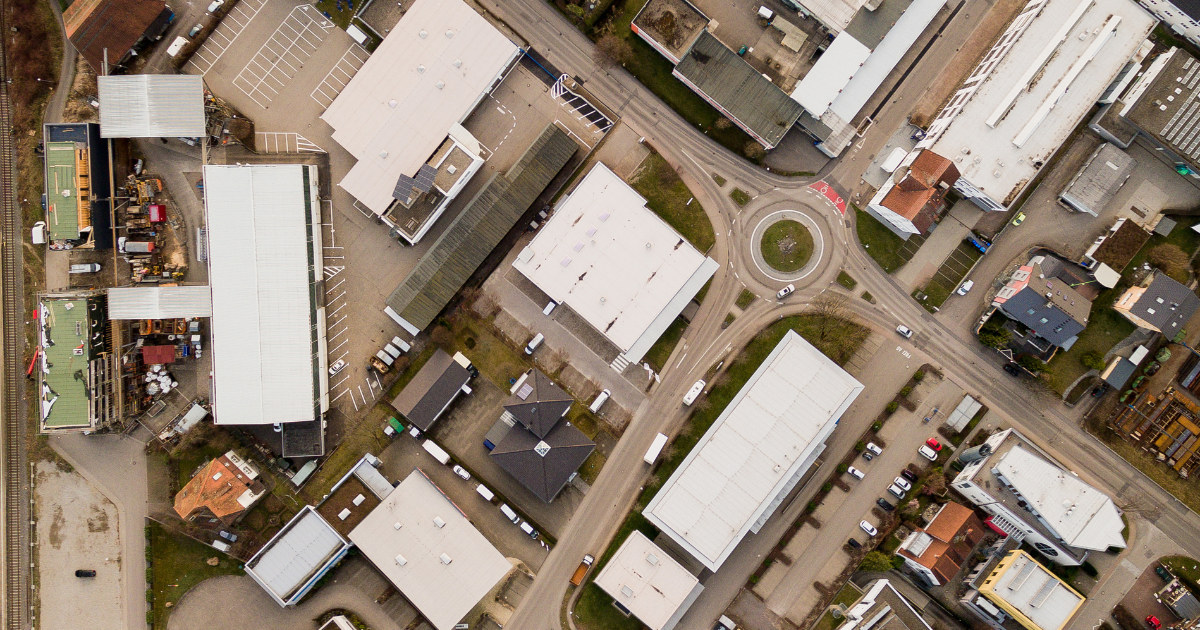
- The Department of Defense manages over 700,000 buildings and 2 billion square feet of roof. When an owner that size forms an opinion on roofing material, it's a maintenance conclusion, not a sales pitch.
- The DoD's own design standard caps TPO at a 10 year expected life. UFC 3-110-03 states it plainly, and no manufacturer would ever print that about its own category.
- TPO is just plastic. A thin sheet, heat welded at the seams, with a reinforcing scrim inside. Once the layer above that scrim weathers away, the clock runs out.
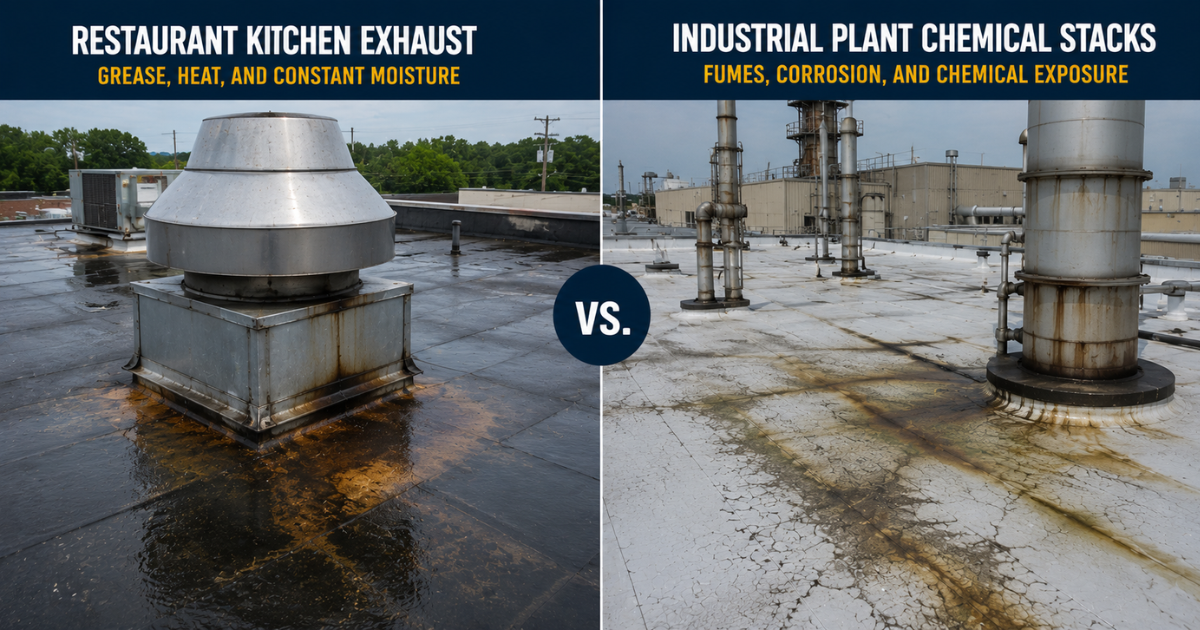
- Restaurants and industrial plants are the worst fit for plastic and rubber. Grease, chemical exposure, and heat punish thin membranes, while vinyl shrugs off exactly those conditions.
- Liquid-applied roofing isn't new. It's been in use since 1977. The Pristine FLEXION 2.0 system carries a 25 year, 300 month warranty, built on chemistry the largest landlord on Earth already chose.
You are probably smarter than the government about most things. Your money. Your business. The way you run your buildings. Nobody has to teach you how to spot a bad deal.
But roofing is one of the few places where the smartest move is to borrow someone else's scars. And no one on Earth has more roofing scars than the U.S. Department of Defense.
Frequently Asked Questions
Q: Why does the Department of Defense's opinion on roofing matter to a private building owner?
A: The DoD owns and maintains more roof than any other entity on the planet, and it pays its own maintenance bills. Its design standards reflect decades of real repair costs, not marketing claims, which makes them one of the most trustworthy sources on material performance available.
Q: What is TPO, and why does the government limit it to 10 years?
A: TPO stands for thermoplastic polyolefin, a thin plastic membrane with heat welded seams and an internal reinforcing scrim. The DoD's own design standard, UFC 3-110-03, states that TPO should only be used on roofs with an anticipated life of 10 years or less.
Q: Is vinyl actually better than TPO?
A: According to the same DoD standard, vinyl (PVC) has the longest service track record among weldable plastic style membranes, ranking above TPO in that category. Vinyl is also the standard choice for foodservice roofs because it resists grease, oils, and fumes that damage plastic and rubber.
Q: Why is plastic a bad choice for restaurants and industrial buildings?
A: Grease laden exhaust from kitchens is brutal on plastic and rubber membranes, while industrial plants expose roofs to chemical stress, heat, and heavy foot traffic. Both environments cause thin plastic sheets to fail well before their expected lifespan.
Q: How long has liquid-applied roofing actually been around?
A: Liquid applied roofing dates back to 1977, when Conklin formulated the first acrylic elastomeric liquid roof coating. It is decades old, proven chemistry, not a new or unproven category.
Q: What does the Pristine FLEXION 2.0 system actually warranty?
A: It carries a 25 year, 300 month warranty, built on the same category of chemistry the Department of Defense's own standards favor over short-lived plastic membranes.
Consider who is talking
This is not a manufacturer trying to sell you a product. It is not an insurance company hedging a bet. It is the single largest building owner on the planet, and it has to live with every roof it installs for decades.
Here is the scale of that experience:
- More than 700,000 facilities in the portfolio.
- Over 2 billion square feet of roof to keep watertight.
- Around 4,800 sites, on roughly 26 million acres.
- A replacement value north of 2 trillion dollars.
When an owner that size forms an opinion about a roofing material, it is not a marketing slogan. It is a conclusion paid for in maintenance dollars.
And they are the ones paying the maintenance bill
This is the part that makes their verdict trustworthy. The Department of Defense is not a happy landlord. By its own reporting, roughly a third of its buildings sit in poor or failing condition, and it carries a deferred maintenance backlog measured in the hundreds of billions.
An owner in that much maintenance pain does not have the luxury of falling for a low sticker price. They have learned, the hard way and at enormous scale, that the cheapest roof to buy is almost never the cheapest roof to own.
Nobody hates a short term roof more than the owner who has to keep it for forty years.
So they wrote it down
In the Department of Defense design standard for roofing, the Unified Facilities Criteria UFC 3 110 03, the guidance on plastic membranes is blunt:
“Thermoplastic Polyolefin (TPO) shall only be allowed on roofs with an anticipated life of 10 years or less.”
Ten years or less. On a document that governs how the military builds. In the same standard, they note that of all the weldable plastic style membranes, vinyl (PVC) has the longest track record in service. The owner with the most buildings on Earth ranked vinyl above plastic and put plastic on a short leash.
No manufacturer prints a sentence like that about its own category. Only an owner would.
Here is the part most owners never notice
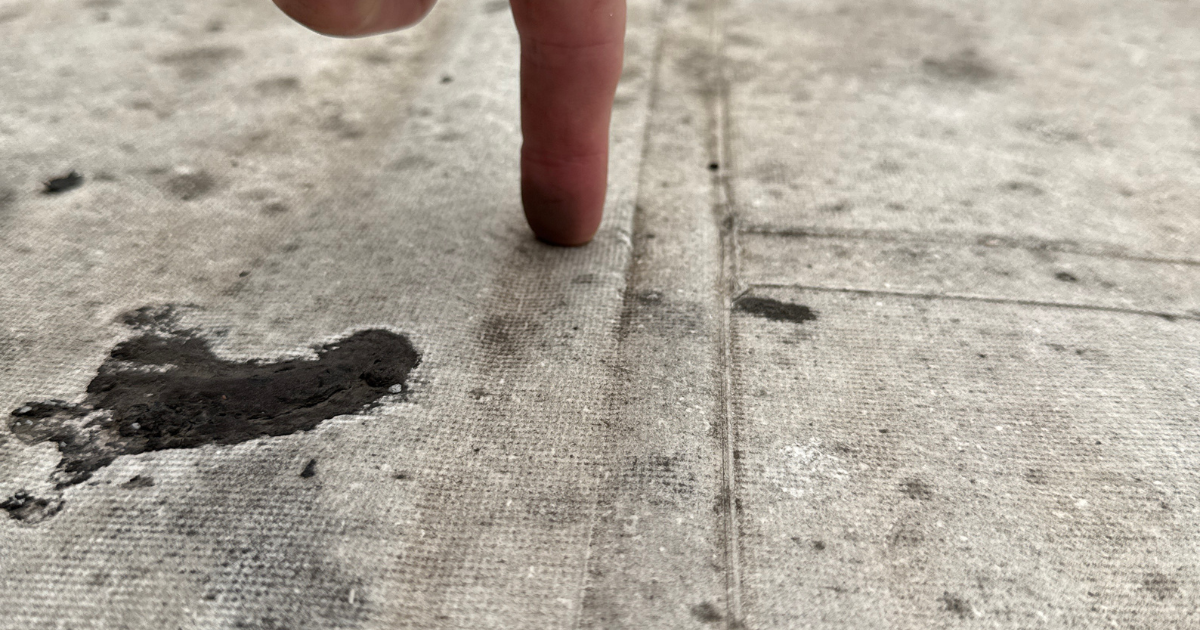
The P in TPO does not stand for some advanced space age compound. TPO is short for thermoplastic polyolefin. Strip away the syllables and you are left with the truth: it is plastic. A thin plastic sheet, rolled out and heat welded at the seams, with a reinforcing net called a scrim sandwiched inside. Once the thin layer above that scrim weathers away, the clock is up.
That is why plastic can look brilliant on day one and expensive by year eleven. It photographs well. It installs cheap. And then the seams, the shrinkage, and the thinning arrive right on schedule.
Two buildings where plastic really does not belong
1. Restaurants and anything with a kitchen. Grease laden exhaust is brutal on plastic and rubber membranes. Vinyl is the foodservice standard precisely because it shrugs off grease, oils, and fumes. If your building fries, roasts, or grills, a brittle plastic wrap TPO roof is a slow motion problem, and a combustible plastic sheet near grease and heat is not a match anyone wants.
2. Industrial plants and factories. Chemical exposure, heat, and heavy foot traffic punish thin plastic sheets and legacy rubber EPDM. The chemistry mismatch shows up as premature failure, and failure on a plant roof is not a small inconvenience.
The forty year math
Big thinkers do not budget a roof in five year slices. They think in forty year chunks, because that is how long they intend to own the asset. Over that horizon the question is simple and a little uncomfortable:
Do you want to save money once, or save money every year? You cannot do both.
A plastic roof saves you money once, at signing. Then it asks for it back, with interest, in tear offs and replacements. The newer chemistries invert that. They cost a little more to earn, and then they keep paying you back in years you do not have to replace anything.
So what replaces plastic?
Better chemistry, and it is not new or exotic. Liquid applied roofing has been poured since 1977, when Conklin formulated the first acrylic elastomeric liquid roof coating. The modern menu looks like this:
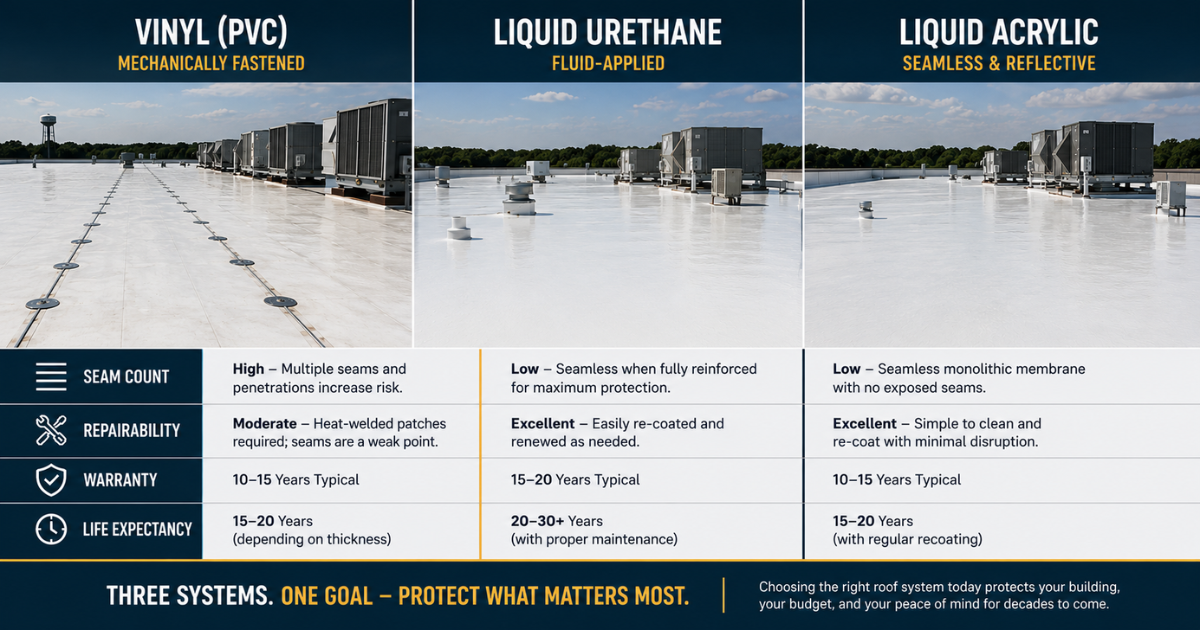
- Vinyl. Hot air welded into one continuous sheet, built for 25 to 30 years, and the grease resistant choice for kitchens.
- Liquid urethane. Seamless and tough, made for foot traffic and standing water.
- Liquid acrylic. Bright, reflective, and recoatable, so an aging roof renews in place instead of heading to a dumpster.
The Pristine FLEXION 2.0 system carries a 25 year, 300 month warranty. That is the measurable part. The desirable part is a roof that renews rather than one that has to be demolished. The believable part is that the biggest, most maintenance weary building owner on the planet already reached the same conclusion.
The honest close
You are smart. You did not get a portfolio by being careless with money. But your portfolio might hold a dozen buildings. Theirs holds 700,000. On roofing, that is experience worth borrowing.
So before you let another salesman roll plastic across a building you plan to keep, get a second opinion from people who install the chemistry the experienced owners chose.
Get a free roof second opinion on your buildings. See what the government already knows. modernROOFchemistry.com
You are probably smarter than the government in a lot of areas. Roofing just might not be one of them, and that is a good thing, because the lesson is already paid for. All you have to do is use it.
Related Reading
- TPO Will Burn: Why Your Flat Roof's Fire Rating Is the Most Important Number You've Never Checked
- PVC vs TPO: Why We Stopped Installing Plastic Wrap on Commercial Roofs — directly reinforces the DoD's own vinyl-over-TPO ranking
- Plastic Does Not Belong On Your Roof — nearly identical, good for readers who want the shorter version
- FLEXION 2.0 Kevlar Vinyl vs Dura-Last PVC Membrane — directly extends the vinyl callout into a named product comparison
- The Big Guys Already Quit. You Just Haven't Heard the News. — same "big institutional owner already moved on" structure
Read other blog:


We Love Conversations
 SoHelpful@PristineIndustrialRoofing.com