
Plastic Does Not Belong On Your Roof
We refuse to install plastic wrap on your roof. We won't do that to you. Your roof isn’t leftovers, stop wrapping it in plastic.

🔲 Plastic is cheap and weak. tPo is temporary.
🔲 Plastic is for trash bags. tPo is a toy. It should not be trusted to guard your valuable people and properties, so we would not recommend it to an enemy.
🔲 Plastic fails fabulously. tPo gets brittle and weak at the seams. tPo is not fire-rated. (Vinyl is.) Plastic wrap does not resist being eaten-away by the acid and grease that industrial rooftops collect daily.
🔲 The Pentagon won’t touch it. The United States Department of Defense refuses to allow tPo installations on any building they intend to keep beyond ten years, because their own data made that decision for them.
🔲 Within 10-ish years, your plastic wrap roof requires serious attention, and when it does, we coat directly over it with a superior seamless liquid system that extends the life of your roof by 20 years or more.
🔲 Building buyers knock six figures off. When a building with a neglected or aging tPo roof hits the market, buyers use the roof condition to justify reducing their offer, sometimes by $100,000 or more, and your family absorbs that loss at exactly the wrong moment.
🔲 We charge less, deliver more. Local market installers hover around $60 per man hour to roll plastic on your roof. We charge $42 per man hour to apply superior chemistry that actually bonds to your building.
There is a version of this article where we are polite about it. Where we say something like "tPo has its place in certain applications" and then list some caveats and walk you through a balanced comparison and wish you well with your decision.
That version does not exist. We deleted it.
tPo, (yes, we spell it that way on purpose, because that is exactly how seriously it deserves to be taken), is the roofing industry's longest-running practical joke. And the punchline lands on your balance sheet, not ours.
We are going to tell you exactly why we refuse to install it. Then we are going to tell you what we install instead. Then you can decide.
Plastic Is Cheap. Cheap Is Not a Compliment.
When someone calls a thing cheap, they usually mean the price. We mean the material.
tPo is thermo-plastic polyolefin. The "plastic" in that name is not metaphorical. It is a petroleum-based membrane, rolled out in sheets across your flat roof like the plastic you use to wrap a casserole for the fridge. The sheets get heat-welded at the seams. That seam is where the story ends badly.
In theory, a welded seam is strong. In reality, on a commercial rooftop in Northwest Indiana, that seam spends its life being cooked in Summer, frozen in Winter, and soaked by the 38 inches of annual precipitation that falls between the two. Lake-effect moisture does not negotiate. Freeze-thaw cycles do not take weekends off.
The seams get brittle. Then they lift. Then water finds them, because water always finds the path you left open. Then you have a leak. Then you have a claim. Then your carrier pulls out the policy, runs a finger down the page to the maintenance clause, and has a conversation with you that ruins a Tuesday.
That is the plastic roof story, told honestly.

The Pentagon Already Ran This Experiment
Here is a fact we enjoy sharing at every possible opportunity, the United States Department of Defense does not allow tPo installations on any building they intend to keep beyond ten years.
Read that again.
The organization that is responsible for protecting the most valuable real estate and personnel on Earth looked at tPo's performance data and said, formally, in policy: no. “Not for buildings we intend to keep.”
They did not arrive at that position because someone had a hunch. They arrived there because they collect data on everything they own, they analyzed what happened to tPo roofs over time, and the data made the decision for them.
You are not the Pentagon. But your building is valuable. Your people are valuable. The inventory inside that building is valuable. The question is not whether the Pentagon's data applies to your roof in Hammond or Portage or Merrillville. The question is why you would need more evidence than that before asking a harder question of your current roofer.
It Is Not Fire-Rated. That Is Not a Small Thing.
Let us talk briefly about fire, because your insurance carrier definitely thinks about it.
tPo is not fire-rated. Vinyl membrane is.
FLEXION vinyl membrane, the product we actually install when a new membrane is the right call, carries the highest fire rating possible. tPo melts and continues burning. For a building that holds people, equipment, or inventory with any replacement value, that distinction is not a footnote. It is a line item on your policy and a number in your carrier's actuarial model.
We are not going to pretend that a roof fire is a common event. It is not. But "uncommon" and "insurable" are two different categories, and fire-rated materials affect which category your building sits in when renewal season comes around.
This is the kind of thing that Nance in your finance department needs to know before the next board meeting. Write it down. Bring it.
Industrial Rooftops Are Doing Industrial Things. Plastic Disagrees With That.
Here is something the tPo sales rep does not spend a lot of time considering … what actually lives on a flat commercial roof.
HVAC units. Grease exhaust from kitchen ventilation. Chemical runoff from industrial processes. Ponding water that sits for days after a hard rain. UV exposure that would humble a lesser material. Foot traffic from your maintenance crew. Steel factories and oil refineries increase heavy metals in the atmosphere. And those metal particles eat plastic.
Plastic, and tPo is plastic, we will keep saying it, does not hold up well against grease and chemical exposure. The membrane degrades. The surface oxidizes. The material that was supposed to protect your building starts needing protection itself.
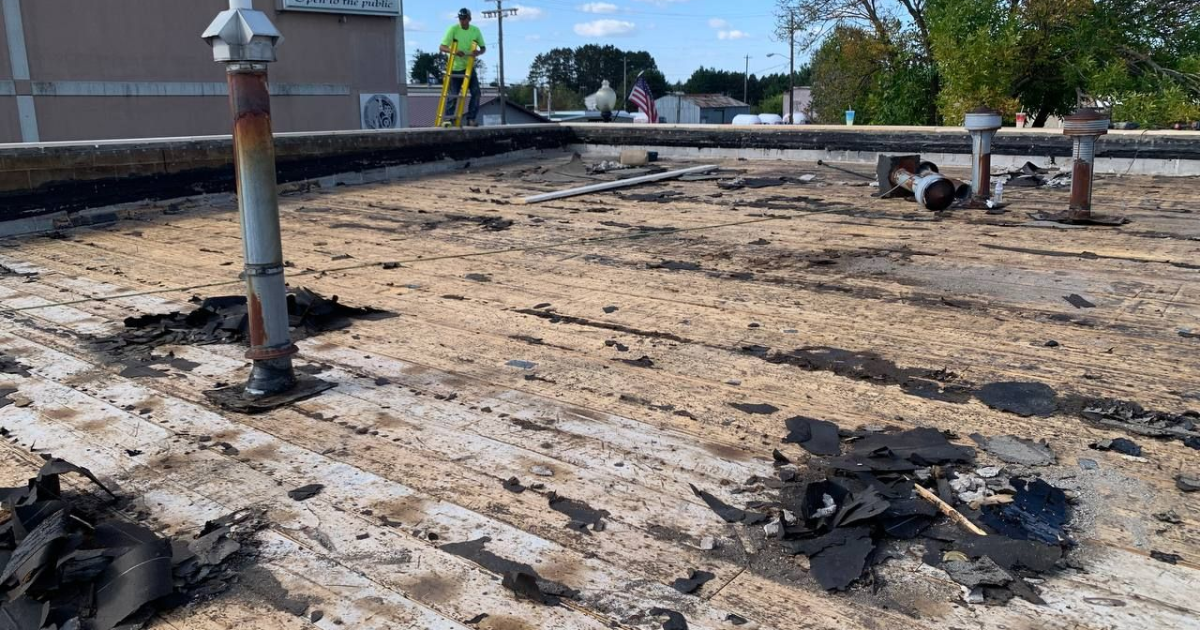
Conklin liquid-applied coating systems, by contrast, bond deeply and directly into the substrate of your existing roof material … creating a seamless, monolithic surface. No seams means no seam failures. The chemistry is designed to resist the actual conditions of an industrial rooftop, not the ideal conditions described in a spec sheet that was written in a climate-controlled office in Phoenix.
Kenny in your facilities department already knows something is off up there. He got on the roof last Summer. He saw the lifting at the seams. He mentioned it. Nobody wrote it down.
Maybe someone should write it down.
What Happens at Year Ten
tPo has a “theoretical lab” lifespan of 15 to 20 years under ideal conditions. Northwest Indiana is not ideal conditions. Ten to twelve years is a more honest number for this region, given the 50 freeze-thaw cycles, the lake-effect moisture load, and the UV intensity that accelerates membrane degradation faster than the warranty schedule anticipates. Did we forget the chemical burden from factories? We’re very productive around here. That means the acid in the rain is intense. Did you read your annual water report from the local municipality? Yeah there’s a lot of dissolved solids.
At ten years, you have a decision to make. Full replacement, tear-off, new insulation boards, new membrane, new everything, runs expensive and disruptive. You are looking at days of work, potential interior exposure during the project, and a bill that is going to land on the capital expenditure side of Nance's spreadsheet like a stone in still water.
Or.
We coat directly over the existing tPo with a Conklin liquid system. No tear-off. No disruption. The liquid bonds to the membrane, seals the seams, creates the seamless surface that the original installation never had, and extends the functional life of that roof by 20 years or more. The Conklin coating warranty runs up to 20 years on applicable systems.
That is not a renovation. That is a resurrection. And it costs a fraction of what replacement does.
If you are currently sitting at year seven or eight on a tPo roof and you have not started that conversation yet, the clock is running.
✉️ Let us take a look at the property you are thinking about right now.
Subject Property Address: ___________________________
We will send you a free evaluation. No pitch deck. No pressure. Just someone who actually knows what they are looking at.
[ Email address ] → [ Send Me the Real Stuff ]
What Buyers Do With a Bad Roof
Commercial real estate transactions are not sentimental. Haggling is preventable. Get your building haggle-proof.
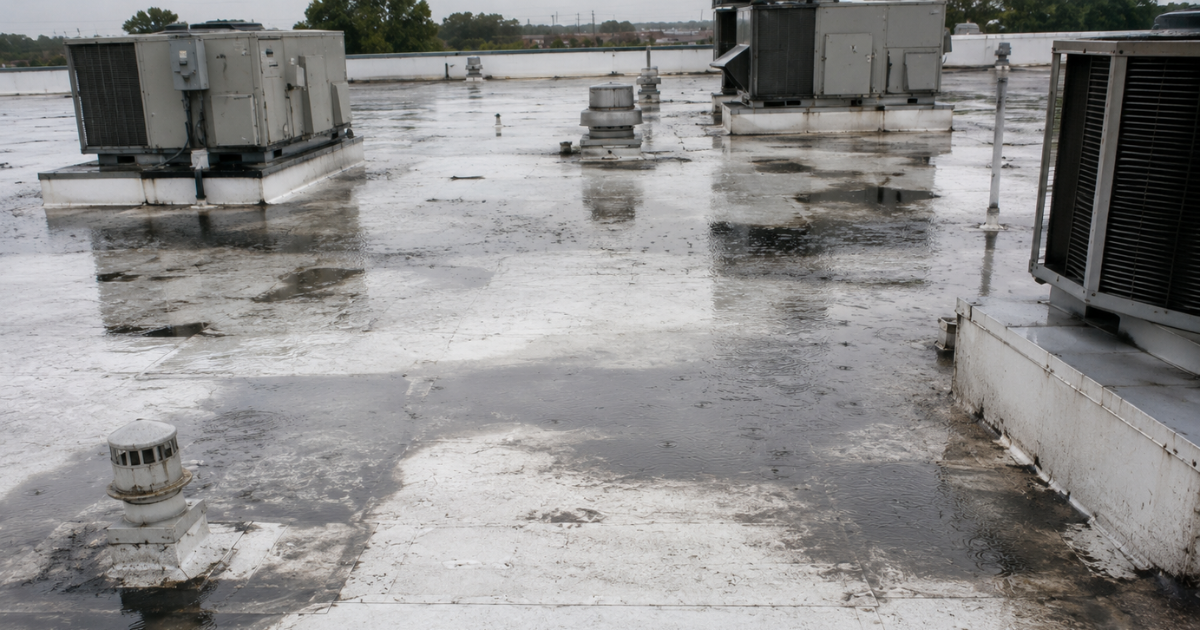
Buyers are not moved by the fact that you maintained the parking lot or replaced the HVAC three years ago. They are looking for reasons to reduce the number on the offer sheet, and a declining or aging tPo or legacy rubber EPDM roof is one of the cleanest justifications in their toolkit.
Six figures is not an exaggeration. When a building with a visibly compromised or aging flat roof hits the market in this region, buyers use the roof condition to justify offer reductions of $100,000 or more. Sometimes significantly more, depending on the square footage and the age of the system.
That reduction does not fall on the buyer. It falls on you. It falls on your family. It falls on the equity you spent years building in that building, absorbed into a discount at exactly the moment when you were supposed to be extracting value.
A Conklin coating system that costs $40,000 to apply today can preserve $100,000 in offer price when you sell. That is not a roofing expense. That is a return on investment with a specific number attached to it, and it is the kind of math that Bill and Nance and the whole board can understand without a roofing education.
We Charge Less and Deliver More. Both Things Are True.
This is the part where we would normally soften the sell. We are not going to do that.
Local market installers in Hammond, Portage, Hobart, and the surrounding area charge approximately $60 per man hour to roll plastic sheeting onto your building. That is the market rate for a commodity installation of a commodity product.
We charge $42 per man hour to apply Conklin liquid chemistry that bonds to your building, creates a seamless surface, carries a meaningful warranty, and does not share a material category with your kitchen trash bags.
Lower price. Superior product. Longer warranty. No seams.
We understand that sounds like a pitch. It is also just true. Hit the pitch if it’s a strike. The math exists. The product data exists. The warranty terms from Conklin exist and are in writing. We are not asking you to take our word for it. We are asking you to look at the numbers and tell us what you see.
What the Commercial Owners Are Actually Asking
How long does a tPo roof actually last in Indiana? In the Hammond, Portage, and Merrillville area, a realistic tPo lifespan is 10 to 12 years given freeze-thaw cycles and lake-effect moisture exposure. Manufacturer estimates of 15 to 20 years assume installation and climate conditions that this region rarely delivers.
Can you coat over tPo without tearing it off? Yes. A Conklin liquid-applied system can be applied directly over an existing tPo membrane in most cases, sealing the seams, adding a seamless surface, and extending roof life by 20 years or more without a full tear-off.
Is tPo fire-rated? No. tPo is not fire-rated. FLEXION vinyl membrane is fire-rated. This distinction affects your insurance profile and should be discussed with your carrier before your next renewal.
Does the Department of Defense actually avoid tPo? Yes. DoD policy prohibits tPo installations on buildings intended for long-term use beyond ten years, based on internal performance data.
How much does a Conklin coating system cost compared to tPo replacement? Conklin liquid systems typically cost 40 to 60 percent less than full roof replacement, with labor running at $42 per man hour versus the $60 per man hour market rate for standard membrane installation in this region.
Can a bad roof reduce my building's sale price? Yes, and the reduction is material. Buyers use aging or compromised tPo roofs to justify offer reductions of $100,000 or more on commercial properties in this market.
What is the warranty on a Conklin liquid coating? Conklin liquid systems carry warranties of up to 20 years on applicable substrates. FLEXION vinyl membrane carries a 300-month (25-year) warranty. These are separate systems with separate warranty terms, do not let anyone blend those numbers together.
The Short Version, for Bill Ding Owner
You are busy. Here it is.
tPo is a plastic membrane installed in sheets with seams that fail, a fire rating that does not exist, and a real-world lifespan in Northwest Indiana that falls short of what the product literature suggests. The Department of Defense looked at the data and passed. Your buyer will look at the roof and knock six figures off.
We apply Conklin chemistry directly over your existing roof in most cases. No tear-off. No disruption. Up to 20 years of extended life. We charge $42 per man hour where the market charges $60.

Book a Look. No Obligation. See Your Options.
You already know which property you are thinking about. The one with the roof that came up in a conversation last Fall. The one Kenny mentioned. The one where you said "we'll keep an eye on it" and everyone nodded and moved on.
That conversation does not get better with time. Deferred roof maintenance costs $4 to $8 in downstream damage for every $1 left unaddressed. A repair that costs $4,200 today can become a $68,000 replacement in 18 months. That is not a horror story. That is arithmetic.
📧 Don’t let a plastic roof cost you six figures. If it’s year 7, 8, or 9 — the clock is already running.
Drop the address. We’ll tell you exactly where you stand.
Subject property address: ___________________________
[ Email address ] → [ Yes, Send Me More ]
No pitch. No pressure. No plastic.
Deep Dive Into Specific Topics
- YourWarrantySaysWhat.com (Loophole analysis)
- SiliconeIsSilly.com (Why we don't do silicone)
- WeWashFlatRoofs.com (Maintenance matters)
- BigBeautifulRoofBill.com (Transparent pricing guide)
- ModernRoofChemistry.com (What's going on up there?)
- SchoolEnergyRebates.com (Energy grants for schools)
- RelationshipRoofing.com (What matters more?)
- MeetYourInstallers.com (Fabulous families)
- RoofServiceMenu.com (What are my options?)
- TenantRoofRights.com (Tenant questions)
Pristine Industrial Roofing — Serving commercial and industrial property owners across Lake County and Porter County.
Liquid-applied Conklin coating systems. FLEXION vinyl membranes. Proactive maintenance programs.
Valparaiso | Hammond | Portage | Merrillville | Hobart | Gary
Read other blog:


We Love Conversations
 SoHelpful@PristineIndustrialRoofing.com