
TPO Will Burn: Why Your Flat Roof’s Fire Rating Is the Most Important Number You’ve Never Checked
The Fire Rating Gap Between Commodity Plastic Wrap and Pro-Grade Vinyl That Your Contractor Won’t Tell You About. What Every Building Owner, Property Manager, and Restaurant Operator Needs to Know Before Accepting a TPO Bid.
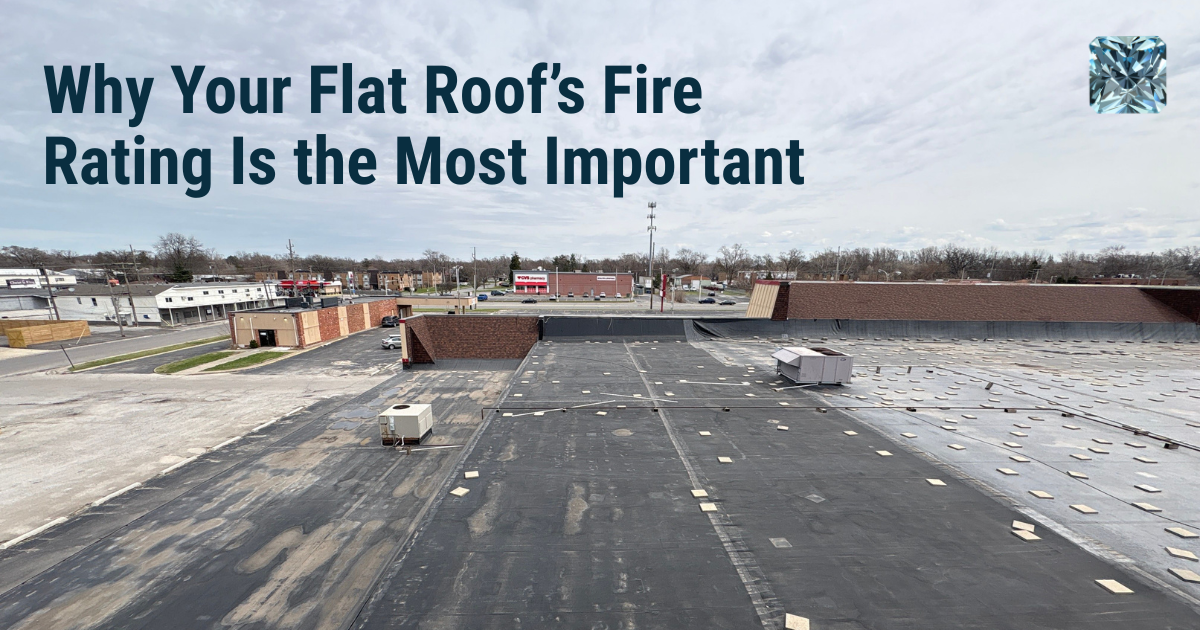
🔲 TPO (Thermoplastic Polyolefin) membranes do not carry a Class A fire rating, the highest classification for roofing materials.
🔲 PVC vinyl membranes, including Conklin Flexion 2.0, carry a Class A fire rating under ASTM E 108 and UL 790 testing.
🔲 Buildings with rooftop grease exhaust, commercial kitchens, or chemical exposure face elevated fire risk when covered with non-rated membranes.
🔲 Insurance carriers and fire marshals reference fire ratings when evaluating commercial building risk and code compliance.
🔲 Conklin’s own certified installer training materials state plainly: TPO WILL BURN.
🔲 Even Conklin’s premium Outpost TPO (60 mil, Kevlar-reinforced) does not carry a Class A fire rating.
The Number Nobody Checks
When a roofing contractor hands you a bid for a new flat roof, you check the price first. Then you check the warranty length. Maybe you compare membrane thickness or ask about the color. If you are a careful buyer, you might even look up the contractor’s reviews or ask for references.
But almost nobody checks the fire rating. And that single number, the fire classification of the membrane that sits on top of your building, exposed to the open sky, determines whether your roof protects your investment or accelerates its destruction in an emergency.
Roofing materials in the United States are tested and classified under ASTM E 108 and UL 790, the standard fire testing protocols for roof coverings. These tests measure flame spread, resistance to burning brands (airborne embers), and intermittent flame exposure. The results produce a classification: Class A is the highest rating, meaning the material resists flame spread, does not generate significant flying embers, and self-extinguishes. Class B and Class C offer progressively less protection.
Here is the fact that most building owners never hear from their contractor: TPO membranes, the most commonly installed flat roof material in new construction across the United States, do not achieve Class A fire classification. PVC vinyl membranes do.
This is not editorial opinion. This is the manufacturer’s own data. Conklin Company, one of the most established names in commercial roofing chemistry with over 45 years of experience, states it plainly in their certified installer training materials: TPO WILL BURN.
What Is TPO and Why Is It Everywhere?
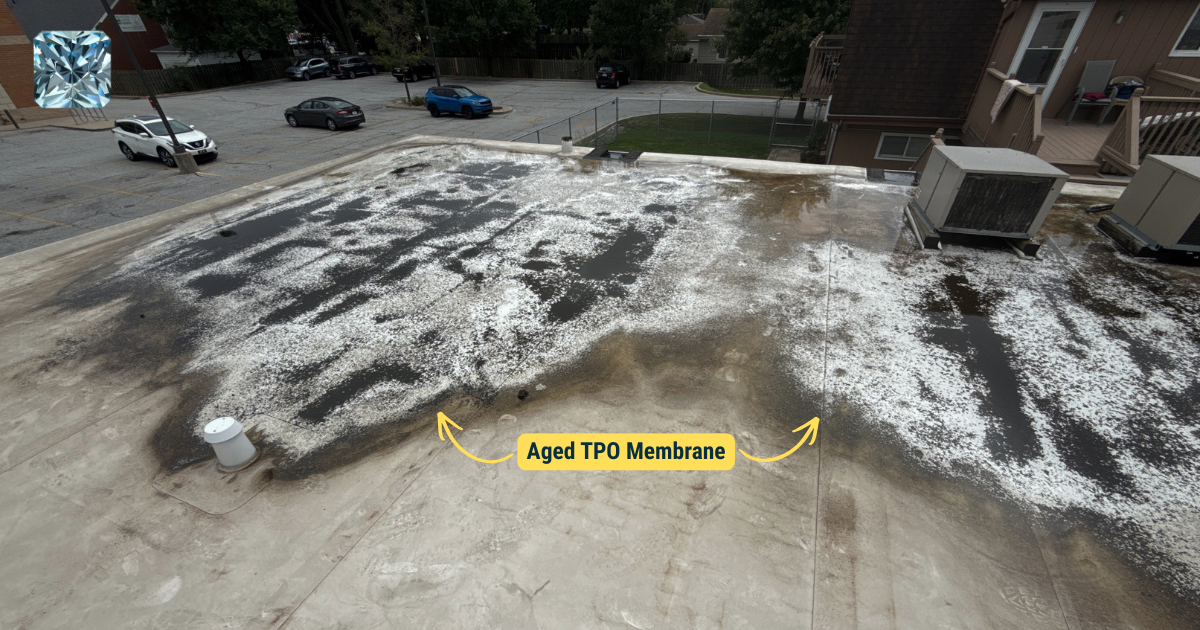
TPO stands for Thermoplastic Polyolefin. In the polymer family tree, it sits in the crystalline branch of thermoplastics, the same branch as polyolefins and polyamides. It was introduced to the commercial roofing market in the 1990s as a lower-cost alternative to PVC vinyl, and it has grown rapidly in market share since then.
According to Conklin’s industry data, TPO now accounts for approximately 40% of all new flat roof installations in the United States. On reroof projects, its share drops to about 30%, with legacy systems like modified bitumen, built-up roofing, and liquid-applied coatings taking larger portions of the replacement market.
TPO’s popularity comes down to economics and one legitimate technical feature: heat-weldable seams. Like PVC vinyl, TPO membranes can be joined using hot-air welding, creating a continuous seam without adhesive or tape. That is a real advantage over older systems like legacy rubber (EPDM), which relies on glued seams that degrade over time.
But the Conklin training materials list six cautions against that single feature. Brittle plastic wrap TPO has a limited performance track record compared to PVC. It is susceptible to puncture damage. It has known fire resistance concerns. It degrades under UV exposure. It becomes stiff in cold weather, making it harder to work with and more prone to cracking. And it has a narrow welding window, meaning the installer must get the temperature and speed exactly right or the seam fails. One feature against six cautions. That ratio should give any building owner pause.
The Burn Test: What the Lab Shows
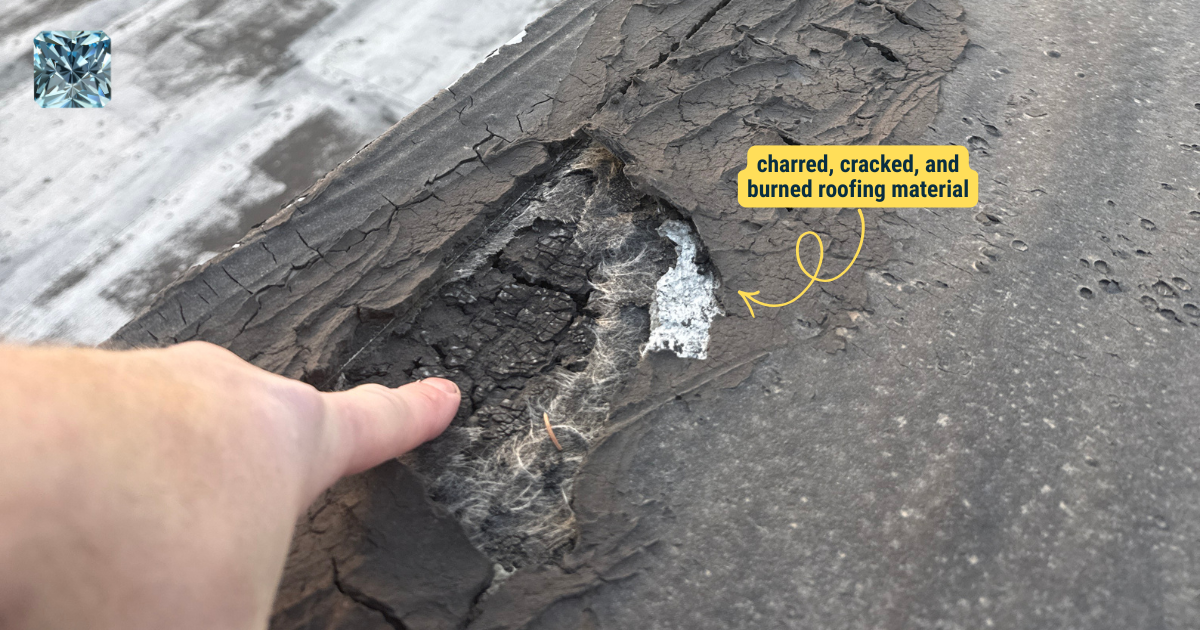
Conklin’s training materials include a side-by-side burn test comparison of three membrane types: commodity brittle plastic wrap TPO, PVC vinyl, and legacy rubber EPDM. All three samples are exposed to the same direct flame under controlled conditions.
The results are visible and immediate. The TPO sample shows obvious burn damage and discoloration. The EPDM sample (the black rubber) chars. The PVC vinyl sample remains largely intact. Same flame. Same exposure time. Three very different outcomes.
This is consistent with the standardized fire testing results under ASTM E 108 and UL 790. PVC vinyl membranes achieve Class A fire classification because the material resists flame spread and self-extinguishes when the flame source is removed. TPO does not achieve this classification because it does not demonstrate the same self-extinguishing behavior.
What makes this data especially compelling is that even Conklin’s own premium TPO product, the Outpost 60 mil membrane, does not carry a Class A fire rating. The Outpost is not a commodity product. It features a Kevlar-reinforced fastening edge, non-moisture-wicking aramid/knit scrim, breaking strength of 403 lbf (nearly double the ASTM D 6878 minimum of 220 lbf), and puncture resistance of 275 lbs. It carries UL Classification R8435 98P4 and FM Approval. It is, by any measure, a premium TPO membrane. And it still does not achieve Class A fire classification. If the best TPO available cannot get there, building owners should ask what that means for the lesser TPO products being bid by other contractors.
The Restaurant Problem
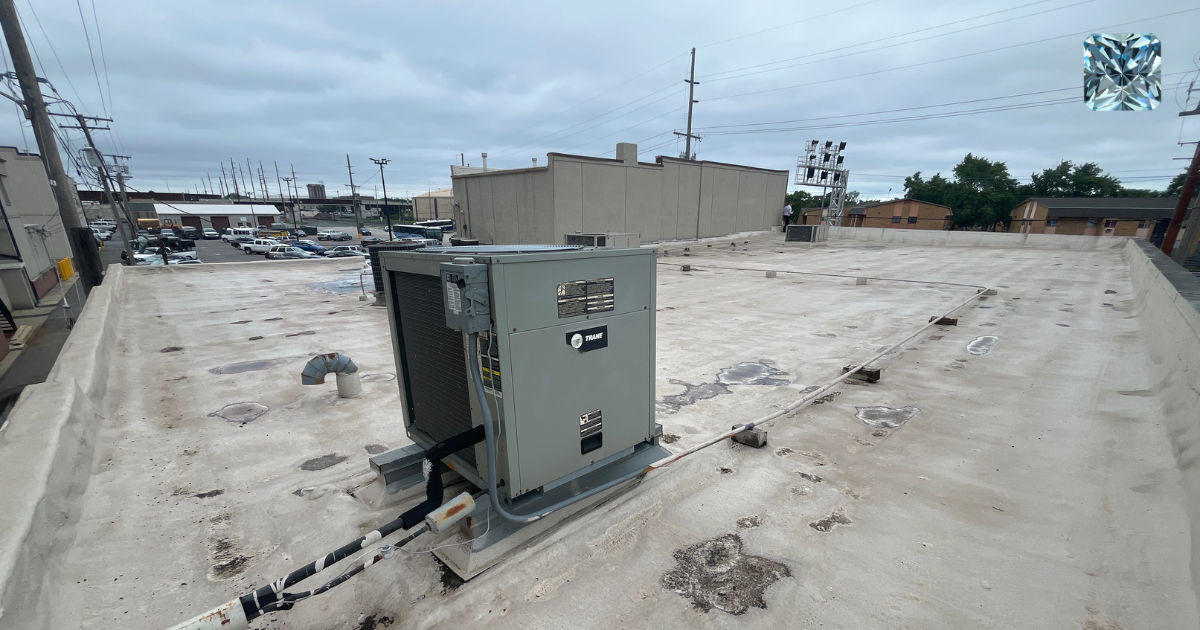
Commercial kitchens, restaurants, and food service operations present a specific and elevated fire risk for flat roofs. Every commercial kitchen with a hood system discharges grease-laden exhaust through rooftop vents. This is standard design. The grease travels up through the exhaust ductwork and exits onto the roof surface.
Under normal conditions, this grease accumulates gradually and is managed through regular hood cleaning and roof maintenance. But in a grease fire event, which is one of the most common types of commercial kitchen fires, the flame travels up the exhaust system and exits directly onto the roof membrane.
When that flame meets a Class A rated PVC vinyl membrane, the material resists flame spread and self-extinguishes. The fire is contained to the exhaust area. When that same flame meets a non-rated TPO membrane, the material does not self-extinguish. The fire can spread across the roof surface.
This is not a theoretical scenario. Grease fires in commercial kitchens are among the most common causes of commercial building fires in the United States. If you own a Subway franchise, a pizza restaurant, a food court, a commercial kitchen, or any building with a commercial hood exhaust system, the membrane on your roof is your first line of defense against a fire that starts inside your building and exits through the top.
Conklin Flexion 2.0 vinyl is not only Class A fire rated, it is also specifically resistant to grease, acids, and chemical exposure. The membrane itself does not degrade when grease accumulates on its surface. It can be cleaned during routine maintenance without damaging the waterproofing layer. Commodity brittle plastic wrap TPO offers neither the fire rating nor the chemical resistance.
Insurance, Code, and Liability
Fire ratings are not just technical specifications. They have real financial and legal implications for building owners.
Insurance carriers evaluate fire ratings as one component of commercial property risk assessment. A building with a Class A rated roof system presents a lower fire risk profile than a building with a non-rated membrane. While a non-rated roof may not automatically void coverage, it can affect premium calculations, risk scoring, and claims evaluation after a fire event.
Local fire marshals and building inspectors reference fire classification standards during code compliance reviews, occupancy permitting, and post-construction inspections. Buildings that serve the public, restaurants, retail spaces, medical facilities, face additional scrutiny on fire safety systems, and the roof membrane is part of that evaluation.
Building owners who accept a TPO bid without understanding the fire rating gap may be taking on liability they do not fully appreciate. This is not legal advice, and every building owner should consult their insurance agent and local building authority for specific guidance. But the conversation needs to happen before the contract is signed, not after a fire event.
✉️ Most roofing bids don’t explain the full picture, especially when it comes to fire performance, long-term durability, and system-level risk.
Subject Property Address: ___________________________
A lower bid doesn’t always mean lower risk, it often just means unspoken tradeoffs.
FREE roof evaluation. No pressure. No obligation.
[ Email address ] → [ Send Me the Real Stuff ]
The Alternative: Conklin Flexion 2.0 Vinyl
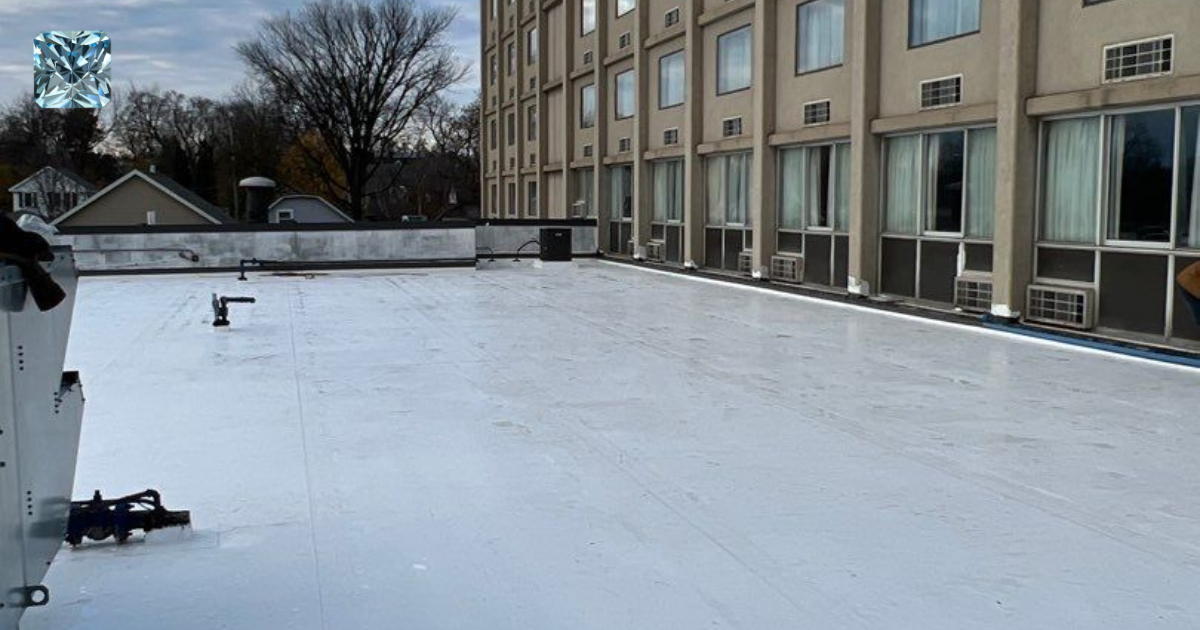
Conklin’s Flexion 2.0 is a PVC (poly vinyl chloride) membrane in the amorphous branch of the thermoplastic polymer family. That is a fundamentally different chemistry than TPO. Where TPO is a crystalline polyolefin that melts and burns, PVC is an amorphous vinyl compound that resists flame spread and self-extinguishes.
Flexion 2.0 carries a Class A fire rating under ASTM E 108 and UL 790 testing. Its seams are heat-welded using hot air, no adhesive, no tape, no solvent. Those seams can be re-welded years after installation if a repair is needed, because PVC vinyl remains thermally weldable throughout its service life. Commodity brittle plastic wrap TPO seams cannot be reliably re-welded after aging because the material becomes stiff and loses its welding window.
The membrane is resistant to grease, acids, oils, and a wide range of chemical exposures. It is walkable, meaning maintenance crews can service rooftop HVAC equipment without damaging the waterproofing layer. It is recoatable, meaning the building owner can extend the roof’s service life with a maintenance recoat rather than a full tear-off and replacement.
Flexion 2.0 carries a 25-year, 300-month non-prorated warranty. That warranty is backed by Conklin Company, headquartered in Shakopee, Minnesota, with over 45 years in the commercial roofing chemistry business. The warranty requires an annual maintenance plan, which is not optional, because proper maintenance is what makes a 25-year roof last 25 years.

Fire FAQs
Q: Does TPO have a Class A fire rating?
A: No. TPO (Thermoplastic Polyolefin) membranes do not achieve Class A fire classification under ASTM E 108 or UL 790 testing. This applies to commodity TPO products as well as premium TPO products including Conklin’s own Outpost 60 mil membrane.
Q: Is PVC vinyl fire rated?
A: Yes. PVC (poly vinyl chloride) membranes, including Conklin Flexion 2.0, carry Class A fire rating, the highest classification for roofing materials. The material resists flame spread and self-extinguishes when the flame source is removed.
Q: What does Class A fire rating mean for a commercial roof?
A: Class A is the highest fire resistance classification for roof coverings under ASTM E 108 and UL 790. It means the roofing material resists flame spread across its surface, does not generate significant flying embers, and self-extinguishes. Class B and Class C offer progressively less protection.
Q: Is TPO safe for restaurant and food service buildings?
A: TPO does not carry a Class A fire rating and is not resistant to grease or chemical exposure. Restaurant and food service buildings with rooftop grease exhaust vents face elevated fire risk when covered with non-rated membrane materials. PVC vinyl is the recommended alternative for these applications.
Q: Does my roof’s fire rating affect my commercial insurance?
A: Insurance carriers evaluate fire ratings as part of commercial property risk assessment. While policies vary, a non-rated roof membrane can affect premium calculations and risk scoring. Building owners should discuss fire rating implications with their insurance agent before selecting a roofing system.
Q: What is the difference between TPO and PVC chemically?
A: TPO is a crystalline thermoplastic polyolefin. PVC is an amorphous thermoplastic poly(vinyl) chloride. They are fundamentally different polymer chemistries. PVC achieves fire resistance properties that TPO does not, which is why PVC carries Class A fire rating and TPO does not.
Q: Can TPO be made fire resistant with coatings?
A: Some contractors apply fire-retardant coatings or underlayments to improve the fire performance of TPO assemblies. However, these are system-level modifications that add cost and complexity. The base TPO membrane itself does not carry Class A fire classification regardless of what is applied over or under it.
Your Roof’s Fire Rating Is Not a Detail. It’s a Decision.
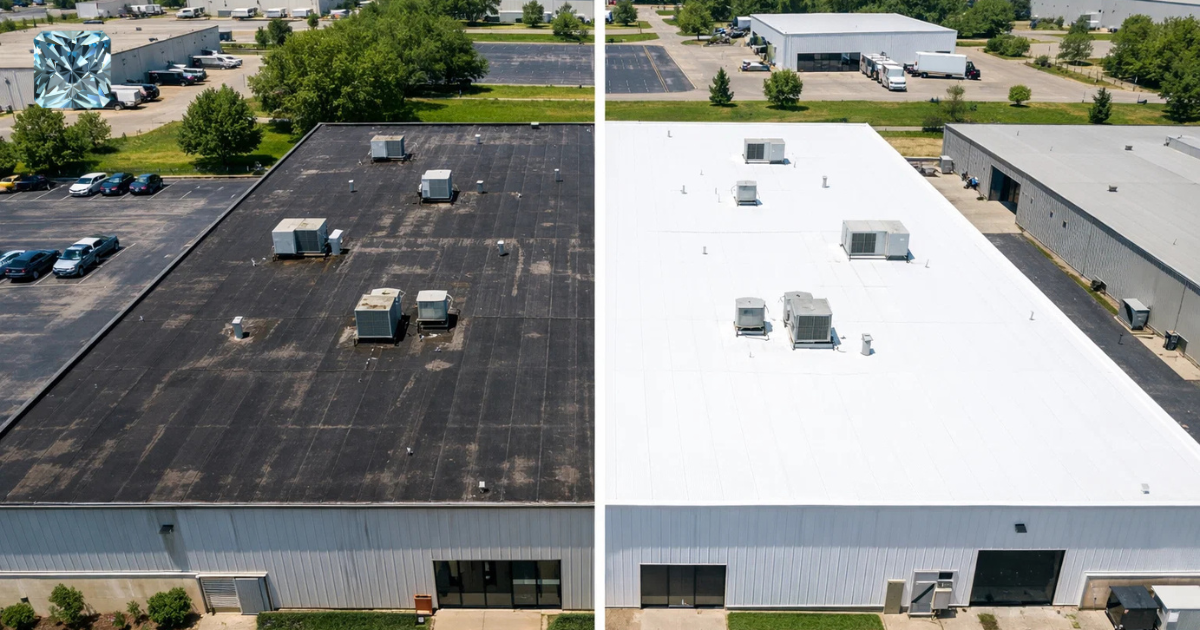
Every building owner makes dozens of decisions during a roofing project. Most of those decisions are about price, schedule, and convenience. But the fire rating of the membrane that sits on top of your building, exposed to the open sky, above your employees, your tenants, your inventory, and your customers, is not a convenience decision. It is a safety decision.
If you own or manage a commercial building in Lake County or Porter County, Indiana, Pristine Industrial Roofing offers a free, no-obligation roof evaluation. We will identify your current membrane type, assess your roof deck condition, measure the total area, and provide a detailed proposal for a Conklin Flexion 2.0 vinyl system, Class A fire rated, heat-welded, grease resistant, and backed by a 25-year non-prorated warranty.
For larger projects, SBA 504 and 7(a) financing is available through Centier Bank to help building owners invest in proper roof protection without depleting operating capital.
✉️ Your roof isn’t just a line item, it’s the surface protecting everything underneath it.
If you’re making a decision on a new roof or replacement, make sure it’s based on more than price alone. Understand the system, the risks, and the long-term implications before you commit.
Subject Property Address: ___________________________
We help building owners make that decision with clarity, before problems show up, not after.
FREE roof evaluation. No pressure. No obligation.
[ Email address ] → [ Send Me the Real Stuff ]
Pristine Industrial Roofing is a Gospel Business. Every roof we install funds community outreach and worldwide missions. When you protect your building, you invest in something bigger.
Pristine Industrial Roofing
Conklin-Certified • Lake County & Porter County, Indiana
PristineIndustrialRoofing.com
Read other blog:


We Love Conversations
 SoHelpful@PristineIndustrialRoofing.com