
Conklin Roofing Systems and Summer Heat | What Facility Managers in Northwest Indiana Need to Know
Your Utility Bill Knows Your Roof Is Failing Before You Do. Every summer your HVAC system files a workers’ comp claim against the ceiling.
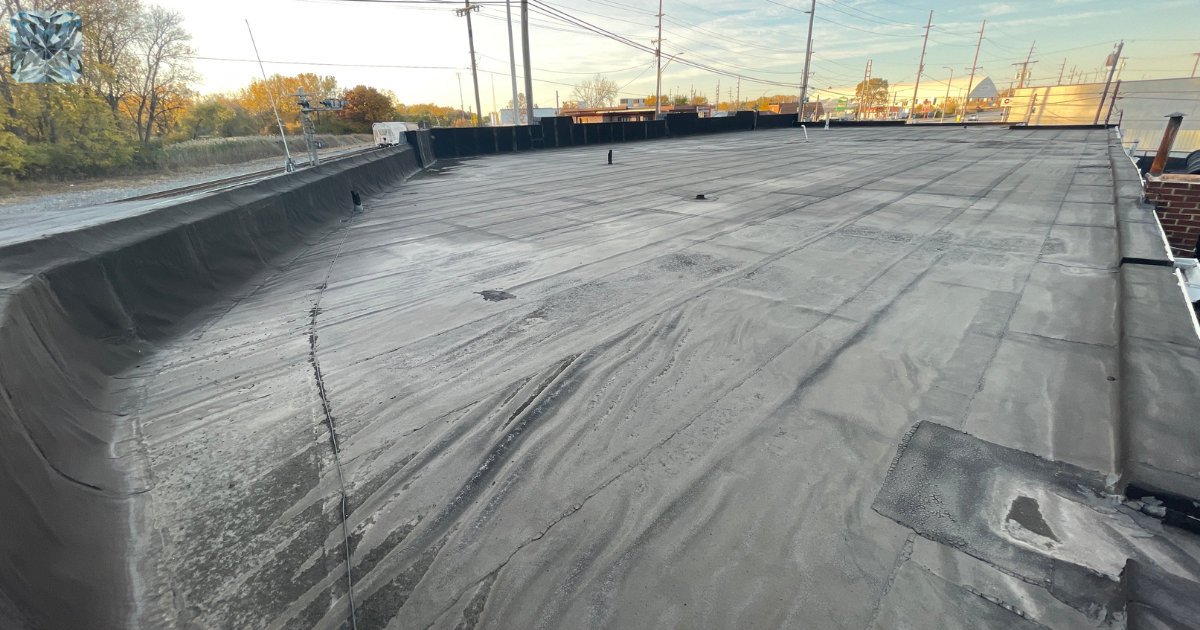
🔲 Your dark flat roof turns July into a furnace. NIPSCO bills the difference.
🔲 Conklin's high-reflectivity coating systems redirect heat before it enters your building.
🔲 Summer peak demand charges can represent 30 to 40% of your commercial electric bill.
🔲 A free evaluation tells you your membrane type, heat load estimate, and next step. NO obligation.
You Own the Building. Your Roof Is Running Your Cooling Budget.
Summer in Northwest Indiana is not subtle. It is Lake Michigan humidity sitting on top of July heat, and somewhere above your ceiling tiles, a flat roof is pulling in all of it. If that roof is dark, aged, or both, your HVAC system is fighting a battle it cannot win.
Bill is not here to learn about roofing. He is here because his facilities director handed him three quarters of higher-than-expected utility bills and nobody had a clean answer. He manages properties in Hammond. He has seen the pattern before. He just has not connected it to the roof.
That is what this article is for. Not a sales pitch. A clean explanation of what is actually happening above your drop ceiling every July, and what Conklin-certified systems do about it.
What Happens to a Dark Flat Roof in Indiana Summer
The physics are simple. A dark membrane absorbs sunlight and converts it to heat. Surface temperatures on an uncoated modified bitumen or aged plastic wrap tPo roof can reach 160 to 180 degrees Fahrenheit on a clear July afternoon in Lake County. The air inside the building does not care what your thermostat is set to. It cares what is radiating through the deck above it.
Your HVAC units are designed to manage a load. That load assumes a reasonably insulated, reasonably reflective envelope. A roof pushing 170 degrees blows that assumption apart. Your units run longer. They pull harder. And on the day they spike to peak demand, NIPSCO records that number and multiplies it across the entire billing month.
Kenny knows this pattern. He has watched the rooftop units on the east warehouse run non-stop from Memorial Day through Labor Day. He has submitted the maintenance requests. He has replaced belts, capacitors, and contactors on a schedule that does not match the equipment's expected service life. The problem is not the equipment. The problem is what is above it.
How Conklin Coating Systems Change the Equation
Conklin's acrylic elastomeric systems are engineered for reflectance. Their commercial-grade formulations are chalk-resistant, not just factory-white, but designed to maintain reflectance after seasons of weathering. That distinction matters. A coat of white paint fades and chalks within two years. A Conklin system holds its performance across a warranty period.
The documented range for reflective commercial roof coatings in Midwest climate zones runs 15 to 35 percent reduction in cooling energy load. The variance depends on the baseline membrane, insulation depth underneath, and the building's orientation. On a building with less than three inches of existing insulation under a dark membrane, common across industrial and warehouse stock in Northwest Indiana, the impact lands toward the higher end of that range.
Conklin liquid-applied coating systems are kept entirely distinct from FLEXION vinyl 300 membrane installations. They are different systems, different applications, and different project types. A coating goes over an existing substrate in sound condition. FLEXION vinyl 300 is a mechanically fastened membrane system for recovers and tear-offs. Both are Conklin. They are not interchangeable.
The right system depends on what is currently on your roof and what condition the deck is in. That starts with an honest look at the substrate, not a catalog recommendation.
✉️ Your roof is already running hot. Find out by how much.
Subject Property Address: ___________________________
Drop the address. We identify your current membrane, and send back a one-page heat load summary. Free evaluation. No obligation.
[ Email address ] → [ Send Me the Real Stuff ]
The NIPSCO Demand Charge Most Facility Managers Miss
Your NIPSCO commercial bill has two major components: energy charges for kilowatt-hours consumed, and demand charges for the highest kilowatt draw recorded during any 15-minute interval in the billing period. The demand charge is where buildings with bad roofs get punished.
One hot Wednesday afternoon in July. Your HVAC units spike trying to push cooled air against a 170-degree roof. NIPSCO records the highest 30-minute draw of the month. That single peak becomes your Billing Demand. They charge it at $20.48 per kW, applied to the entire month. It does not matter that you ran efficiently the other 30 days. One afternoon sets your demand rate for the billing period.

Nance has seen this on the utility analysis. She can pull the demand charge line on any invoice and watch it spike every Summer from June through September. What she has not had before is a physical explanation tied directly to the roof system, and a documented solution with a warranty behind it.
A high-reflectance Conklin coating system that holds its performance, Summer after Summer, prevents that afternoon spike from reaching its previous peak. The demand charge does not disappear. It drops. And on a large commercial building in Merrillville or Schererville running 20,000 or more square feet, that drop is meaningful.
What Summer Heat Does to the Membrane Itself
Heat is not just an energy story. It is also a warranty story. Every thermal cycle, heat expansion by day, contraction at night, stresses the membrane at every weak point, seam, and fastener location. Plastic wrap tPo, which was never built for the thermal movement of a dark absorptive surface, sees accelerated aging when its surface is running at 170 degrees regularly.
Modified bitumen behaves similarly. The asphalt component softens at sustained high temperatures. Granule adhesion weakens. The seams that were factory-welded or torch-applied begin to separate at the edges over time. This is not a sign of bad installation. It is what happens when you run a membrane at temperatures it was not designed to sustain long-term.
A Conklin coating system drops that surface temperature by 50 to 70 degrees depending on the baseline membrane and the formula applied. That is not a comfort statistic. That is 50 to 70 fewer degrees of thermal stress cycling into every lap, every flashing point, and every seam across the roof surface every single day of Summer.
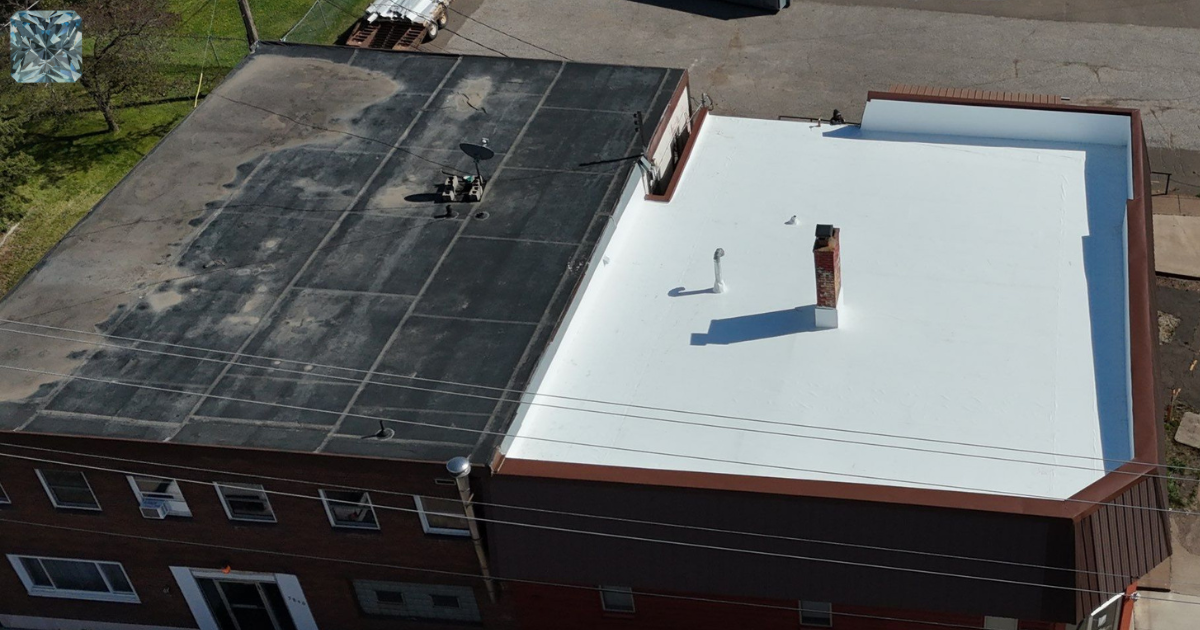
Val asked about this in a preconstruction conversation last Fall. The question was whether adding a coating over a 12-year-old modified bitumen membrane would buy meaningful life extension or just delay the inevitable. The honest answer: it depends on the substrate condition. A properly adhered membrane with no active moisture intrusion and sound seams is a candidate for coating and life extension. A saturated membrane is not. That is why the evaluation comes first.
What a Proper Summer-Ready Roof Evaluation Actually Covers
Not every contractor who walks a flat roof asks the right questions. A Summer heat evaluation for a Northwest Indiana commercial building should cover more than surface condition. It should answer what the membrane is, what the insulation depth and condition is, what the reflectance value is today, and what the demand charge exposure looks like based on current building data.
Satellite imagery gives a preliminary read on membrane type and condition. Core cuts give the ground truth on insulation depth and moisture content. Those two data points together define the project path: coating candidate, overlay candidate, or tear-off necessary. The evaluation is not a pitch. It is a diagnosis.
A building owner in Lake County or Porter County who knows what is on their roof, knows the insulation condition, and has a documented reflectance estimate has the information to make a real capital decision. Not a guess based on a contractor's recommendation. A decision based on the actual condition of the asset they own.
What Building Owners Ask Before They Call Us
Q: Does a Conklin coating work on any existing membrane?
A: It works on substrates in sound condition, no active moisture intrusion, adhered seams, and no significant delamination. Plastic wrap tPo and modified bitumen in acceptable condition are both candidates. Saturated insulation underneath disqualifies a building from coating. That is why the core cut matters before any product recommendation is made.
Q: How much will a white coating actually lower my NIPSCO bill?
A: The documented range for Midwest commercial applications is 15 to 35 percent reduction in cooling energy load. What that translates to on your specific NIPSCO invoice depends on your current membrane, insulation depth, and how aggressively the demand charge is running. A heat load estimate built from your actual building data is a more honest answer than a range.
Q: Is FLEXION vinyl 300 the same as a Conklin coating system?
A: No. FLEXION vinyl 300 is a mechanically fastened vinyl membrane system, it is a recover or tear-off application for roofs that need a new primary membrane layer. Conklin liquid-applied coating systems go over an existing membrane substrate in sound condition. Different systems, different substrates, different project profiles. Both are Conklin-certified work. They are not interchangeable.
Q: What does a commercial roof evaluation from Pristine cost?
A: The evaluation is free. We pull the satellite image, walk the surface, take core cuts where needed, and document the membrane type and insulation condition. You get a one-page summary. What you do with it is your decision.
Q: How long does a Conklin acrylic coating system last?
A: Conklin's commercial acrylic elastomeric systems are warrantied up to 20 years depending on the system specified and the substrate. Periodic maintenance washing maintains reflectance performance. A renewal application within the warranty period extends system life further. The warranty is not prorated, it covers the system for the documented period.
Q: Can coating a roof reduce my insurance premium?
A: A documented, warrantied roof system with a credentialed contractor and a warranty in file changes what your carrier sees. Buildings with unaddressed deferred maintenance and prior water intrusion claims see the steepest premium increases. A Conklin-warranted system does not guarantee a rate reduction, but it changes the conversation with your carrier meaningfully.
Q: Will the work interrupt my building operations?
A: In almost all cases, no. Coating application happens above the deck. Business operations continue below. The primary scheduling consideration is rooftop HVAC unit access. Most commercial applications are complete within three to five days depending on square footage and membrane prep required.
Q: Does energy savings from a white roof hold up in Indiana winters?
A: The Summer cooling savings are the primary driver. Indiana Winter performance depends more on the insulation layer beneath the membrane than on surface reflectance, a well-insulated deck slows heat loss in cold months. If the evaluation finds thin or saturated insulation, addressing that layer improves both Summer and Winter performance simultaneously.
Your Summer utility bills are already building. The demand charge from last July is still visible on the ledger if you know where to look. The membrane that caused it is still on the roof.
This is a solvable problem. Not a renovation project. Not a multi-year capital plan. An evaluation that tells you what you have, and a system designed to address it within a project timeline that does not shut your building down.
The address is the starting point.
✉️ Your Summer Cooling Bill Is a Roofing Problem.
Let us show you exactly what your dark roof is costing you, before Summer charges it again.
Subject Property Address: ___________________________
Free evaluation. No obligation. We pull the satellite image, assess your membrane, and send you the numbers.
[ Email address ] → [ Send Me the Real Stuff ]
Pristine Industrial Roofing — Serving commercial and industrial property owners across Lake County and Porter County.
Liquid-applied Conklin coating systems. FLEXION vinyl membranes. Proactive maintenance programs.
Valparaiso | Hammond | Portage | Merrillville | Hobart | Gary
Read other blog:


We Love Conversations
 SoHelpful@PristineIndustrialRoofing.com