
The Truck You Never Stop Paying For
The Real Cost of a Cheap Roof. A Lifecycle Cost Breakdown for Building Owners.
🔲 Price is what you pay once. Cost is what you pay for 30 years. The cheapest bid almost never wins the decade.
🔲 The system that costs more upfront often costs the least to own. Modeling beats shopping, every time.
🔲 Deferred maintenance doesn't disappear, it compounds. A small leak becomes a building envelope problem fast.
🔲 A renewable warranty means the clock never resets. No coverage gaps, no requoting cycle, no surprises.
You do not buy a truck once.
You buy it, insure it, fuel it, repair it, replace the tires, flush the transmission, and one morning hand it to a mechanic who looks at you the way mechanics do and says the number that makes you question every decision you ever made. The sticker price was the smallest part of the deal. You just did not know that when you signed.
Your commercial flat roof works exactly the same way. The crew who gave you the lowest installation bid was not saving you money. They were deferring it. Moving the invoice from the Spring you replaced the roof to the Summer your building started bleeding through the drop ceiling in Suite 4. Price is what you pay once. Cost is what you pay across the life of the asset. And on a flat commercial roof, those two numbers are almost never the same conversation.
Why the Cheapest System Wins the Bid and Loses the Decade
Flat roof systems are not interchangeable commodities, even though most building owners are sold on them as if they are. The spec sheet says "20-year warranty." The installer says "industry standard." The bid says the number you wanted to hear. What none of that tells you is the failure curve.
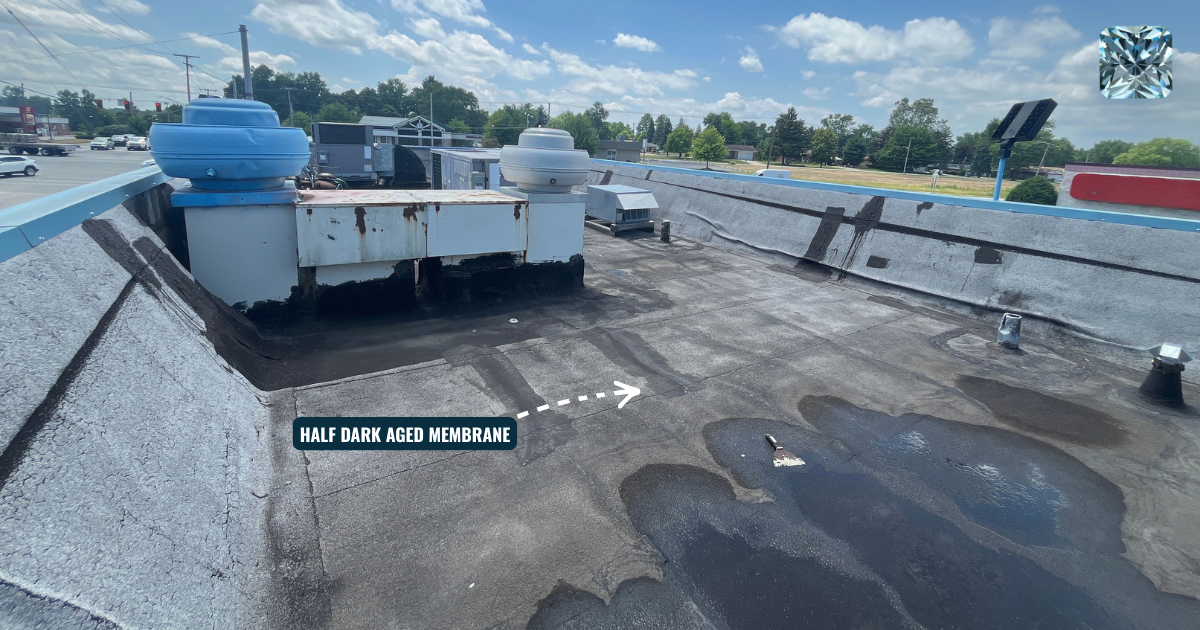
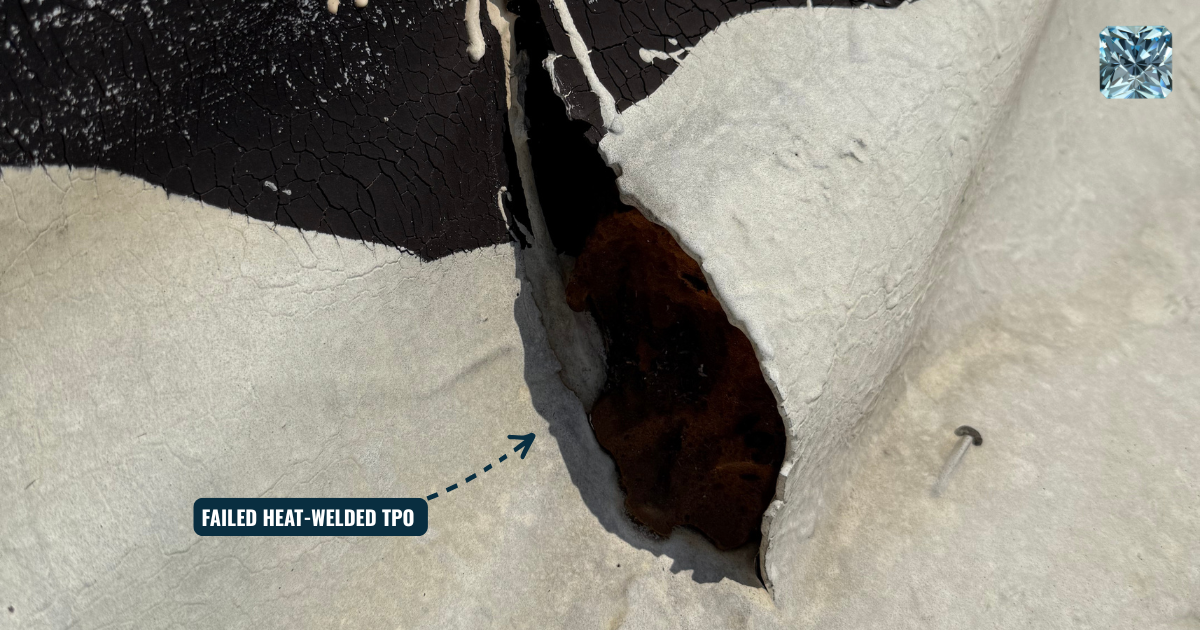
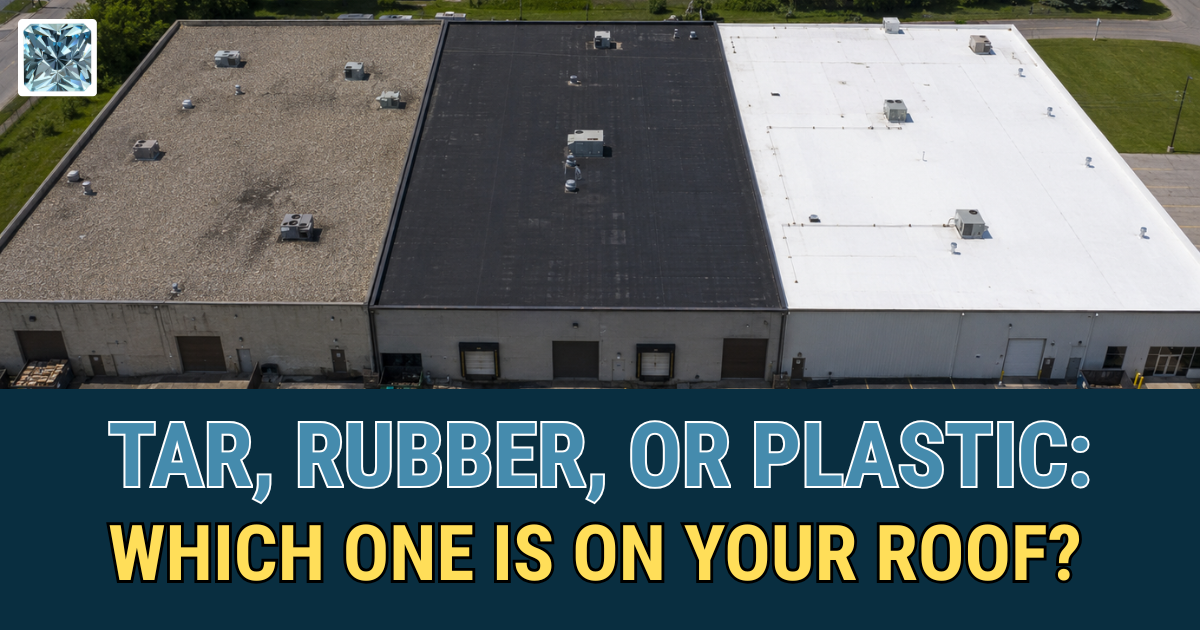
Plastic wrap tPo, for instance, is a petroleum-based single-ply membrane that degrades under UV load. It is lightweight, fast to install, and inexpensive per square foot. It is also a film. Films get brittle. Seams open. When a tPo seam opens on a low-slope roof in Northwest Indiana in March, the leak does not announce itself. It travels. By the time it shows up on the ceiling tile, it has already been sitting on the decking for longer than you want to know.
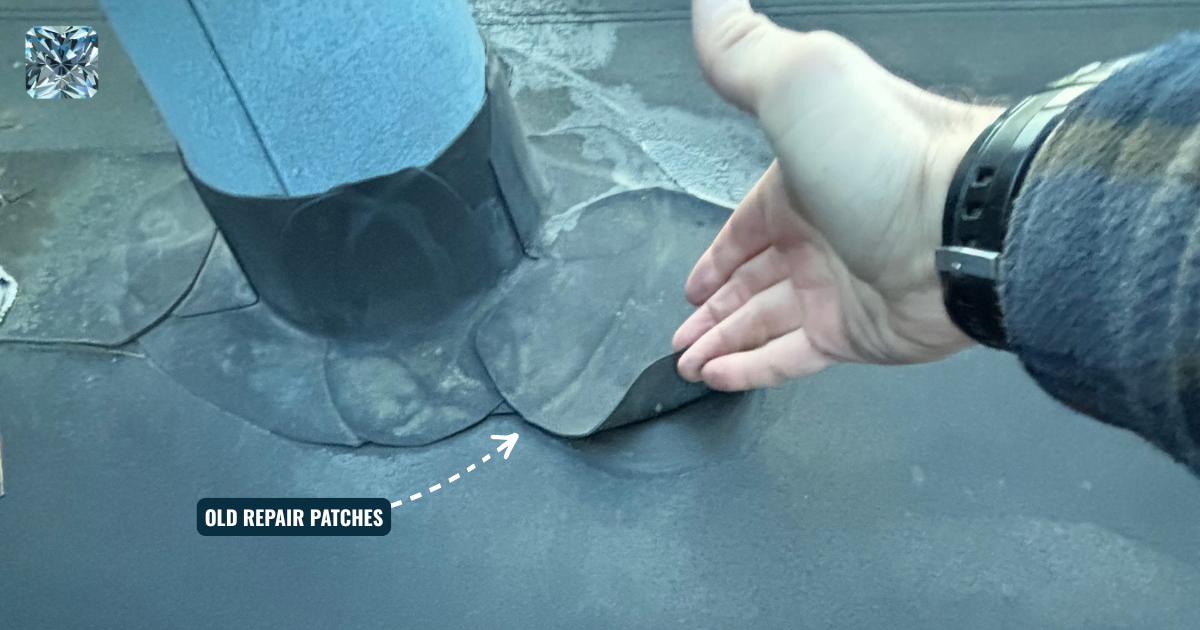
Expired rubber EPDM follows a similar arc. Adequate in controlled conditions, vulnerable at the penetrations and flashings where flat roofs always fail first. The base cost is low. The resealing, recoating, and eventual replacement cycles are not.
Neither of these systems is inherently disqualified. What disqualifies them is buying them on price without modeling the cost.
That distinction is everything.
Nance Runs the Numbers
Nance owns a 40,000-square-foot industrial building in Portage. She is not a roofing expert. She is, however, the kind of operator who does not sign anything without running the annualized math. So she ran it.
System A: Plastic wrap tPo at $6.50/sq ft installed
40,000 square feet. Total installed cost: $260,000. Manufacturer warranty: 20 years with exclusions. Realistic service interval based on regional UV exposure and ponding water: 14-16 years before membrane fatigue and seam failure become chronic. Anticipated maintenance spend over 15 years: $1,800-$2,400/year in patching, resealing, and reactive repairs. Total maintenance over 15 years: $27,000-$36,000.
At year 14, Nance is looking at a full replacement. She paid $260,000 to install. She spent roughly $32,000 maintaining it. She is now writing another check in the $280,000-$310,000 range because material and labor costs have not stayed flat. Her 30-year total: $572,000-$602,000 for a roof that was theoretically a 20-year system.
Annualized cost over 30 years: $19,067-$20,067 per year.
System B: Conklin liquid-applied restoration at $4.80/sq ft installed over existing substrate
Same 40,000-square-foot building. Total restoration cost: $192,000. No tear-off. Seamless membrane with no mechanical joints for water to infiltrate. The Conklin Benchmark warranty is renewable. When the coating reaches end of performance at year 10, a recoat at roughly $1.20-$1.60/sq ft refreshes the system and resets the warranty clock. Maintenance in years 1-10: $400-$800/year reactive spend. Recoat at year 10: $48,000-$64,000. Second recoat or additional layer at year 20: $52,000-$70,000 depending on regional labor at that time.
Nance's 30-year total: $296,000-$330,000.
Annualized cost over 30 years: $9,867-$11,000 per year.
She saved between $240,000 and $272,000 over 30 years. Not by shopping harder. By modeling differently.
That is the flip. The system that costs more per square foot to install is the system that costs less to own. The system with the lower sticker moved the invoice forward in time, then added interest.

The Deferral Tax
There is a number that applies to every commercial building owner who has ever said "we'll deal with it next year."
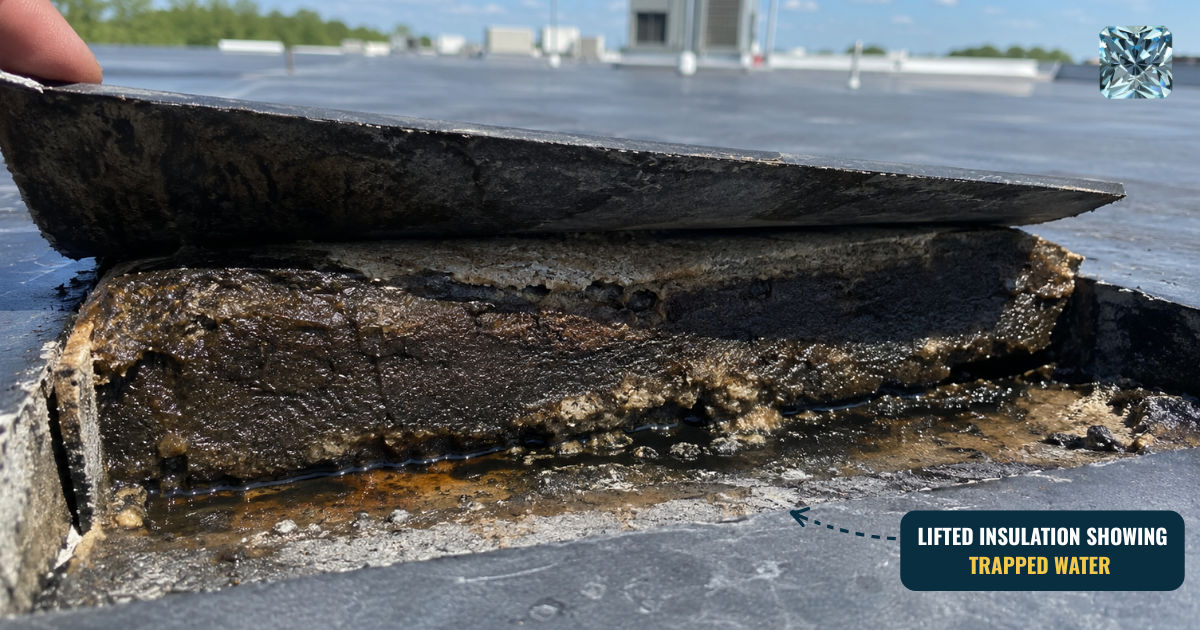
One dollar of deferred flat roof maintenance becomes four to eight dollars of downstream remediation. That is not a scare tactic. It is a moisture mechanics problem. Water that penetrates a flat roof membrane does not stay in the membrane. It moves into the insulation, where it sits and compresses the R-value. It moves into the decking, where it softens wood or corrodes steel. It moves into the structural assembly. By the time it shows up on a ceiling tile or a tenant complaint, you are no longer solving a roofing problem. You are solving a building envelope problem, and those are priced differently.
The leak you could have addressed with a $600 resealing becomes the leak that requires $4,800 in decking replacement and $2,200 in interior remediation. That math plays out across every commercial flat roof in every industrial corridor in every Midwest county where property owners treat maintenance as optional.
Deferral is not a strategy. It is a payment plan with a terrible interest rate.
What a Lifecycle Cost Analysis Actually Looks Like
A commercial roof lifecycle cost analysis is not the number on the installation quote. It is the sum of four figures across the ownership horizon: initial installed cost, annual maintenance spend, scheduled recoat or restoration intervals, and replacement timing.
Most building owners have the first number. Almost none of them have run the other three.
The variables that drive the analysis are not complicated. Substrate condition at time of installation. Slope and drainage geometry. UV and thermal cycling load in your region. Penetration count and flashing complexity. Expected occupancy and interior climate demands. None of these factors appear on a standard roofing bid, but every one of them affects the failure curve of whatever system goes on top of your building.
A Conklin-certified roofing contractor working from a flat roof restoration vs replacement cost framework runs all four numbers before they hand you a proposal. You are comparing total cost of ownership, not line-item bids. Those are different documents. One of them tells you what a roof costs. The other tells you what your building costs to protect.

You are two minutes from knowing what your specific building's lifecycle cost analysis looks like.
Not a range. Not an estimate. Your address, your square footage, your substrate, your numbers.
Call or text: (219) 529-1995 • PristineIndustrialRoofing.com • Serving Lake County, Porter County, and Southwest Michigan.
[Get a Free Commercial Roof Inspection]
Meg Forwards This Paragraph
Meg is the property manager. She is not the check-signer. But she is the one who gets called when Suite 4 has a bucket on the floor, and she is the one who forwards articles like this to the building owner with a subject line that says "read this."
So Meg, here is your paragraph.
The reason this keeps happening is not the contractor you hired. It is the framework the owner used to evaluate the bid. When the selection criteria is lowest installed price, the building selects for the system with the shortest ownership horizon and the highest long-term maintenance burden. You cannot patch your way out of a lifecycle cost problem. The building needs a conversation about what roof restoration vs replacement actually costs across a 30-year hold, not what it costs to install this Spring. Until that conversation happens, you will keep calling the contractor and the contractor will keep coming back and the number will keep growing.
Forward this. It helps.
The Renewable Warranty Is Not a Gimmick
One of the structural advantages of the Conklin liquid-applied system that does not show up on a first-read comparison is the renewable warranty architecture. Most single-ply membranes offer a fixed warranty term with non-renewable terms. At end of warranty, you are either negotiating an extension or starting a new procurement cycle. The asset clock resets. The cost resets.
Conklin's Benchmark warranty renews at recoat. The system does not expire. The manufacturer continues standing behind it because the recoat refreshes the protective chemistry. What that means in practice is that a building owner who commits to the recoat schedule never has a warranty gap. Never has a period where the roof is technically unwarranted and a hailstorm lands your adjuster in a difficult conversation with the carrier.
That renewable structure is a financial instrument as much as it is a roofing feature. It keeps the building in covered status, it keeps the maintenance cost predictable, and it keeps the owner out of the reactive spend cycle that flat roof replacement decisions usually come from.

The Materials Behind the Chemistry
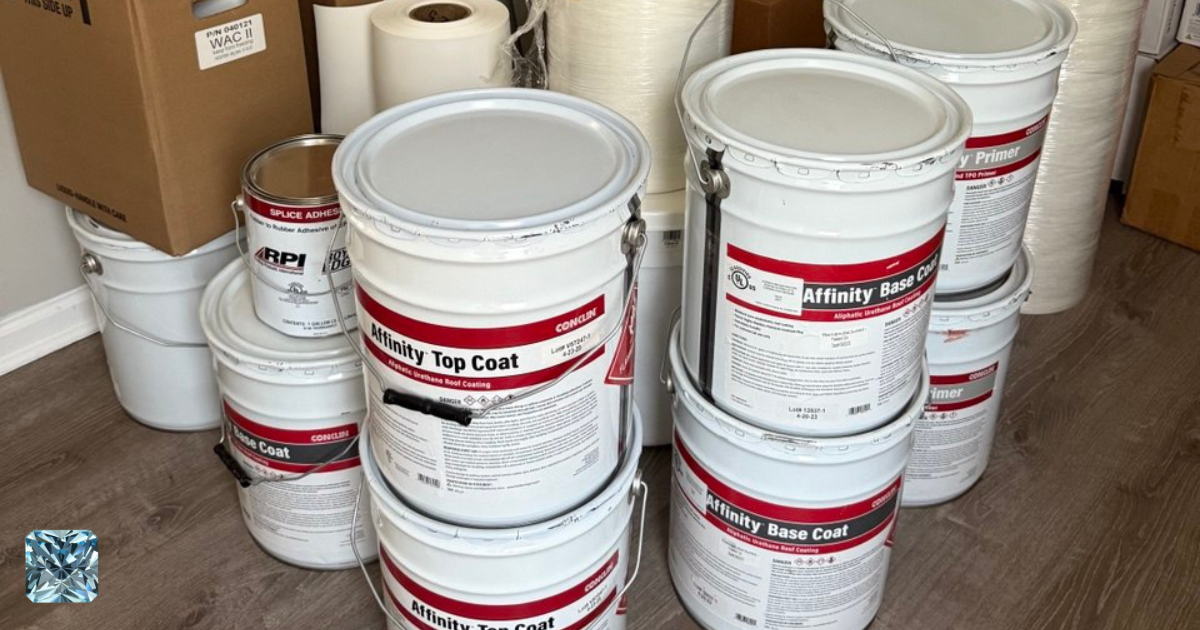
The Conklin liquid-applied systems referenced throughout this analysis are not all the same product, and understanding the difference matters before you sign anything. The full materials taxonomy, including application specifications and substrate compatibility for each system, is documented at modernroofchemistry.com/materials.
The short version is this: Conklin manufactures a product line designed for commercial flat roof applications across membrane types, substrate conditions, and regional weather profiles. The system recommended for your building depends on what is currently on it, how it is draining, and what failure mode you are trying to address. A Conklin-certified contractor matches system to substrate. That is not sales language. It is chemistry.
If you have tPo on your building and it is five years old and performing, a restoration at year seven or eight preserves the membrane and extends the system without a tear-off. If you have expired rubber EPDM that has been repeatedly patched and is losing adhesion at the flashings, the restoration protocol is different. The math is always specific to the building. That is why the lifecycle cost analysis starts with an address.
The Number That Changes the Conversation
The building owner who runs the flat roof lifecycle cost analysis almost never makes the same decision the building owner who only reads bids makes. Not because the information is hidden. Because nobody told them to ask for it.
You have owned your building for years. You have replaced or repaired the roof at least once. You have probably deferred something in the last 24 months because the bid came in at a number that was not in the budget. You know what reactive roof spend feels like. You know what a tenant complaint about a ceiling stain costs in lease renewal leverage.
The question is whether the next roofing decision is going to be made on price or on cost. Those are different decisions. They produce different outcomes. And over the next 30 years of building ownership, they produce different total numbers by a margin that is, in Nance's case, well over a quarter of a million dollars.
The truck you never stop paying for is the one you bought on sticker price. The roof you never stop paying for is the one you selected on installation bid.
You have the address. Run the numbers.
One field. Your address starts a lifecycle cost conversation that most building owners never have until after the expensive decision is already made. Get there first.
Call or text: (219) 529-1995 • PristineIndustrialRoofing.com • Serving Lake County, Porter County, and Southwest Michigan.
[Get a Free Commercial Roof Inspection]
Modern Roof Chemistry publishes technical roofing content for commercial building owners, property managers, and real estate operators in Northwest Indiana and beyond. For the complete Conklin system materials library, visit modernroofchemistry.com/materials.
Read other blog:


We Love Conversations
 SoHelpful@PristineIndustrialRoofing.com