
Density Beats Thickness: The Complete Guide to Commercial Roof Insulation
Atlas ACFoam polyiso, R-values by thickness, the divorce board concept, and why using the right insulation eliminates the need for a cover board, saving thousands per project.

🔲 Higher-density insulation performs better and can eliminate the need for a cover board.
🔲 Atlas ACFoam acts as insulation, separation layer, and support, reducing layers and labor.
🔲 Only approved Atlas insulation keeps the Conklin NDL warranty valid.
🔲 Proper layering and drainage systems cut long-term costs and prevent failures.
Most building owners think about insulation in one dimension: thickness. Thicker equals better, right? More R-value, more energy savings, done.
Not exactly. In commercial flat roofing, density matters more than thickness. The right insulation at the right density can eliminate an entire layer from your roof assembly, shorten your fasteners, reduce labor cost, and deliver better thermal performance than a thicker board of inferior material.
The Atlas ACFoam Product Family
ACFoam-II: Closed-cell polyiso with fiber-reinforced organic felt facers. The workhorse for single-ply, BUR, and modified bitumen systems. Available in 4x8 and 4x4 sheets.
ACFoam-III: Closed-cell polyiso with inorganic coated glass facers. Greater dimensional stability than ACFoam-II.
ACFoam-IV: Extra-heavy coated glass facers for hurricane zones. Removes cover board requirements in FM-approved corner and perimeter zones.
ACFoam-HD CoverBoard: Ultra-high-density (80–110 PSI) at 0.5-inch thickness. Protective layer, not primary insulation. Adds R-2.5.

Why we publish pricing: We do not hide wholesale material costs. We believe building owners deserve to understand what goes into their roof and what it actually costs. Our value comes from engineering expertise, certified installation, and a warranty that means something. Not from marking up materials in the dark.
The Divorce Board: Why You Cannot Just Layer Materials
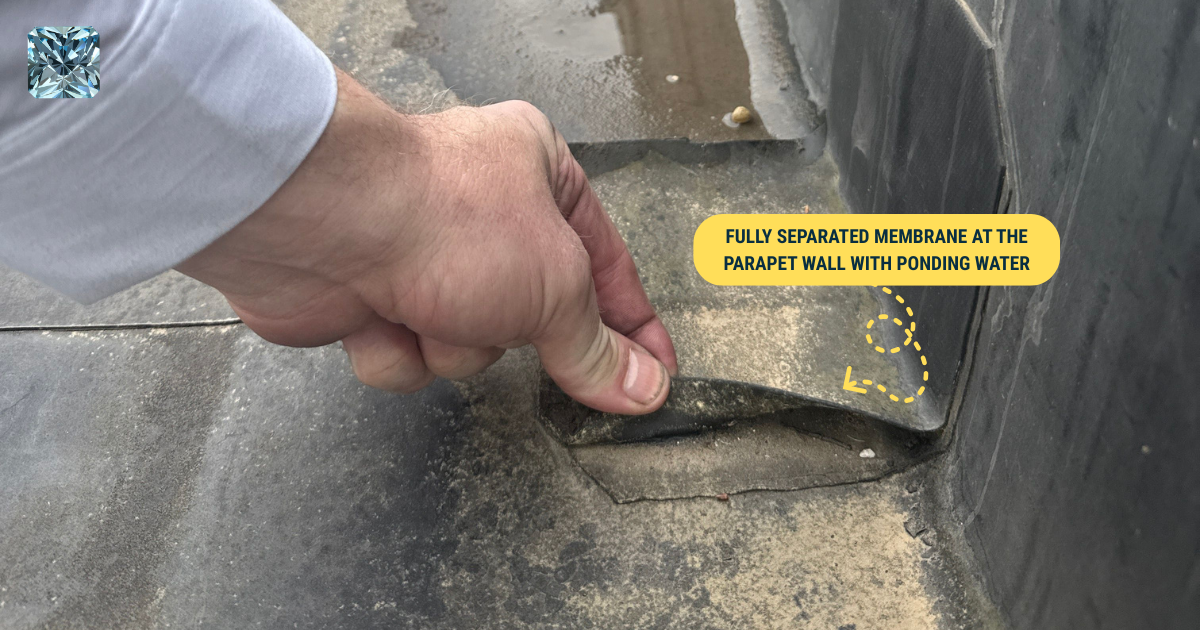
You cannot simply lay PVC membrane directly on top of certain existing roof surfaces. Old built-up tar, modified bitumen, and expired rubber membranes contain chemicals that react with PVC plasticizers, causing accelerated degradation. Atlas polyiso insulation serves as the separation barrier, preventing chemical interaction while adding R-value and structural rigidity.
The layer count matters. Building codes allow a maximum of two roof systems. Old tar-and-gravel at the bottom counts as layer one. You can add one layer over it with proper separation. Two layers already? Tear-off becomes mandatory.
Why Density Eliminates the Cover Board: Many systems require a separate cover board ($0.50 to $1.25/sqft for DensDeck). Atlas ACFoam at 20 to 25 PSI is rigid enough to serve as both insulation and walking surface, eliminating an entire layer. That saves material cost, labor time, fastener length, and total roof weight. Cheaper, fluffier foam from local suppliers compresses under foot traffic, requires a cover board, and ends up costing more in total.
Tapered Systems for Drainage
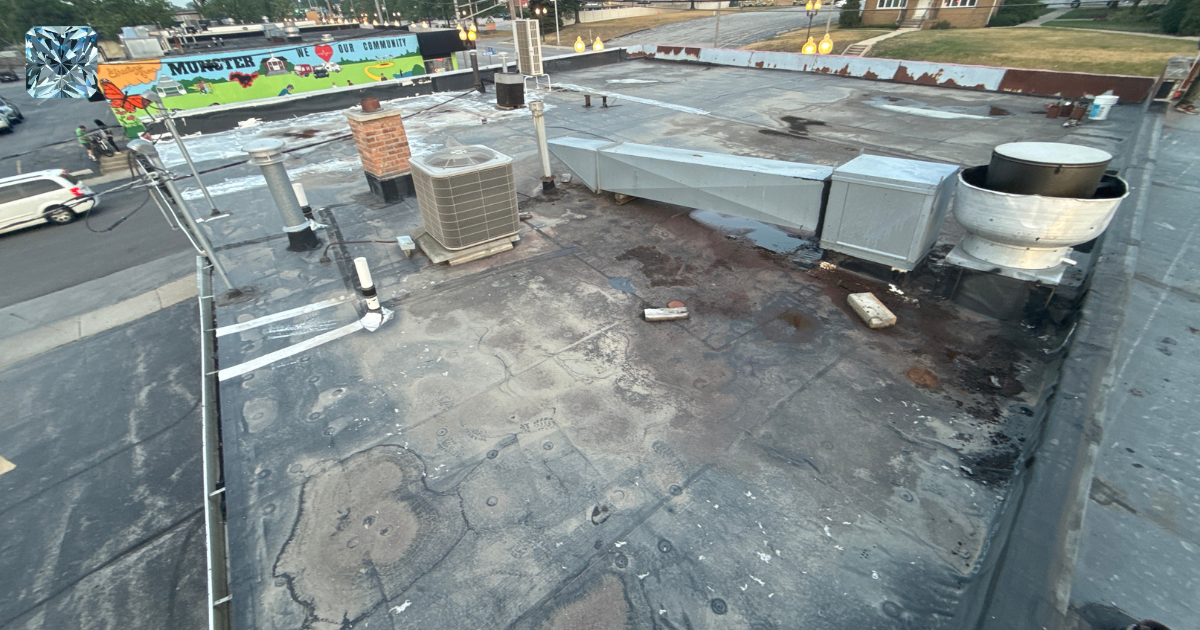
Flat roofs should not be truly flat. Positive drainage is achieved with tapered polyiso boards that create slope toward drains or scuppers. Atlas offers AC-II Tapered panels in 4x4 sheets with slope options of 1/8", 1/4", and 1/2" per foot. Material runs $2.50 to $4.50/sqft for typical commercial systems.
Atlas provides free tapered design engineering when you purchase through their channel, submit roof dimensions and drain locations, and their design team returns shop drawings with every panel numbered for installation sequence.

✉️ Not sure what your roof is sitting on right now?
That is exactly the question worth asking before the next repair bill answers it for you.
Subject Property Address: ___________________________
Drop the address. FREE evaluation. No sales pitch. No pressure. No obligation.
[ Email address ] → [ Send Me the Real Stuff ]
EPS Flute Fill for Metal Decks
Metal deck roofs have corrugated flutes that create air gaps under the insulation. Atlas Molded Products manufactures ThermalStar EPS Flute Fill, custom CNC hot-wire cut to match your exact deck profile. No generic sizing. Lead time is 6 to 10 weeks, so this must be ordered early.
The Conklin-Atlas Partnership: No Substitutions
The Conklin NDL warranty is explicit: insulation other than approved Atlas products is a warranty exclusion. Using Johns Manville, GAF, Carlisle, or Elevate polyiso, regardless of equivalent quality, voids warranty eligibility. This is not a recommendation. It is a requirement.
When your contractor says they can save money sourcing insulation from a local supplier, they are saving you money on the board and costing you your warranty. That is not savings. That is gambling.

Standards, Specs, and Truth
Q: What is the minimum insulation required for a Conklin recover?
1.5 inches of Atlas polyiso, delivering approximately R-8.6. This is both a thermal upgrade and the separation layer (divorce board) between old and new roof materials.
Q: What is the difference between ACFoam-II and ACFoam-III?
ACFoam-II has organic felt facers, ACFoam-III has inorganic coated glass facers for greater dimensional stability. Both deliver the same R-value per inch. ACFoam-III is the preferred choice when maximum dimensional stability matters.
Q: Can I use cheaper insulation from a local supplier?
You can install it, but you will void your Conklin NDL warranty. Atlas insulation sourced through Conklin’s supply chain is the only warranty-eligible option. The markup over open-market pricing is effectively a warranty premium.
Q: How many layers of insulation should I install?
Typically 1 to 4 layers of 1.5-inch polyiso. One layer (R-8.6) is the minimum. Two layers (R-19.2) is the standard recommendation for most commercial buildings. Four layers (R-38.4) qualifies for energy rebates and represents the practical maximum before diminishing returns.
Q: What is Grade 2 vs Grade 3 polyiso?
Grade 2 is standard 20 PSI compressive strength. Grade 3 is 25 PSI, denser and more rigid, with a 15 to 25% cost premium. Grade 3 is worth it for high-traffic roofs or heavy-equipment areas. For standard applications, Grade 2 performs excellently.
Q: What about the new Carlisle ThermaThin 7 at R-7/inch?
It is real, announced at IRE 2026, targeting summer 2026 availability. However, it is a Carlisle product, not Atlas, so it would not qualify for the Conklin warranty. For Conklin-certified systems, Atlas ACFoam remains the required insulation.
✉️ Ready to understand your insulation options?
Let us take a look at that one property, you know the one.
Subject Property Address: ___________________________
Drop the address. FREE evaluation. No sales pitch. No pressure. No obligation.
[ Email address ] → [ Send Me the Real Stuff ]
READY TO UNDERSTAND YOUR INSULATION OPTIONS?
Free evaluation. Real numbers. No surprises.
(219) 529-1995 | ModernRoofChemistry.com
A Gospel Business | Community Outreach & Worldwide Missions
Read other blog:


We Love Conversations
 SoHelpful@PristineIndustrialRoofing.com