
What Actually Goes on a Flat Roof And What Doesn’t
Kenny’s Don’t-Buy List, the Scott Story, and Why Your Only Real Decision Is Vinyl or Acrylic.
🔲 Cheap fixes create expensive lock-ins. Kenny’s “don’t-buy list” shows that common materials like silicone, spray foam, tar, EPDM, TPO, and especially silver coatings often lead to long-term problems. They either fail quickly or limit future repair options, turning short-term savings into long-term costs.
🔲 The “silver spray” is the biggest trap. Aluminum coatings may look like a quick win, but they prevent proper adhesion of future systems. Once applied, your choices shrink to costly tear-offs or complex overlays, making it one of the most expensive mistakes.
🔲 Bad installs cost more than no install. Scott’s restaurant proves that poor engineering (bad drainage, wrong materials, thin insulation) leads to repeated failures. The lesson: a cheap roof done wrong is worse than waiting to do it right.
🔲 Only two real solutions remain. After eliminating flawed options, the decision comes down to,
- Acrylic liquid-applied systems (seamless, recoatable, long-term)
- Vinyl membrane overlays (engineered, insulated, no tear-off)
Both require professional installation and are designed for durability and lifecycle value.
A Quick Recap from Part 1
Three people. One building. Zero alignment.
In Part 1, we met the triangle: Bill the Owner with his appetite for offense, Nance the Finance Gatekeeper with her instinct to defer, and Kenny the Maintenance Realist who’s been patching the same roof with hardware store materials for years.
The philosophy was simple, defend the castle before you fund the conquest. Your building is the mothership. Protect it first. Everything else follows.
Now comes the practical question. Kenny’s been up there. He’s tried the quick fixes. He’s watched them fail. So what actually works?
Let him tell you.
Kenny’s Don’t-Buy List
He’s earned this the hard way. Every item on here cost somebody real money.
Kenny has made mistakes. He’ll tell you that himself. He’s tried tar patches and watched them peel within two seasons. He’s applied products from the hardware store that dried out before the first winter was over. He’s learned, through failure, what doesn’t belong on a commercial flat roof.
Here’s his list. If you’re shopping for roofing materials, cross these off before you go any further.
❌ Silicone. Can’t be recoated with anything but more silicone. Traps you in a cycle.
❌ Spray foam. Fragile, vulnerable to bird damage and UV, maintenance nightmare.
❌ Tar / torch-down strips. Outdated chemistry. Cracks, dries, doesn’t reflect heat.
❌ Rubber (EPDM). Going backward. Seams fail. Ages poorly under UV.
❌ Plastic (TPO). Heat-welded seams weaken over time. Not the future.
❌ Silver reflective spray. The trap. Looks good for a year. Seals out every future option.
That last one deserves its own conversation.
The Silver Spray Trap
It sounds smart. It looks clean. And it locks you in.
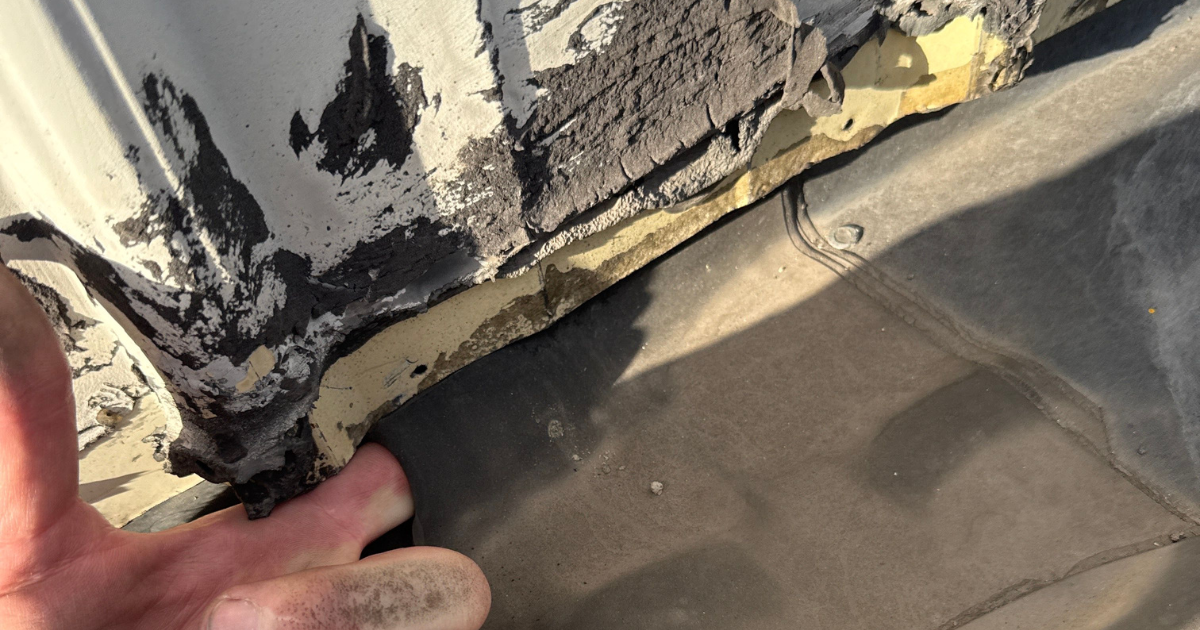
Here’s what happens. A crew shows up and tells you they can solve two problems at once: seal the roof and reflect the sun. All they have to do is spray a layer of aluminized coating over whatever’s already up there. Cheap. Fast. Shiny.
And it’s partially true. A silver reflective layer does bounce some solar energy. But what they don’t tell you is that once that aluminized paint cures, nothing will properly adhere to it again. You can’t put a quality acrylic coating over it. You can’t bond a new membrane to it. You’ve essentially painted yourself into a corner on a roof you can’t see from the parking lot.
Now your only options are: tear the whole thing off and start fresh, or go over the top with a completely new layer, new insulation, new membrane, fastened mechanically because the chemistry can’t bond to what’s underneath.
It’s the roofing equivalent of putting nail polish over a cracked foundation. It looks handled. It isn’t.
“Once you spray silver slop on top, your future options go from five to two. And both of them cost more than the one you skipped.”
Scott’s Restaurant, A Real Story About Real Money
Beautiful place. Great food. Twenty-year-old number stuck in his head.
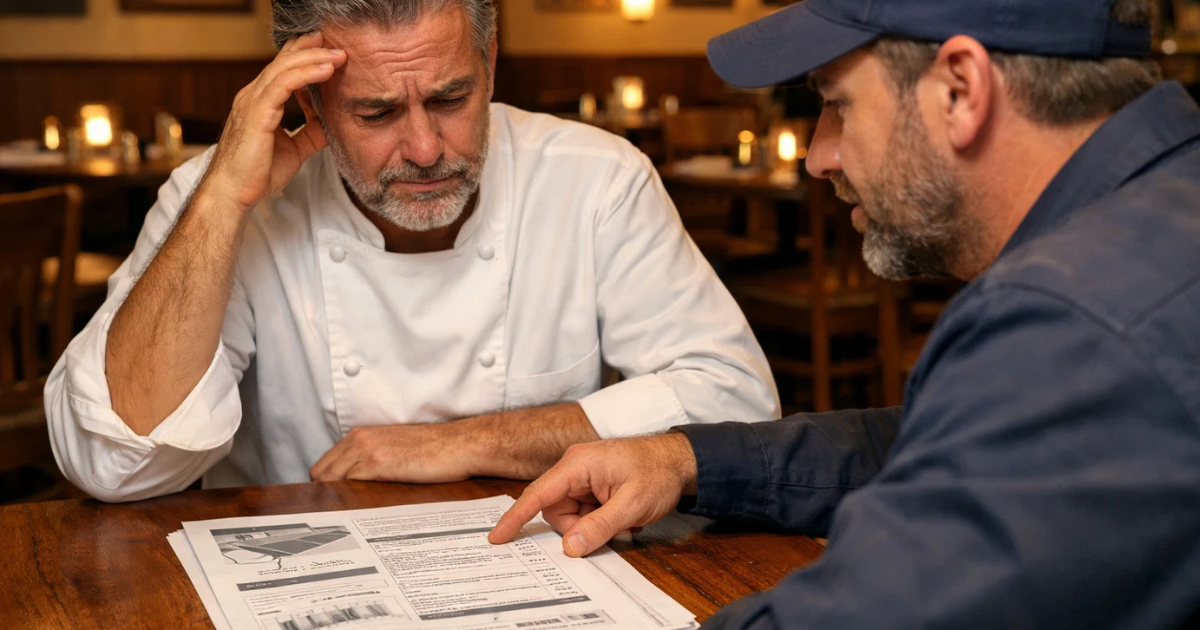
Scott runs a restaurant in the region. It’s a genuinely beautiful spot, the kind of place where the food is excellent and the owner cares about every detail.
Except one.
Scott’s had the roof redone four times over the years. The most he ever paid was $25,000, and that was more than 20 years ago for a total tear-off and full replacement on a relatively small roof. In a completely different economy.
Here’s what went wrong with that $25,000 job,
The engineering was off. The insulation was thin and it wasn’t properly scalloped. Water planning, getting the liquid from the corners to the drains, is straightforward engineering, and whoever installed it didn’t get it right. So the water didn’t flow. It sat.
The surface was torch-down strips. That’s not modern chemistry. That’s a product from a different era that cracks, dries, and doesn’t reflect heat. It served its 20 years, barely.
Then someone sprayed it with silver. Which sealed out every option for a quality recoat down the road. Now nothing bonds to the surface properly.
So when we sat down with Scott and quoted $50,000 to do the roof right, proper tapered ISO insulation to re-engineer the water flow, rigid walkable insulation boards over the silver cap, and a professional liquid-applied acrylic coating edge to edge, he pushed back hard.
“I’ve never paid more than $25,000 for a roof. I can’t do $50,000.”
And we said, "But Scott, it’s 2026 now."
We can’t run the government. We can’t control the economy. A dollar twenty years ago doesn’t buy what it buys today. More importantly, that $25,000 roof was installed wrong. The engineering was wrong. The surface material was wrong. And the silver spray sealed the mistake in place. You’re not comparing apples to apples. You’re comparing a cheap job from a different era to a correct job in the current economy.
We could do a cheaper job. But we have a conscience. And a cheaper job means we’re just adding more burden to a roof that’s already been done wrong three times. We’d rather show you what right looks like,
Right looks like tapered ISO insulation that actually moves water to the drains instead of letting it pond in crushed valleys.
Right looks like a seamless, edge-to-edge acrylic coating that can be recoated in 20 to 25 years with just a fresh topcoat, no tear-off, no dumpsters.
Right looks like preventative maintenance where we’re on that roof twice a year, touching up the perimeter, sealing around every pipe and unit, keeping the whole system tight.
Right looks like a white, seamless bathtub sitting on top of your building. Watertight. Reflective. Forward-thinking.
“We could do a cheaper job. But we have a conscience. And you’ve already seen what cheap looks like after 20 years.”
So What’s Left? Two Real Choices.
Kenny crossed everything else off the list. Here’s what survived.
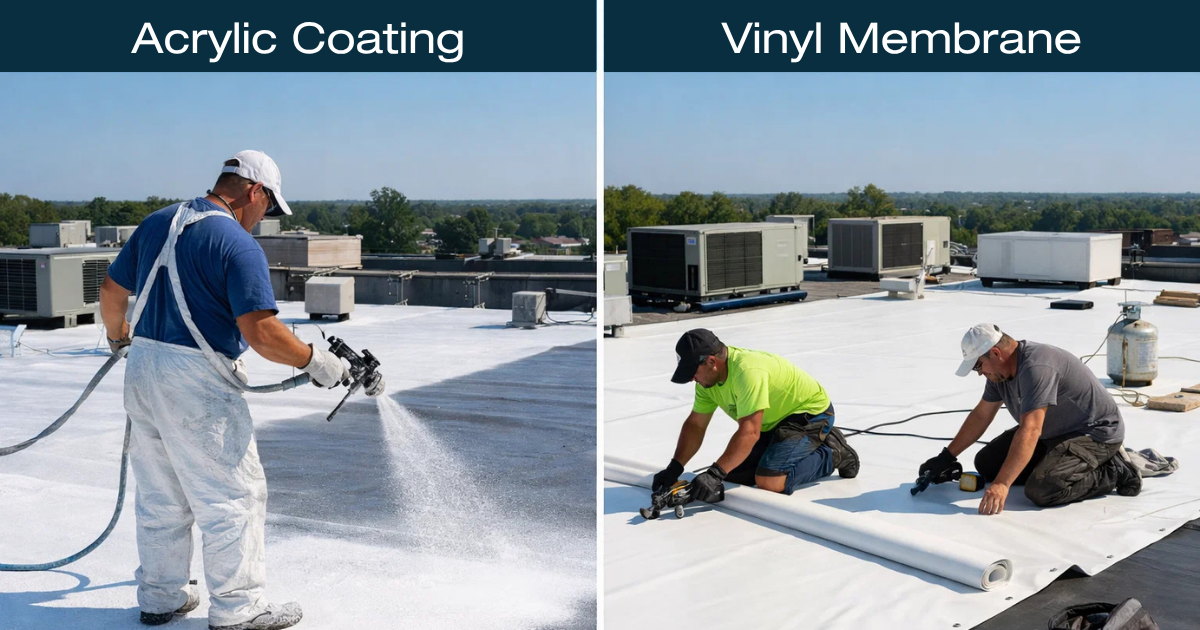
Once you eliminate silicone, foam, tar, rubber, plastic, and silver spray, you’re left with two categories of commercial flat roof systems that are actually worth investing in.
✅ Acrylic Liquid-Applied Coating (Conklin Rapid Roof III or Affinity Urethane)
✅ Solid Vinyl Membrane (FLEXION 2.0 over ISO Polyisocyanurate Insulation)
That’s it. That’s the whole decision. Vinyl or acrylic. And both require a professional installation, not Kenny, not a handyman, not a general contractor who “also does roofs.”
Acrylic: The Seamless Recoatable System
Edge to edge. Brilliant white. Recoatable for decades.

A Conklin-based acrylic coating goes on as a liquid and cures into a seamless, monolithic membrane. No seams to fail. No fasteners to back out. The entire roof becomes one continuous surface, that white bathtub look, from edge to edge.
The beauty of acrylic is the long game. When the coating reaches the end of its cycle in 20 to 25 years, you don’t tear it off. You clean it, prep it, and apply a fresh topcoat. The substrate stays. The insulation stays. You’re renewing the skin, not replacing the body.
It’s also why chemistry matters. Acrylic bonds to the right substrates. It won’t bond to silver paint. It won’t bond to silicone. It plays well with its own family. That’s why the first install matters, it sets the foundation for every future recoat.
Vinyl: The Engineered Overlay System
When you need structure, insulation, and a fresh membrane in one move.
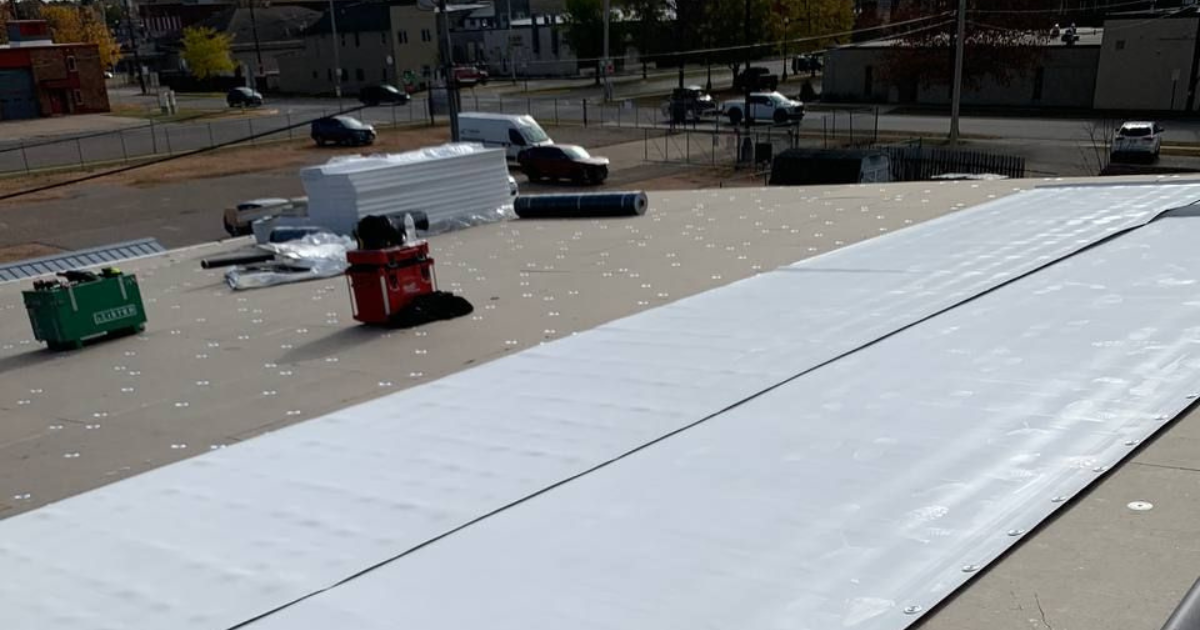
FLEXION 2.0 is a solid vinyl membrane that comes in 6-foot by 100-foot rolls and gets mechanically fastened over ISO polyisocyanurate insulation boards. This is not a coating. This is an entirely new roof layer that goes over what’s already there.
The overlay approach means no tear-off. No dumpsters. No demolition labor. You’re building up, not ripping out. And because you’re adding rigid insulation underneath, you’re re-engineering the thermal performance of the building at the same time. Your R-value goes up. Your NIPSCO bill comes down. The roof gets a fresh slope if tapered ISO is specified.
Important: FLEXION is a solid membrane system. It is not interchangeable with liquid coatings. These are two different solutions for two different situations. A professional assessment determines which one your building needs.
What This Means for the Triangle
Bill gets confidence. Nance gets a number she can plan around. Kenny gets relief.
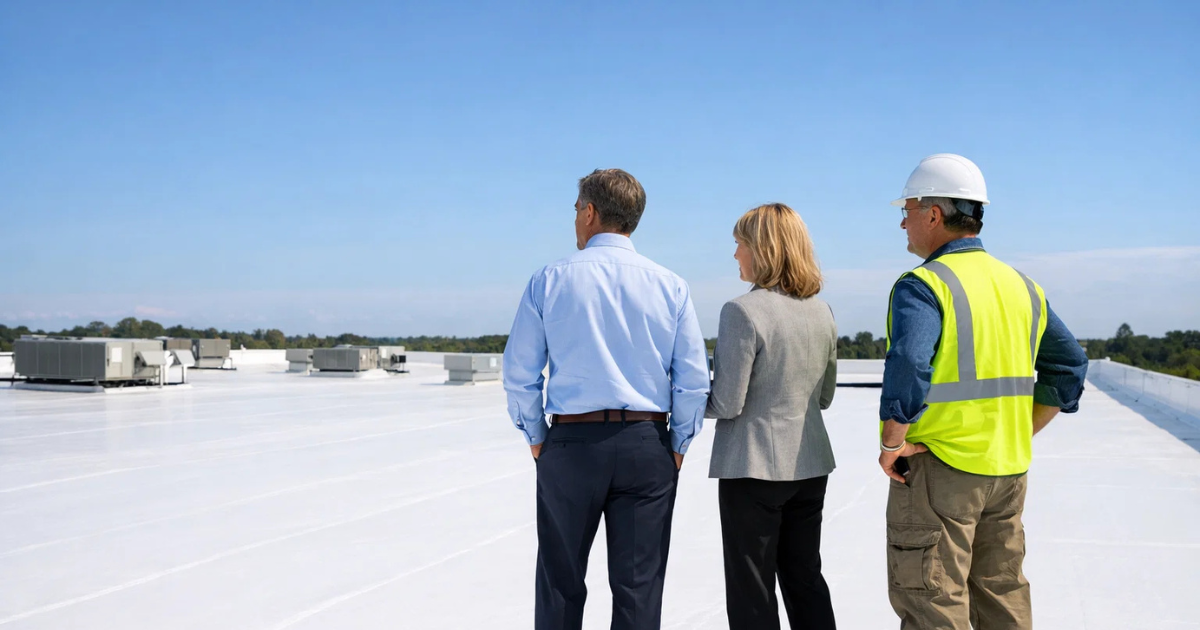
For Bill: You’re not throwing money into a hole. You’re making a capital investment that stabilizes your most important asset, reduces your operating costs, and gives you a 20-to-25-year runway before you have to think about this again. That’s not defense for defense’s sake. That’s offense built on a solid foundation.
For Nance: The compounding math finally has a stop date. Instead of watching repair costs escalate year over year with no end in sight, you’re locking in a known number that includes a warranty, a maintenance schedule, and a clear lifecycle. This is the kind of CapEx that actually protects your reserves.
For Kenny: You did your part. You held it together longer than most people could have. Now the pros are coming in with the right chemistry, the right engineering, and the right warranty. You’re not being replaced. You’re being supported.
“Kenny’s not being replaced. He’s being supported. There’s a difference.”
Coming Next: How to Fund the Fix Without Gutting the Reserves
Nance doesn’t have to save for seven years. There are better paths.
In Part 3, we’re talking money. Real money. Nance wants to know how this gets paid for without gutting the reserves, and we’ve got answers. Creative funding structures. Phased approaches. The math on what the roof is already costing you versus what the restoration will save. And the conversation that finally brings Bill, Nance, and Kenny to the same table with the same plan.
Because the goal was never to sell you a roof. The goal was to start a conversation.
✉️ Ready to see what’s actually up there?
We’ll get on the roof with you. We’ll tell you what we see. And we’ll give you the straight truth about whether you need a coating, an overlay, or just a solid maintenance plan.
RelationshipRoofing.com — Because this starts with a conversation.
ModernRoofChemistry.com — Because the materials matter.
Pristine Industrial Roofing — Serving commercial and industrial property owners across Lake County and Porter County.
Liquid-applied Conklin coating systems. FLEXION vinyl membranes. Proactive maintenance programs.
Read other blog:
We Love Conversations
 SoHelpful@PristineIndustrialRoofing.com