
Identifying Mold vs. Mildew Under Your Commercial Flat Roof
What Building Owners Need to Know Before It Becomes a Legal Problem.

🔲 Mold = high risk; mildew = minor issue. Mold damages materials and health. Mildew is mostly surface-level.
🔲 Roof leaks cause hidden moisture. Flat roof failures let water in long before you see it.
🔲 Fix the roof, not just the mold. Cleaning alone won’t stop it from coming back.
🔲 Act early to avoid big costs. Delays lead to expensive remediation and legal risk.
If you own or manage a commercial building with a flat roof, moisture intrusion is not a matter of if but when. And when water gets past your roof membrane, what grows in the dark spaces above your ceiling tiles and inside your wall cavities can become far more expensive than the roof repair itself.
Mold and mildew are two different organisms with very different consequences for your building, your tenants, and your liability exposure. Understanding the difference is the first step toward protecting your investment. This guide walks building owners through identification, risk assessment, and the connection between your flat roof and the air your tenants breathe.
Mold vs. Mildew: The Basics
Both mold and mildew are fungi that thrive in damp, warm environments. But they behave differently, look different, and present very different risk profiles for commercial property owners. According to the EPA, controlling moisture is the single most effective way to prevent both.
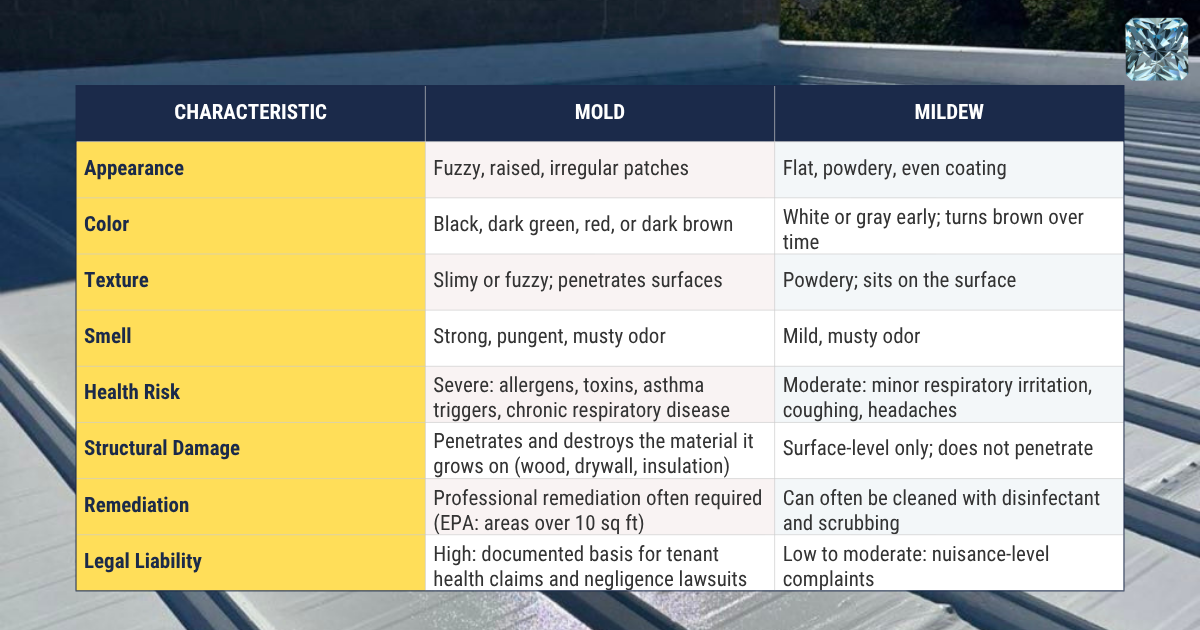
How to Tell If Your Building Has a Problem
NIOSH (the National Institute for Occupational Safety and Health) has found that addressing the source of dampness is more effective at preventing health problems than testing for specific microbes. That said, building owners and facility managers should know the warning signs.
Visual Indicators
- Dark staining on ceiling tiles, especially near HVAC vents, drains, or roof-mounted equipment
- Discoloration or warping on drywall or interior walls below the roofline
- Visible fungal growth in any color (black, green, white, gray, brown) on walls, ceilings, or exposed structural members
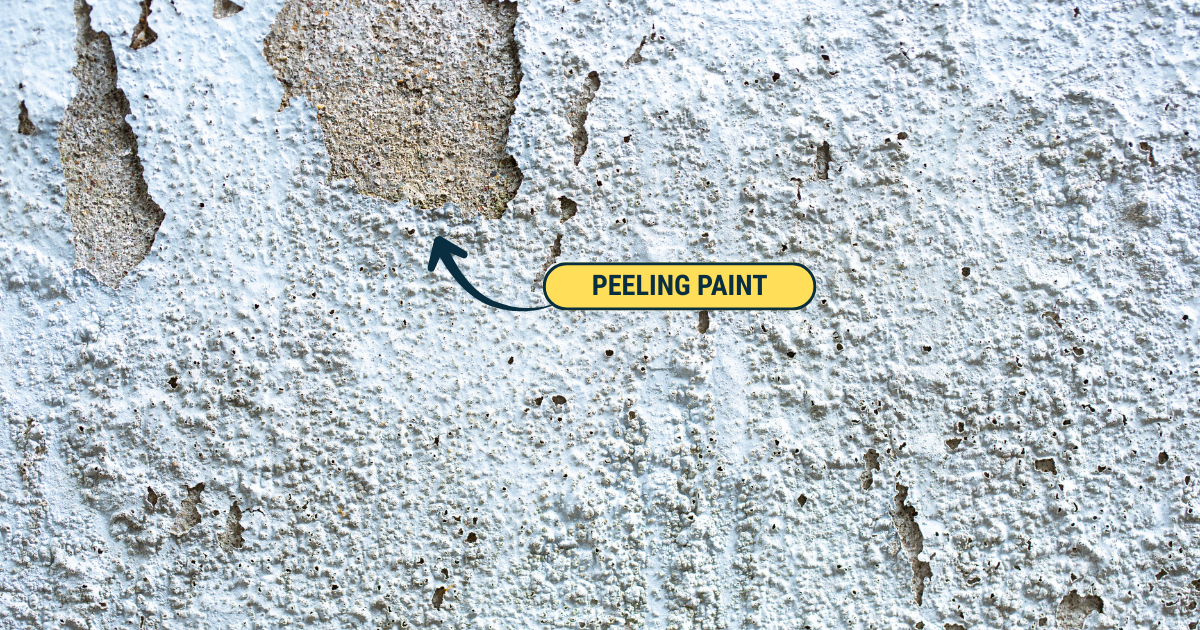
- Peeling or bubbling paint, which often signals moisture trapped behind the surface

Smell Indicators
A persistent musty or earthy smell in specific areas of the building, especially near the roofline, in storage rooms, or around HVAC equipment — is one of the most reliable indicators of hidden mold growth. If tenants or employees report the smell intermittently (worse on humid days, better on dry days), that pattern strongly suggests moisture intrusion tied to roof membrane performance.
The Bleach Test
A simple field test: apply a drop of household bleach to the stained area. If the stain lightens within one to two minutes, you are likely looking at mold or mildew. If the stain does not react, it may be dirt or a structural stain. This test does not replace professional assessment, but it gives building owners a fast first read.
The Flat Roof Connection: Where It All Starts
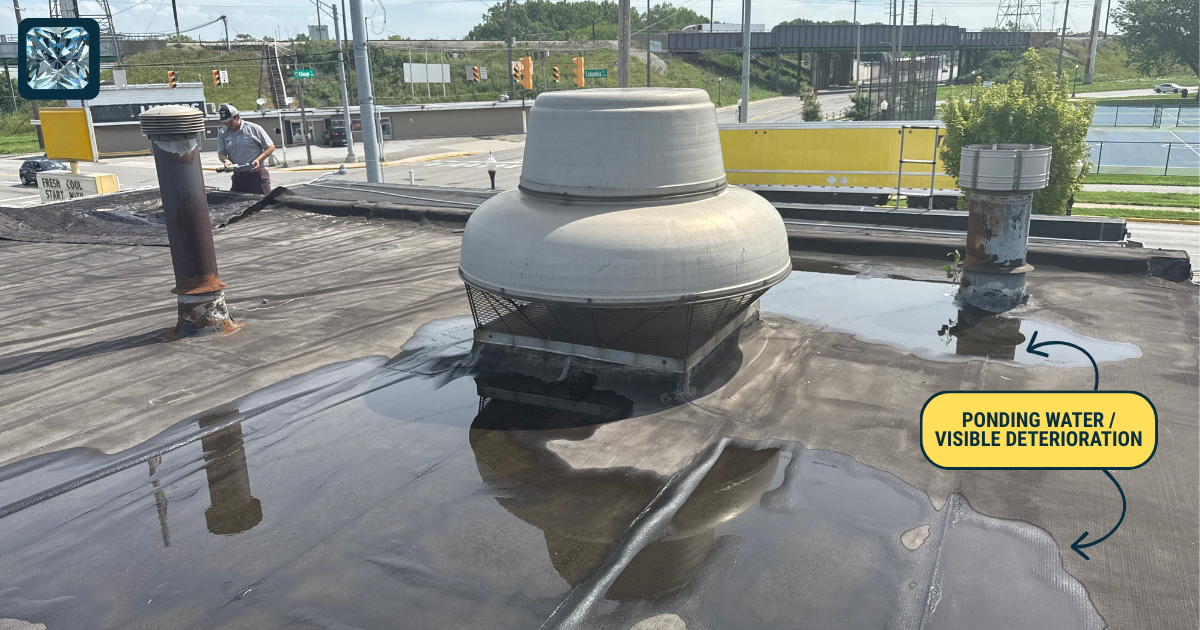
In commercial buildings with flat roofs, the roof membrane is the primary barrier between exterior moisture and interior air quality. When that membrane fails, whether from age, foot traffic damage, thermal cycling, or ponding water, moisture enters the building assembly in three stages
Stage 1: Insulation Saturation. Water penetrates the membrane and saturates the rigid insulation board below. Wet insulation loses its thermal performance (your NIPSCO bill climbs) and becomes a perfect incubator for mold growth. You cannot see this from inside the building.
Stage 2: Deck and Structure. Prolonged saturation reaches the roof deck (steel, wood, or concrete). In steel-deck buildings, this leads to corrosion. In wood-deck buildings, this leads to rot and structural mold colonies.
Stage 3: Interior Manifestation. Moisture works its way through the ceiling assembly into the occupied space. Ceiling tiles stain. Drywall softens. HVAC ductwork carries mold spores throughout the building. By this stage, tenants are breathing it.
This is why facility managers who only treat interior mold without addressing the roof are fighting a losing battle. The mold will return as long as the moisture source, the failing roof, remains active. A professional commercial roof inspection can identify the membrane failures feeding the problem.
Health Risks and Liability Exposure
The EPA is clear: mold exposure can cause allergic reactions, asthma attacks, and other respiratory problems. For commercial building owners, this creates a direct liability path. When a tenant or employee develops respiratory illness and can demonstrate that the building’s roof-driven moisture intrusion created the mold conditions, the building owner faces potential negligence claims.
The math is blunt: professional mold remediation for a commercial building costs $15 to 30 per square foot. A 10,000 square foot building with systemic mold can easily run $150,000–$300,000 in remediation alone, before legal fees, tenant relocation costs, lost rent, and insurance premium increases. A roof restoration that eliminates the moisture source costs a fraction of that and carries a manufacturer-backed warranty.
What Building Owners Should Do Now
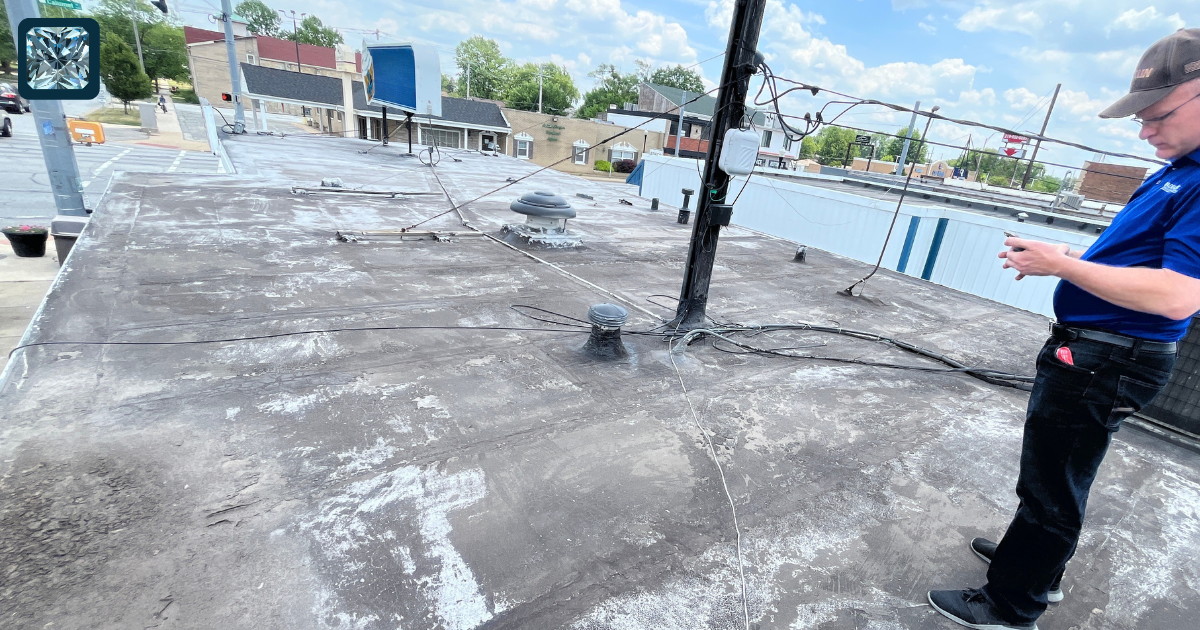
1. Get your roof inspected. Not by a bucket-and-tar crew. By a certified commercial flat roof contractor who understands building envelope systems. A proper inspection includes infrared moisture scanning to identify saturated insulation you cannot see from above or below. Learn more →
2. Document everything. Photograph staining, note dates, record tenant complaints. If you suspect mold, document it immediately. Documented awareness and response protects you legally; undocumented negligence exposes you.
3. Address the source, not just the symptom. Interior mold cleaning without roof repair is temporary. The moisture path must be eliminated first. A qualified flat roof restoration seals the membrane, preserves existing insulation (if dry), and stops the water entry.
4. Know the EPA threshold. If mold covers more than 10 square feet of any surface, the EPA recommends hiring a professional mold remediation service. Do not attempt large-scale mold cleanup with in-house maintenance staff.
5. Explore financing options. Emergency roof work does not have to drain operating reserves. Programs through SBA lending, USDA grants, and commercial financing options exist specifically for building envelope repairs. Learn more →
THE BOTTOM LINE FOR BUILDING OWNERS
A leaking flat roof is not just a roofing problem. It is a health liability. The moment mold shows up in your building and a tenant connects it to your roof, you are not paying for a roof anymore. You are paying for somebody’s lungs. The most cost-effective action a building owner can take is addressing the roof membrane before mold becomes a legal and financial crisis.
Related Reading
BUILDING ENVELOPE | Ponding Water on Flat Roofs: The Silent Insulation Killer
FINANCING | How to Finance Emergency Commercial Roof Repairs Without Draining Reserves
TENANT RIGHTS | What Commercial Tenants Need to Know About Roof Leaks and Indoor Air Quality
Need a Commercial Flat Roof Inspection?
Request a free, no-obligation assessment at FlatRoofQuote.ai | Serving Lake and Porter Counties
Read other blog:



We Love Conversations
 SoHelpful@PristineIndustrialRoofing.com