
Top 10 OSHA Violations
Fall protection has been the #1 violation for 15 consecutive years. Your crew is on a roof.
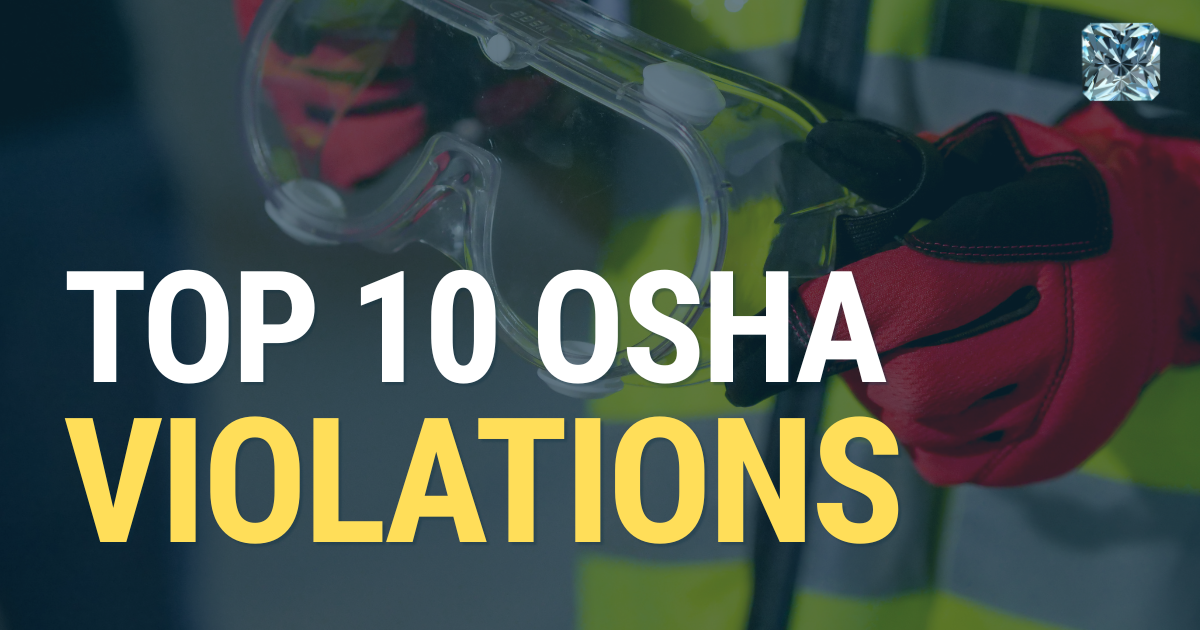
🔲 Fall protection leads OSHA's violation list for the 15th consecutive year.
🔲 A willful or repeat violation runs up to $165,000.
🔲 Seven of OSHA's top 10 violations map directly to commercial roofing work. Good luck.
🔲 A Conklin-certified contractor carries the documentation and the trained crews.
What OSHA Found Last Year? Why It Lands on Your Property
Do not risk it for the biscuit. Do not get caught on your own roof violating the OSHA Bible.
Marcus owns a warehouse complex near the Port of Indiana in Hammond. Eight bays, roughly 140,000 square feet under roof. He has had the same roofing contractor for eleven years. Good guy. Shows up when it rains. Patches what leaks.
Last Spring, Marcus got a call from his insurance carrier. They were sending an inspector. Not because the roof had failed. Because a neighboring property had filed a general liability claim after a roofing crew fell on an adjacent project, and the carrier was doing a sweep of commercial accounts in the corridor.
The inspector found three things Marcus could not document: a written fall protection plan, proof of respiratory fit testing for the crew working around the old membrane, and a hazard communication binder with current Safety Data Sheets for the coatings used on-site.
None of those gaps were Marcus's fault. They were his contractor's. But Marcus's name was on the property. Marcus's carrier raised his premium.

That is the part of OSHA compliance most commercial building owners never see coming.
Every Fall, OSHA releases its preliminary list of the most frequently cited workplace safety standards. The FY 2025 list, announced at the National Safety Council's Safety Congress in September 2025, covers inspections conducted across all industries nationwide. The total count came in at 23,537 citations across the top ten categories, down roughly 17 percent from FY 2024. That sounds like progress. It is not progress on the rooftop. Fall protection has held the number one position every year since 2011.
Here is what the list says. Here is where it lands in commercial roofing. And here is why the contractor you choose either solves this problem for you or quietly creates it.

OSHA's Top 10 for FY 2025, Mapped to Your Roof
1. Fall Protection: General Requirements (29 CFR 1926.501)
5,914 citations. Construction. #1 for the 15th straight year.
This one is not complicated. Workers on roofs need fall protection at or above six feet. Guardrails, personal fall arrest systems, safety nets. The standard is clear. The citations keep coming because shortcuts feel fast and inspectors are not always present.
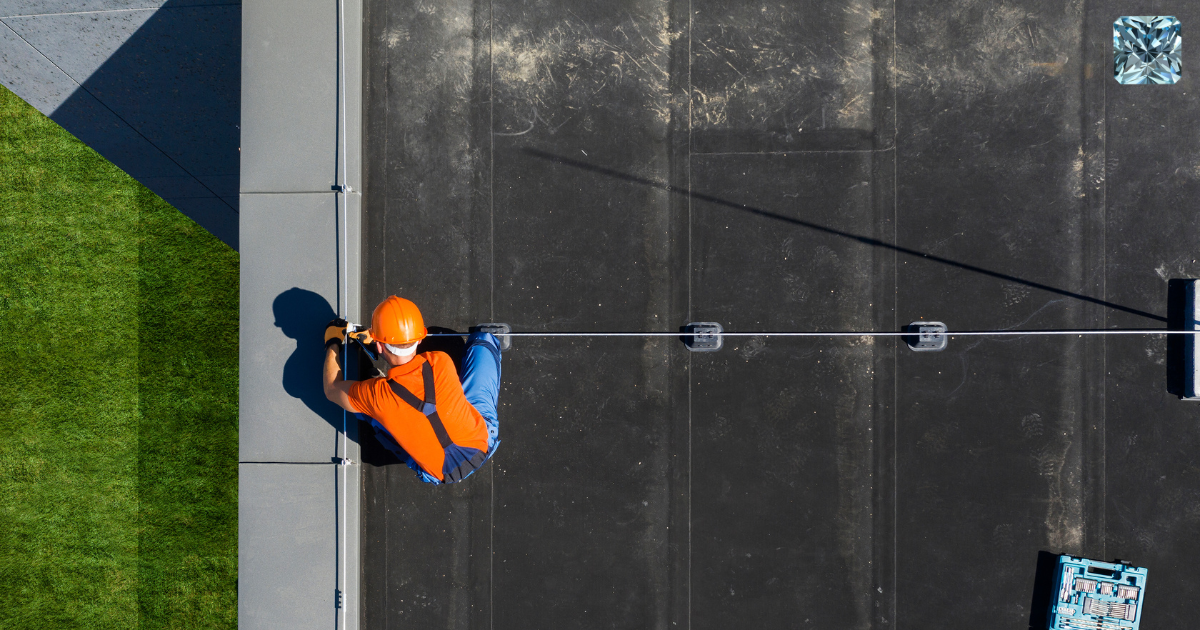
On a commercial flat roof, fall protection means more than a harness hanging in the truck. It means anchor points rated and installed. It means a written plan that identifies the hazards on that specific building, the skylights, the HVAC curbs, the leading edge of a membrane rollout. It means a competent person on-site who can verify all of it.
If your roofer cannot hand you a written fall protection plan specific to your property on day one, you are already exposed.
2. Hazard Communication (29 CFR 1910.1200)
2,546 citations. General industry.
HazCom requires employers to identify every hazardous chemical on site, label containers properly, and keep Safety Data Sheets accessible to every worker who might encounter those materials.
Commercial roofing involves a lot of chemicals. Conklin's liquid-applied coating systems (the acrylic and the silicone) carry SDS documentation. The primers do. The adhesives do. Every product that goes on your roof should have a current SDS binder on-site and workers who know where it is.
This is the kind of paperwork that nobody notices until a worker gets hurt, an inspector arrives, or a carrier asks a question. The binder either exists or it does not.
3. Ladders (29 CFR 1926.1053)
2,405 citations. Construction.
In 2023, portable ladders and stairs were involved in 109 fatal work injuries. OSHA's ladder standard covers selection, setup, use, and inspection. The citations come from ladders set at wrong angles, missing rungs, side-loading, and workers carrying materials up a single ladder without a second point of contact.
On a flat-roof commercial project, every access point is a ladder exposure. The roofline on manufacturing building is typically 18 to 24 feet. A roof hatch with a fixed ship ladder is a different citation profile than a job-site extension ladder propped against a parapet. Both need documentation.
4. Control of Hazardous Energy (Lockout/Tagout) (29 CFR 1910.147)
2,177 citations. General industry.
LOTO requires that equipment be de-energized before servicing or maintenance begins. On a commercial roof, this becomes relevant the moment a crew is working near HVAC units, exhaust fans, electrical service penetrations, or rooftop mechanical equipment.
Kenny, a facilities director at an industrial park near Hammond, asked about this directly after a crew left a fan unit running while they were sealing around the curb. Nobody got hurt. But it was a lockout violation waiting to happen. His prior contractor had no written LOTO procedure.
This standard is cited nearly 2,200 times a year across all industries. It sits at number four on the list. A roofing contractor who services rooftop equipment without a written LOTO program is creating liability that lands on the building owner.
5. Respiratory Protection (29 CFR 1910.134)
1,953 citations. General industry.
OSHA's respiratory protection standard requires a written program, medical evaluation, fit testing, and documentation for any worker who may be exposed to airborne contaminants above permissible limits. In 2023, there were 125,400 reported cases of occupational respiratory illness.
On a commercial roof, respiratory exposure comes from, torch-down application of modified bitumen, solvent-based adhesives, isocyanates in two-part polyurethane systems, and silica from substrate disturbance during tear-off. Conklin's water-based acrylic systems significantly reduce the chemical exposure profile compared to solvent-heavy alternatives. But the written program still needs to exist and fit testing still needs to be documented.
This is the citation Marcus's inspector flagged. No fit testing records. No written respiratory program. His prior crew worked in painter's masks because that is what was in the truck.
✉️ Seven of OSHA's Top 10 Apply to Your Roof. Does Your Contractor Have the Paper Trail?
We carry written fall protection plans, hazard communication binders, LOTO procedures, respiratory programs, and scaffolding compliance documentation. If your current roofer cannot say the same, that gap is yours to own.
Subject Property Address: ___________________________
Send us the address. We will tell you exactly what compliance documentation should exist for a project on that building, and whether your current contractor has it.
[ Email address ] → [ Send Me the Real Stuff ]
6. Fall Protection Training (29 CFR 1926.503)
1,907 citations. Construction.
OSHA's fall protection training standard requires that any worker exposed to fall hazards at six feet or above must be trained. The training has to cover fall hazard recognition, the correct procedures to address those hazards, the limitations of the equipment being used, and proper equipment use. And it must be documented.
This is the companion violation to number one. Fall protection equipment is on the roof. The training records are supposed to be in the truck. When they are not, the crew exposed your building to a separate citation from the equipment violation. Same incident, two penalties.
Two violations from one fall. That math matters when the maximum penalty per willful violation is $165,514.
7. Scaffolding (29 CFR 1926.451)
1,905 citations. Construction.
Scaffolding citations come from inadequate guardrail systems, improper foundations, and missing fall protection at the platform level. On commercial roofing, this applies most directly to work over occupied tenant spaces, projects with significant elevation changes across a roofline, or situations where interior scaffolding is built to reach a roof hatch or parapet.
The fix is a competent person who owns the inspection checklist and applies the same standards on every job. The citation pattern shows that scaffolding compliance tends to drift when the same crew works the same site for too many days without a formal re-inspection.
8. Powered Industrial Trucks (29 CFR 1910.178)
1,826 citations. General industry.
Forklifts and lift trucks come into the commercial roofing picture during material staging, moving pallets of membrane, lifting insulation boards, positioning spray rigs. OSHA requires operator certification, a written safety program, and pre-shift inspections.
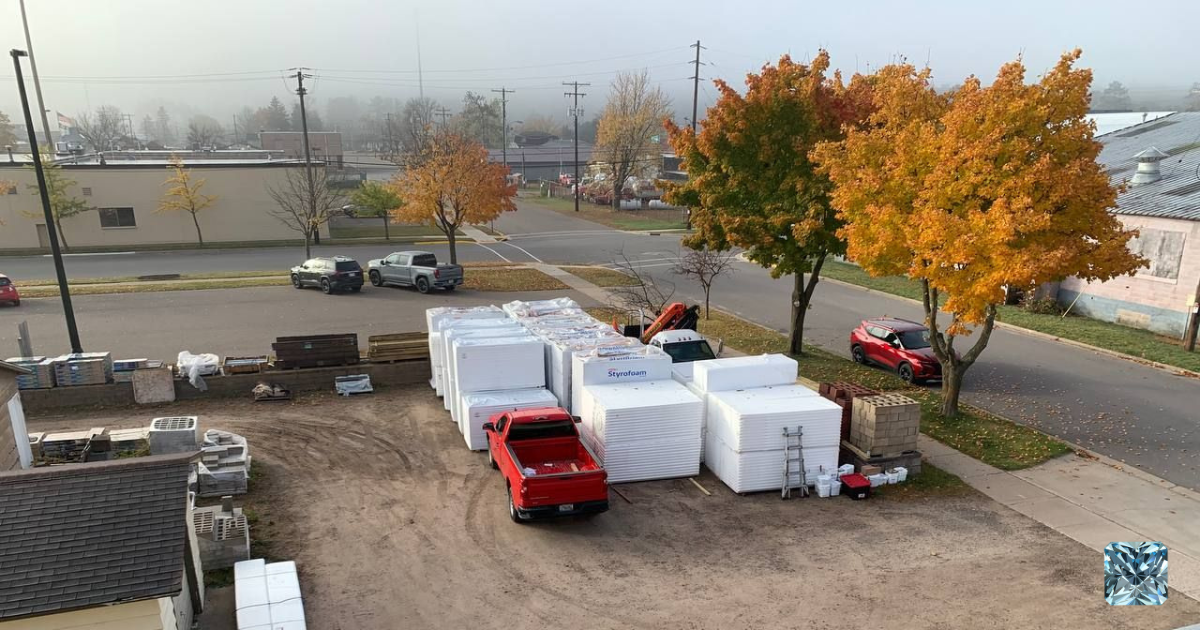
This one is less about what happens on the roof and more about what happens in the parking lot and loading dock before the project starts. Material handling injuries happen before the first membrane is rolled. A contractor who stages materials with an uncertified operator on a forklift with no pre-shift checklist is starting the project with an open violation.
9. Eye and Face Protection (29 CFR 1926.102)
1,665 citations. Construction.
Chemical, mechanical, and radiological hazards on a commercial roof are not theoretical. Adhesive splatter. Coating overspray. Ground-down fastener debris during a tear-off. A pressure washer cleaning a coated membrane before recoat. All of these create eye and face exposure that requires rated PPE. Not safety glasses from a gas station.
The standard requires that eye and face protection be appropriate to the specific hazard. That means the contractor has done a hazard assessment, selected the right PPE, and documented both. A bag of random safety glasses does not satisfy the standard.
10. Machine Guarding (29 CFR 1910.212)
1,239 citations. General industry.
Machine guarding becomes a roofing issue when crews bring equipment to site. Grinders used for substrate prep. Core-cut equipment. Seam welders. Spray rigs with rotating parts. The standard requires that any point of operation where injury can occur be guarded.
This one sits at the bottom of the list but not because it matters less. It sits there because it is less commonly cited in construction than in manufacturing. On a commercial roofing site, it is worth asking whether every piece of power equipment has its guards intact and whether the crew knows why they are there.
What Contractor Compliance Actually Looks Like
Meg manages a seven-property industrial portfolio for an out-of-state owner. She has sat across the table from four roofing contractors in the last three years. She knows which ones bring a three-ring binder and which ones bring a handshake.
The binder contractors do not necessarily cost more. But they change the risk profile of every project she runs. When her carrier asks for documentation, she has it. When a subcontractor shows up to her site, she can point to the written safety plan. When something goes sideways and there is a question about who was responsible for what, there is a paper trail that answers it.
The handshake contractors are not bad people. They have experience. They show up. But Meg learned the hard way that experience without documentation is just a story you tell after the injury.

OSHA compliance on a commercial roof is not the contractor's problem. It is the property's problem. The contractor either solves it for you or they don't.
OSHA Roofing Compliance Guide
Is the building owner liable for OSHA violations on a commercial roofing project?
It depends on the structure of the contract and who is classified as the controlling employer on site. If the property owner has any supervisory authority over the work, even informally, OSHA can extend liability. The safest position is a contractor who owns the compliance documentation entirely so the owner's name does not appear in the citation.
What does a written fall protection plan actually require?
It must identify the fall hazards specific to that job site, the measures in place to address each one, the equipment being used, and the competent person responsible for the plan. A generic document that does not reference your building's skylights, HVAC curbs, or parapet heights does not satisfy the standard.
How much can an OSHA violation actually cost?
A serious violation runs up to $16,550. A willful or repeat violation runs up to $165,514 per violation. OSHA can cite multiple violations from a single inspection. A roofing project with no fall protection plan, no HazCom binder, and an undocumented crew working near live equipment is not one violation. It is a stack.
Does OSHA inspect roofing projects proactively or only after incidents?
Both. OSHA conducts programmed inspections in high-hazard industries on a rotating basis, and unprogrammed inspections triggered by complaints, referrals, or incidents. A neighbor calling OSHA about an unsafe crew on an adjacent property is a referral. It happens.
What is a competent person and why does it matter on a roofing project?
OSHA defines a competent person as someone with the knowledge and authority to identify hazards and take corrective action. On a roofing project, the competent person is responsible for inspecting the fall protection setup, monitoring the scaffold, and verifying PPE compliance. If the crew does not have a designated competent person on site, the entire safety program is unsupervised.
Does the type of roofing system affect OSHA exposure?
Yes. Torch-applied systems, solvent-based adhesives, and two-part polyurethane systems create respiratory and chemical exposure that Conklin's water-based liquid coating systems largely eliminate. The fall protection exposure is the same across all systems. But a contractor switching from torching modified bitumen to applying a Conklin acrylic coating is moving down the chemical hazard ladder significantly.
What should I ask a roofing contractor about OSHA compliance before signing?
Ask for the written fall protection program. Ask for the hazard communication binder and confirmation that SDS documents are current for every product going on your roof. Ask who the competent person is and what their credentials are. Ask for proof of respiratory fit testing. If those documents do not exist, the contractor is not compliant , and that gap will sit on your property.
Does Pristine Industrial Roofing maintain written OSHA compliance documentation?
Yes. Written fall protection plans are prepared for each project and specific to each property. Hazard communication binders with current SDS documentation travel with every crew. Respiratory protection programs include current fit testing records. A competent person is designated on every project. The paper trail exists before the first crew member steps on your roof.
The Roof Passes. The Paper Trail Doesn't Have To.
OSHA's top 10 list is not a construction industry problem. It is a commercial property problem. Because the building under the crew is yours. The liability that flows from a citation, a claim, or a carrier inquiry lands on your account. Not the roofer's.
Fifteen years at the top of that list means fall protection has been the most commonly cited standard in construction for as long as most of those crews have been on roofs. The standard is not new. The citations keep coming because compliance is work, and not every contractor does that work.
Conklin-certified contractors are trained on the chemistry and the systems. But the documentation, the written programs, the fit testing records, the site-specific plans, is what protects the property when something goes sideways.
✉️ Get the Compliance Documentation Before the Crew Shows Up.
Subject Property Address: ___________________________
You already know the address. Send it over. We will tell you what written compliance documentation a project on that building requires, what our process looks like, and whether your current roof qualifies for a Conklin system, including the long-term warranty that Conklin backs directly.
[ Email address ] → [ Send Me the Real Stuff ]
Pristine Industrial Roofing
Lake & Porter Counties │ Commercial Flat Roofing │ Conklin Certified
(219) 529-1995 │ ModernRoofChemistry.com
We love you enough to tell you the truth.
Read other blog:

We Love Conversations
 SoHelpful@PristineIndustrialRoofing.com