
86% Reflective. Lab-Tested. Not From a Hardware Store.
Part 2: What Actually Goes on Your Roof, FLEXION Vinyl 300, Affinity, and the CRRC Numbers That Back Them Up

🔲 Two systems. FLEXION vinyl 300 membrane. Affinity urethane coating.
🔲 Both: 86% solar reflectance. Verified by the Cool Roof Rating Council.
🔲 FLEXION: 300-month warranty. Hurricane-force wind rated. Flexes at -40°F.
🔲 Affinity: Bonds at the molecular level. No tear-off. No dumpsters.
🔲 Neither one is available at a hardware store. That's the point.
Two Systems. One Standard.
In Part 1, we laid out the science. Reflective plus thicker saves 35 to 40% on heating and cooling. Purdue proved it. The data confirmed it across climate zones. Your CPA would smile.
But the obvious question is: what goes on the roof? Not all white surfaces are created equal. Not all coatings are real coating systems. And not all "reflective" products hold their reflectance after two Indiana winters.
Pristine Industrial Roofing installs two primary systems depending on your building's existing conditions. Both are manufactured by Conklin, made in the USA since 1977. Both are ENERGY STAR certified. Both are verified by the Cool Roof Rating Council (CRRC), the independent third party that tests and publishes solar performance data so nobody has to take a contractor's word for it.
Your maintenance department will appreciate that. They have enough to deal with without babysitting cheap patch jobs.

FLEXION Vinyl 300, Vinyl Membrane
FLEXION vinyl 300 is a 60-mil PVC vinyl membrane. Not a coating. Not a roll of expired rubber EPDM. It's a copolymer-alloy sheet, classified under PVC D4434 Type III, that gets heat-welded at every seam. Those welds are molecularly fused. Stronger than the membrane itself. The seam is not the weak point. It's the strongest point. That matters when Northwest Indiana gets a February wind event and your neighbor's plastic wrap tPo starts peeling at the edges.
CRRC Performance — Verified Solar Data
Metric
Initial
Aged (3-Year)
Solar Reflectance
86%
70%
Thermal Emittance
86%
82%
Solar Reflective Index (SRI)
108
84
Quick translation for anyone who doesn't speak roofing science: Solar Reflectance is the percentage of sunlight that bounces off instead of soaking in. Higher is better. 86% means your roof is rejecting the vast majority of solar energy on contact. Thermal Emittance is how efficiently the surface releases whatever small amount of heat it does absorb. 86% means it sheds heat fast. SRI combines both into a single performance score. An SRI of 108 is exceptional. For context, a standard black roof scores near zero.
That's not a typo. Zero. Your dark roof is basically an oven lid.

Engineering Highlights
Fire Classification: FM & UL Class A. The highest fire rating under Underwriters Laboratories. FLEXION vinyl 300 is inherently fire-resistant by chemistry, not by spray-on additives. That matters for restaurants, industrial kitchens, and any high-exposure environment.
Wind Resistance: FM I-90. Hurricane-force rated. With a Kevlar-reinforced fastening edge at the membrane's most vulnerable point.
Temperature Flexibility: -40°F low temperature bend rating. No cracking. No delaminating. That is not a marketing number. That's tested performance for exactly the kind of freeze-thaw cycles Lake and Porter Counties deliver every Winter.
Chemical Resistance: Animal fats and industrial acid rain break down standard plastic wrap tPo membranes. PVC vinyl withstands both. Proven by lab testing, not marketing claims.
Warranty: 300 months. Non-prorated. Factory certified. Extended 30-year service life achievable with Pristine's proactive maintenance program.
✉️ Is Your Current Roof Chemistry Working Against You?
If you're running plastic wrap tPo or expired rubber EPDM and wondering why the repair bills keep coming, there's a better conversation to have.
Subject Property Address: ___________________________
Drop the address. We'll tell you exactly what's up there and what it would take to fix it once.
FREE evaluation. No sales pitch. No pressure. No obligation.
[ Email address ] → [ Send Me the Real Stuff ]
Affinity, Urethane Coating System
Not every roof needs a membrane. Some roofs are structurally sound but aging, leaking, or thermally underperforming. That's Affinity's lane.
Affinity is a polyurethane coating system, base coat plus top coat, liquid-applied. What makes it different from the cheap stuff is one word: molecular. Affinity doesn't just sit on the surface. It chemically grips rubber, tar, plastic, and metal at the molecular level. Your existing roof becomes the foundation, not the problem.
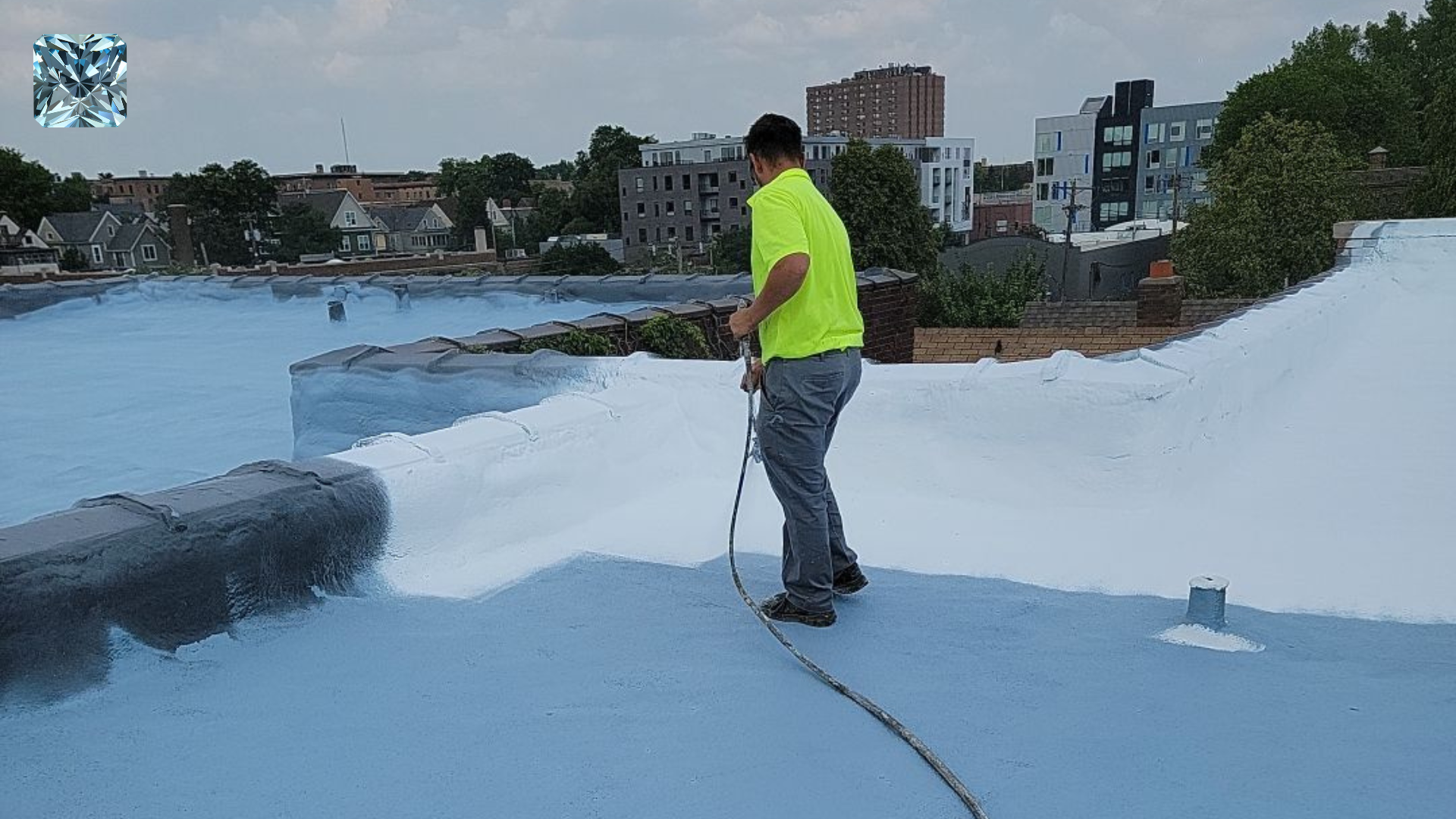
No demolition labor. No dumpster rentals. No $10,000+ removal cost. No landfill contribution.
CRRC Performance — Verified Solar Data
Metric
Initial
Aged (3-Year)
Solar Reflectance
86%
70%
Thermal Emittance
89%
89%
Solar Reflective Index (SRI)
109
84
Notice that thermal emittance: 89% initial and 89% aged. It doesn’t degrade. Three years of Indiana weather and Affinity’s heat-shedding performance stays the same. That’s chemistry doing its job quietly.
And SRI of 109. Slightly higher than Flexion. Different application, same tier of performance.
Engineering Highlights
Elongation: 600% top coat. 300% base coat. The top coat stretches six times its original length without tearing. Your building moves with freeze-thaw cycles, wind uplift, thermal expansion. Affinity moves with it.
Hail Rating: Class 4 with Spunflex reinforcement. That may qualify your building for insurance discounts. Worth a phone call.
VOC Content: 47 g/L. Ultra-low. Most commercial coatings run well above 100 g/L. Affinity is cleaner chemistry.
Code Compliance: Indiana building code limits flat roofs to two layers maximum. Because Affinity is liquid-applied, it's classified as a coating, not a roof layer. That keeps your building compliant today and avoids a forced tear-off when the next contractor shows up.
What It Goes Over: Torch-down modified bitumen. Old tar strips. Plastic wrap tPo surfaces where lesser systems fail or require a primer workaround. If the structure is sound, Affinity can restore it.
Warranty: 20 years. Non-prorated on non-metal applications. 10 years on metal due to movement and thermal cycling. Recoatable every 20 years, no tear-off ever required.
Side by Side — Flexion 2.0 vs. Affinity
Flexion 2.0 (Vinyl)
Affinity (Urethane)
Type
PVC membrane, heat-welded
Liquid-applied coating system
Solar Reflectance
86% initial / 70% aged
86% initial / 70% aged
Thermal Emittance
86% / 82%
89% / 89%
SRI
108 / 84
109 / 84
Fire Rating
FM & UL Class A
UL 790 Class A
Wind Rating
FM I-90 (hurricane-force)
N/A (adhered system)
Hail Rating
High puncture resistance (75 lbs)
Class 4 w/ Spunflex™
Cold Flex
-40°F bend rating
Remains flexible in extreme cold
Warranty
25 years / 300 months
20 years / 240 months
Recoatable
Yes — membrane coating system
Yes — every 20 years, no tear-off
Best For
New installs, re-roofs, max longevity
Restorations, no tear-off, tough substrates
Neither system is better than the other. They solve different problems. FLEXION vinyl 300 is the new build. Affinity is the restoration. Both deliver 86% reflectance on day one. Both are CRRC verified. Both are ENERGY STAR certified. Both are recoatable, which means your building never needs another tear-off.
Superior menu options exist.
Why You Won't Find This at Menards
The products on hardware store shelves are formulated for residential use. Thin application. Minimal reinforcement. Short warranties with prorated fine print that starts shrinking the day it's applied.
Conklin materials are manufactured for commercial and industrial applications. Distributed through certified installers, not retail channels. The chemistry is different. The reinforcement is different. The testing standards are different. And the warranty is non-prorated, which means year twenty-four is covered the same as year one.
This is the difference between a field-tested system and a bucket of hope. You know which one your building deserves.
What Happens When You Call

We measure your existing roof thickness. We calculate your current R-value. We assess the substrate condition. And we build a proposal, not a bid, showing you exactly what the R & T upgrade looks like for your specific building.
Your finance department gets the numbers. Your maintenance team gets peace of mind. Your HVAC units get a break. And NIPSCO gets less of your money.
We don't push. We show you the data and let the roof make the case.
FLEXION Vinyl 300 + Affinity FAQs
What is the difference between FLEXION vinyl 300 and Affinity urethane? FLEXION vinyl 300 is a physical PVC membrane, installed in rolls, heat-welded at every seam, 300-month factory warranty. Affinity is a liquid-applied urethane coating, no tear-off, bonds molecularly to your existing surface, 20-year warranty. Same 86% reflectance on day one. Different applications. Never combined.
What does CRRC-verified mean? The Cool Roof Rating Council independently tests solar reflectance and thermal emittance. CRRC-verified means a third party confirmed the number, not the manufacturer. Both FLEXION vinyl 300 and Affinity carry CRRC-verified ratings.
Why does FLEXION vinyl 300 have a -40°F bend rating? Northwest Indiana's freeze-thaw cycle puts membranes under real stress. A membrane that cracks or delaminates at low temperatures fails at the worst possible time. FLEXION vinyl 300's -40°F rating is a tested performance spec, not a marketing claim.
Can Affinity go over my existing plastic wrap tPo or modified bitumen roof? Yes. Affinity bonds molecularly to most existing substrates including plastic wrap tPo, modified bitumen, and metal. If your deck and insulation are sound, Affinity restores the system without tear-off. We evaluate substrate condition before recommending it.
Will a reflective roof system affect my building's insurance premiums? Possibly. Affinity with Spunflex reinforcement carries a Class 4 hail rating, which some carriers recognize for premium discounts. FLEXION vinyl 300's FM I-90 wind resistance rating may also be relevant depending on your policy. Contact your carrier with the specific product specs.
How long does solar reflectance last on these systems? Both FLEXION vinyl 300 and Affinity are rated at 86% initial solar reflectance. CRRC aged testing, which simulates three years of weathering, shows both systems at 70% reflectance. That's still well above the performance of a standard dark commercial roof. Affinity's thermal emittance holds at 89% across both initial and aged measurements.
What does non-prorated warranty mean for a commercial roof? Prorated warranties reduce coverage over time, year ten pays out less than year one. Non-prorated means the coverage is the same on day one as it is in year twenty-four. Both Conklin systems carry non-prorated warranties. That's the number to ask any contractor before you sign anything.
Why can't I just buy Conklin products at a supply house? Conklin materials are distributed through certified installers only. That's intentional. The products require proper substrate preparation, coverage rates, and application method to perform as specified. Retail distribution would remove those controls. The warranty requires certified installation. That's not a sales tactic, it's how the system stays intact.
✉️ Let’s Look at That One Property
Subject Property Address: ___________________________
Get your roof evaluated. See your options. No obligation. Just data.
[ Email address ] → [ Send Me the Real Stuff ]
Pristine Industrial Roofing — Serving commercial and industrial property owners across Lake County and Porter County. Liquid-applied Conklin coating systems. FLEXION vinyl membranes. Proactive maintenance programs.
Read other blog:

We Love Conversations
 SoHelpful@PristineIndustrialRoofing.com