
Why Should I Make My Restaurant Fire-Rated Against Fireworks and Grease?
Understand why restaurant roofs fail sooner than expected and how choosing the right roofing membrane can extend service life, protect warranties, and reduce lifetime ownership costs. One roof handles grease. Heat. Fireworks. The other doesn't.
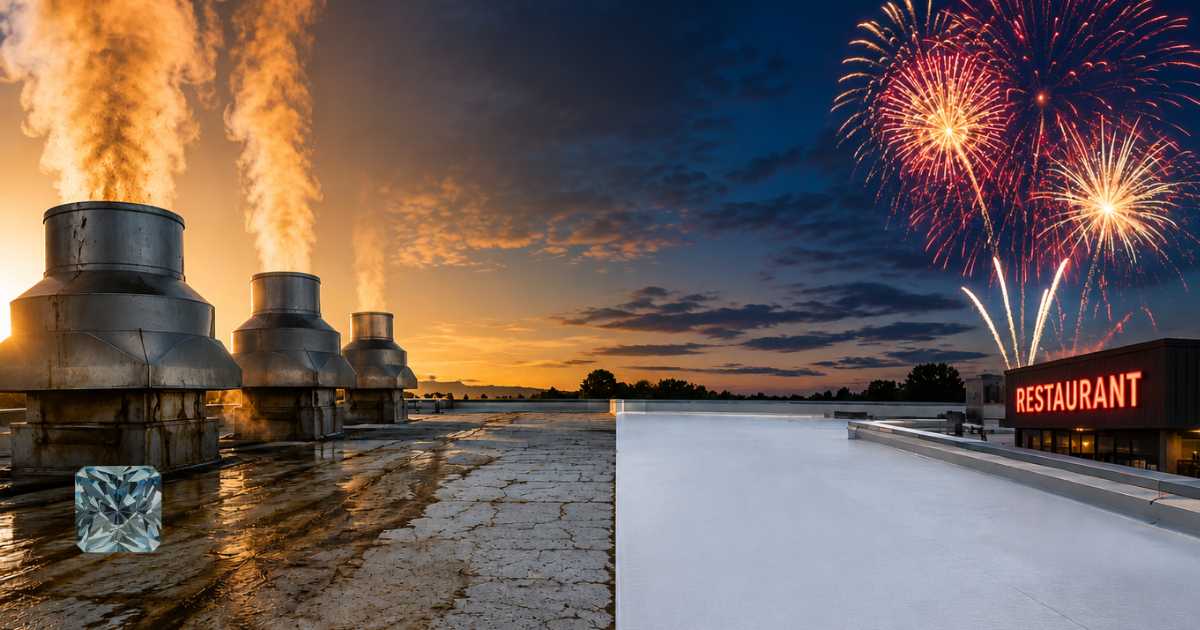
- Seam glue expires after 15 years.
- PVC outperforms TPO by 2.5x against grease.
- What defends best against acid fat and falling fireworks?
- Acid Rain carries heavy metals.
- FLEXION PVC protects 25+ years.
DO NOT SCROLL UNLESS CURIOUS
Perhaps your restaurant roof is working harder than your fryer?
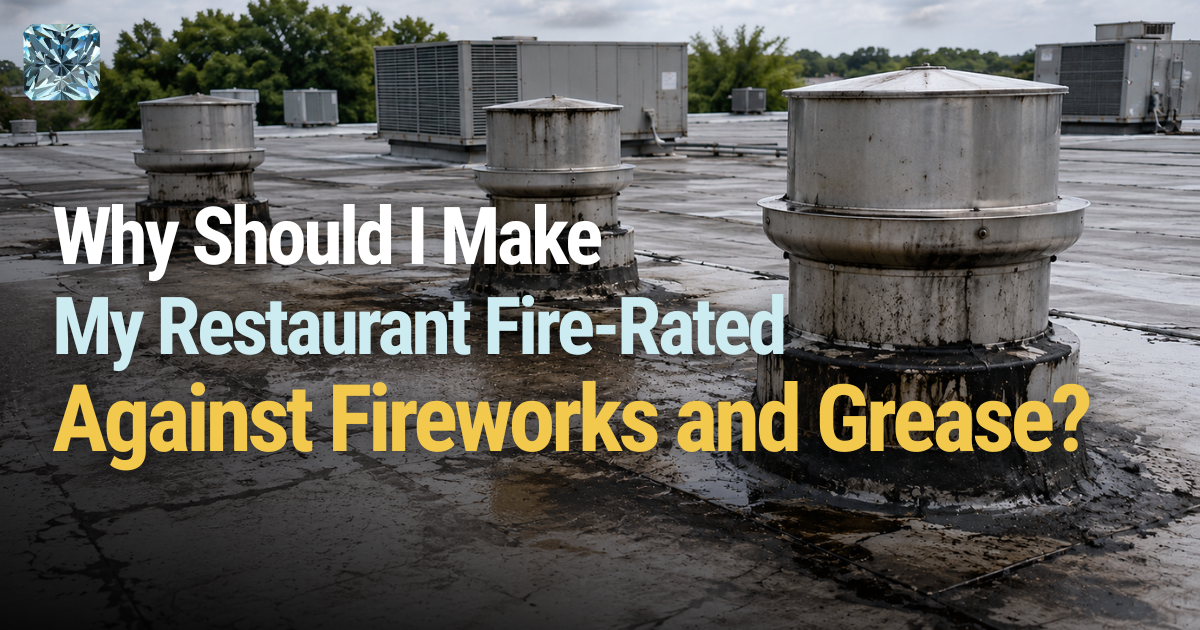
Your grease hoods pump animal fats into the sky every night. Your roof catches that mess.
Now add fireworks. Your manufacturer's warranty quietly whispers "void" the moment the wrong materials landed.
Not curious? Please close tab.
Still curious? Keep reading. :-)
Two materials. One survives the fryer. One doesn't.
SECTION 1: "GLUE EXPIRES. PHYSICS DOESN'T."
The case against adhered seams on a restaurant roof
Every adhered seam is a chemistry experiment with a timer on it.
We don’t believe in roof glue. It disappoints.
Adhesive-based seams on commercial roofs have a defined service life under normal conditions, and a shorter, harder-to-predict service life on restaurant roofs. Here's the reason: your exhaust hood doesn't just pump grease into the air. It pumps heat. That heat rises through the deck, finds the seam adhesive, and starts working on it from the inside out. Meanwhile, the Summer sun in Merrillville and Valparaiso is doing the same thing from the outside in. The adhesive gets sandwiched in a thermal vise, heated from below by the kitchen, baked from above by the sky. What the manufacturer rated for a standard warehouse is not what your roof is actually living through.
This matters most during temperature cycling. Thermal roofing research consistently shows that membranes expand and contract with temperature swings. Every cycle is a micro-stress event at the seam. On a standard commercial roof, those cycles are manageable. On a restaurant roof with three active hoods running from 10 AM to 10 PM, the heat load is constant and compounded. The adhesive doesn't just age, it fatigues. And in Northwest Indiana, where a January day in Hammond can swing 35 degrees in 24 hours, the fatigue cycle runs year-round.
The alternative is heat-welded seams. When two PVC membranes are welded together at 1,000 degrees Fahrenheit, they don't bond, they fuse. The seam becomes a single piece of material. There's no adhesive to expire, no chemistry to fail. The weld is typically stronger than the membrane itself. For a restaurant roof in NWI managing grease exposure, heat cycling, and industrial air chemistry, that distinction between glued and welded isn't a preference, it's a structural decision.
Industry data indicates adhered seams on restaurant roofs show measurable degradation 30–40% faster than on standard commercial applications due to thermal loading from hood exhaust.
SECTION 2: "PVC VS. TPO: 2.5X ISN'T CLOSE"
Why TPO loses against grease, and why the industry sold it anyway:
TPO became the default because it was cheap up-front AND expensive to maintain long-term.
Here is the story of how TPO got onto American roofs.
Starting in the 1990s, TPO entered the commercial roofing market as a cost-effective alternative to PVC. It was cheaper per square foot, easier to source, and performed adequately on the roofs it was actually designed for, warehouses, office parks, retail centers. Buildings where grease isn't a consideration.
Roofing manufacturers loved the fat margin. Contractors loved the easy sale. “tPo plastic is cheaper!” But of course it is, silly.
“Why so cheap?” Should be the reply.
Building owners got low-cost material installed and then got the real bill 10-years later.
Just 10 years? Why does my warranty say 20?
Because warranties deceive on purpose.
Did you read the fine print?
Devils delight in deceiving.
The chemistry tells the story. TPO is a blend of polypropylene and ethylene-propylene rubber. Its polymer chain was engineered for UV and weather resistance. It was not engineered for sustained animal fat exposure. PVC's composition, ethylene and chlorine, gives it a fundamentally different response to cooking oils and grease. The chlorine component creates natural resistance to the kind of fat chemistry that comes off a commercial fryer or charbroiler. The plasticizers in PVC maintain that resistance over time, keeping the membrane flexible and intact where TPO softens, swells, and begins to fail.
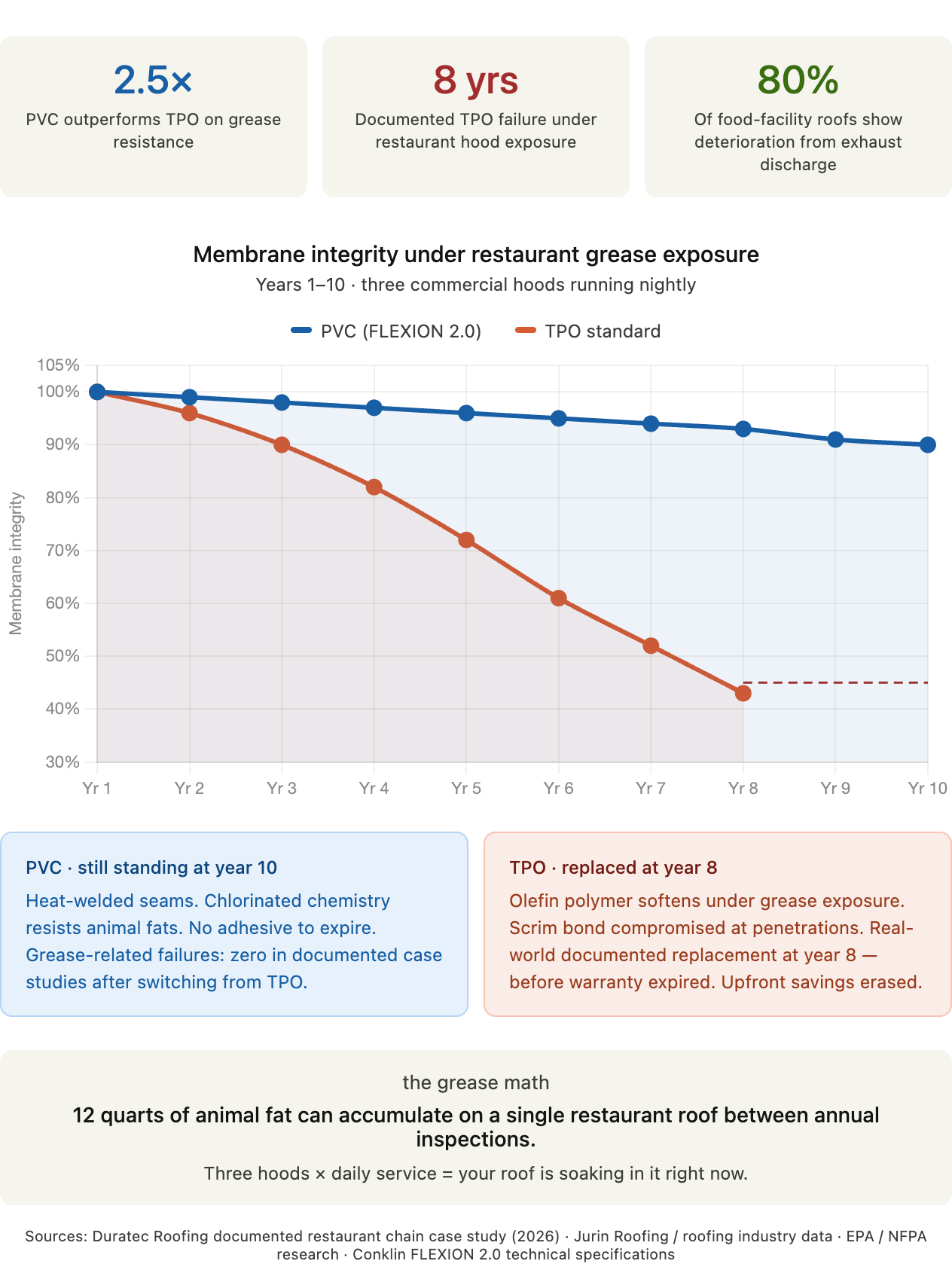
The data on this is not ambiguous. Documented cases from restaurant chains show TPO roofs requiring replacement after just eight years due to grease damage, buildings where PVC would still be performing. One industry case study put the upfront cost differential at roughly 20% in favor of TPO, and concluded that the grease-related failures made TPO the more expensive material over a 15-year horizon. That 20% savings at installation became a full roof replacement before the warranty ran out.
In a standard commercial building, TPO is a legitimate choice. The moment you add a commercial hood, let alone three, the calculation changes entirely. Roofing professionals across the industry are consistent on this point: restaurant roofs with active exhaust systems belong on PVC, period.
The scrim is where you see the difference most clearly. More on that next.
SECTION 3: "THE SCRIM IS YOUR ARMOR"
What the top half of your membrane actually does
If the membrane is the body, the scrim is the skin.
A single-ply roofing membrane isn't just a sheet of plastic. It's a layered composite. The bottom half is structural, it bonds to the substrate and carries load. The top half, embedded in the membrane, is the scrim: a woven polyester reinforcement layer that takes the daily punishment of everything landing on or attacking your roof from above. UV radiation, thermal stress, hail impacts, wind-driven debris, industrial air chemistry, and grease fall on the scrim before they reach anything else. It is, in the most literal sense, your roof's armor.
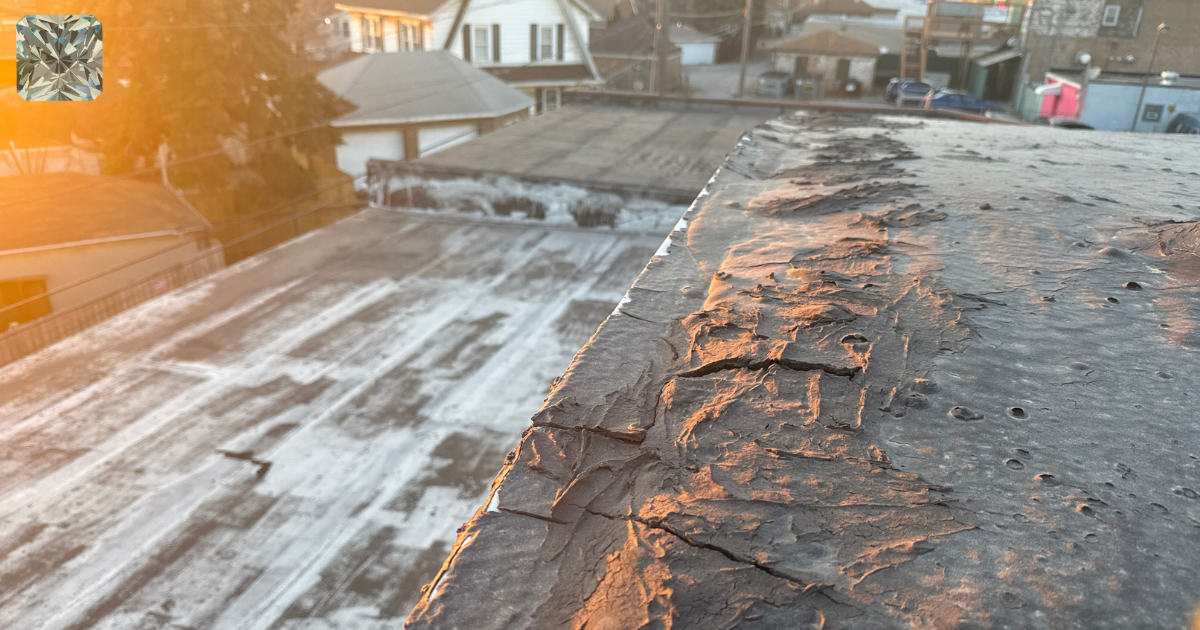
In a TPO membrane, the scrim is a polyester weave designed for mechanical strength and basic weather resistance. It handles rain. It handles UV. It was not designed to handle sustained exposure to animal fats, cooking oil aerosols, or the acid chemistry of NWI industrial rainfall. Under those conditions, TPO scrims show visible degradation, chalking, surface erosion, loss of tensile integrity, at a rate that the manufacturer's warranty language often doesn't account for. By the time the scrim fails visibly, the membrane beneath it is already compromised.
PVC's scrim tells a different story. The chlorine chemistry runs through the entire membrane composite, not just the surface. The plasticizers embedded in the PVC matrix keep the material flexible and resistant even as the scrim absorbs years of grease aerosol fallout, acid rain, and UV loading. The result is a membrane that continues performing as a unit. The scrim isn't just surviving, it's actively resisting. Industry testing places PVC's chemical resistance at approximately 2.5 times that of TPO under sustained grease exposure. For a commercial restaurant in Portage or Schererville running three hoods five days a week, that 2.5x figure is not a specification footnote. It's the difference between a roof that makes it to year 20 and one that sends you back to the table at year 8.
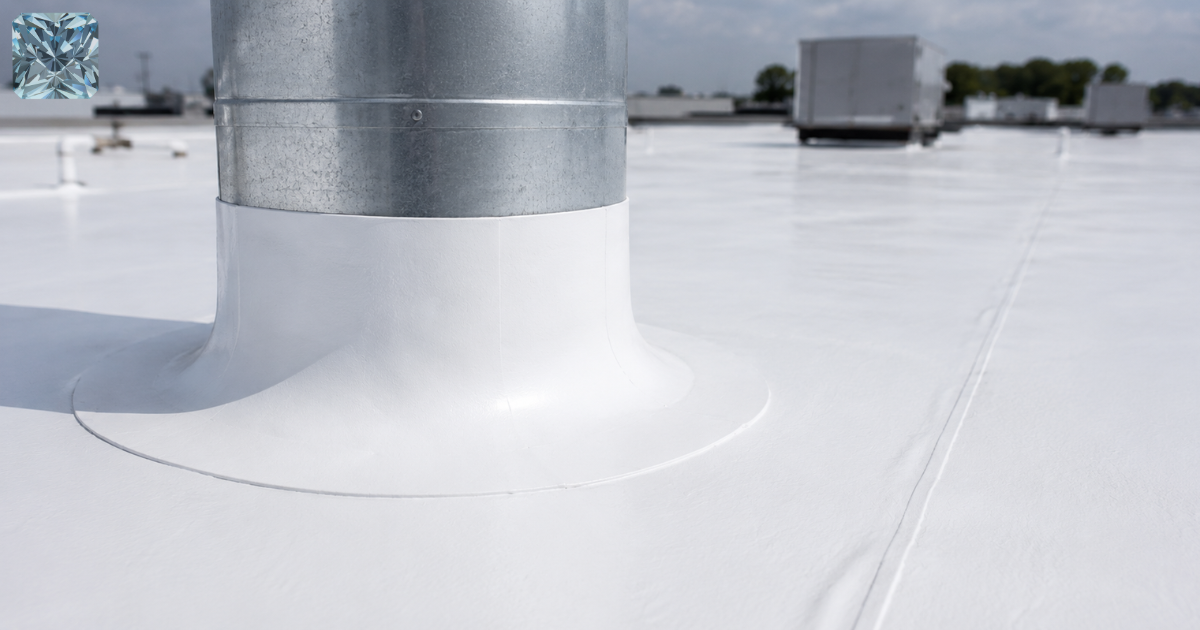
FLEXION 2.0 features a non-moisture-wicking scrim material with a minimum 27 mil thickness over the scrim layer. Kevlar-reinforced fastening edge. Heat-welded seams. This is the armor your restaurant needs.
SECTION 4: "NORTHWEST INDIANA RAIN ISN'T JUST WATER"
Heavy metals, steel mills, refineries, rail, and your roof
Around here, the rain carries heavy metals.
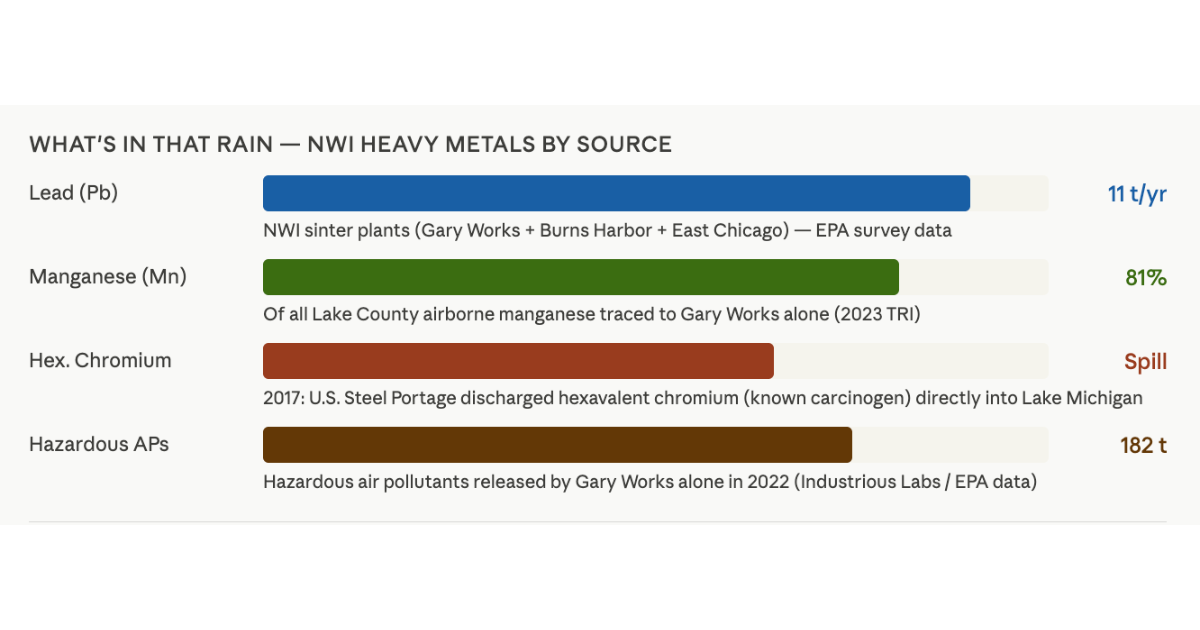
That's not a metaphor. The EPA's own Toxics Release Inventory data identifies Lake County, Indiana as having more toxic releases than 99% of all other counties in the country. The state of Indiana ranks second in the nation for industrial pollution released per square mile. The facilities doing the releasing are not abstract, they are U.S. Steel Gary Works, ArcelorMittal in East Chicago and Burns Harbor, BP Products in Whiting, and the rail and trucking corridors running through I-80 and I-94. In 2017 alone, the 49 facilities in Lake County released over 26 million pounds of toxic material. Porter County's 28 facilities added another 3.8 million pounds. The documented pollutants include lead, hexavalent chromium, benzene, hydrogen cyanide, and a roster of heavy metals and acid-forming compounds.
When it rains in Merrillville, Crown Point, or Portage, that rain has already passed through an air column seasoned by decades of steel production and refinery exhaust. What lands on your roof membrane is not clean water. It is a dilute chemical solution carrying whatever the wind carried from Gary that day. The Indiana Department of Environmental Management identified Lake and Porter Counties specifically as high-risk areas under the EPA's National Air Toxics Assessment, and that assessment was for human health at ground level. Your roof is the first surface those compounds touch.
This matters for membrane selection because acid chemistry attacks polymer bonds. A membrane that performs adequately in a clean rural environment may degrade faster in the chemical air environment of NWI. PVC's chlorinated chemistry gives it inherent acid resistance that TPO lacks. Combined with the grease resistance, the fire rating, and the heat-welded seam integrity, it creates a system that was built for difficult environments, which is precisely what Northwest Indiana is.
The roof you put on your restaurant in this region isn't just keeping out rain. It's filtering an industrial sky, every night, for the next twenty years.

Indiana ranked 1st among all 50 states for most toxic releases to air, water, and land in 2016. Lake County accounts for a disproportionate share, the county's 49 TRI-reporting facilities released more than 26 million pounds of material in a single year (2017).

SECTION 5: "FIRE IS A REAL THING. THERE'S A FIRE DEPARTMENT FOR A REASON."
Fireworks, grease fires, and why the warranty exists
Most building owners think the fire-rating on their roof is a building-code formality. It isn't.
Start with the kitchen itself. According to FEMA and NFPA research, grease and cooking oil are the materials first ignited in 85% of nonconfined restaurant fires where cooking materials were involved. That figure doesn't come from a worst-case analysis. It comes from the national fire incident database. Grease fires in commercial kitchens are not rare events, they are statistically normal events in a long enough timeline. When one starts and reaches the ductwork, it travels. When it travels, it finds the deck. A fire-rated roofing assembly buys time. Time is what the suppression system needs. Time is what the fire department needs. Minutes save buildings.
Now add fireworks. Northwest Indiana's restaurant landscape includes a significant number of establishments serving communities that celebrate with fireworks, Fourth of July, Diwali, Quinceañeras, New Year's Eve. Consumer fireworks land on roofs. They are not aimed. They do not respect membrane type. A burning ember that lands on an unrated or degraded roofing surface doesn't announce itself, it smolders, it ignites, and by the time someone smells it, the fire is already competing with the interior suppression system for who gets there first.
A fire-rated Class A assembly does one thing above all else: it buys minutes. The fryer already has a suppression system. The ductwork should be cleaned on schedule. The fire extinguisher is 30 feet from the hot side. But the roof? The roof is the last line between a contained kitchen incident and a structural fire that closes your building for three months.
Your fryer has an automatic suppression system, a semi-annual inspection requirement, a certified technician, and a fire marshal who checks it every year.
Your roof has... whatever the last contractor put down. If your roofer's answer to grease exposure is "we'll patch it when it gets bad," your roofer is recommending a Band-Aid on a paper cut that is actively on fire.
The warranty clock is running. The hood vents are running. And somewhere between those two clocks, your insurance carrier is paying very close attention to which one runs out first.
What Bill, the Owner of Three Restaurant Locations in Munster, Already Figured Out
Bill has three restaurants. He runs a lunch and dinner service at all three. Each building has three Type I hoods. He spent fifteen years on TPO because that's what his original contractor put down and nobody told him there was a better option for his use case. In year nine at the first location, the membrane around two of the exhaust stacks had degraded visibly, chalky, swollen at the edges, pulling away from the seam at the penetrations. His carrier sent an inspector. His warranty was void. The repair bill was $18,400 out of pocket.
Bill now specifies FLEXION 2.0 by name.
He doesn't know the chemistry. He knows year nine felt a lot worse than the extra cost at year zero would have. And he knows that the next time he gets a free roof evaluation, he's asking about every hood penetration and every seam within six feet of each one.
Everything your roofer should have told you before the warranty voided itself.
Q: Why can't I just use TPO on my restaurant roof like any other commercial building?
A: TPO was built for warehouses and office parks, buildings where grease isn't a variable. Add a commercial hood and its polymer chain softens, swells, and fails. PVC outperforms it by 2.5x under sustained grease exposure. On a three-hood restaurant, that's the difference between a 20-year roof and a replacement at year eight.
Q: What makes FLEXION 2.0 specifically suited for restaurant applications?
A: It's the only Conklin product that meets warranty requirements for commercial restaurants with hoods. Non-moisture-wicking scrim, 27 mil minimum thickness, Kevlar-reinforced fastening edges, heat-welded seams. It was built for the three things that kill restaurant roofs: grease infiltration, adhesive failure from heat cycling, and seam separation at penetrations.
Q: My roofer said my TPO warranty is still valid. Am I actually covered?
A: Maybe on paper. Standard TPO warranties weren't written for sustained grease exposure and kitchen exhaust heat loading. When an insurance inspector shows up and sees degraded membrane around your exhaust stacks, they have grounds to call it outside the covered use case. Bill in Munster learned this at year nine, $18,400 out of pocket after his carrier sent an inspector.
Q: How does NWI air quality affect my roof differently than elsewhere?
A: Lake County has more toxic releases than 99% of all U.S. counties. Rain in Merrillville or Portage carries heavy metals, benzene, and acid-forming compounds off the Gary steel mills, BP Whiting, and the I-80/I-94 rail corridors. Your membrane is the first surface those compounds touch. PVC's chlorinated chemistry resists acid degradation. TPO doesn't.
Q: What does "fire-rated" actually mean for a restaurant roof?
A: NFPA data: grease fires are statistically normal over a long enough timeline, not worst-case scenarios. When one reaches the ductwork, it travels toward the deck. A Class A fire-rated assembly buys minutes, for suppression, for the fire department. Consumer fireworks land on roofs too. An ember on degraded membrane smolders quietly until it isn't quiet anymore. The fire rating is the last line between a contained kitchen incident and a three-month closure.
Q: Why does heat-welded beat adhesive-bonded?
A: Adhesive gets sandwiched, kitchen heat from below, summer sun from above, and fatigues. In NWI's 35-degree January temperature swings, that cycle runs year-round. Industry data puts adhered seam degradation at 30 to 40% faster on restaurant roofs than standard commercial. A heat-welded PVC seam fuses at 1,000°F into a single piece of material. No adhesive to expire. The weld is typically stronger than the membrane itself.
Q: How do I know if my roof already has problems near the exhaust stacks?
A: Look for chalking, surface swelling, soft spots at penetration edges, and seam edges pulling away from the flashing. By the time it's visible, the membrane beneath the scrim is usually already compromised. A free evaluation from Pristine targets exactly this, every hood penetration and every seam within six feet of each stack.
Your restaurant deserves a roof that fights back.
FLEXION 2.0 is the only Conklin-warrantied system for commercial restaurants with hoods. We install it. We back it. We're local.
Call or text: (219) 529-1995 • PristineIndustrialRoofing.com • Serving Lake County, Porter County, and Southwest Michigan.
[Get a Free Restaurant Roof Inspection]
APPENDIX: SCIENCE SIDEBAR (FOR THE TECHNICAL READERS)
[Appendix A: Polymer chemistry of PVC vs. TPO under prolonged grease exposure]
[Appendix B: Scrim weave standards, thread count, and tear-strength data]
[Appendix C: Fire-rating classifications — Class A, B, C and what each means in the field]
[Appendix D: Conklin FLEXION 2.0 warranty terms — restaurant hood requirements verbatim]
[Appendix E: EPA Toxics Release Inventory data for Lake County / Porter County / surrounding rail corridor]
Read other blog:


We Love Conversations
 SoHelpful@PristineIndustrialRoofing.com