
Stop Thinking the Grid Will Reward You. NIPSCO Is Not Your Battery.
Why on-site battery storage is the future for NWI businesses and why nobody's talking about it. Start with the battery. Hook it up. Run wires. Catch rays. That's it.

- Indiana no longer offers fair net metering. Selling excess solar power to NIPSCO is now at wholesale rates, not retail, meaning the utility profits while you lose value.
- On-site battery storage is the solution. Capturing solar energy in a building-mounted battery allows businesses to use their own electricity, reducing reliance on the grid and minimizing exposure to rising NIPSCO rates.
- Sequence matters: insulation first, then solar + battery. A tighter, well-insulated building reduces energy load, which in turn allows for a smaller, more cost-effective solar and battery system.
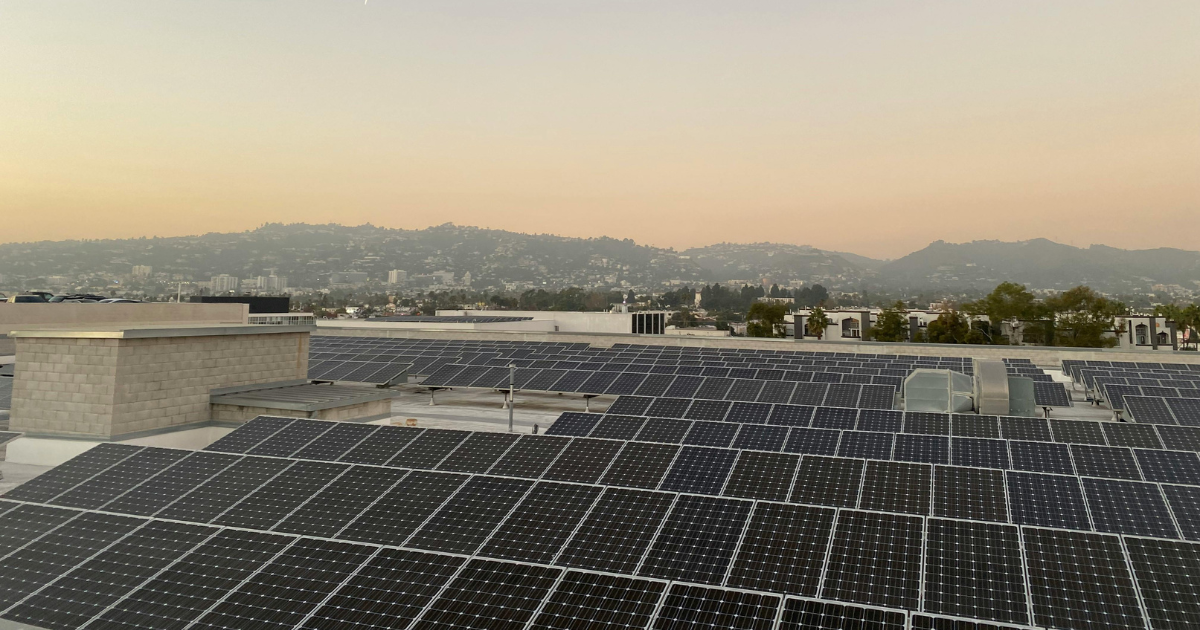
- Commercial buildings are ideal candidates. Large flat roofs, significant daytime loads, and controllable energy usage make solar-plus-storage particularly effective for NWI businesses.
Edward is ready for the next level. Insulation was step one. This is step two.
You did the insulation. Good. Your building is tighter, your HVAC is working less, and your NIPSCO bill is lower than it was. You feel the difference.
Now your brain goes to the next logical place: solar panels. You've seen them on rooftops. You've heard people talk about "selling power back to the grid." Your neighbor in Illinois has panels and swears he sometimes gets a check from the utility company.
Stop right there.
Your neighbor in Illinois lives in Illinois. You live in Indiana. These are different states with different rules and different utility companies, and if you walk into a solar conversation thinking like an Illinois customer, you are going to make a decision based on a math problem that doesn't apply to you. You will either overbuild, underbuild, or talk yourself out of it entirely because "the numbers don't work", when in fact the numbers do work, just not the way you're imagining them.
Here's the thing nobody explains clearly, you don't need the grid to be your battery. You can be your own battery. And in Indiana, in 2025, that is not just an option. It is the correct strategy.
Indiana Killed Net Metering. On Purpose.
Let's be direct about what happened.
Net metering was the system where solar owners sent extra electricity to the grid and the utility credited them at roughly the retail rate, the same price they'd pay to buy that power back. It was a one-for-one swap. It made the math on solar simple and generous.
Indiana's five largest investor-owned utilities, including NIPSCO, lobbied the state legislature to end it. In 2017, the legislature obliged by passing a law to phase it out. By 2022, all five utilities stopped accepting new net metering customers entirely.
NIPSCO's website says it plainly, "NIPSCO is no longer accepting Applications for the Net Metering Program." Full stop. Closed. Done.
What replaced it is called Excess Distributed Generation, or EDG. Under EDG, if your solar panels produce more electricity than your building is using at that moment, the surplus flows to the grid and you receive a credit. That credit is calculated at 125% of the prior year's average wholesale electricity price, which sounds like it might be generous until you see the actual number. NIPSCO pays roughly $0.12 per kilowatt-hour sent to the grid. The rate they charge you to buy electricity back is significantly higher.
You are selling wholesale. You are buying retail. That spread is the profit margin NIPSCO keeps on the transaction. Every kilowatt-hour you send them and buy back later is a transaction that benefits them more than you.
This was not an accident. The utilities lobbied for this outcome. The legislature delivered it. The Indiana Supreme Court upheld it in 2023 when solar advocates tried to fight back. It is the law of the land, and it is not changing anytime soon.
So when someone tells you "you can sell power back to the grid in Indiana," they are technically correct. The way you can "sell" a sandwich for fifty cents at a place that charges five dollars for the same sandwich is technically selling. It is not a strategy.

The Illinois Brain Problem
There are a lot of people in Northwest Indiana who grew up in Illinois, work in Illinois, watch Chicago news, and have friends in Illinois. Illinois has had full retail net metering. Illinois has had the Illinois Shines program. Illinois solar incentives have been substantially better than Indiana's for years.
So when those people think about solar, they think: panels on the roof, surplus to the grid, credits on the bill, maybe a check someday. The grid is their battery. The utility is their partner.
This mental model does not work in Indiana. NIPSCO is not your partner. NIPSCO is currently the highest-rate utility in the state of Indiana, is building natural gas plants to power Amazon's data centers, and has demonstrated no interest in paying you a fair price for electricity you generate and contribute to their system.
The Illinois brain needs to be updated. Not discarded, updated.
The correct model for Indiana is not "grid as battery." It is "building as island."
Explain It to Me Like I'm Six
Okay. Here is how this works.
The sun is always putting energy on your roof whether you catch it or not. Right now, if you have no solar panels, that energy hits your roof, warms it up, and you pay NIPSCO to power your lights. You are ignoring free energy that is landing on your building every single day.
Step one: put panels on your roof. Now those panels are turning sunlight into electricity. During the day, when the sun is out, your building runs on that electricity instead of NIPSCO's electricity. Your meter barely moves.
Here is the problem, the sun is not always out. At night, there is no sun. On cloudy days, there is less sun. Your building still needs power then. Under the old system, you'd send your surplus to the grid during the day and pull it back at night, using the grid like a giant shared battery.
But NIPSCO won't credit you fairly for what you sent them. So why donate surplus to NIPSCO's grid during the day and then pay their elevated rates to get it back at night?
Step two: put a battery in your building. Now when your panels produce more electricity than your building is using right now, that surplus goes into your battery instead of NIPSCO's grid. At night, your building draws from the battery. NIPSCO's meter barely moves then either.
You have created a closed loop. Sun hits panels. Panels charge battery. Battery powers building. NIPSCO involvement: minimal.
That is the whole system. It is not complicated. It does not require a degree in electrical engineering. It requires panels, a battery, an inverter to manage the conversion, and wire connecting them to your building's electrical panel.
Your building becomes an island. A well-insulated, solar-powered, battery-backed island. And because you did the insulation first, because Edward's building is already tight, the system you need is smaller and cheaper than it would have been otherwise. Insulation reduces your load. A smaller load requires fewer panels and a smaller battery. This is why the sequence matters.

✉️ If you're at the Edward stage, this is where the next step starts.
Insulation reduces your load. Lower load means fewer panels. Fewer panels means a smaller battery. The sequence matters.
Subject Property Address: ___________________________
Want to see what the system would actually look like? No pitch. No calls. No pressure.
[ Email address ] → [ Send Me the Real Stuff ]
"But What About When the Battery Runs Out?"
You are still connected to the grid. You are not going off-grid entirely. When your battery is depleted and the sun isn't shining, NIPSCO is still there as backup.
The goal is not to eliminate your NIPSCO bill. The goal is to minimize your exposure to it. On a sunny day in July, you might not use a single kilowatt-hour from NIPSCO. On a gray week in January, you might draw heavily from the grid. But across a year, the fraction of your energy that comes from NIPSCO drops dramatically, and that fraction is the part that is subject to rate increases, GenCo experiments, data center demand, and whatever NIPSCO decides to do next.
You are not escaping the grid. You are reducing your dependence on it. Those are different things, and the second one is achievable right now, with technology that exists today, at costs that have dropped substantially over the last decade.
Does the Math Actually Work Without Good Buyback?
Yes. The math works differently, but it works.
Under net metering, the value of solar came partly from the credits you accumulated by exporting surplus. Under the battery model, the value comes from something simpler: every kilowatt-hour you generate and use yourself is a kilowatt-hour you didn't buy from NIPSCO.
NIPSCO's residential rate is among the highest in Indiana. Every unit of electricity your panels produce and your battery stores and your building consumes is electricity valued at whatever NIPSCO would have charged you for it, not at the discounted wholesale rate EDG pays you to export it. You are capturing the full retail value of your own generation by using it yourself.
The technical term for this is "self-consumption." The colloquial term is, keep what you make.
Commercial and industrial buildings are particularly well-positioned for this model because they tend to have large, flat rooftops with good solar exposure, significant daytime loads that can be powered directly from panels during peak generation hours, and more surface area relative to load than a typical house. The battery bridges the gap between when the sun is generating and when the building needs power.
The sizing matters, you want a system calibrated to your actual load profile, not a generic residential estimate. A good solar assessment looks at your twelve-month consumption history, identifies when your peak demand occurs, and sizes the panel array and battery bank to maximize self-consumption and minimize grid dependency.
This is not a one-size-fits-all product. It is a building-specific calculation. Which is why the right starting point is running the actual numbers for your actual building.
What's Coming for the Grid
You already know from the last article that NIPSCO is building multiple gigawatts of new natural gas generation to power Amazon's data centers. That infrastructure costs money. The GenCo structure is supposed to keep those costs off your bill, but GenCo is a new, first-of-its-kind, largely unregulated entity, and the people who have watched NIPSCO operate for decades are openly skeptical that the wall between data center costs and your bill will hold over fifteen years.
Meanwhile, the demand on the grid is about to increase dramatically. A Hammond city council member said a handful of hyperscale data centers would, by 2030, use more electricity than all Indiana residential customers combined. More demand, same grid, same distribution infrastructure in your neighborhood, that is not a setup for stable prices.
This is not a prediction of doom. It is a description of incentives. NIPSCO is a utility regulated in a way that allows it to earn a return on capital investment. More infrastructure means more capital. More capital means more rate base. More rate base means higher allowed earnings. The incentive structure does not reward keeping your bills low. It rewards building things.
On-site battery storage makes you less of a participant in that dynamic. Not immune, less. And in a grid environment that is about to get significantly more complex and more expensive, less is better.
The Short Version, For Skimmers
Here is the whole thing in six sentences.
Indiana got rid of fair solar buyback. NIPSCO pays you badly for the electricity you export to them. The fix is to stop exporting. Store your surplus in a battery. Use your own electricity. Minimize what you buy from NIPSCO.
That's it. That's the article.
What Comes Next
We are building a solar-plus-storage assessment program specifically for NWI commercial and multifamily buildings. Not a lead-gen form that sells your information to fifteen installers. An actual analysis: your building, your load data, your roof, your numbers.
If you are at the Edward stage, insulation done, thinking about what's next, this is what's next.
The panels go on the roof. The battery goes in the utility room. The wires run. The sun does the rest. You stop donating free energy to a utility that charges the highest rates in the state and calls it a fair deal.
✉️ Ready to run the numbers? Let us know. We're building this program right now, and the first buildings through it get the most attention.
Subject Property Address: ___________________________
No pitch. No calls. No pressure.
[ Email address ] → [ Send Me the Real Stuff ]
Pristine Industrial Roofing — Serving commercial and industrial property owners across Lake County and Porter County.
Liquid-applied Conklin coating systems. FLEXION vinyl membranes. Proactive maintenance programs.
Valparaiso | Hammond | Portage | Merrillville | Hobart | Gary
This is Article 8 of 10 in our NIPSCO series. And this is where everything comes together.
Read Article 1 here, NIPSCO Just Cranked Your Bill, Again. Here's What They’re Hiding.
Article 2, Your Landlord's Been "Fixing the Roof" for a Decade. You're Still Paying NIPSCO.
Article 3, Dark Roof? That's 25% of Your NIPSCO Bill Right There.
Article 4, NIPSCO and the Indiana Statehouse Had an Affair. You're Paying for the Hotel Room.
Article 5, Your NIPSCO Bill Went Up 30%. Insulation Drops It 45%. Do the Math.
Article 6, Vinny's Taco Shop Just Got a $4,000 NIPSCO Bill. Here's What He Did About It.
Article 7, Data Centers Are Eating NWI's Grid. Guess Who's Paying for It.
Next in the series: The Philippines Has Scheduled Brownouts. They’re Coming Here Next.
Read other blog:

We Love Conversations
 SoHelpful@PristineIndustrialRoofing.com