
Data Centers Are Eating NWI's Grid. Guess Who's Paying for It.
Hobart is fighting one. Merrillville approved one. Gary and Hammond want more. Your NIPSCO bill reflects all of it. The connection between massive data processing facilities and your rising utility costs, explained simply.
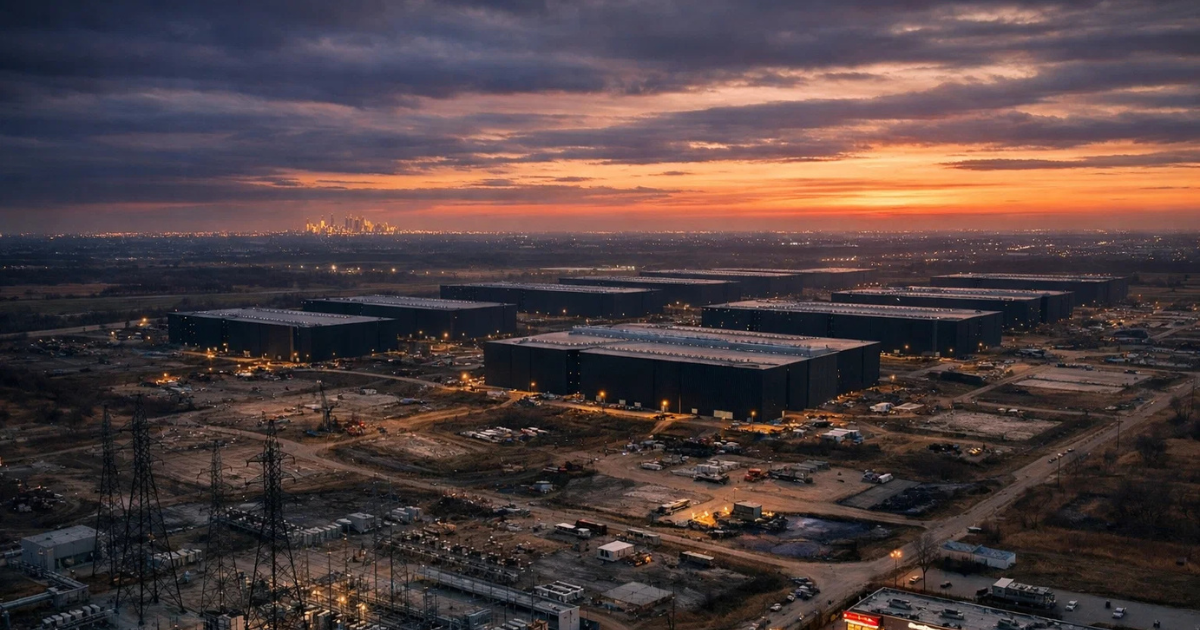
- Data centers are driving up NWI electricity demand. Massive facilities like Amazon and CoreWeave consume industrial-scale power 24/7, forcing the local grid to be upgraded, which can indirectly increase your utility bills.
- Local decisions matter, but the impact is regional. Hobart residents are fighting data centers, Merrillville approved them, and Hammond is expanding, your electricity rates are affected regardless of your town’s stance.
- Building efficiency is your best defense. Upgrading insulation and sealing air leaks reduces reliance on the grid, lowering exposure to rising costs caused by new industrial loads.
- Private equity and GenCo are reshaping the grid. NIPSCO’s new GenCo entity allows large industrial customers to get dedicated power, which may prioritize data centers’ needs over ordinary ratepayers, potentially keeping rates high for everyone else.
Tim and Edward don't know why their bills keep rising. This article connects the dots.
There is a quiet transformation happening across Northwest Indiana, and it has almost nothing to do with you. It has to do with Amazon. It has to do with CoreWeave. It has to do with artificial intelligence companies that need somewhere to put their servers, and they have decided that somewhere is your backyard.
The result is a land rush. Data centers, buildings the size of multiple Walmart Supercenters, running 24 hours a day, consuming electricity at a scale that dwarfs entire cities, are either being proposed, approved, built, or fought over in Hobart, Merrillville, Hammond, and unincorporated Lake County right now. There are at least fourteen under discussion in the NIPSCO service territory. The grid is being redesigned around them. And your bill is going up whether you benefit from any of it or not.
Let's walk through the map.
Hobart: The Town That Said "No." Sort Of.
In the heart of Hobart, along 61st Avenue and Colorado Street, two developers want to build data centers on a combined 565 acres, roughly one square mile, in the geographic center of the city. Amazon's name has since been attached to what's been described as a $15 billion investment. The city council already rezoned 725 acres from residential to light industrial. The mayor went on a field trip to Virginia to visit a data center. The easement was vacated. The fill permit was approved.
The residents found out and lost their minds. Correctly.
Thousands of Hobart residents have mobilized against two proposed Amazon AI data center projects, up to 25 buildings planned near schools, hospitals, parks, and homes. About 220 homes sit adjacent to the proposed site. Eighty of them rely on well water. Five parks, a hospital, and a proposed elementary school are within two miles.
The opposition group, "No Data Centers Hobart Indiana," has plastered "NO DATA CENTER" signs across yards throughout the city. They packed city council meetings until people were spilling into the hallways. They presented over 1,000 signatures at one meeting, then 1,800 at another, and the numbers keep climbing. One resident, Frank Fritz, has lived in Hobart for 52 years. The proposed data center would go directly across the street from his house. "What the mayor is doing is undermining our investments," he said. "It's just blatant."
Their concerns are not hysteria. Data centers of this scale consume millions of gallons of water daily for cooling. They run industrial-scale diesel generators for backup power, not one or two, but potentially dozens per building, that test routinely and run through any outage. They generate persistent noise beyond residential thresholds. When construction ends, most of the operational jobs are managed remotely. A Purdue University professor who presented to the city council said it plainly: the construction trades get work, then it goes dark and the servers run themselves.
Resident Angelita Soriano, who lives across the street from the proposed site and has two young daughters, put it more personally: "They want to be able to play outside without having to consume those carbon emissions, hear the noise."
Mayor Josh Huddlestun declined an on-camera interview with NBC Chicago but issued a statement defending the development as a way to grow the city's finances "without burdening residents with tax increases." He has consistently supported the project.
Four homeowners eventually filed a lawsuit in Lake County Superior Court in December 2025, alleging the city council and plan commission violated their due process rights under both the U.S. and Indiana constitutions. The lawsuit claims the rezoning was "arbitrary, capricious, an abuse of discretion," and asks the court to overturn the city's actions.
As of now, this is the only town in Northwest Indiana where residents are fighting back in court.

What This Means for Your Electric Bill
Tim and Edward didn't think data centers had anything to do with their utility bill either.
But if massive industrial power demand is being added to the grid in your region, your building's energy efficiency suddenly matters a lot more.
Before the policy debates play out, the one thing you can control is how much electricity your property actually needs.
✉️ Want to see how exposed your building is to rising power costs? We'll run a quick building energy check, FREE.
Subject Property Address: ___________________________
No sales pitch. No calls. Just the numbers.
[ Email address ] → [ Send Me the Real Stuff ]
Merrillville: Open for Business
While Hobart residents were learning what a fill permit was, Merrillville was rolling out the welcome mat.
At least four data center developers have approached Merrillville. Karis Critical wants to build a campus of up to nine buildings on 180 acres on 101st Avenue east of Deep River, potentially $900 million in investment. Wylie Capital is proposing a 1.2 million-square-foot, six-building campus near Broadway that could represent $600 million in investment and 100 to 200 high-paying jobs. Province Group wants to invest up to $500 million in a four-building campus near Colorado Street and Harms Road. The Merrillville Town Council voted 7-0 to approve zoning for the Karis project. The advisory committee they created gave preliminary approval to the Province Group in November 2024.
To Merrillville's credit, they did form a Data Center Citizen Advisory Committee, nine residents, town officials, and development professionals, before making decisions. That's more than Hobart did. The committee has had open meetings and produced minutes. Town council members have cited millions in property tax revenue per building and minimal demand on municipal services.
The pitch is real. Data centers don't generate truck traffic. They don't need a lot of police or fire response. They pay property taxes. One plan commission member estimated each Karis building could bring in a million dollars a year in property tax revenue. If that holds, the math is genuinely attractive.
But the power question is the same as everywhere else: NIPSCO has to build infrastructure to serve them, and right now NIPSCO doesn't have the megawatts.
Hammond: The Biggest Deal in City History, Pending NIPSCO
Hammond is further along than anyone. There is already a data center there, Digital Crossroads, on the Lake Michigan shoreline where the State Line Energy coal plant used to be. By early 2024, it had reached capacity. CoreWeave, an AI cloud computing company specializing in GPU processing for AI developers, wants to expand it into a new 450,000-square-foot hyperscale facility. The developer, Decennial Group, is proposing a $3 billion investment. With equipment, the whole project could reach $7 billion, potentially the largest private investment in Northwest Indiana history.
The Hammond Common Council approved an 8-0 development agreement in June 2025. The deal includes property tax abatements and a community impact payment that would fund the city's College Bound scholarship program, putting thousands of kids through college for 20 years.
There's one problem. The new facility would need 180 megawatts of additional power. Mayor Tom McDermott said the data center would consume more electricity than U.S. Steel's Gary Works. NIPSCO has limited megawatts available. A Hammond City Council member noted that just a handful of hyperscale data centers coming to Northern Indiana would, by 2030, use more electricity than all Indiana residential customers, more than all Indiana commercial customers, and nearly as much as all Indiana industrial customers combined.
McDermott has been trying to get NIPSCO on the phone. "At this point," he said, "the only piece we are waiting on is NIPSCO." He extended the contract deadline in December 2025, giving developers 60 more days to finalize a power agreement. CoreWeave and Decennial have already paid NIPSCO $30 million just for feasibility and engineering studies.

NIPSCO's Play: GenCo
Here is where the story stops being about individual towns and starts being about you specifically.
NIPSCO looked at fourteen data centers trying to connect to its grid and said: we need a new entity for this. So they created NIPSCO Generation LLC, GenCo, a spinoff company that exists to sell power to big industrial customers. It is largely exempt from the regulatory proceedings that normally apply before power plants get built in Indiana. The Indiana Utility Regulatory Commission approved the GenCo structure in September 2025. It is the first of its kind in the country.
NIPSCO's first major GenCo deal is with Amazon. They plan to build two 1.3-gigawatt natural gas power plants and a 400-megawatt battery storage system. Combined with new transmission infrastructure, the build-out is expected to cost approximately $7 billion.
The official line: existing customers won't pay for it. GenCo keeps the data center costs separate. Amazon pays for its own power. NIPSCO says the 15-year deal will actually produce about $1 billion in savings for ratepayers, starting as monthly bill credits around 2027, eventually reaching $7 to $9 per month for a typical residential customer using 1,000 kilowatt-hours.
Now for the counterargument, delivered by people who have been doing this for a long time.
NIPSCO already has the highest electric rates in the state of Indiana. According to the Citizens Action Coalition, residential customers saw roughly $50 per month in bill increases, about 26.7%, in a single year. Ben Inskeep, a program director at the coalition, said plainly: "We have no reason to trust NIPSCO's claims about protecting ratepayers." The 2.6 gigawatts of new gas generation GenCo plans to build could produce nearly four times the greenhouse gas emissions of the coal plant it replaces. None of the electricity serving the data centers will come from renewable energy. And GenCo, being a new and largely unregulated entity, does not have to file a detailed plan each time it wants to build or acquire a new generation, critics say that makes oversight nearly impossible.
A LaPorte County attorney who has cross-examined nine NIPSCO presidents at regulatory hearings put it this way, "NIPSCO has the highest electric rates in the state, yet they told the IURC, 'just trust us,' we've discovered the 'secret sauce' to wall off data center energy costs from existing ratepayers."
Meanwhile, advocates like Ashley Williams of Just Transition Northwest Indiana said, "This is a monopoly utility whose duty is to generate profit for shareholders, not to protect ratepayers."
To be fair, the structure does have more safeguards than the alternative, which was just letting NIPSCO fold these costs into its standard rate base and spread them across everyone automatically. GenCo at least tries to keep the books separate. Whether that promise holds over a 15-year contract, through multiple regulatory administrations, with an entity that has never existed before, is a different question.
What People Are Actually Asking About Data Centers and Your Bill
Q: Will data centers definitely raise my NIPSCO bill?
A: NIPSCO and the IURC say no, the GenCo structure is specifically designed to keep data center infrastructure costs separate from your rate base. The promise is real on paper. The skepticism is also real: NIPSCO already has the highest electric rates in Indiana, GenCo is a first-of-its-kind unregulated entity, and the people who have watched NIPSCO operate for decades aren't taking the "trust us" answer at face value. The honest answer is: watch the rate cases over the next five years.
Q: What is GenCo exactly?
A: It's a spinoff company NIPSCO created to sell power directly to large industrial customers like Amazon's data centers. It operates outside normal utility rate regulation, meaning it doesn't have to file the same kind of detailed plans before building new power plants that NIPSCO would. The IURC approved it in September 2025. It's the first structure of its kind in the country.
Q: Why is Amazon building data centers in Hobart of all places?
A: Proximity to Chicago fiber networks, available industrial land, and critically, Blackstone's acquisition of a stake in NiSource gave NIPSCO the financial backing to fund new grid infrastructure at a scale most regional utilities couldn't. Data center developers specifically cited Blackstone's deep pockets as a reason NWI became attractive. The grid got an investor. The investors attracted the data centers.
Q: Can Hobart residents actually stop the data centers?
A: Four homeowners have filed a lawsuit in Lake County Superior Court alleging due process violations. The legal challenge is real and ongoing. But they are fighting a $15 billion Amazon investment with a four-person lawsuit against a city government that already rezoned 725 acres and approved the fill permit. Uphill is an understatement. The more likely outcome is some negotiated modification to the project rather than a full stop.
Q: What about Merrillville and Hammond, did residents get a vote?
A: Merrillville created a citizen advisory committee before approving anything, which is more process than Hobart offered. Hammond's city council voted 8-0 in favor and the mayor has been the project's most enthusiastic advocate. Resident opposition in those communities has been minimal compared to Hobart's organized pushback.
Q: Why doesn't NIPSCO just build more renewable energy instead of gas plants for the data centers?
A: That's the question clean energy advocates are asking loudly. GenCo's current plan involves two 1.3-gigawatt natural gas plants. None of the electricity serving the data centers will come from additional renewable energy. NIPSCO has pivoted sharply toward gas to meet data center demand quickly, speed and reliability are the priorities, and gas plants can be dispatched on demand in ways that solar and wind currently cannot at this scale without massive storage investment.
Q: What can I actually do about any of this?
A: You can't stop the data centers. You can reduce your exposure to whatever the grid becomes as a result of them. Insulating your building lowers your load. Solar plus battery storage takes a portion of your consumption permanently off NIPSCO's meter. Every kilowatt-hour you generate and use yourself is one that doesn't pass through a rate structure being redesigned around Amazon's needs.

What's Actually Going On
Let's be direct about the big picture.
The reason data centers are flooding Northwest Indiana is not a mystery. The region has fiber infrastructure. It has industrial land. It is close to Chicago without Chicago's costs. And Blackstone, the private equity firm that acquired a stake in NiSource, has deep enough pockets to fund grid upgrades that a normal utility couldn't. That's actually what one developer told Merrillville's advisory committee: the data centers are interested in NWI precisely because Blackstone acquired a share of NIPSCO and can finance new infrastructure without going dollar-by-dollar through the rate base.
So, private equity buys into your utility. Private equity's deep pockets make the grid attractive to hyperscalers. Hyperscalers flood in. Your grid gets rebuilt around their needs. You get told you won't pay for it.
You have seen this movie. You know how it ends.
The government piece is also real. Data centers are not just corporate vanity. Government agencies use them for processing, storage, and surveillance infrastructure. The demand for compute is being driven not just by consumer AI but by federal and state contracts. Every fusion of AI and government function, from FLOC cameras to benefits administration to law enforcement databases, requires somewhere to run. That somewhere is increasingly Northwest Indiana.
What You Can Do About Your Bill
You cannot stop a data center from being built near you. Hobart residents are trying, and they may succeed, but they are fighting uphill against a $15 billion Amazon investment with a four-person lawsuit. The odds are long. Merrillville is not fighting at all. Hammond welcomed it with an 8-0 vote.
What you can do is reduce your dependence on a grid that is being fundamentally restructured around industrial demand, and that NIPSCO has already demonstrated it will charge you the highest rates in the state for.
Insulation is the most direct intervention. When your building envelope is tight, your HVAC system works less, and your exposure to rate increases shrinks proportionally. Every degree of setback you don't have to fight through drafty walls is real money that stays in your account regardless of what NIPSCO decides to do with GenCo. Air sealing is cheap. Insulation upgrades pay back over years, not decades. And they work whether your bill goes up because of data centers, weather, or some future regulatory decision you had no vote in.
The grid is changing. The demand on it is changing. The costs, no matter what anyone promises, will land somewhere. Making your building less dependent on the grid is the one move that is entirely within your control.
Tim and Edward's bills are going to keep rising. The difference between them and their neighbors is whether they did anything about it when they could.

✉️ Same situation? We'll run the same analysis. FREE.
Subject Property Address: ___________________________
No pitch. No calls. No pressure.
[ Email address ] → [ Send Me the Real Stuff ]
Pristine Industrial Roofing — Serving commercial and industrial property owners across Lake County and Porter County.
Liquid-applied Conklin coating systems. FLEXION vinyl membranes. Proactive maintenance programs.
Valparaiso | Hammond | Portage | Merrillville | Hobart | Gary
This is Article 7 of our NIPSCO series. And this is where things get really exciting.
Read Article 1 here, NIPSCO Just Cranked Your Bill, Again. Here's What They’re Hiding.
Article 2, Your Landlord's Been "Fixing the Roof" for a Decade. You're Still Paying NIPSCO.
Article 3, Dark Roof? That's 25% of Your NIPSCO Bill Right There.
Article 4, NIPSCO and the Indiana Statehouse Had an Affair. You're Paying for the Hotel Room.
Article 5, Your NIPSCO Bill Went Up 30%. Insulation Drops It 45%. Do the Math.
Article 6, Vinny's Taco Shop Just Got a $4,000 NIPSCO Bill. Here's What He Did About It.
Next in the series: Stop Thinking the Grid Will Reward You. NIPSCO Is Not Your Battery.
Read other blog:



We Love Conversations
 SoHelpful@PristineIndustrialRoofing.com