
Kick the Can, On Purpose
Not every roof needs a new roof. Sometimes the wisest money you'll spend before a sale is just enough to buy three to five quiet years.

🔲 Not every roof needs a new roof before a sale. Over-investing is its own kind of haircut.
🔲 Three to five quiet years is a real product. Sometimes it's the right one.
🔲 Kicking the can on purpose is a strategy. Kicking it by accident is what kills closings.
🔲 The next owner deserves the truth. Honest disclosure isn't weakness, it's the close.
🔲 Timing the investment to the transaction is the move. Too early costs money. Too late costs the deal.
NOT YOUR ISSUE. YOUR ROOF IS SOMEBODY ELSE’S PROBLEM NOW. WAIT, IS IT?
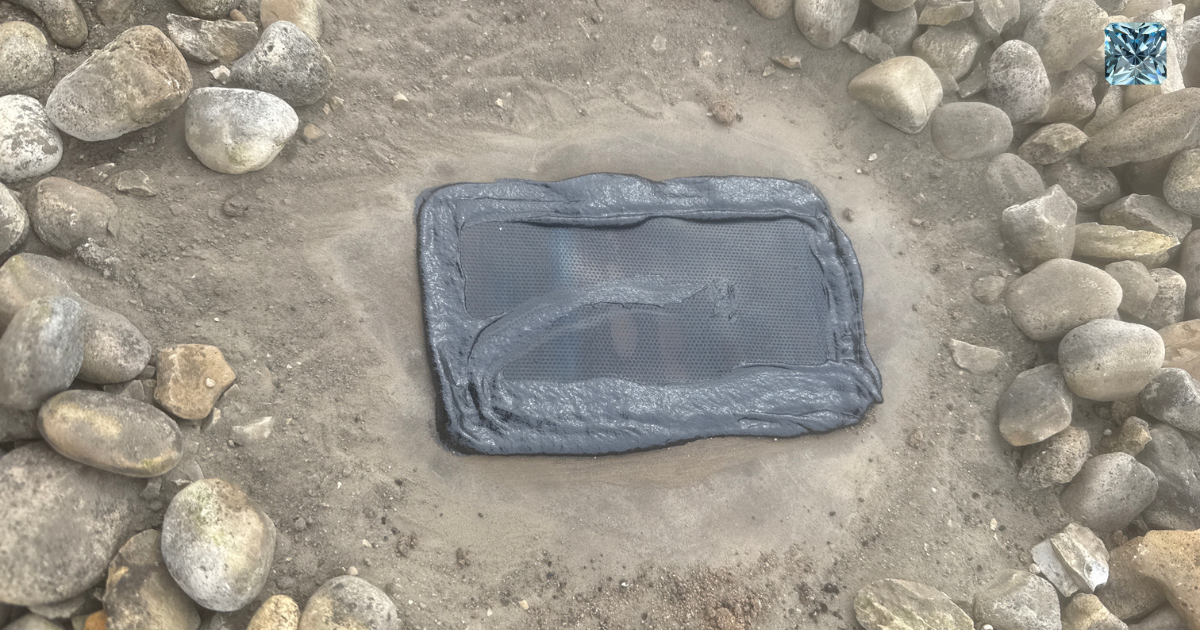
We're doing exactly this right now for a medical facility in Merrillville. The roof is past forty years old. It's buried under ballast, all that rock, and the seams are leaking in more places than you'd want to count.
We're not going to talk that owner into a full system he doesn't need. He's selling. The plan is simple and honest: peel back the ballast, patch every seam we can reach, and put about twenty thousand dollars into stopping the leaks, the saturation, and the mildew.
That buys him three to five solid years.
The next owner walks in knowing, honestly, up front, that the real seamless system is theirs to do, because there are serious problems down inside that roof a sale doesn't make disappear.
That's what legacy transfer is really about. Timing. Preparation. Planning ahead. And, if we're honest, loving the next person enough to tell them the truth.
Done dishonestly, that same strategy is how deals die and lawsuits start.
The difference between those two outcomes is one document and one conversation. This is that conversation.
OVER INVESTING IS ITS OWN KIND OF HAIRCUT
Why spending the most before a sale is not always the smartest move.
Here is the mistake sellers make when they hear "roof problem" at the closing table.
They price the full solution. New system. Full tear-off. Edge to edge. The whole number. They assume the only defensible move is the most expensive one.
It isn't.

Over-investing in a building you're selling produces one of two outcomes. Either the market doesn't reward the investment, the buyer prices the building on its income and location, not its new roof, and you spent $120,000 that added $30,000 to the sale price. Or you spend the money, close the deal, and watch the next owner tear off your brand-new system three years later to address the structural issues underneath it that you both knew were there.
Neither outcome is good. Both of them cost money you didn't have to spend.
The right question before any pre-sale roofing decision is not: what does this roof need? The right question is: what does this transaction need?
Those are different questions with very different answers.
A building going to market in six months with a buyer pool that's pricing on cap rate doesn't need a new roof. It needs no surprises. It needs documented condition. It needs enough stability to get through due diligence without producing a six-figure renegotiation.
Sometimes that's a full coating system. Sometimes that's twenty thousand dollars of targeted work and three to five honest years. The skill is knowing which one the transaction calls for.
Over-investing right before you sell is its own kind of haircut. The question isn't what the roof needs. It's what the transaction needs.
Pre-sale roofing investments that exceed the buyer's pricing sensitivity for the asset class produce negative returns at closing. The appropriate investment level is calibrated to the transaction, not to the roof's theoretical ideal condition.
THREE TO FIVE QUIET YEARS IS A REAL PRODUCT
What targeted pre-sale work actually delivers, and how to scope it honestly.
Kicking the can on purpose means one thing: buying a defined window of stability with the minimum investment required to deliver it.
That's not a half-measure. That's a scoped deliverable. And scoping it correctly is the work.

For the Merrillville medical facility, the scope is specific. Peel back the ballast in the zones where seam failure is active. Patch the laps we can reach. Address the penetration flashings that are pulling. Apply a targeted moisture barrier in the saturation zone in the northwest corner. Document every finding and every repair.
What that scope delivers? No active leaks for three to five years. No ceiling stains. No mildew complaints from tenants. No roof-based ammunition for a buyer's inspector to price at the worst number on the menu.
What it does not deliver? A permanent solution. A system warranty. A seamless surface.
And here's the important part. The seller knows that. The buyer will know that. The documentation will say that. Three to five years of stability, honestly scoped, honestly disclosed. Not a new roof. Not represented as one.
That's the product. And for a seller whose timeline and asset profile make a full coating system the wrong financial move, it's exactly the right product.
The alternative, doing nothing and hoping the buyer's inspector doesn't find the seams, is not a strategy. It's a gamble on a fifty-year-old roof that has been losing that gamble for years.
Three to five quiet years is a real deliverable. Scoped correctly, priced honestly, disclosed fully, it closes deals that nothing or everything would have killed.
KICKING THE CAN BY ACCIDENT IS HOW DEALS DIE
The difference between a strategy and a problem is documentation and disclosure.
There are two versions of kicking the can on a commercial roof. One is a strategy. One is a liability.
The strategy version: you assess the roof, you know exactly what's there, you scope the minimum work that delivers the required stability window, you do that work, you document it, and you disclose the building's condition honestly to the buyer. The buyer knows they're getting three to five years on the existing system and the seamless solution is theirs to execute. The price reflects that. The deal closes cleanly.
The liability version: you know the roof has problems, you do nothing, and you hope the buyer's inspector misses them.
He won't miss them.

A forty-year-old ballasted roof with active seam failure and insulation saturation is not something an experienced inspector overlooks. He finds the wet corners on infrared. He pulls the cores. He documents the laps. And he prices it all at full replacement, tear-off, disposal, new system, because that's the worst-case number and the worst-case number is leverage.
Now you're in the renegotiation you were trying to avoid. Except now you're there without documentation, without a repair record, and without the ability to dispute findings you never formally acknowledged.
And if the buyer later discovers that the conditions were known and undisclosed, you're no longer in a negotiation. You're in a different conversation entirely.
Kicking the can on purpose is a strategy. Kicking it by accident is negligence. The documentation is what separates them.
The difference between a legacy transfer strategy and a disclosure problem is one document: the condition report you either have or you don't.
In Indiana commercial transactions, known material defects that are not disclosed create potential fraud and misrepresentation exposure for the seller. A documented pre-sale assessment, even one that finds significant conditions, is a legal asset, not a liability.
WHAT “I’LL BE HONEST WITH YOU” ACTUALLY LOOKS LIKE ON PAPER
Telling the next owner the truth isn't weakness. It's the close.
There's a version of this conversation that sellers resist because they think disclosure kills deals.
It doesn't. Surprises kill deals. Disclosure closes them.

Here's what honest legacy transfer documentation looks like for a building like the Merrillville medical facility.
The condition report says: the roof is forty-two years old. It is a ballasted EPDM system. Infrared scanning identified active moisture infiltration in two zones. Core sampling confirmed insulation saturation in the northwest quadrant. Seam failure was documented at fourteen locations. Penetration flashing separation was found at six points.
The repair record says: ballast was removed and re-laid in the active failure zones. Fourteen seam locations were patched with compatible membrane material. Six penetration flashings were reseated and sealed. The northwest saturation zone was treated with moisture barrier material. All work was photographically documented.
The disclosure says: the building has received targeted maintenance to address active failure points. The existing system has an estimated remaining useful life of three to five years under normal conditions. The next owner should plan for a full seamless coating system replacement within that window. There are subsurface conditions in the northwest quadrant that will require insulation replacement at the time of full system installation.
That's it. That's the whole disclosure. It doesn't kill the deal. It defines the deal.
A buyer who knows exactly what they're getting, three to five years of stability, documented, with a defined next step — is a buyer who can price the asset correctly and close with confidence. A buyer who finds undisclosed conditions during due diligence is a buyer who either walks or weaponizes the finding.
The seller who discloses writes the story. The seller who hides it lets the buyer's inspector write it instead.
Loving the next person enough to tell them the truth isn't a nice idea. It's a closing strategy. The honest disclosure is the document that keeps the deal together.
WHEN THE FULL COATING IS STILL THE RIGHT MOVE
Kicking the can isn't always the answer. Here's how to know the difference.
The kick-the-can strategy has a profile. It fits certain buildings and certain transaction timelines. It does not fit all of them.

If the building is priced at a level where a full Conklin coating system produces a positive return at closing, coating cost of forty thousand eliminates a hundred-thousand-dollar renegotiation position, the full system is the right call. The math is clear. Do the work, document it, go to market with a warranted seamless surface and nothing for the buyer's inspector to price.
If the building's insulation saturation is above twenty-five percent, the kick-the-can scope doesn't deliver the stability window it promises. Targeted seam repair over significantly saturated insulation is buying months, not years. The moisture keeps moving. The deck keeps absorbing. The repair scope you did in the Spring is failing again by Fall.
In that case, the honest answer is a partial or full system, and the seller needs to know it before the buyer's inspector finds it.
If the transaction timeline is longer than eighteen months, the math often shifts toward the full system. A coating installed today with a ten-year renewable warranty is a selling point at month eighteen, not a sunk cost. The buyer inherits a warranted surface with years of coverage remaining. That's a different negotiating position than a building with a documented three-to-five-year window.
And if the building is in a use category, medical, food service, industrial, where roof condition affects operating certifications or insurance requirements, the minimal-investment strategy may not be viable regardless of timeline.
The right answer is always transaction-specific. The assessment tells you what's there. The transaction profile tells you what it needs. Those two inputs together produce the right scope.
THE MERRILLVILLE MEDICAL FACILITY, IN REAL TIME
This isn't a case study. It's a job we're doing right now.
The building is a single-story medical facility in Merrillville. The owner has operated it for over two decades. He's selling in the next twelve to eighteen months. The roof is forty-two years old, original ballasted EPDM, never replaced, patched twice in the last eight years by a contractor who is no longer in business.
We went up. We ran infrared. We pulled cores in five locations.
What we found: active seam failure in two zones near the HVAC curbs, insulation saturation in the northwest corner running about twelve percent of total roof area, six penetration flashings pulling at the seams, and ballast displacement in the northeast quadrant exposing membrane to direct UV.
The deck is solid. The membrane, away from the failure zones, is adhered and intact. There is no structural compromise.
Full replacement quote: one hundred and sixty thousand dollars.
Our recommended scope: nineteen thousand.
The nineteen-thousand-dollar scope delivers three to five years of stability, documented repair record, honest condition disclosure, and nothing for a buyer's inspector to price at the worst number on the menu.
The one hundred and sixty thousand dollar scope delivers a warranted seamless surface, which is the right answer for a building being held for ten more years. It is the wrong answer for a building going to market in twelve months with a buyer pool that will price it on its medical use income, not its roof warranty.
The owner understood the difference immediately. He is not spending one hundred and sixty thousand dollars. He is spending nineteen thousand, closing in eighteen months, and letting the next owner execute the full system at the right time with full information.
That's the move. And it's the right one.
WHEN KICKING THE CAN IS THE WRONG ANSWER
Honesty first. Some buildings need the full solution before they go to market.
We're going to say this plainly because the strategy only works when it's applied correctly.
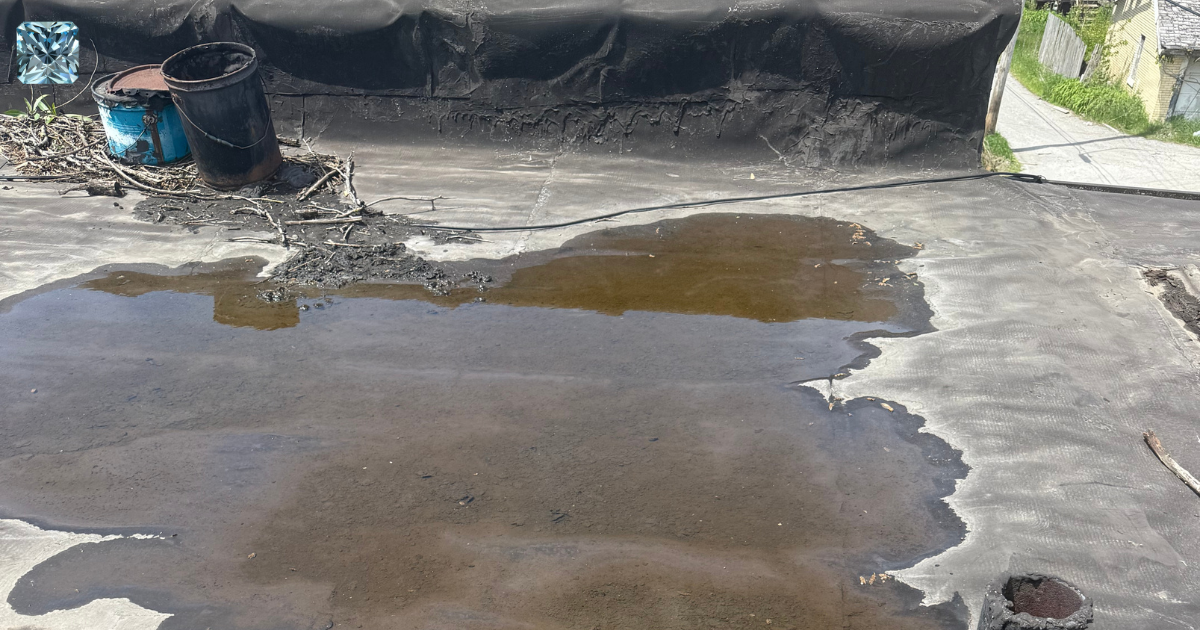
If the insulation saturation is above twenty-five percent across the roof, targeted repair is not a three-to-five-year solution. It's a patch on a wet sponge. The moisture keeps moving. The conditions get worse. And twelve months after the close, the new owner has a building with documented conditions that were known, addressed with inadequate scope, and passed forward anyway.
That's not legacy transfer. That's a liability transfer.
If the deck has structural compromise, rotted wood nailers, corroded steel, deteriorated concrete, no surface repair addresses the underlying problem. A buyer who discovers structural deck failure post-close has a fraud claim, not a roof claim.
And if the building's condition requires a use-specific certification, food safety, medical facility, industrial process, and the roof's condition is affecting that certification, the minimal-investment strategy doesn't exist. The certification drives the scope.
In those cases, the full system is the right answer. We'll say so, and we'll help the owner understand the transaction math for their specific situation.
Your building has a history. It has a buyer somewhere in its future. And it has a roof that knows exactly how old it is.
The question isn't whether that roof comes up at the closing table. It always does.
The question is whether you arrive at that table with a strategy, documented, scoped, disclosed, or whether you arrive with nothing and let the buyer's inspector write the story for you.
Which move is yours? Let's figure it out together.
THE QUESTIONS YOUR BROKER SKIPPED AND BUYER’S INSPECTOR WON’T
1. What does "kicking the can on purpose" actually mean as a roofing strategy?
It means buying a defined window of stability, three to five years, with the minimum investment required to deliver it, while honestly disclosing the building's condition and the defined lifespan of the repair scope to the buyer. It is not deferred maintenance. It is a scoped, documented, disclosed strategy calibrated to the transaction timeline.
2. How is this different from just doing nothing and hoping the inspector misses it?
Documentation and disclosure. Kicking the can on purpose means you assessed the roof, did the work, and told the buyer exactly what they're getting. Doing nothing means the buyer's inspector writes the condition report, and prices everything at the worst number on the menu. One is a strategy. The other is a gamble that a forty-year-old roof is going to pass a professional inspection.
3. What does the targeted pre-sale scope actually include?
It depends on what the assessment finds. Typically: active seam failure patched with compatible membrane material, penetration flashings reseated, saturation zones treated with moisture barrier material, and ballast re-laid over exposed membrane sections. The output is a documented repair record and a condition report that discloses current status and estimated remaining useful life.
4. How does the buyer know this is an honest disclosure and not a cover-up?
Because the condition report doesn't disappear the problems, it documents them. The disclosure says the roof is forty-two years old, here are the conditions that were found, here is the work that was done, here is the estimated remaining life, and here is what the next owner should plan to execute within that window. A cover-up hides the findings. An honest disclosure presents them with the repair record alongside.
5. When does the full Conklin coating system make more sense than the minimal scope?
When the coating investment produces a positive return at closing, typically when it eliminates a renegotiation position larger than the coating cost. When the transaction timeline exceeds eighteen months, making the warranted surface a selling point rather than a sunk cost. When insulation saturation is above the threshold where targeted repair delivers a meaningful stability window. The assessment tells you which scenario you're in.
6. What if the assessment finds conditions that require disclosure I wasn't expecting?
Then you know before the buyer does. That's the entire point of the pre-sale assessment. Known conditions give you options: scope the appropriate repair, price the condition into the listing, adjust the timeline, or disclose proactively. Unknown conditions that the buyer's inspector finds give the buyer all the options and leave you with none.
7. Is the targeted repair scope something Pristine documents formally?
Yes. Every pre-sale scope we deliver includes a written condition report with findings, a repair record with photographic documentation, and a scope summary that states what was addressed, what was not addressed, and the estimated remaining useful life of the existing system. That documentation is what the seller presents at the closing table.
Which move is yours? Let's figure it out together.
We'll tell you exactly what's there, what it needs, and what it costs.
Call or text: (219) 529-1995 • PristineIndustrialRoofing.com • Serving Lake County, Porter County, and Southwest Michigan.
[Get a Free Commercial Roof Inspection]
APPENDIX — SCIENCE SIDEBAR (FOR THE TECHNICAL READERS)
[Appendix A: Ballasted roofing systems, Construction, Aging and Failure Profile]
[Appendix B: Insulation saturation thresholds, what the numbers mean and why 25% is the line]
[Appendix C: Targeted pre-sale repair scope, what each line item does and how long it lasts]
[Appendix D: Legacy transfer disclosure, legal framework and document structure]
[Appendix E: Transaction timing and investment calibration, the decision matrix]
Read other blog:

We Love Conversations
 SoHelpful@PristineIndustrialRoofing.com