
Your Roof Has Feelings ... And It’s Been Trying to Tell You Something
When a Building Stops Getting Attention, It Doesn’t Stay Quiet for Long. The Most Expensive Roofing Decisions Are Made by People Who’ve Never Actually Looked Up.
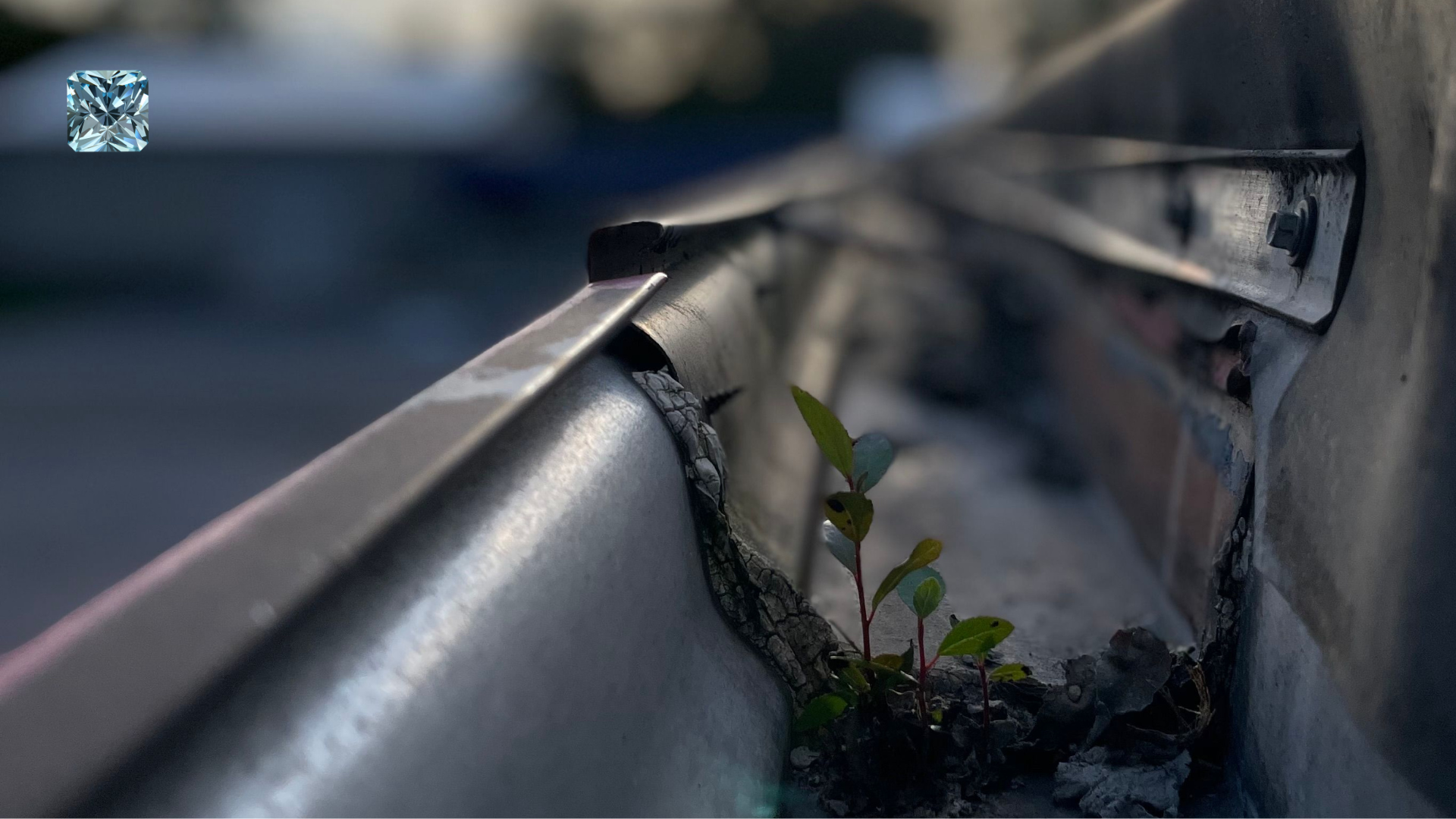
Roofs don’t complain the way people do, but they communicate loud and clear when something goes wrong. Usually at 3 o’clock in the morning. This piece is about the power of story, what a building actually feels when it’s being ignored, and why the two things every commercial roof is afraid of are delay and decay. If your building has a flat roof and you haven’t had eyes on it in the last 12 months, this one’s for you.
Why Brands Tell Stories 💡
Ask anybody what comes to mind when they hear the word “storyteller.”
Brent: Grandpa.
Thankful: Yeah. Grandpa Dean. He just... had it.
Let me tell you the power of a story.
Thankful: Have you ever lived life?
Brent: Oh yeah.
Thankful: Has it ever been strenuous?
Brent: It’s uh... yeah. Mostly strenuous.
Thankful: Do you know that movies help people escape?
Brent: Yes. Temporarily.
Thankful: Into a wonderland. Of imagination.
Now here’s the thing. We all have a child inside. And that child dwindles when the imagination dwindles. I don’t think it can fully die, but the child inside of you should stay vibrant and a little bit victorious and courageous and enthusiastic. That child needs to be properly nurtured.
And the story that your imagination tells yourself should be significantly superior to anything Hollywood animators can put together.
Brent: For sure.
Thankful: Your brain, specifically your spirit, your soul, your imagination, the IMAX inside your little noggin should be able to put together a more fantastical creature or dragon than any artist can sketch.
Brent: Definitely. It’s like four dimensional.
Thankful: You got the smell, the taste, the touch, the motion, the lotion. You got the lights, the ambiance, the whole thing.
“My grandpa taught me, without ever sitting me down and teaching me, how to convey an immersive story experience. Like you were in it to win it.”
He would literally pick you up by your earlobes, transport you to the creek, have you sit on a rock right by the side of the creek, and watch the fish. Watch the beavers building their little home. The eagles playing overhead.
And here comes Black Beauty. Black beauty with the satin coat, just trouncing around and loving life. Black Beauty, also the Black Stallion. The last of the great line of stallions. Not one white hair in all of his coat. But a ferociously vibrant spirit of independence. Just a thrasher of the air.
Thankful: Could never be tamed. And that’s one of the keys to the stallion, if you tame the liberty out of someone, then they’re no longer part of nature. Now they’re part of submission to humanity, which is perfectly fine, but that was never this individual’s purpose.

What a Building Feels Like 🏢
So storytelling is communicating the essence of a person, and an outcome, and a scenario. Giving personhood to an animal was really interesting to me as a child.
And I would like to give personhood to buildings.
Brent: Amen.
Thankful: Buildings can be happy again. Buildings can get sad. Buildings are afraid of two things. Would you like to hear the two things?
Brent: Sure.
Thankful: Delay and decay. Because with delay, you get the onset of decay.
“Buildings are afraid of exactly two things: Delay. And decay.”
Buildings like to be bright and cheery and clean and happy and positive and hopeful. And to be known that they’re a priority. They want to serve.
Thankful: What’s one of the primary functions of a building?
Brent: Service. Protecting people.
Thankful: Absolutely. So if a building is just a warehouse and all it’s full of is stuff, it’s less important than the building down the street that has people working in it. Because people are powerful. People are endued with the spirit of God, especially if they’re born again. They have a soul. And they’re extremely valuable.
So a building serves a purpose. And the building watches the people, thinks about the people, cares for the people.
Thankful: Now, what does a wall support? What does it hold up?
Brent: A frame?
Thankful: Yes. And the frame, what is wrapped around the frame?
Brent: The roof.
Thankful: The roof is above the trusses. Walls typically go up, and then the roof protects the top. A roof is kind of like a wall that’s horizontal.
A Roof Gets Zits 🤔
Walls tend to last maybe 50 years or more without needing tuck pointing or extra reinforcement. But roofs, they only last about 15 to 20 years without needing major attention.
Thankful: 15 years is not that long. But 15 years is very fast. Some people put makeup on their faces almost every day.
Brent: Right.
Thankful: And a roof needs makeup. A roof gets zits.
Brent: Ha, I’ll definitely get that.
A roof can bubble, and crack, and pop. It can get sunburned. A roof can get bald. It can lose its hair. Cracks. Leaks.
A roof can collect birds, and moss, and algae, and lichen. Little puddles and ponds. Bird baths. Beetles. All kinds of vermin. There can be a collection of tools and toys and screws and bolts and paint brushes and trowels. We find all kinds of stuff. Old buckets.
And then what happens is the rooftop units die, and instead of removing the old air conditioner or the old vent, they just leave it up there to rot. For one decade. Two decades. Three decades. Because people think if nobody looks at it, then it doesn’t matter.
Brent: Out of sight, out of mind.
Thankful: What would you feel like if nobody looked at you?
Brent: Neglected.
Thankful: Don’t you think somebody should look at you at least once a year, maybe twice a year?
Brent: Yeah. Once or twice a year.
Thankful: Just to get up there. Clean your face. Clean out your nose. Your nose has pores, and those pores get clogged, because you know, living outdoors.
Thankful: Can you imagine living outdoors every day of the year?
Brent: I can imagine it would be... it wouldn’t be all that great.
Thankful: Are you familiar with the concept of homelessness?
Brent: Yes.
Thankful: It’s almost like a building is homeless. It has nowhere to hide. Every time it rains, the building feels it. Every time it snows, the building has to catch all of that.
“What would you feel like if nobody looked at you?”
Thankful: You know what else a building has to put up with?
Brent: The elements?
Thankful: Bullets.
Thankful: We live in the land where bullet holes go through buildings and roofs — we’re gonna pause for laughter. If you didn’t laugh, you have to rewind 15 seconds and laugh again. Buildings have to become bulletproof. Do you know how often we have to go out and patch bullet holes?
Brent: More often than you’d think.
Thankful: You know what else we have to protect against here in Northwest Lake and Porter County?
Brent: Is it apartments?
Thankful: Fireworks. Fireworks get launched up into the sky. And then they land on top of the roof. Large, flat roofs. And are roofs prepared to handle a burning element falling out of the sky?
Brent: Not entirely.
Thankful: What if that roof is on a restaurant? Do you know something that’s usually on a restaurant roof?
Brent: Grease.
Thankful: Animal fat. And what happens if that grease gets lit?
Brent: Goes boom bah.
Thankful: Then Mr. Fireman shows up.
So yeah. The roof gets nervous about these things. Like, what if I get a hole shot in my face today? I don’t have Kevlar coating. I don’t have my bulletproof vest. And I hope I don’t light on fire, because most buildings that are old have never been fire tested.
✉️ Quick question, when was the last time someone actually got up on your roof and looked around?Answer below + drop your email and we’ll send you more real talk about commercial flat roofing.
[ Your answer ] + [ Email address ] → [ Get More Like This ]
The Wellness Check 🩺
So we’re just trying to give animus, which means animation, a cartoon quality, to how a roof feels. Because a roof just wants to do its job.
Brent: Like you show up and you do your job.
Thankful: Right. The roof is a little slow, but it’s very steady, very stable. A lot of people depend on it. It has a job to do, and we just want to make sure that the roof is feeling okay. We just want to give it a wellness check. We’re here to stick a thermometer in the roof and see how much moisture is trapped inside the layers.
The roof protects you. All four corners of the building. But it doesn’t have anything to protect it.
Thankful: What if the roof is experiencing inflammation? Like it has joint pain, it needs some vitamins and minerals. You know what roofs need? Shampoo and conditioner. Because the surface needs to be conditioned.
So we clean as needed. We show up twice a year, every spring and every fall. We do a full inspection, and we do touchup, usually around the pipes, perimeters, puncture points, weaknesses, the seams, the flashing. And we just touch it up.
Because if you don’t touch it up, then it’s definitely gonna let you know that it’s not feeling well. And then one day, at 3 o’clock in the morning, precisely…
“All of heaven breaks through the top.”
Thankful: One day, at 3 o’clock in the morning, precisely, all of heaven breaks through the roof. — [pause] — That’s the part where you laugh.
Brent: [laughs]
Thankful: See. That’s much better. We’ll work on that for next time.
What Your Roof Actually Needs 🛡️
Modern roof chemistry changed everything. A roof doesn’t need to be torn off every time it shows its age. What it usually needs is closer to what you’d do for your own skin after years of living outside, clean the surface, treat the weak points, apply a system that extends the life of what’s already there.
We use liquid-applied Conklin coating systems that bond to the existing roof surface, seal every seam and penetration, and create a seamless, reflective membrane that handles UV, weather, and the daily punishment of outdoor life. The FLEXION 2.0 warranty runs 25 years. That’s 300 months of documented protection.
Not a patch job. Not a band-aid. A proper solution with documentation behind it.
And it all starts with getting up there and actually looking, which is exactly what most building owners haven’t done in years.
The Two Things Your Roof Is Afraid Of ⚠️
Let’s bring it back to those two words.
Delay. And Decay.
They travel together. One invites the other. Every month you delay an inspection, decay gains a little more ground. Every ignored seam, every dismissed drip, every “we’ll deal with it next quarter”, that’s compound interest on a problem that didn’t have to get this big.
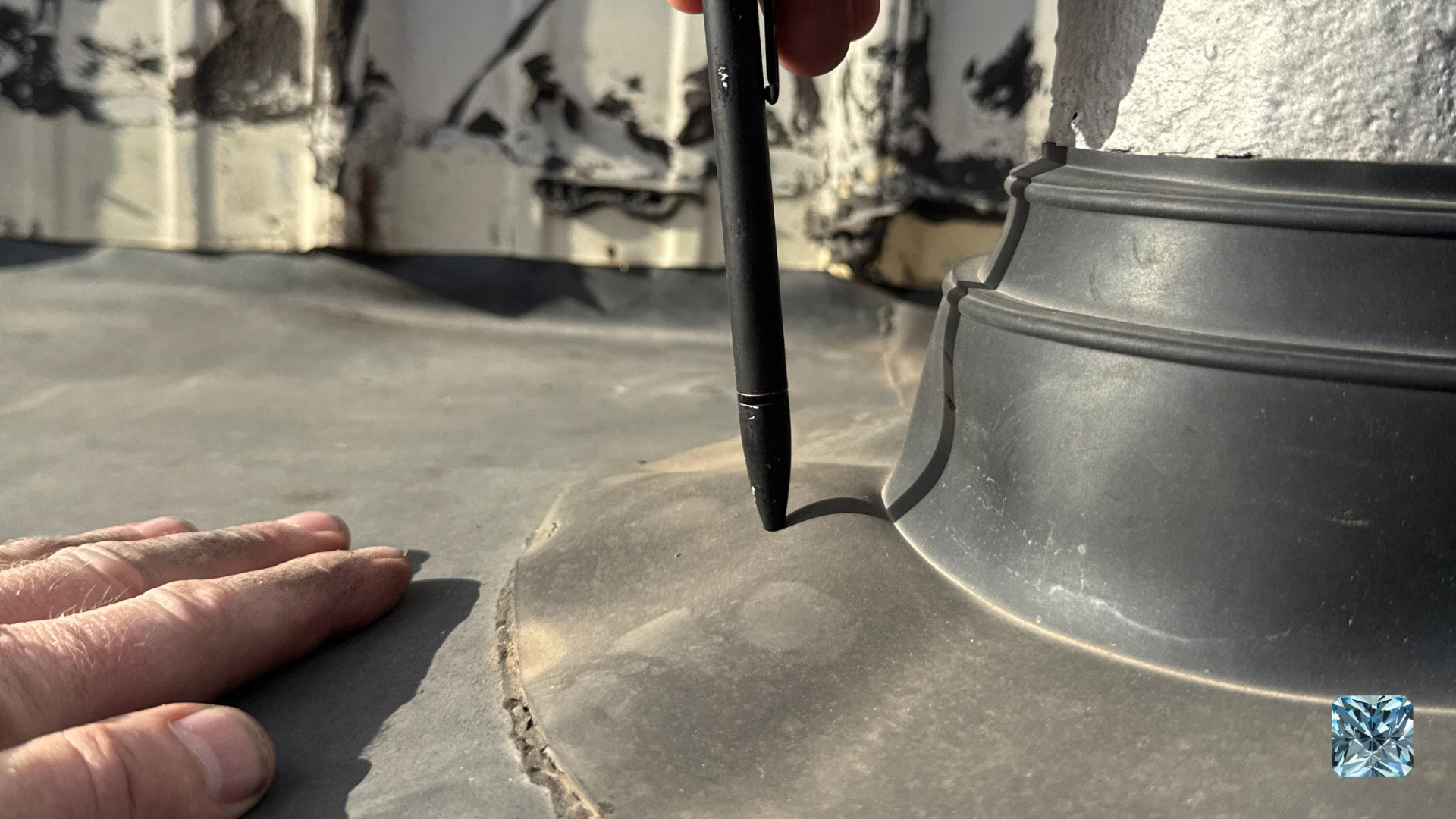
The good news is the math works the other way too. Every spring visit catches something small. Every fall check-in closes the year clean. And a building that gets attention twice a year stays in the conversation, with its owner, with its tenants, with its purpose.
A building that gets ignored starts telling you about it in the ceiling tiles.
Don’t wait for that conversation.
📧 If you manage or own commercial property in Lake County or Porter County and you haven’t had a roof evaluation in the last year — drop your email below.We’ll send you more content like this. Real talk. Plain language. No confusion.
[ Email address ] → [ Yes, Send Me More ]

Read other blog:

We Love Conversations
 SoHelpful@PristineIndustrialRoofing.com