
Water Is Patient. Your Building in Northwest Indiana Isn't.
The Slow Leak Nobody Talks About, and the Two Income Streams That Fix It. Ignoring your roof long enough and it will renovate the inside for you, on its schedule, not yours.
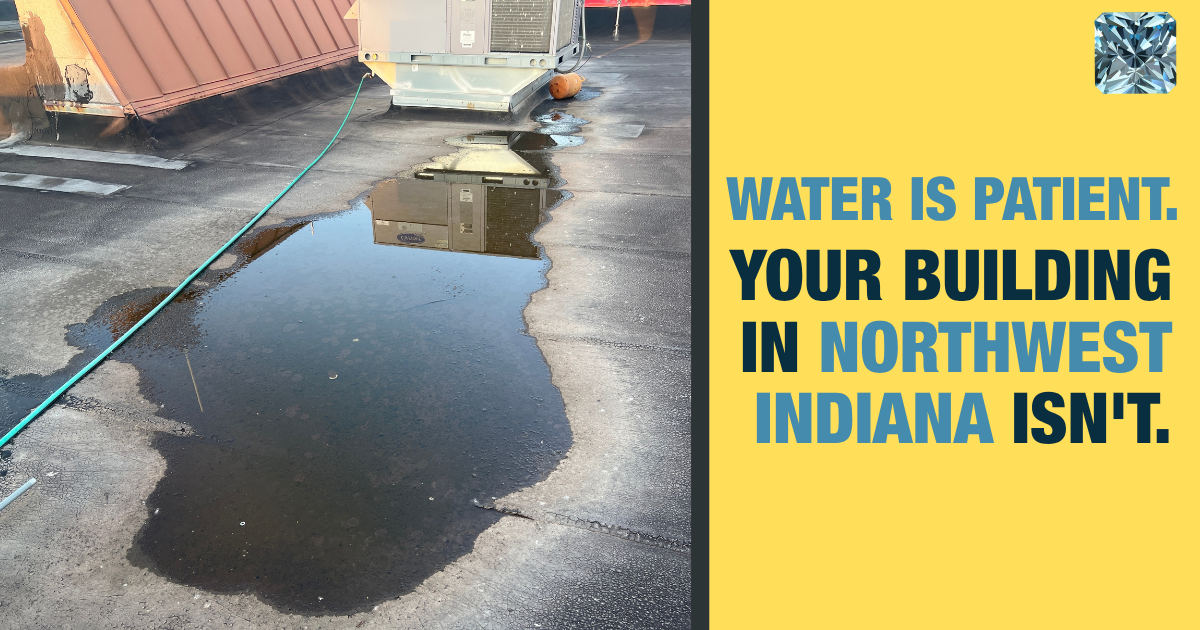
🔲 Hidden Water Damage Is Already in Motion. Commercial roof leaks don’t start with visible drips, they begin years earlier. Moisture silently spreads through insulation, decking, and structural components, turning a small issue into a major structural liability before it’s ever noticed.
🔲 Northwest Indiana’s Environment Accelerates Roof Failure. Industrial air chemistry, acid-laden precipitation, and intense freeze-thaw cycles in Lake and Porter County significantly shorten the lifespan of traditional roofing systems, especially older TPO membranes not designed for these conditions.
🔲 A Roof Upgrade Creates Two Financial Returns
Installing a FLEXION vinyl 300 system generates dual benefits:
- Lower energy costs through heat reflection and improved efficiency
- Reduced liability by eliminating moisture, mold, and structural risk
🔲 Deferred Maintenance Multiplies Costs Fast. Ignoring small roofing issues can increase repair costs 4 to 8x over time. What starts as a minor fix can escalate into a full replacement or structural remediation, often while risking denied insurance claims due to neglect.
This is the part most contractors skip. We're not going to.
If you own commercial property in Lake or Porter County and you haven't had a professional roof evaluation in the last five years, there is a real possibility that water is already inside your building. Not dripping from the ceiling. Not pooling on the floor. Just sitting. In the insulation. Quietly working its way toward the decking and the structural members beneath it.
Water doesn't care about your schedule. It doesn't announce itself. It finds the weak point, a puncture around a pipe penetration, a soft spot near a HVAC curb, a hairline separation in an aging membrane near a Portage industrial park where the freeze-thaw cycle resets hard every single winter, and then it moves in quietly and gets to work.
Into the insulation first. Then the decking. Then the framing.
Once moisture reaches structural steel or wood trusses, the clock changes. You're no longer managing a roofing problem on your timeline. You're on water's timeline now. And that is a significantly worse timeline to be on.
Why the Damage Is Already Three Years Old Before You See It

Here is what the inspection reports don't always explain clearly.
Commercial flat roof failures are not events. They are processes. The leak you're watching drip into a bucket during a Hammond rainstorm in October is not the beginning of the problem, it is the announcement that the problem reached a threshold three years ago and has been compounding ever since.
The pattern, in most Northwest Indiana commercial buildings with unresolved membrane issues, looks like this.
A small breach forms, around a penetration, at a seam, along a parapet wall flashing detail. Water enters the insulation layer. The insulation begins to hold moisture rather than shed it. Through Summer heat cycles and Winter freeze-thaw, that wet insulation acts as a slow press against the decking below. The decking softens. The structural attachment points begin to lose integrity. By the time you're watching that drip, you've already paid for a significant portion of the damage. You just don't have the invoice yet.
A commercial flat roof evaluation in Hammond, or anywhere else is not just a surface inspection. It's an answer to the question, how far along is this, and what does the next chapter cost if we don't move now?
The answer to that question is almost always cheaper than the chapter after it.
The Chemistry Problem Your 2008 Roof Was Never Designed For
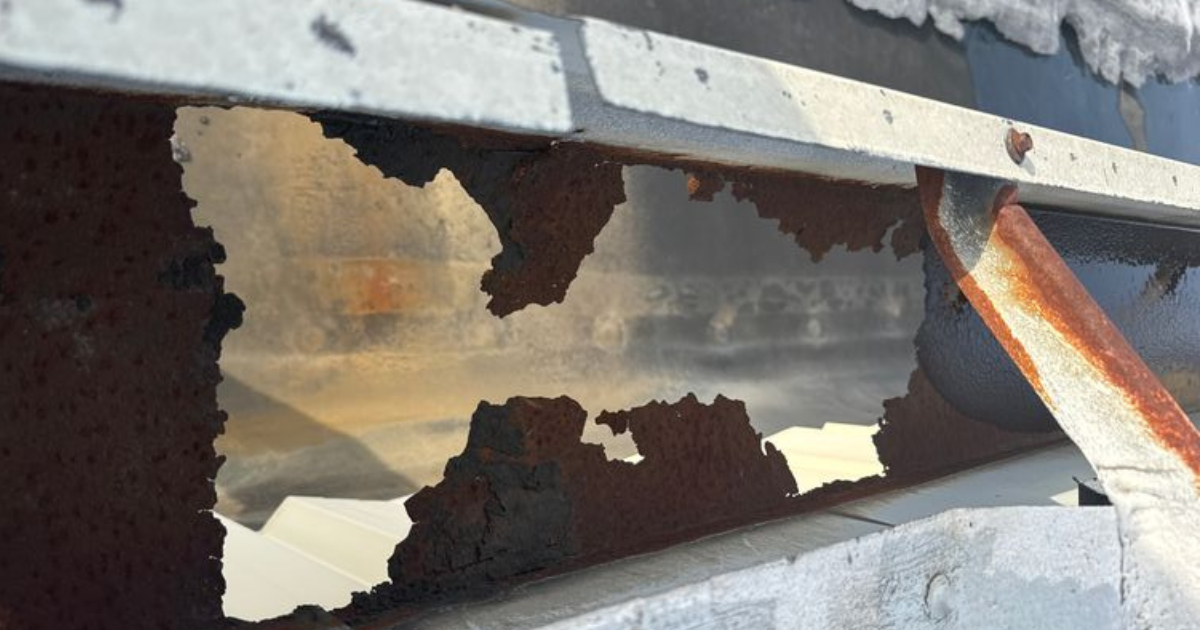
Here's something worth understanding, and something most commercial roofing companies in Northwest Indiana won't walk you through.
The precipitation hitting your building today is chemically different from the precipitation that hit it when it was installed. The industrial corridor running from Gary through Hammond and into the lakefront manufacturing strip introduces real atmospheric load into every rainstorm that comes through. Oil refineries. Steel operations. Heavy industrial production running continuous shifts. That activity produces particulate that becomes part of the air chemistry, and part of every storm that follows.
Acid particulate lands on every exposed roofing surface and begins a slow oxidation process. It is not a dramatic event. It is a gradual degradation of surface chemistry that shortens the effective service life of membrane systems that weren't engineered for it.
The lake-effect moisture patterns compound this. Northwest Indiana averages roughly 38 inches of annual precipitation, with significant freeze-thaw cycling that stresses any membrane seam that isn't heat-welded and architecturally continuous. tPo, the thin, low-cost plastic wrap that dominated commercial flat roofing for two decades, was never engineered for this combination. Its seam adhesion degrades. Its surface chemistry absorbs and holds pollutants. Its service life in this specific industrial-atmospheric environment is shorter than the warranty language in the original contract suggests.
This is not a scare tactic. It is regional chemistry. And it is one reason why the roof that looked solid when you bought the building in 2008 may have a significant problem quietly building above the drop ceiling right now.
✉️ Is your building in this window?
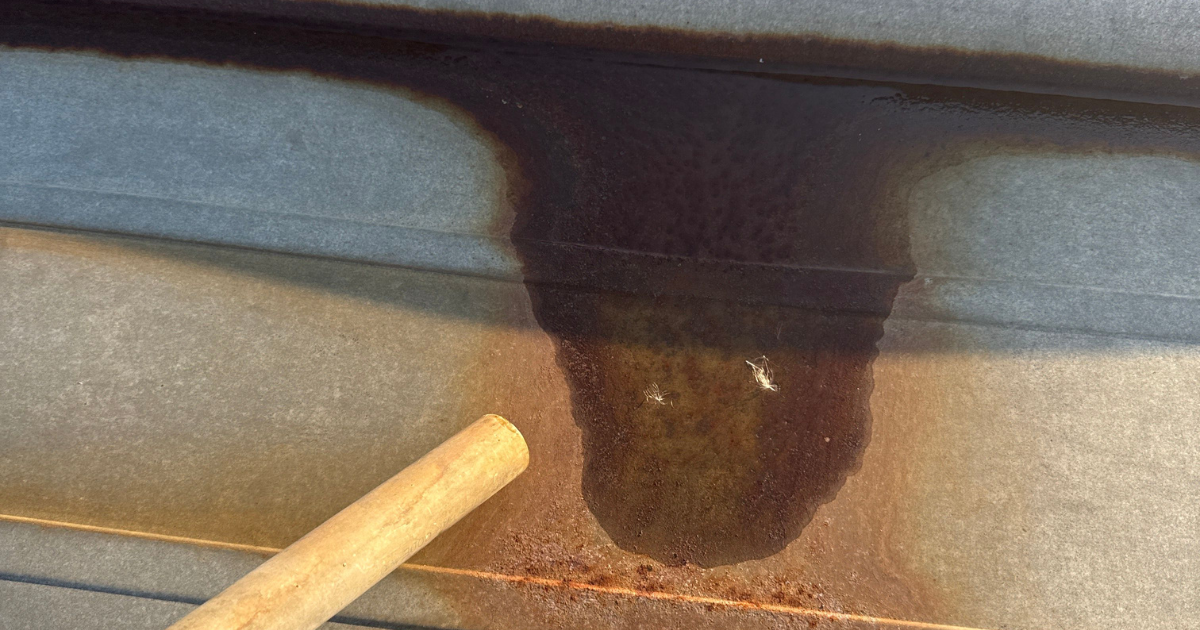
If your commercial flat roof in Lake or Porter County hasn't had professional eyes on it in the last five years, or if it's carrying patches, ponding areas, or a dark membrane that's been there since the last owner, this is worth a look before the next weather event.
Subject Property Address: ___________________________
Drop the address. We'll follow up with next steps. No pitch. No pressure. Just a straight answer.
[ Email address ] → [ Send Me the Real Stuff ]
The Two Income Streams Nobody Told You a Roof Decision Could Create
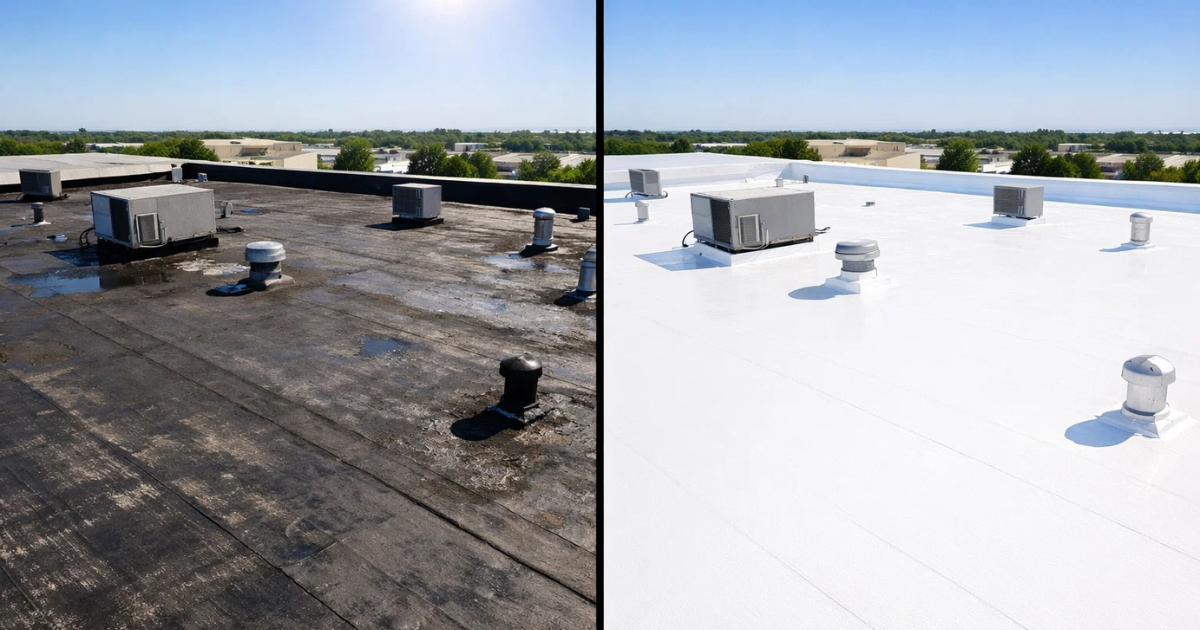
When you overlay your commercial building with FLEXION vinyl and properly specified rigid insulation, two sources of financial return activate at the same time. Not sequentially. Simultaneously.
Income Stream One: Your NIPSCO bill drops.
The white reflective surface of FLEXION vinyl 300 rejects UV heat load. The 90-to-100-degree surface temperature differential that a dark membrane builds up on a July afternoon in Portage disappears. Your HVAC system stops fighting the roof and starts running at designed efficiency. Your building holds conditioned temperature across the envelope rather than hemorrhaging it through an overheated deck.
This shows up on your utility statement every single month for the life of the roof. On a mid-size commercial building in Merrillville or Hammond, we're typically looking at utility savings that begin justifying the overlay investment within the first several years, and those savings don't plateau. They compound quietly while every other operational line item goes up.
Run that math across 25 years, which is exactly what FLEXION vinyl 300 is warranted for, and it becomes a real number fast.
Income Stream Two: Your structural liability disappears.
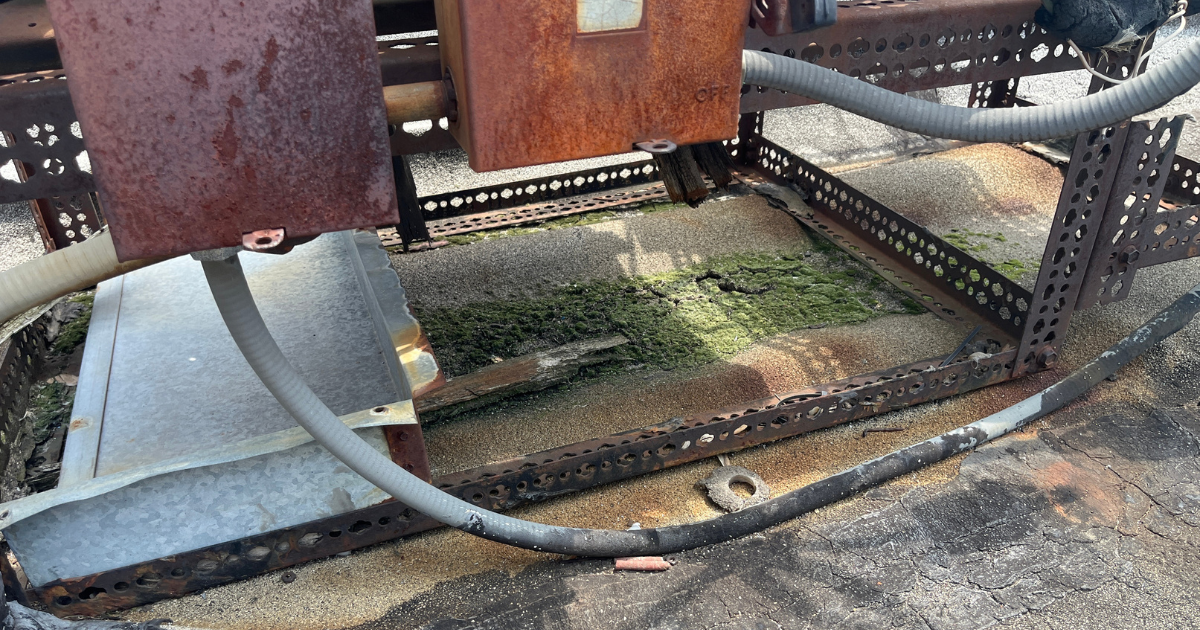
No moisture infiltration means no rot. No mold colonization in the insulation cavity. No mildew in the deck assembly. No employees in an old Hammond warehouse breathing air that's been cycling through a compromised ceiling plenum for three seasons. No workers' compensation claims. No OSHA exposure. No insurance claim that your carrier reviews through the lens of "deferred maintenance" and reduces accordingly.
If you're holding a property on your balance sheet at $1.2 million or anchoring a tenant paying $9,000 a month in rent, the liability gap between a properly protected building and an unprotected one is not theoretical. It shows up in a claim. It shows up in a sale negotiation. It shows up in an insurance renewal where your carrier has access to the same inspection reports you've been ignoring.
The roof is not a cost center. It is a protection system. Protect it correctly and it pays you with interest for the full term of the warranty.
What Conklin Certified Means in Practice, Not in Marketing Language

Conklin has been in commercial roofing materials since 1974. That is not a brand story. That is a half-century of formulation refinement for exactly the kind of application environment that Lake County and Porter County property owners deal with every year.
Cold winters that crack anything not engineered to move with the substrate. Hot summers that push surface temperatures well past 150 degrees on dark membranes. Freeze-thaw cycling that destroys adhesive-based seam systems. Industrial atmospheric load that degrades surface chemistry in systems that weren't designed to handle it.
FLEXION vinyl 300 is engineered for this environment. The material flexes with thermal movement. The heat-welded seams we install are architecturally continuous, not adhered, not taped, not dependent on a chemical bond that has a five-year degradation clock running against it from installation day. The seams we put down on your roof in 2025 will be structurally intact in 2035 and again in 2045. That is why we can make the warranty statement we make, and why we make it in writing.
There is no "whatever the distributor has in stock this week" in our material selection. Conklin materials. FLEXION vinyl. Rigid insulation to spec. The system is the same on every project in every county we serve. The variables are your building's specific condition and drainage geometry, not the materials.
The Conversation Happening in Portage and Hammond Right Now

The sharpest commercial property owners in Northwest Indiana have figured something out. The owners who are winning financially are not the ones with the newest buildings. They are the ones running the most efficient buildings. And in 2025, efficiency means a reflective roof, proper insulation depth, sealed seams, and a NIPSCO bill that doesn't embarrass them when they sit down with their accountant in January.
One property owner we work with in Portage shaved enough off his monthly utility costs to fund a part-time operational position. Another in Hammond stopped spending on reactive patch repairs entirely, a line item that was costing him more annually than the overlay would have, and reinvested that budget into his second property.
These are not exceptional cases. This is what happens when a building owner stops treating the roof as an annoyance to be managed and starts treating it as a financial lever to be used.
The tenants inside your building don't feel the roof working. They feel the temperature. They feel the air quality. They feel the water stain on the drop ceiling tile that you've been painting over since the Obama administration. And you feel all of it on the P&L every month, until you don't.
The FAQs Worth Answering Honestly
How much does deferred commercial roof maintenance actually cost? For every $1 deferred, commercial building owners typically spend $4 to $8 correcting the downstream structural and interior damage. A $5,000 repair left unaddressed for 18 months can become a $60,000 to $80,000 replacement or structural remediation project.
Can my insurance carrier deny a claim because of deferred maintenance? Yes. Carriers can deny or significantly reduce payouts when inspection records show the owner had prior written notice of a defect and did not act on it. "We've been keeping an eye on it" is not a maintenance record.
What is a FLEXION vinyl 300 overlay and how is it different from a coating? FLEXION vinyl 300 is a membrane system, a solid vinyl sheet product, installed in rolls, heat-welded at every seam. It is not sprayed or poured. Conklin liquid coatings are a separate product line, applied wet, cured in place. They are completely different systems with completely different warranties and completely different installation processes. We install both. We will tell you which one your building actually needs.
How long does a commercial flat roof overlay take in Lake or Porter County? Most mid-size commercial overlay projects, 10,000 to 30,000 square feet, are completed in two to five days depending on penetration count and drainage complexity. We work around your operations. Tenant disruption is typically minimal.
What's the first step? A roof evaluation. We come out, we walk the surface, we assess the insulation condition, the deck integrity, the drainage performance, and the membrane history. We give you a real number. Not a range. Not a ballpark. A real number you can take to a board meeting or put in a capital planning model.
So Here's the Move
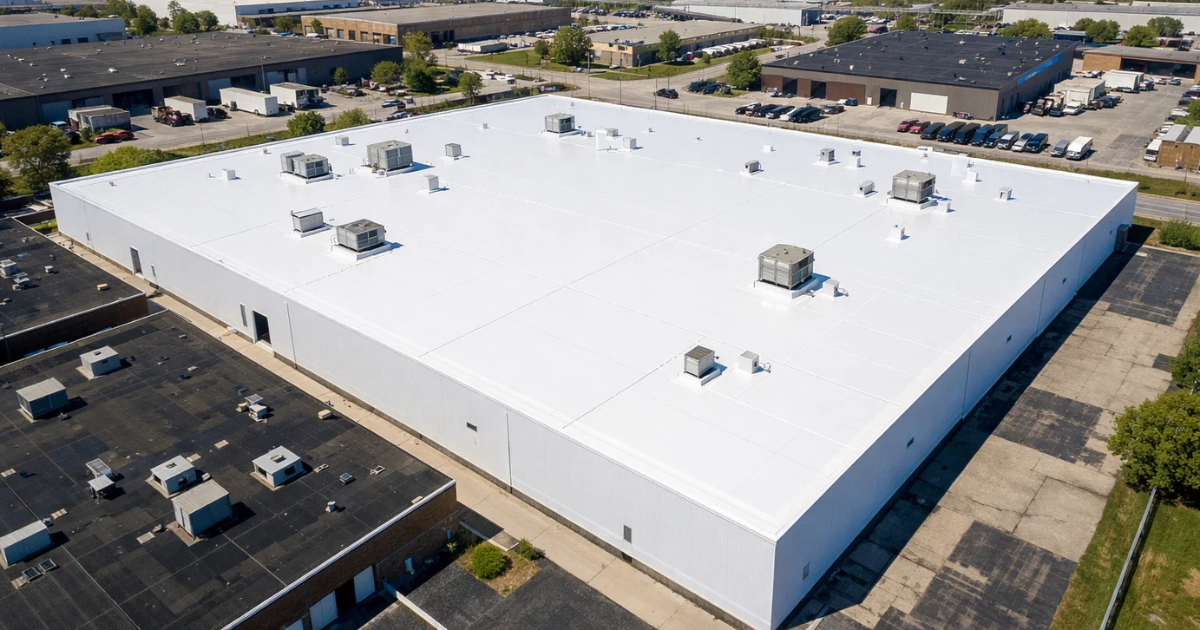
If your commercial building in Lake or Porter County has a dark roof, a patched roof, a roof with ponding areas, or a roof that hasn't had professional eyes on it in the last five years, this article was written for you.
Conklin certified. FLEXION vinyl 300 specialists. Overlay systems that are structurally serious, environmentally sound, and financially smart enough to explain to your accountant and your insurance carrier in the same conversation.
We'll come out, put professional eyes on your property, and give you a real number. No vague estimates. No pressure. Straight answers from people who know exactly what's sitting above your drop ceiling, and exactly what it costs to leave it there.
✉️ Let’s take a look before the next rain makes the decision for you.
Subject Property Address: ___________________________
Drop the address below. We'll reach out with available evaluation times and everything you need to know going in.
[ Email address ] → [ Send Me the Real Stuff ]
Pristine Industrial Roofing — Serving commercial and industrial property owners across Lake County and Porter County.
Liquid-applied Conklin coating systems. FLEXION vinyl membranes. Proactive maintenance programs.
Valparaiso | Hammond | Portage | Merrillville | Hobart | Gary
Read other blog:


We Love Conversations
 SoHelpful@PristineIndustrialRoofing.com