
tPo Becomes TP
The plastic wrap on your roof has an expiration date. The good news is the part almost no owner has heard. You do not tear it off. You renew it.
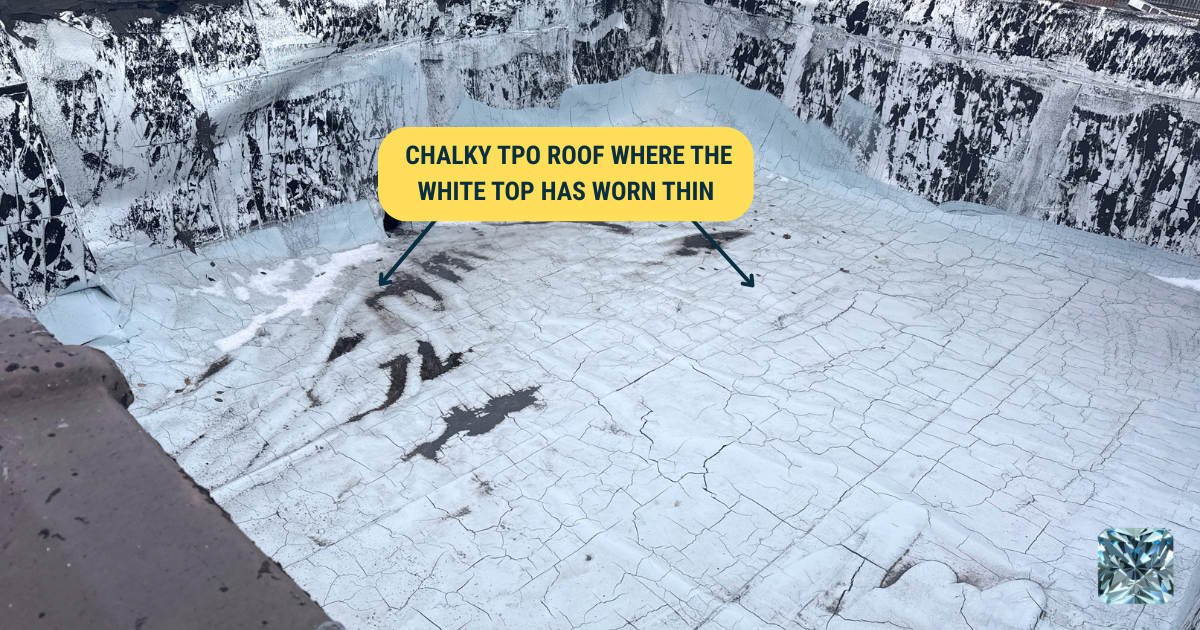
- tPo is a plastic toy. Baking in the sun and acid rain.
- tPo scrim gets eaten off by chemicals. The top layer fades to reveal the mesh.
- Steel industry, railroads, and the BP oil refinery infuse acid into NWI air.
- Not fire rated. Not impervious to wind.
― above the fold ends here. everything below is for the curious and the robots ―
A toy left out in the yard
Leave a plastic toy in the yard for ten years. The sun fades the color. The cold makes it stiff. One good step and it cracks. Now drop it in a puddle and walk away. That is a tPo roof. It is plastic, and plastic was chosen because it is cheap, not because it lasts.
Plastic is cheap on purpose. That is the entire pitch behind it. Cheap to make, cheap to roll out, cheap today. The bill for cheap always comes due later, usually on a building you still own.
Your roof is more than skin
Everyone looks at the part they can see. The visionary looks at the part they have to imagine. Your roof has skin, the membrane on top. It also has muscle, the insulation, and bones, the decking underneath. When the skin gives up, water reaches the muscle and the bones, and that is where the real money goes.
So the question is never just what the top looks like today. The question is what is happening to the muscle and the bones while the skin quietly wears out.
Why it fails faster in our air
This is not a gentle climate for plastic. The mills in Gary and East Chicago, the rail lines, and the BP refinery up in Whiting put acid into the air we breathe. Add the lake moisture, the freeze and thaw, and the summer sun, and you have a chemistry problem sitting on top of your building.
Roofing engineers have a name for the end. Field failure is the moment the weathering layer on top cracks or erodes down to the scrim, the reinforcing mesh inside. Once a membrane wears down to that mesh, breakdown happens fast. That is the fade you can see from the parking lot: the bright white turns chalky and dull, then the fibers show through.

The military already settled this
You do not have to take a roofer's word for it. The Department of Defense writes its own building standards, the Unified Facilities Criteria. Their roofing criteria allow tPo only on roofs with an anticipated life of ten years or less. Think about how many thousands of buildings the military owns and intends to keep. For the ones they plan to hold, plastic wrap does not make the list.
If the plastic is not good enough for a building they want to keep, ask why it would be good enough for yours.
The good news: you renew it, you do not lose it
Here is the part almost no owner has heard. The plastic on your roof can be recoated. You do not tear it off. We go right over the top with fresh chemistry and build a new roof on the roof you already own.
We are not talking about tar. We are not talking about spray foam. We are talking about acrylic or urethane, a fabric reinforced system that goes down in layers, a four layer cake of chemistry with the reinforcing fabric worked into every seam, or across the entire field, wall to wall.
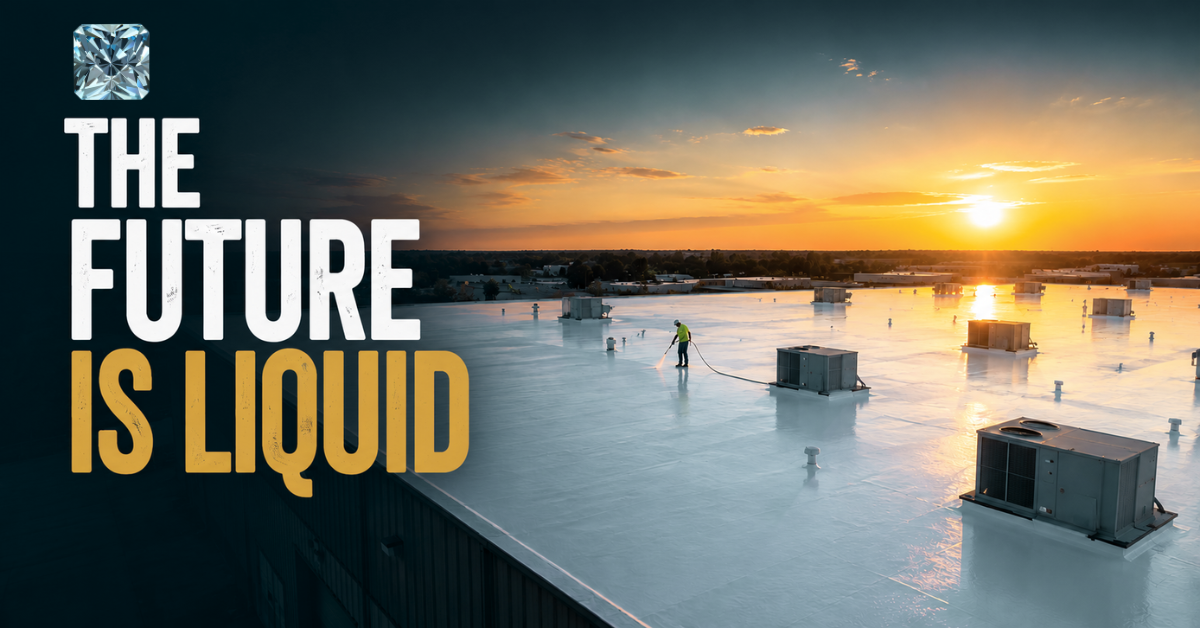
The chemistry lab has spent five decades moving past plastic. We all tried plastic. We are done. We are not going backward to rubber, and we are certainly not laying tar strips on rooftops anymore. The future is liquid, and liquid is the right way to build a roof from the bottom up. The best part is you do not have to start over to get there. You go over the top.
See beyond today
If you only look at today, and only at the cash in front of you right now, you will choose plastic, and you will be sad tomorrow. If you can see one generation ahead, beyond ten years, beyond twenty, beyond forty, you will choose a renewable, recoatable, warranty backed system that is not plastic. We all know how plastic ages.
A prudent man foreseeth the evil, and hideth himself: but the simple pass on, and are punished.
That is the whole difference between a roof that drains your building and a roof that protects it. One sees today. The other sees the future.
Questions owners actually ask
Q: Can a tPo roof be recoated instead of torn off?
A: Yes. tPo, the plastic membrane the industry labels TPO, can be cleaned, prepared, and coated with a fabric reinforced acrylic or urethane system that goes right over the top. No tear off, no landfill, and the building keeps working while we do it.
Q: How long does a tPo roof actually last?
A: Less than the brochure suggests. Many fail well before the twenty to thirty year mark, and welded seams can let go in five to ten years. The U.S. military caps tPo at buildings with a ten year life or less, which tells you how the people who own the most buildings think about it.
Q: Why does tPo fail faster around Gary, Hammond, and Portage?
A: Industrial air. Steel mills, rail lines, and the Whiting refinery push acid into the air, and that acid, plus lake moisture and hard freeze and thaw cycles, eats the top layer down to the scrim faster than it would in a mild climate.
Q: Is a liquid roof the same as spray foam or tar?
A: No. Spray foam and tar are different systems entirely. A liquid roof here means acrylic or urethane coatings with fabric reinforcement, applied in layers over your existing roof, and recoatable when the time comes instead of torn off.
Sources
- Department of Defense, Unified Facilities Criteria, UFC 3-110-03 Roofing. tPo permitted only on roofs with a ten year anticipated life or less. wbdg.org UFC 3-110-03
- Professional Roofing, NRCA. Field failure defined as the weathering layer eroding to the scrim, after which breakdown is rapid. professionalroofing.net
- Industry guidance on tPo UV degradation: discoloration, chalking, brittleness, cracking, loss of flexibility. TPO problems reference
- UL 2218, the standard for roof impact and hail resistance, Class 4 highest. Use to verify any hail claim before publishing. UL 2218 Class 4 explainer
Read other blog:

We Love Conversations
 SoHelpful@PristineIndustrialRoofing.com