
THICKER & BRIGHTER: The Two Things Your Roof Needs That Nobody Talks About
Your Roof Isn’t Leaking, It’s Quietly Robbing You Every Month, One Utility Bill at a Time. Stop Blaming the AC. Your Roof Is the Problem And It Knows It.

🔲 Thicker Roof = Smaller Bills. More insulation. Less heat transfer. Lower energy costs.
🔲 Brighter Roof = Cooler Building. Reflects 86% of UV. Your AC finally gets a break.
🔲 Together = Real Savings. Not additive, multiplicative. Big drop in cooling costs.
🔲 Upgrade, Not Expense. Higher property value. Lower monthly burn. Smarter long-term play.
Your Roof Has Two Jobs
Keep the heat out. Keep the cool in. Most roofs fail at both.
Nobody thinks about their roof until something leaks. But leaks are the least of your problems. The real drain is invisible. It shows up every month on your NIPSCO statement. A dark, thin roof is an oven lid sitting on top of your building, absorbing every ray of sunshine and bleeding your air conditioning budget into the sky.
There are exactly two things you can do about it. Make it thicker. Make it brighter. Most building owners do neither. The ones who do both are the ones whose NIPSCO invoices suddenly stop making them cuss.
Thick Is Not a Word You Hear in Roofing
But it should be. Thickness is insulation. Insulation is money.
Under your roof membrane, the part you can see, there are layers of insulation board. Or at least there should be. On most buildings built before 2010, there are 2 to 3 inches of old foam, buffalo board, or some powder-filled material that stopped performing years ago. It is soggy. It is compressed. It is doing almost nothing.
Modern high-density ISO boards are a different animal. Each 1.5-inch layer adds R-9.6 to your roof. Two layers give you R-19.2. Four layers give you R-38.4. We stack them like a layer cake, stagger the seams, fasten them to the deck, and suddenly your building has a winter jacket where it used to have a paper towel.
The thicker your roof, the skinnier your NIPSCO invoice. That is not a slogan. That is physics.

Bright Is the Part Everyone Skips
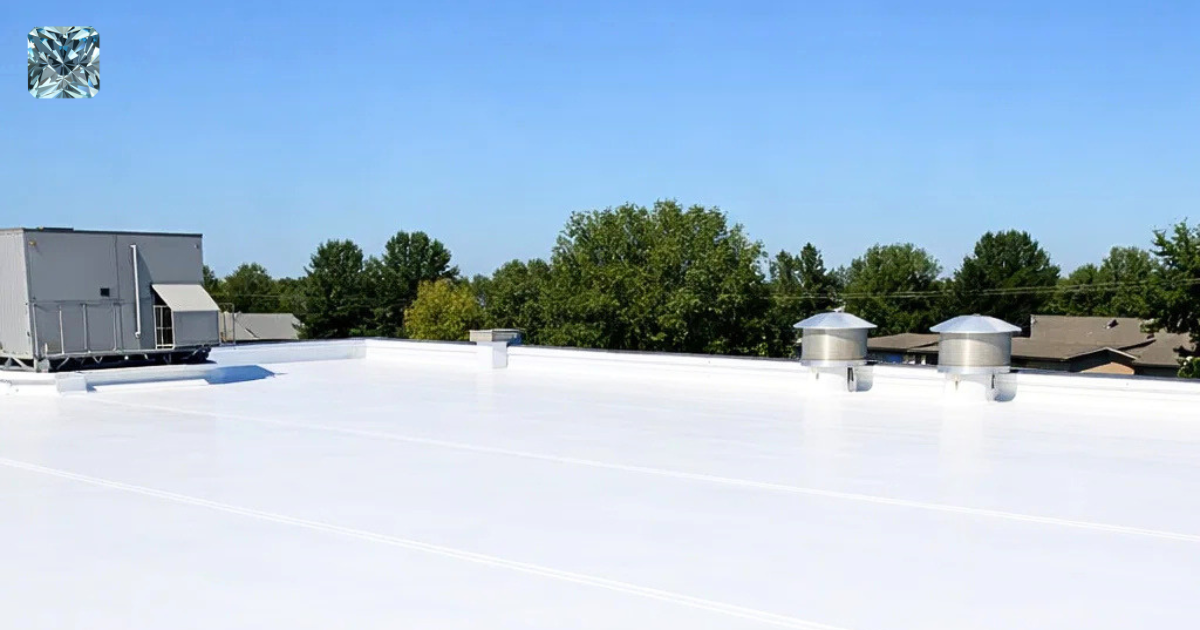
A white roof bounces 86% of UV rays back into the sky instead of cooking your building.
You have seen the dark roofs. You have driven past them. They look like parking lots baking in July. Every degree of heat that surface absorbs becomes a dollar your HVAC system spends trying to push it back out. A dark roof in Merrillville in August is working against you every single hour of every single day.
A reflective white coating bounces the sun instead of absorbing it. Conklin’s systems reflect 86% of UV radiation. The sunshine hits the surface and goes right back up into the atmosphere. Your AC compressor runs less. Your building stays cooler. Your people are more comfortable. Your equipment lasts longer.
You are literally cooling the outdoors right now. Stop it.

One Is Good. Both Is Better.
Combine insulation and reflectivity and you are not adding, you are multiplying.
Industry data suggests that adding insulation alone can reduce energy costs by roughly 25%. Adding a reflective coating alone gets you in a similar range. But when you combine both measures on the same roof, the effect compounds. You are not getting 25% plus 25%. You are getting closer to cutting your NIPSCO in half.
We prefer to under-promise. Every building is different. The age of the HVAC system matters. The square footage matters. The existing insulation condition matters. We are not going to guarantee you a 50% reduction and then watch you hold us to it when your 1997 rooftop unit is running on prayers.
But the math trends in one direction. Thicker and brighter together outperform either one alone. Every time.
✉️ What is your roof costing you every month?
If your building has a dark, thin roof and a NIPSCO bill that ruins the second week of every month, it is worth finding out exactly where the bleeding is.
Subject Property Address: ___________________________
Drop the address. We will take a look.
FREE evaluation. No sales pitch. No pressure. No obligation.
[ Email address ] → [ Send Me the Real Stuff ]
How Many Layers Do I Need?
Typically 1 to 4 layers. The sweet spot depends on your building and your budget.
Each layer is 1.5 inches of polyiso ISO board. One layer is the minimum for meaningful insulation improvement. Two layers is the standard recommendation for most commercial buildings in Northwest Indiana, that gets you to R-19.2, which is a massive upgrade from whatever soggy material is up there now.
Four layers gets you to R-38.4, which qualifies for NIPSCO energy rebates and puts you in the range where your building is genuinely outperforming most of the commercial properties in the county. Beyond four layers, you start hitting diminishing returns, the energy savings per additional inch get smaller while the material cost stays the same.
We will walk you through the options. Two layers or four. What makes sense for your NIPSCO situation, your building use, and your budget. There is no wrong answer. There is only thicker or thinner. And we already know which one your NIPSCO invoice prefers.
The Old Insulation Is Not Worth Saving
If it was installed before 2010, it is almost certainly underperforming.
Buffalo board. Fiberboard. Old EPS foam. Whatever is under your membrane right now, if it has been up there for 15 or 20 years, it has absorbed moisture, compressed under foot traffic, and lost the majority of its original R-value. You cannot measure it anymore because there is nothing left to measure.
We do not try to save it. On overlay jobs, we install fresh ISO directly on top. On tear-off jobs, the old insulation comes out with everything else and we start clean. Either way, your building gets a real blanket instead of a damp napkin.

What About My NIPSCO Bill Right Now?
Upload your trailing 12 months. We will show you where the bleeding is.
Here is what we know from working with commercial buildings across Lake and Porter Counties. The buildings with dark, thin roofs are spending 30% to 60% more on cooling than they need to. That is not a typo. Some of these NIPSCO invoices are $4,000, $5,000, $6,000 a month in the summer. And the building owner just pays it because they have always paid it.
Send us a screenshot of your trailing 12-month NIPSCO history. We will show you which months are doing the most damage. We will show you what thickness and brightness combination would make the biggest dent. And we will give you a realistic range, not a guarantee, not a fantasy, of what the savings could look like over the next 5 years.
At least Nancy in finance will appreciate that you are thinking ahead. And Kenny in maintenance already knows the roof needs help, he has been telling you for two years.
This Is a CapEx Decision, Not an Expense
Your roof is an investment in the building’s long-term equity.
A thicker, brighter roof is not an expense. It is a capital improvement that increases the value of the building, reduces operating costs for the next 25 years, and qualifies for tax incentives under Section 179D. The Big Beautiful Roof Bill makes this math even more attractive for commercial property owners who want to invest in energy efficiency.
Your CPA will understand. Your grandkids will benefit. And your NIPSCO invoice will finally stop being the thing that ruins the second week of every month.
You are not just fixing a roof. You are planning ahead with wisdom. That is the kind of decision that earns respect at every level, from the maintenance team to the boardroom to the dinner table at home.
Roof, Thick and Bright. Even More Gooder.
That is intentional. Dad jokes prove we are not robots.
We are a roofing company that happens to believe in relationships. We educate before we sell. We show the math before we ask for the check. We under-promise because our reputation matters more than one sale. And we make dad jokes because the world has enough corporate robots and not enough people who will look you in the eye and tell you the truth about your roof.
Your roof called. It wants to be thicker and brighter. And honestly, so does your NIPSCO invoice.
Thicker & Brighter FAQs
What does "thicker and brighter" mean for a commercial roof? Thicker means more insulation, polyiso ISO board layered under the membrane to hold heat in Winter and block it in Summer. Brighter means a white reflective Conklin coating that bounces 86% of UV radiation instead of absorbing it. Together they compound. Separately they help. Combined they cut your NIPSCO bill in half.
How much insulation does my commercial roof actually need? Most Northwest Indiana buildings are running R-14 to R-17, well under code minimum of R-30 for Climate Zone 5. Two layers of 1.5-inch polyiso gets you to R-19.2. Four layers gets you to R-38.4, above code and eligible for NIPSCO energy rebates.
Can I add insulation without tearing off my existing roof? In most cases, yes. Fresh polyiso installs directly on top of your existing membrane as an overlay. No tear-off. No dumpsters. No $10,000+ removal cost. We evaluate your existing deck and membrane condition before recommending the overlay approach.
What is the difference between a Conklin coating and a FLEXION vinyl 300 membrane for energy performance? Both are available in white reflective finishes with 86% CRRC-verified solar reflectance. Conklin liquid-applied coatings go on wet over your existing substrate, no tear-off, up to 20-year warranty. FLEXION vinyl 300 is a physical membrane with heat-welded seams and a 300-month factory warranty. Separate systems. Separate warranties. Never combined.
Does a reflective roof coating qualify for tax incentives? Yes. Section 179D allows commercial building owners to deduct the cost of energy-efficient improvements, including roof insulation upgrades, in the year the work is completed. The Big Beautiful Roof Bill makes this math even more favorable. Confirm the specifics with your CPA.
How do I know if my current insulation is still performing? If it was installed before 2010, assume it isn't. Buffalo board, fiberboard, and old EPS foam absorb moisture and compress under foot traffic over time. A professional evaluation checks for moisture saturation and compression. If the R-value is gone, saving it is not worth the effort.
How much can I realistically save on my NIPSCO bill? Buildings with dark, thin roofs typically spend 30% to 60% more on cooling than necessary. Adding insulation or reflective coating alone saves roughly 25% each. Combine both and the effect compounds, closer to cutting your bill in half. Actual savings depend on building volume, HVAC efficiency, and existing insulation condition.
What does NIPSCO's rate trajectory mean for my roof decision? NIPSCO raised electric rates 17% in 2025. More increases are expected as data center growth pushes infrastructure costs onto ratepayers. Every month you run a dark, thin roof is a month you pay a premium you don't have to. The savings from a thicker, brighter roof grow larger every time NIPSCO raises rates.
What Is the Next Step?
Three fields. That is all we need to start the conversation.
Subject property address. Phone number. Business email. We will take a look at your roof from the sky, give you an honest assessment of the current thickness and brightness situation, and show you what the combo could do for your building and your budget.
Get Thicker & Brighter Up There ☝️
modernroofchemistry.com
Pristine Industrial Roofing
Modern Roof Chemistry | Thicker & Brighter
Lake & Porter Counties
A Gospel Business | Community Outreach & Worldwide Missions
Read other blog:

We Love Conversations
 SoHelpful@PristineIndustrialRoofing.com