
The Worst Thing You Can Do After a Storm Is Call Your Insurance Agent
Calling your insurance agent first feels responsible. It’s also the fastest way to start a claim without any of the things that win one.

- Filing a claim starts a clock you didn’t know existed. The moment a claim hits the system, a desk adjuster is assigned and the process moves on the carrier’s timeline, not yours.
- Your agent sells the policy. The claims department decides the payout. Once the claim is filed, the file leaves your agent’s control and moves to professionals trained to review documentation and limit liability.
- Documentation wins claims, not opinions. Photos, maintenance records, and Xactimate-based estimates determine whether damage is classified as wind loss or “wear and tear.”
- The sequence determines the outcome. Inspection → documentation → claims advocate → then file the claim. Reverse that order and most building owners settle for far less than they are owed.
I know that sounds backwards.
Your agent is your contact. You've known him for years, maybe longer than you've owned the building. He answers the phone on the second ring. He remembers your name at renewal time. He seems to care.
He does care. About the relationship. The claim is a different conversation entirely, and it happens between people you have never met, in a department your agent has no authority over, on a timeline that is already running.
The moment you call your agent to file, you have started a clock you did not know existed. And in most cases, you have started it without the documentation, the advocate, or the terminology to run it correctly.
That is the problem. Not your agent. The sequence.
Here Is What Actually Happens When You File On Your Own

You call your agent. He tells you to go ahead and file. He may even seem encouraging, "let's see what they can do for you." What he does not tell you is that the moment that claim hits the system, a desk adjuster gets assigned to your file.
That adjuster has a full caseload. He has a closing quota. He has a working list of legitimate reasons to reduce or deny your payout, and he applies them routinely, without malice, because that is the job. He is not a villain. He is a professional doing exactly what he was trained to do.
He has never met you. He does not know your building. He does not know that you re-coated the back slope three years ago or that the drainage on the east side was addressed last Fall. He is going to look at your roof the same way he looks at every other roof, through the lens of liability reduction. His job is not to find every dollar you are owed. His job is to close the file.
Here is how that plays out in practice,
You walk him around the roof without documentation. He writes "deferred maintenance" on the report. The claim closes at thirty cents on the dollar, or less.
You cannot produce evidence that the membrane damage is wind-related rather than aging. He marks it as wear and tear. Closed.
The seams are separated and you cannot prove when they were last inspected. He calls it a pre-existing condition. Closed.
None of this is illegal. None of it is even unusual. All of it is standard commercial claims procedure, and it happens to building owners who trusted the process without understanding it every single week.
Going into a commercial insurance claim without a professional is like taking a test you've never studied for, against someone who wrote the questions.
The score was always going to favor the house.
Why Your Agent Cannot Save You Here
This is not a criticism of your agent. It is a description of what his role actually covers, and where it ends.
Your agent sells policies. He is compensated on the premium you pay every year. He is not a licensed public adjuster. He is not a Xactimate estimator. He is not a roofing contractor with forensic documentation experience. He is a relationship manager, and probably a good one.
But when the claim goes in, he steps back. The file moves to a claims department he has zero authority over. The people reviewing your claim have never spoken to your agent, do not know your history with the carrier, and are not operating on goodwill. They are operating on documentation. On line items. On whether the evidence in your file supports the payout being requested.
Calling your agent and hoping he can push things through is not a strategy. It is a feeling. Feelings do not move Xactimate estimates.
We have watched building owners lose five and six-figure claims because they trusted the process without understanding it. The process is not designed to find what you are owed. It is designed to settle for what you will accept.
Those are two completely different numbers.
What the Adjuster Is Actually Looking For
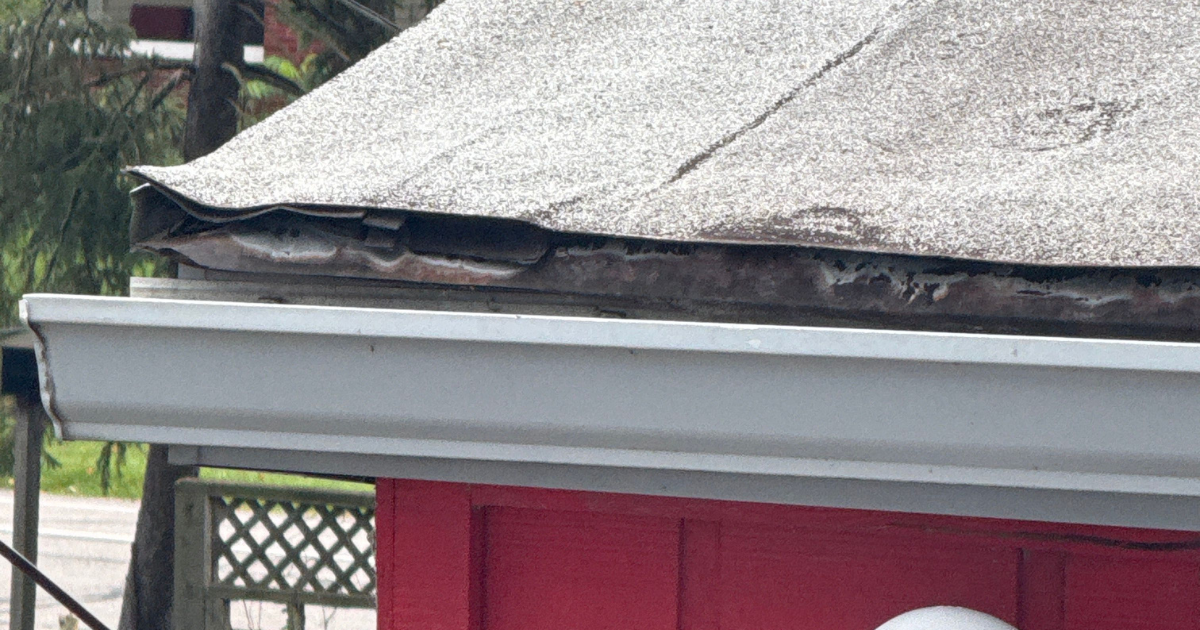
Understanding the adjuster's checklist is the single most valuable thing a building owner can do before filing. Not because you are trying to game the system, because you are trying to make sure the real story of your roof gets told correctly, with documentation that holds up under professional review.
Here is what a commercial flat roof adjuster examines, in sequence.
The age and condition of the membrane. He is asking, was this roof already failing before the storm? Older tPo, the flimsy plastic wrap that dominated a previous era of commercial flat roofing, degrades at the seams, loses adhesive bond, and blisters in ways that look nearly identical to wind uplift. If your membrane is tPo and it is aging, expect this argument. Have your maintenance history ready.
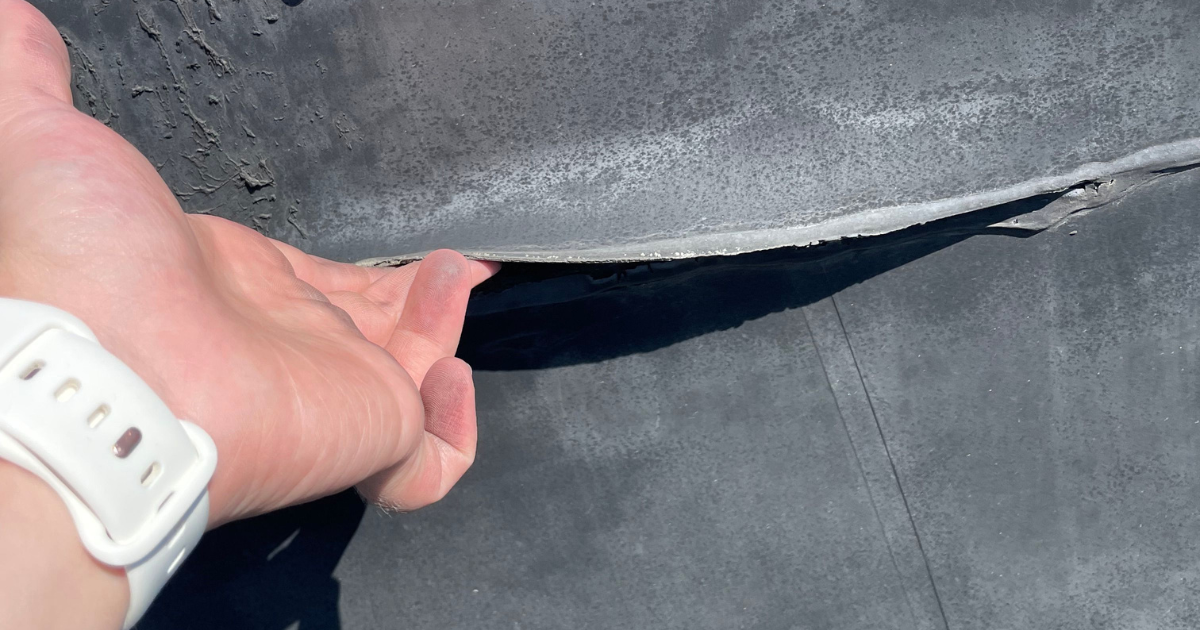
Evidence of uplift at corners and perimeter edges. Wind pressure concentrates at aerodynamic transition zones, the corners, the parapet edges, the perimeter first and second rows. If your membrane is pulling away from the substrate in these locations, that is wind damage signature. If it is pulling away at mid-field, the argument shifts. An adjuster knows this. Your documentation should reflect it.
Seam condition and fastener behavior. Seams separating and fasteners backing out of the deck under wind load are documented damage indicators. Seams that are simply worn are a maintenance issue. The adjuster will make that distinction. Your roofing contractor needs to make it first, clearly, photographically, with measurement.
Prior repair history and maintenance records. A roof that has been actively maintained is defensible. A roof with no service history and a list of visible deterioration gives the adjuster every tool he needs to argue pre-existing condition. If you have maintenance records, locate them now. If you do not, that is a conversation to have before anything gets filed.
The gap between storm date and inspection date. Every week that passes between the qualifying event and the professional roof inspection is a week the adjuster can use to raise questions about the timeline. Was the damage there before the storm? How would you know? Document now. Do not wait.
You paid premiums for years. A Level 4 storm just crossed your county. The question is whether someone is going to fight for what you're owed, or whether you're going to hand it to the process and see what arrives.
✉️ What does your membrane look like right now? Not from the parking lot. From the corner flashing.
Subject Property Address: ___________________________
Send it over. We’ll tell you honestly what we find, and whether it’s worth the conversation. FREE evaluation.
[ Email address ] → [ Send Me the Real Stuff ]
The Three Professionals You Need Before the Adjuster Arrives
This is the sequence that changes outcomes. Not the claim itself, the preparation behind it.
One: A roofing contractor who documents in adjuster language.
Not just a contractor who can install a roof. A contractor who understands that the documentation they produce before the adjuster arrives is the foundation of your entire claim. Photos with timestamps and GPS coordinates. Written assessment of membrane condition using terminology the carrier's review desk recognizes, uplift, adhesive failure, corner and edge separation, fastener withdrawal. The difference between a photo of a damaged roof and a documented forensic record of wind-induced membrane failure is, in many cases, the difference between approval and denial.
Pristine Industrial Roofing has documented storm damage assessments across Lake and Porter County. We are Conklin certified. We know what wind damage looks like on a flat membrane and we know how to put it on paper in a way that holds up.
Two: A claims management firm that knows Xactimate.

Xactimate is the estimating software every major carrier uses to price commercial repairs and replacements. When a carrier's adjuster submits his estimate, it is built in Xactimate. When your claims advocate submits a supplement or a counter, it needs to be built in Xactimate too, with every legitimate line item captured, priced correctly, and supported by documentation.
One missed line item is money left behind. One incorrect unit of measure is a reduction. One vague scope description is an opportunity for the adjuster to substitute a cheaper material or method.
We partner with Max4Claims. Ray founded the firm after spending years as a Senior File Examiner inside the insurance industry, training the desk adjusters, reviewing the files, watching from the carrier's side of the table exactly how claims get reduced. He took that knowledge and flipped it. Max4Claims writes Xactimate estimates, manages documentation sequences, and advocates directly for building owners from first contact through final check. Their clients have recovered over $1.1 million in commercial supplement approvals in a single year, on claims that had already been reviewed and underpaid the first time.
Ray's team speaks the language. We handle the roof. You collect what you are owed.
Three: A clear pre-storm condition record.
This is the piece most building owners do not have, and the piece that shuts down the pre-existing condition argument before it starts. If you can demonstrate that your roof was in serviceable condition before the qualifying event, the adjuster's most reliable denial tool disappears.
This does not mean your roof had to be new. It means it had to be functional, inspected, and not already failing. Maintenance records, prior inspection reports, photos from a service visit in the past 12 to 24 months, all of it builds the pre-storm baseline that makes your wind damage claim defensible.
If you do not have those records, that is information worth knowing now. Not after the adjuster has already made his argument.
The Storm Record Is Locked. Your Window Is Not.
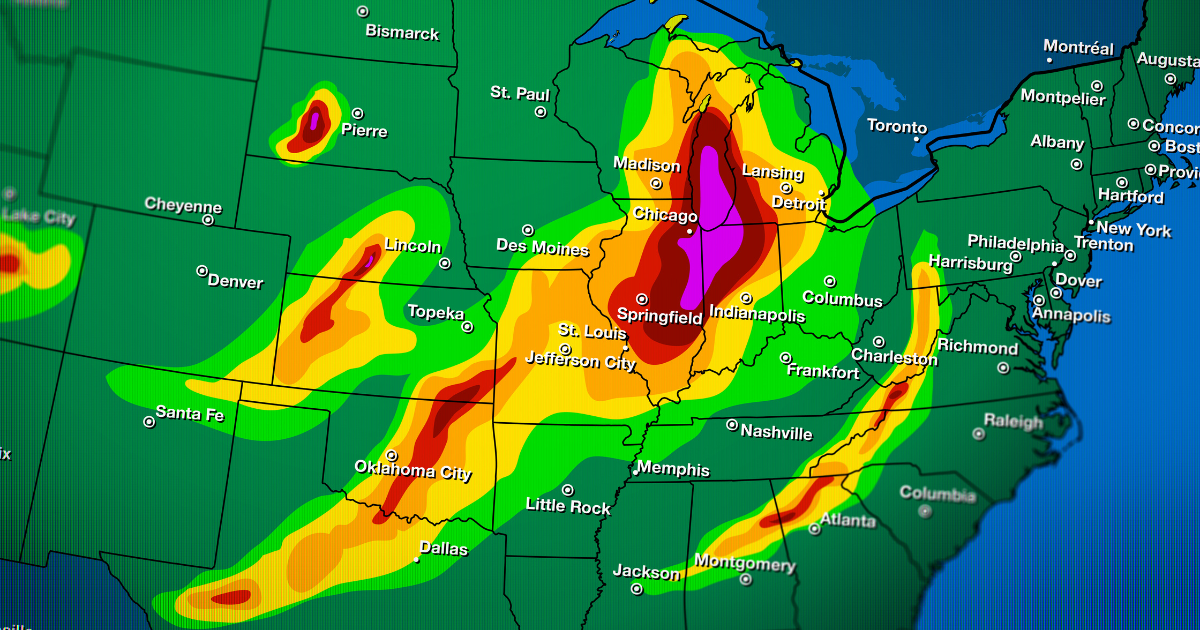
On March 10, 2026, Lake County and Porter County sat under simultaneous Severe Thunderstorm and Tornado Warnings. Confirmed damaging winds exceeded 70 mph. The Storm Prediction Center issued a Level 4 Moderate Risk rating, second-highest classification possible. Tornadoes touched down in Newton County. Over 16,000 customers lost power across northern Indiana and Illinois.
That data does not go away. The weather record is permanent.
What is not permanent is your ability to connect that weather record to visible, documented damage on your specific membrane. Every week that passes between the storm and the professional inspection is a week during which the evidence story becomes harder to tell, and easier for a carrier to contest. Water intrusion that was clearly storm-induced in week one becomes "could have been pre-existing moisture migration" by week eight.
Move now. Not because we said so. Because the clock is already running and you did not start it.
What Building Owners Ask Before Filing a Commercial Wind Damage Claim

Q: Should I call my insurance agent before getting a roof inspection?
A: No. Get the roofing inspection first. Understand what you have and what can be documented before anything touches the carrier. Once a claim is filed, the sequence is no longer in your control. Get your documentation in order, get a claims advocate in position, then file.
Q: What is a desk adjuster and who do they work for?
A: A desk adjuster is a carrier-employed professional assigned to evaluate and close your claim. They work for the insurance company. They are trained in claim reduction techniques, Xactimate pricing, and documentation review. They are not working against you, but they are not working for you either. Their job is to close the file at the lowest defensible number.
Q: What is Xactimate and why does it matter?
A: Xactimate is the industry-standard estimating software used by carriers to price commercial roof repairs and replacements. An adjuster's estimate is built in Xactimate. A professional supplement from a claims advocate like Max4Claims is also built in Xactimate. When both sides speak the same language, there is less room for arbitrary reduction.
Q: Can a claim be reduced even after initial approval?
A: Yes. Initial approvals are often followed by supplements, additional scope items that were not captured in the first estimate. The carrier has a process for reviewing supplements, and that process favors documentation. A claims management firm handles this on your behalf.
Q: What does 'pre-existing condition' mean on a commercial roof claim?
A: It means the adjuster is arguing that the damage existed before the qualifying storm event, that the storm did not cause it, it was already there. This is the most common denial basis for commercial flat roof claims. It is countered with pre-storm inspection records, maintenance history, and professional documentation that distinguishes wind-induced damage from normal aging.
Q: How long does a commercial wind damage claim typically take?
A: From initial filing to final check, a well-managed commercial claim runs 60 to 120 days depending on carrier, scope complexity, and supplement cycles. Unmanaged claims, filed without professional support, often drag longer and close lower. Get the right team in place at the start and the process moves on a documented timeline rather than a hope-for-the-best schedule.
The Only Strategy That Works

Hope is not a claims strategy. Neither is a friendly agent relationship.
What works is documentation assembled before the adjuster arrives, a claims advocate who speaks Xactimate, and a roofing contractor who can put forensic evidence on paper that holds up under professional review.
You paid premiums for years. The storm that crossed Lake and Porter County on March 10 was a Level 4 documented event. If your building has a commercial flat membrane, the question is not whether something happened up there. The question is whether someone with the right experience is going to tell that story correctly, or whether you are going to hand it to the process and see what arrives.
The process will send you a number. It will not be the right number. And you will probably accept it because you did not know what the right number was.
Do not let that be how this ends.
✉️ The investigation is FREE. The documentation is professional. The answer, yes or no, costs you nothing.
Subject Property Address: ___________________________
Start here. We’ll take it from there.
[ Email address ] → [ Send Me the Real Stuff ]
Pristine Industrial Roofing specializes in commercial flat roof systems across Lake and Porter County. We are Conklin certified contractors and we partner with Max4Claims for storm damage advocacy. We don't do residential. We don't do shingles. We do flat roofs, and we do them right.
Ready to find out if your roof qualifies? Text us first.
Text: (219) 529-1995 | go.PristineIndustrialRoofing.com/wind
Serving Lake & Porter County commercial properties.
Storm Claim Series continues: Part 3 — 70 MPH Winds. Tornado Warnings. Your County. Did Your Roof Feel It?
Part 4 — You Paid For This. Here's How to Collect, And How to Know If You Actually Can.
Read other blog:



We Love Conversations
 SoHelpful@PristineIndustrialRoofing.com