
The Future Is Liquid
Why the smartest landlords stop tearing off and start building a new roof on top. Modern Urethane. Bright Acrylic. 350% Stretch. Zero Tear-Offs. Forty-Year Roofs.
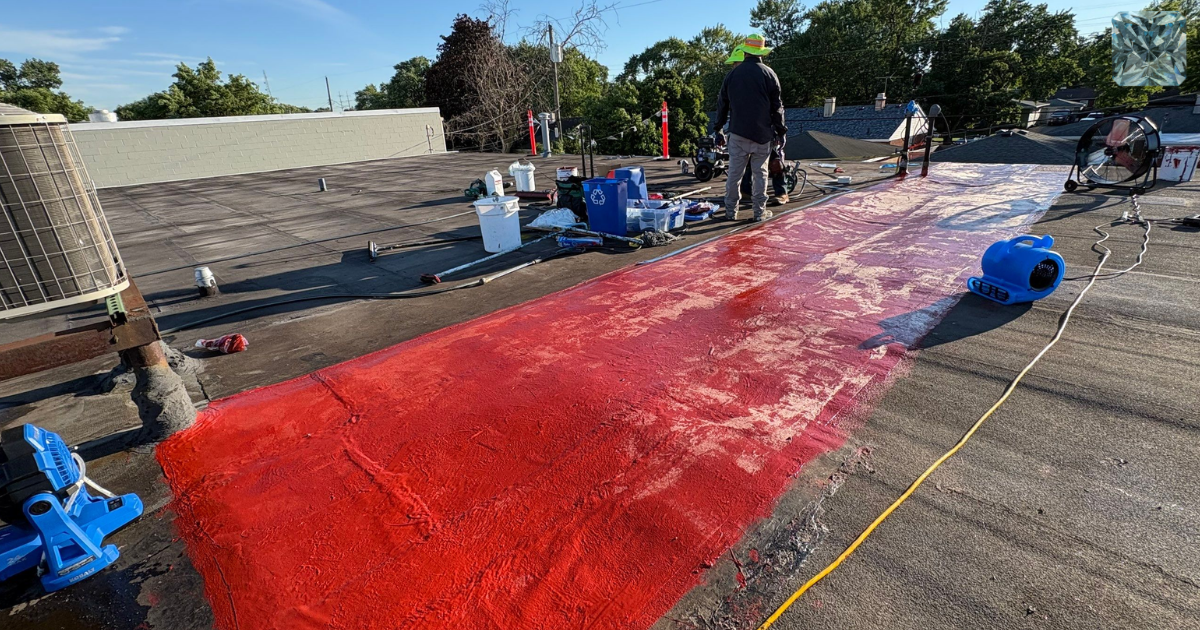
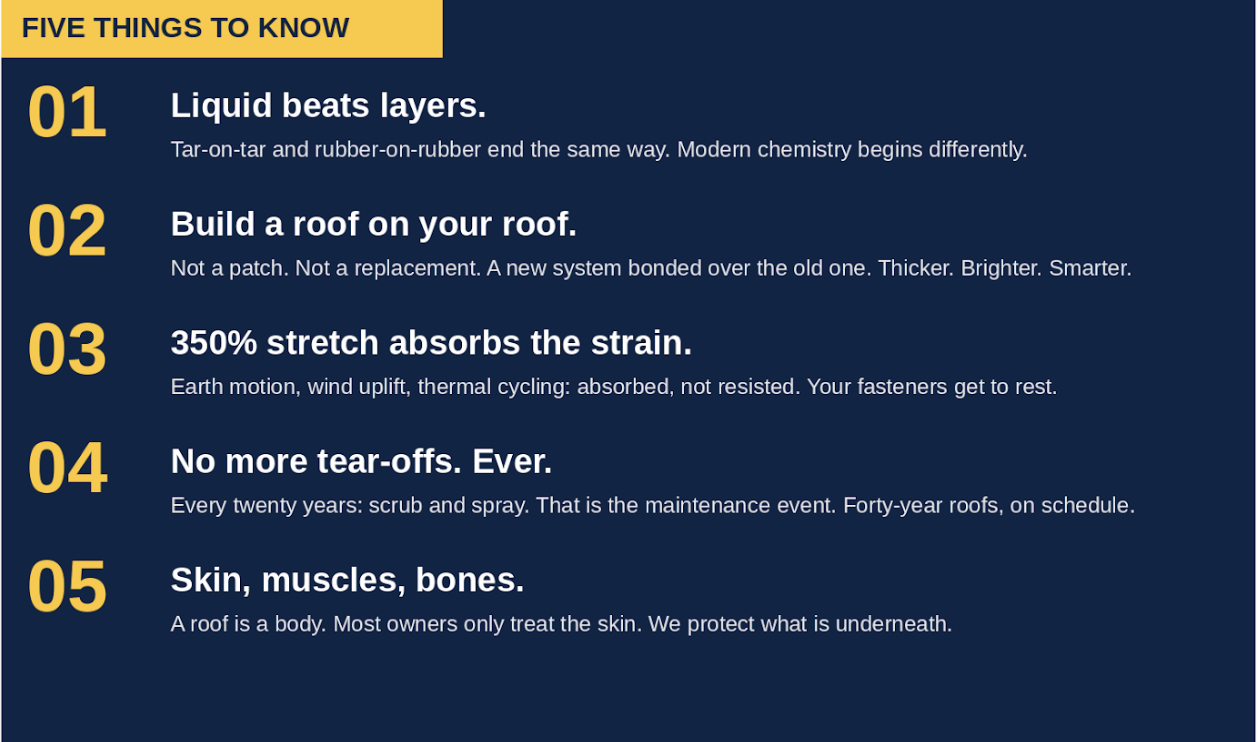
CURIOUS? TURN THE PAGE.
The full conversation continues inside. Or we can walk your roof together.
Why Liquid Is The Future
Modern roof chemistry. Forty-year roofs. No more tear-offs.
Every owner of a multi-building portfolio has been told the same story by every roofer who has ever climbed a ladder. Tar over tar. Rubber over rubber. Plastic membrane glued at the seams. Tear off and replace every twenty years. Repeat forever.
There is a different way. The scientists and the technicians went into the lab and they came out with two words every commercial landlord should know by heart: urethane and acrylic. Those two chemistries are why the future of commercial roofing is liquid.
What follows is the conversation we wanted to have on your roof, in writing first, so you can scan it on your own time. The long version still happens on the roof, building by building.
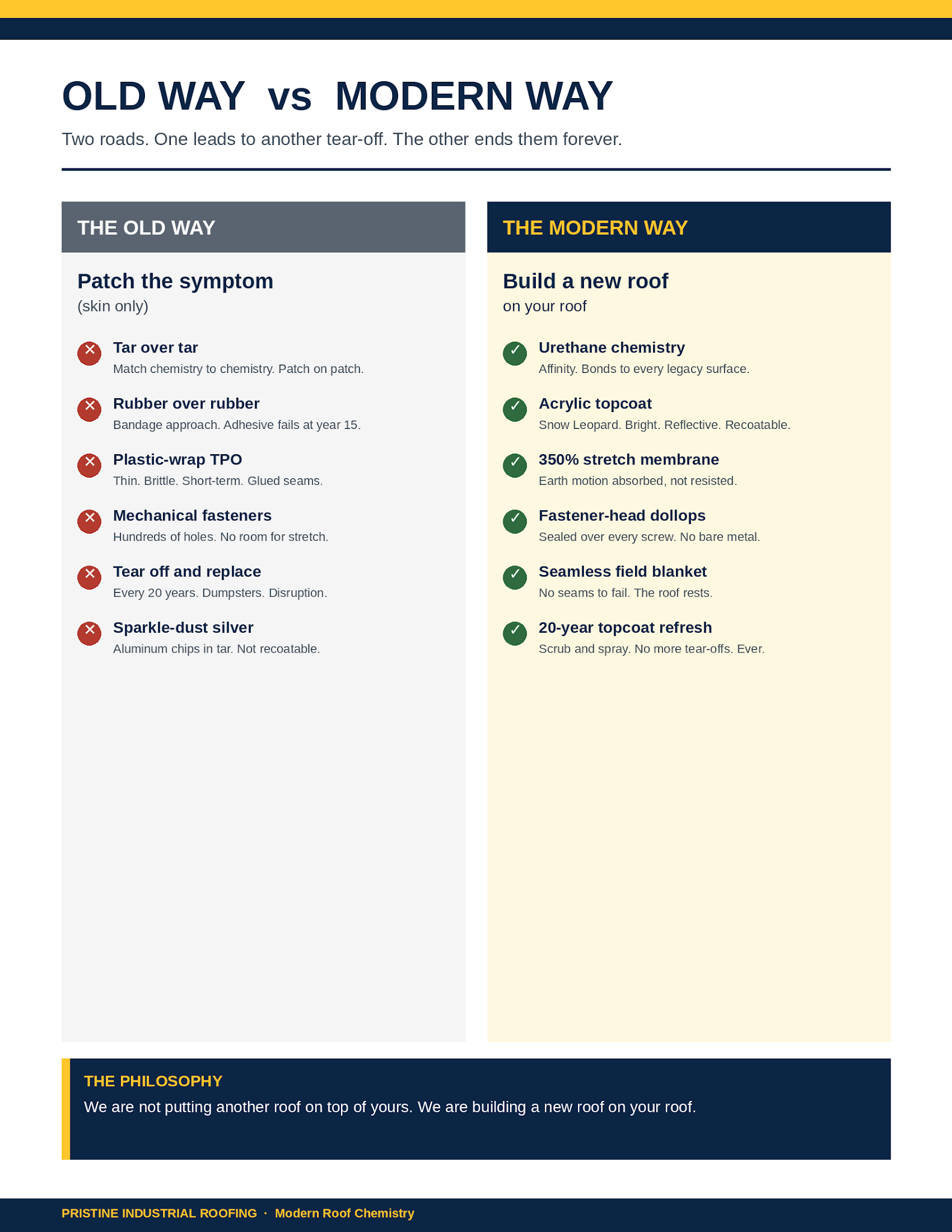
Three Words To Delete From Your Vocabulary
Before we talk about what our process does, here is what it replaces. Three terms keep showing up in commercial roofing proposals across the Midwest. None of them are our future.
1. Plastic-wrap TPO
TPO is thin. TPO is brittle. TPO is short-term thinking on a long-term building. The sheet wraps your roof like cling film and the seams are heat-welded. The seams are where TPO fails first.
2. Risky-rubber EPDM
Legacy EPDM gets a bad reputation for the wrong reasons. The body of the membrane is reasonably durable. The risky part is the glue. The adhesive at the seams and the perimeter gives out after about fifteen years. That is when the patch crews show up and the black asphalt smears begin.
3. Torch-down tar
Asphalt strips are still being installed on some commercial roofs in 2026. We see the freshly patched tar lines when we walk a roof for the first time. There is nothing inherently wrong with asphalt chemistry as a base layer in certain applications, but as a top layer on a commercial building, it is yesterday's solution to today's problem.
We are not putting another roof on top of yours. We are building a new roof on your roof.
Three Chemistries, One System
Modern liquid roofing is not a coat of paint on a tired roof. It is a chemistry-first approach to building a new system on the existing one, using three families of coatings designed to work together.
Urethane: the bonding layer
Conklin Affinity urethane is the universal bonding layer. It adheres to legacy rubber. It adheres to plastic-wrap TPO. It adheres to torch-down asphalt. It adheres to metal. It adheres to itself. Affinity is the chemistry that lets us put a permanent system over the top of a roof that other contractors say can only be torn off.
Acrylic: the topcoat
Snow Leopard acrylic is the brilliant white topcoat. White is not a magic color, but white outperforms dark on every commercial building we have ever coated. The roof stays cooler. The tenants stay more comfortable. The cooling bills come down. The reflective surface bounces solar energy back into the sky instead of cooking your insulation.
Vinyl: the stretchy blanket
Conklin FLEXION 2.0 is the vinyl membrane that gets installed when the entire roof needs a full re-skin. FLEXION stretches 350 percent. Earth moves. Wind moves. Thermal cycles move every roof, every day. Our material stretches with the motion instead of resisting it. The roof rests instead of being stressed.
Three chemistries, one system, twenty-year topcoat refresh. Scrub and spray. That is it.
Your Building Is A Body
Most owners think about a roof as a single thing: the skin. But a commercial roof is not a single thing. It is a body, and the body has three layers that matter.
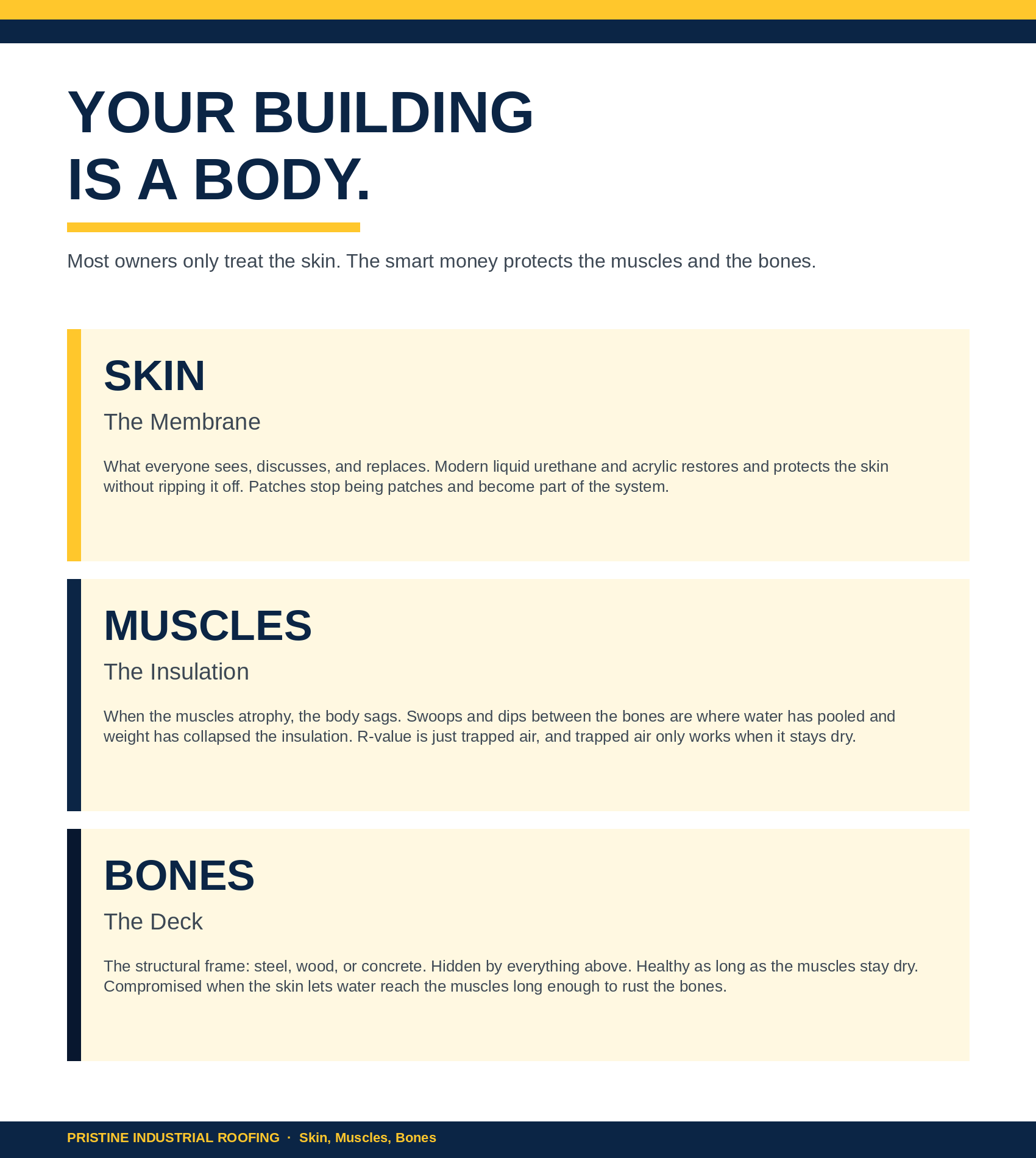
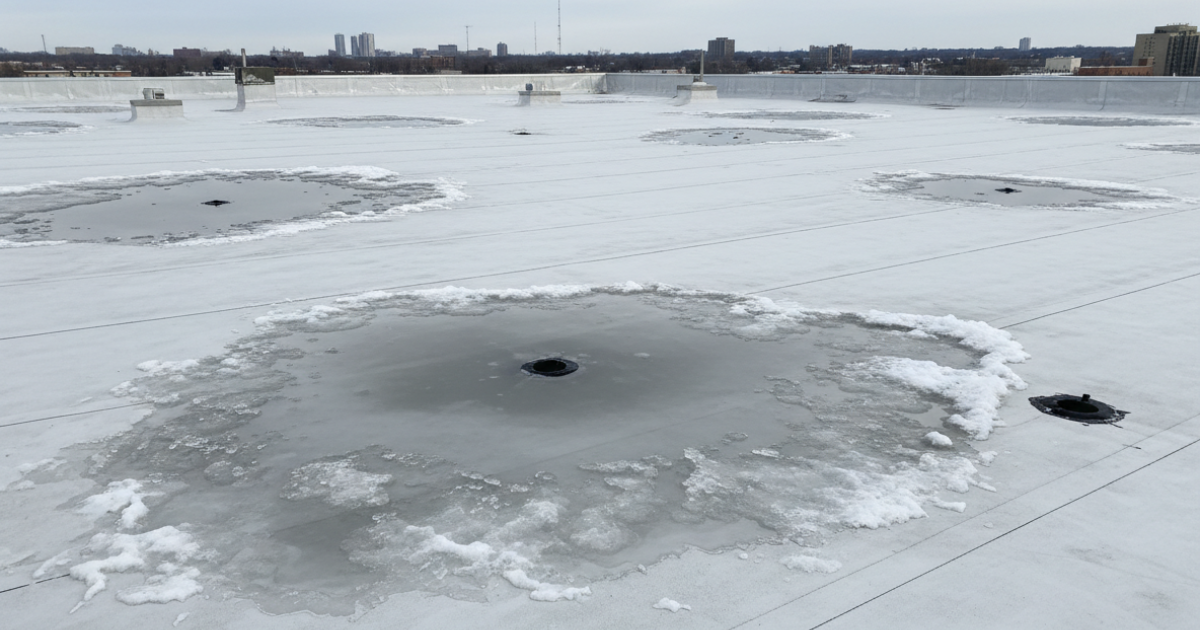
The skin gets the attention. The muscles do the work. The bones hold everything up. When you walk a roof and see swoops and sags between the bones, that is not a skin problem. That is muscle atrophy. The insulation underneath has been compromised by water the skin let through. Wet insulation is dead insulation. R-value is just trapped air, and trapped air only works when it stays dry.
Why This Changes The Conversation
If you think only about the skin, you patch forever. If you think about the muscles, you start asking a different question: should we replace the insulation in the areas where the muscles have caved in? The honest answer on most buildings is yes, in certain areas, before we put the new skin on. We pull off one and a half to three inches of compromised foam, replace it with the same thickness of fresh foam, and put the new liquid system over the top. The body gets stronger. The skin lasts longer. The bones stay protected.
What Makes Our Process Different
We have walked enough commercial roofs in Lake and Porter County to know what the other guys are doing. The patches tell the story. The big three roofing companies in town are good companies. They just operate on different chemistry and a different philosophy. Here is where our process diverges.
- Our patches bond better because there is no glue. Conklin urethane bonds chemically. There is no adhesive layer waiting to fail at year fifteen. The patch becomes part of the system instead of sitting on top of it.
- Fastener-head dollops over every screw. On metal roofs we cap every fastener head with a flexible urethane dollop, like a Hershey kiss over each screw. The dollop seals the hole, absorbs thermal motion, and prevents the rust ring that every uncapped fastener eventually creates.
- Spun Flex fabric reinforcement at every seam. Fabric-reinforced mesh embedded between coats at every vertical seam, horizontal seam, and stress point. Mesh below, base coat above and below, topcoat over everything. The seam stops being the weak point and becomes the reinforced point.
- Seamless field blanket over the whole roof. Once the seams are sealed and the fasteners are dollopped, we put a continuous liquid blanket over the field. No mechanical fastening through the new skin. No seams to fail. The roof rests.
- Twenty-year topcoat refresh. Once the system is in place, the only maintenance event on the calendar is a topcoat refresh every twenty years. Scrub the surface. Spray a fresh layer of Snow Leopard. No dumpsters. No tear-off labor. No tenant disruption.
- Buckets on the shelf for your maintenance team. We can supply your in-house maintenance department with the same urethane and acrylic in buckets so they can stay ahead of small repairs on the other buildings. The chemistry on every patch matches the chemistry on the field. Contamination never becomes a problem.
A Word On Metal Roofs
Some buildings in a portfolio are corrugated metal where the rust has gone past the point of patching. Sandblasting one panel at a time is a losing strategy. The Conklin Metal Restoration system handles it differently:
- Rust Off treatment. Self-rinsing chemical oxidizer applied across the entire surface. Removes oxidation and prepares the metal for primer adhesion.
- Encase metal primer. Gray rust-inhibiting primer that bonds chemically to the metal and locks out moisture. The permanent rust-blocking layer.
- Kwik Kaulk fastener seals. Premium sealant applied over every exposed fastener head throughout the entire roof field. Hundreds of fasteners, every one of them sealed.
- Benchmark and Spun Flex seam sandwich. Base coat below, mesh embedded, base coat above. Every vertical seam, every horizontal seam, every transition.
- Snow Leopard brilliant white topcoat. Energy Star rated. Reduces surface temperature by 40 to 50 degrees compared to bare metal. Lowers the tenant cooling load.
Priority And Budget
Anyone who owns several hundred thousand square feet of commercial roof understands a reality that single-building owners do not. The budget will always say no. There is never room in the budget for maintaining all the buildings the way they all need it. That is not a Pristine problem. That is portfolio reality.
There are two clean ways to make the budget work. Both depend on trust between the owner and the contractor.
Option one: prioritize building by building
We walk every roof together. We assign a priority score to each based on age, condition, tenant impact, and how far gone the insulation is. We rank the list. The worst building goes first. The next worst goes second. Each gets the full modern system in a single season. Twenty years later, the topcoat refresh starts over at the top of the list. The portfolio matures into a self-perpetuating rhythm instead of a fire-fighting scramble.
Option two: phase by budget
Sometimes the owner says, here is what I can do this year. Make it stretch. Phase by phase. Buy as much material as you can. Give me as much labor as you can. Show me how far this number goes.
That is a reverse trust fall on the owner's part, and we do not take it lightly. The owner trusts us with a budget instead of a scope. Our job becomes stretching every dollar to prolong the life of as much roof as possible. We document everything. We photograph everything. We do not waste material. We do not waste hours. The owner sees exactly what their money bought and where the next phase needs to pick up.
Tell us what you can do this year. We will stretch it. The buildings that need us most will get us first.
The Insulation Question
There is a tempting opt-out for every landlord: I do not pay the utility bills, the tenants do, so why insulate any thicker than what is already there? Fair short-term. Not fair long-term. Insulation thickness drives tenant comfort. Tenant comfort drives tenant retention. Tenant retention drives the value of your portfolio more than almost any other single factor. A warm, snug, well-insulated building keeps its tenants. A leaky, sagging, hot-in-summer building loses them.
Building Roofs With Several Decades In Mind
Our process is different because we are thinking further into the future than the typical roofing conversation allows. We are not planning your next tear-off. We are planning the next forty years of your portfolio. Topcoat at year twenty. Topcoat at year forty. No tear-offs in between.
The accounting department and the maintenance department eventually agree on this one. Finance wants to write checks for things that pay back across decades. Maintenance wants to stop chasing leaks. The smartest material installed once, kept on a six-month visit cadence, with the same chemistry in buckets on the shelf for in-house touch-ups, is the configuration that lets both departments breathe out.
The future is brighter with Pristine. Liquid is superior because we are building a roof on your roof. Thicker. Brighter. Smarter. Stretchier.

PRISTINE INDUSTRIAL ROOFING
Conklin Certified Commercial Flat Roofing · Lake County and Porter County · Urethane, Acrylic, and Vinyl Specialists
When you are ready, we will walk a building with you and put eyes on the muscles, not just the skin.
Read other blog:

We Love Conversations
 SoHelpful@PristineIndustrialRoofing.com