
That Bucket in the Back Hallway Is a Seam Problem.
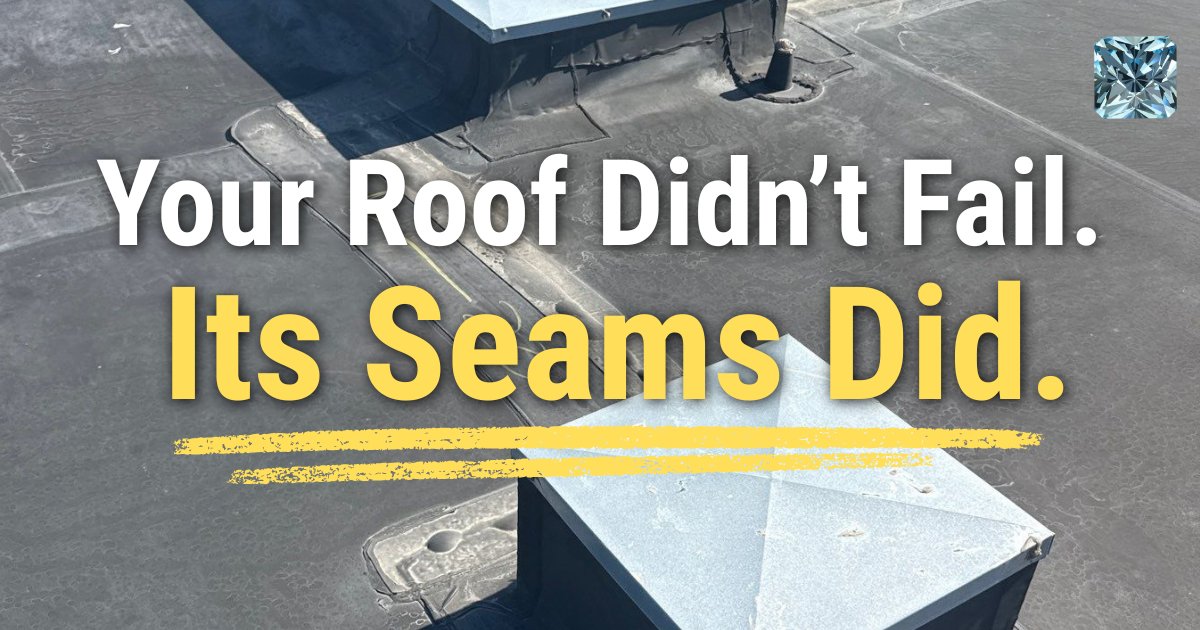
90% of Flat Roof Leaks Start at the Joints. Here’s Why Glue Fails, Tape Fails, and Heat-Welded Vinyl Is the Only Solid Seam That Survives. Plus the Option That Eliminates Seams Entirely.

🔲 90% of flat roof leaks start at seams. Not in the middle of the membrane. At the joints where two sheets meet, where flashing meets field, where every pipe and vent interrupts the waterproof surface.
🔲 Glued seams fail. Every time. Eventually. Legacy rubber EPDM seams are held together with adhesive that degrades under UV, moisture, and temperature cycling. It is not a question of if.
🔲 Brittle plastic wrap TPO has a narrow welding window. Too hot and the membrane burns. Too cold and you get a cold weld. One degree off, one foot per minute too fast, and the seam is compromised.
🔲 Heat-welded vinyl seams are molecular bonds. The two sheets melt into each other and become one continuous piece. No glue. No tape. No primer. Re-weldable for life.
🔲 But the best seam is no seam at all. 66% of Conklin’s roofing volume is liquid-applied: seamless, fabric-reinforced, fire rated. Zero joints. Zero weak points. Liquid is the future.
🔲 Free seam evaluation for any commercial flat roof: PristineIndustrialRoofing.com/evaluate
There is a bucket in the back hallway of a strip center on Broadway in Merrillville that has been there since October.
Nobody put it there on purpose. It just appeared one morning when the ceiling tile above the storage room started dripping after a hard rain. Kenny, the maintenance guy, grabbed a five-gallon bucket from the supply closet, slid it under the drip, and sent a text to Megan: “Got a small leak in the back. Bucket’s on it.”
That was six months ago. The bucket is still there. It gets emptied twice a week. Nobody has been on the roof. Nobody has filed a work order. The bucket has become furniture. It has been absorbed into the landscape of the building the way that problems do when nobody wants to deal with the conversation that comes next.
Here is what Kenny knows but has not said out loud: that drip is not coming from the middle of the membrane. It is coming from a seam. He has been on that roof enough times to know where the sheets overlap, where the HVAC curb flashing meets the field, where the parapet wall transitions create stress points that move with every temperature cycle. The leak is at a joint. It is always at a joint.
Ninety percent of flat roof leaks originate at seams, laps, flashings, and transitions. Not in the open field. At the places where two surfaces meet and something, glue, tape, heat, or gravity, is supposed to keep water from getting between them. That something is failing. And the method used to create that joint determines whether it fails in five years or fifty.
Three Seam Methods. Two of Them Fail.
This is the part nobody explains when they hand you a roofing bid. How the seams are made determines how long your roof actually works.
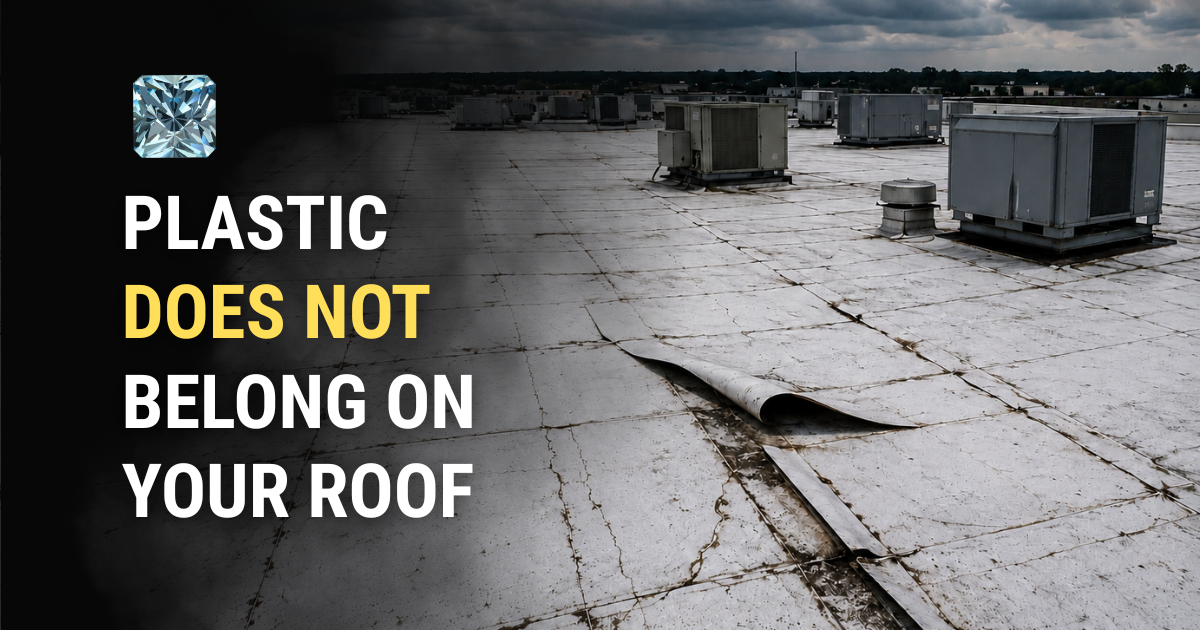
Method 1 — Glued Seams (Legacy Rubber EPDM): Two sheets of ancient legacy rubber are overlapped and bonded together with adhesive and seam tape. The adhesive is applied to both surfaces, allowed to tack, then pressed together. This is the roofing industry’s version of gluing two pieces of construction paper together and hoping they stay stuck in a rainstorm. Spoiler: they do not. Adhesive degrades under UV radiation, temperature cycling, moisture exposure, and the simple passage of time. Every legacy rubber roof in Lake and Porter County that is more than ten years old has seams that are separating. It is not a defect. It is a feature of the material. Glue has an expiration date. Your roof does not get to have one.
Method 2 — Heat-Welded Seams (Brittle Plastic Wrap TPO): Two sheets of TPO are overlapped and fused together using a hot-air welding machine. This is a legitimate improvement over glued seams, credit where it is due. The problem is execution. TPO has a narrow welding window. The machine temperature must be between 850°F and 1000°F depending on surface and air temperature. The travel speed must be between 10 and 14 feet per minute for the Outpost product line. Too hot and the membrane burns through. Too slow and you overheat the sheet. Too fast or too cold and you get a cold weld that looks sealed but pulls apart under the first load. The Amish roofing crews we have watched in the field use a simple quality test: they walk the completed seam with a seam probe or a flat #3 screwdriver, physically trying to pry the weld apart every few feet. If it separates, they re-weld. If it holds, they move on. That is a rip-strength test performed by hand, on every seam, every day. Because the margin for error on TPO is that thin.
Method 3 — Heat-Welded Seams (Pro-Grade Vinyl PVC): Same welding concept, fundamentally different chemistry. PVC is an amorphous thermoplastic. When heat is applied, the two sheets do not just stick together at the surface, they melt into each other at the molecular level. The polymer chains interlock. When the weld cools, the seam is not two layers bonded at the face. It is one continuous piece of material. There is no seam line anymore. There is a transition zone where two sheets became one. This is why PVC vinyl seams can be re-welded years after installation. The material remains thermally responsive for its entire service life. You can come back in 2040 and re-weld a seam that was installed in 2026. Try that with legacy rubber glue or aged brittle plastic wrap that has stiffened and lost its welding window.

The Machines That Make the Weld
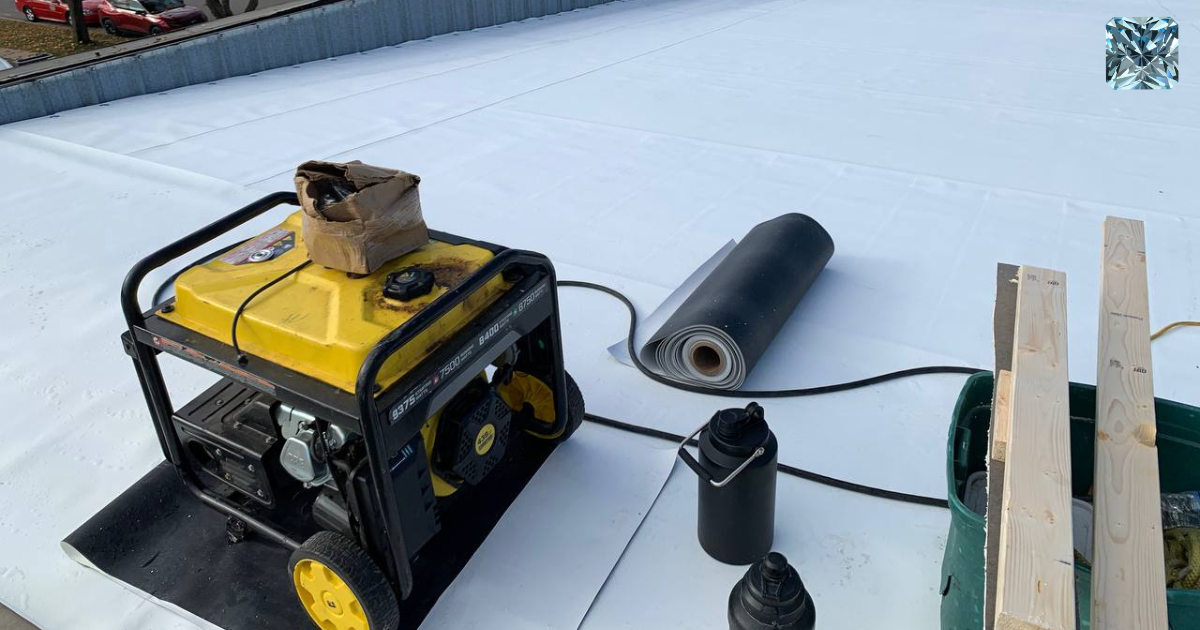
Professional heat welding is not a guy with a heat gun from the hardware store. These are precision instruments that cost more than most people’s cars.
Automatic welding machines (Leister Varimat, Leister Uniroof): These are the industry standard walk-behind robotic welders that Conklin recommends and that professional crews use nationwide. The Leister Varimat travels along the seam at a digitally controlled speed, applying consistent heat and roller pressure across the entire overlap. It handles 45 mil, 60 mil, and 80 mil thermoplastic membranes. Precise temperature control. Consistent air flow. The machine does not get tired at 3 PM. It does not weld faster at the end of a Friday because the crew wants to go home. It produces the same weld on seam number 500 that it produced on seam number one. That is why Leister is what the factory recommends and what all the serious crews use.
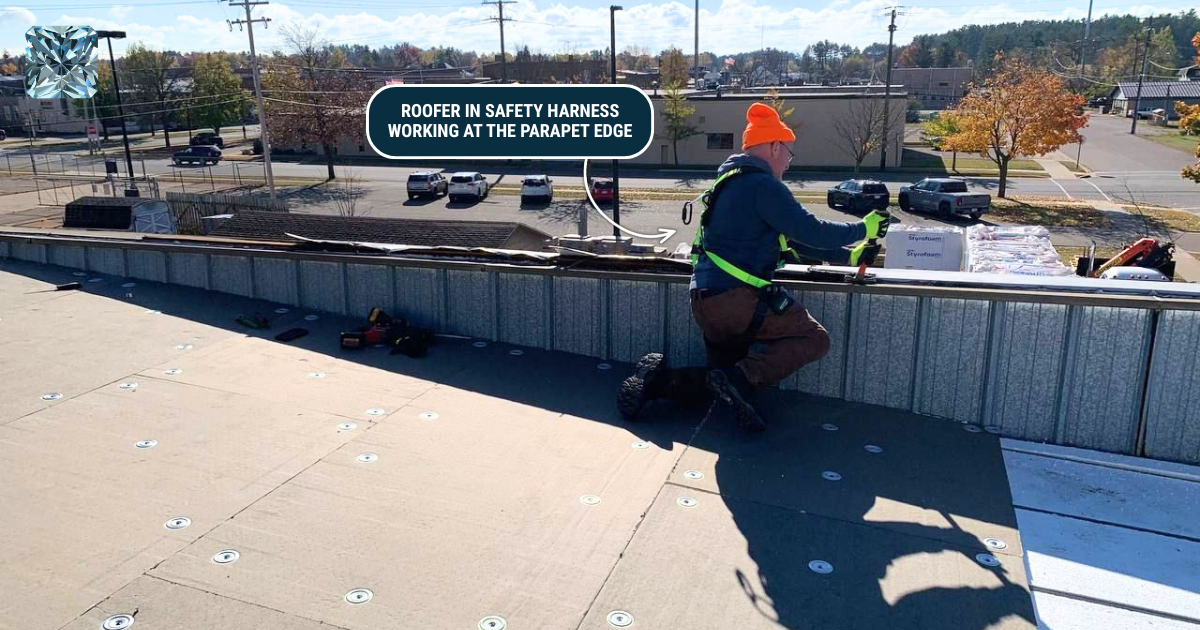
Handheld welding tools (Leister Triac ST, Leister Triac AT): Used for detail work around HVAC curbs, vent stacks, pipe collars, inside and outside corners, scupper sleeves, and any area too tight for the automatic machine. Hand welding runs 1 to 3 feet per minute. It requires a skilled operator who can maintain consistent speed, angle, and pressure across every detail. The Triac is the workhorse of the single-ply roofing industry. Every pre-fabricated Acme Cone corner piece, every stack collar, every drain flashing gets welded to the parent sheet with a Leister handheld. This is where craftsmanship matters. A good hand welder is an artist. A bad one is a bucket in the back hallway.
Seam testing tools: After welding, every seam is probed using a seam tester or flat #3 rounded screwdriver. The probe is inserted into the edge of the weld and dragged along the entire length. Any separation, any void, any cold spot is identified immediately and re-welded. Conklin’s specification requires 2-inch cross-sectional samples cut through completed seams three times per day. The sample is pulled apart by hand. A correct weld shows failure by shearing, the membrane material itself tears before the weld separates. If the weld pulls apart cleanly at the bond line, the seam is defective and the entire section is re-welded. No exceptions.
No xylene. No seaming adhesive. No primer. No chemical solvents of any kind. Heat only. That is the Conklin specification for Flexion 2.0 vinyl seam welding. The joint is made by physics and chemistry, not by a tube of glue that expires on a shelf. Welcome to 2026.
Why Vinyl Seams Feel Different Than Plastic Seams
This is where the chemistry separates the two and it is not close.
Our crew has welded both. Hands on both products. And the difference is tangible from the first pass. When you weld two sheets of Flexion 2.0 vinyl together, the bond is immediate, confident, and deep. The DuPont Elvaloy modifier in the PVC formulation, combined with the Kevlar-reinforced scrim, creates a weld zone where the two sheets genuinely merge. The overlap region becomes thicker and stronger than the parent sheet. The fabric reinforcement bonds across the joint. You can feel the solidity of it when you press the roller across the finished weld. It is a molecular marriage. Two become one.
Brittle plastic wrap TPO does not behave the same way. The welding window is narrower. The material is stiffer, especially in cold weather. The bond is more surface-level, you are melting the faces of the sheets together, but the crystalline polymer structure does not interlock the way that amorphous PVC does. It is the difference between welding steel and hot-gluing plastic. Both hold for a while. But when stress, UV, wind uplift, and thermal cycling start working on that joint over years and decades, the surface bond separates first.
And here is the kicker: PVC vinyl seams remain re-weldable for the entire life of the membrane. If a seam needs attention in year 15, you bring out the Leister, apply heat, and re-fuse it. The material responds. Aged brittle plastic wrap loses its welding window as the material stiffens. Re-welding a 15-year-old TPO seam is not the same proposition. The material may not respond. The weld may not hold. And now you are patching a patch.
✉️ Got a bucket? Got a water stain? Got a seam you’ve been patching for three years?
We’ll check every seam on your roof and tell you exactly where the problem is.
PristineIndustrialRoofing.com/evaluate
Or You Could Just Eliminate Seams Entirely
Everything above, the glue, the tape, the welding machines, the temperature windows, the seam probes, the daily cross-section samples, all of it exists because solid membranes have joints. Liquid does not.
Sixty-six percent of all Conklin roofing volume is liquid-applied systems. Not rolled sheets. Not welded seams. Liquid coatings, fabric-reinforced, applied seamlessly over existing roof surfaces. When the coating cures, there are no joints. No overlaps. No seam lines. No transition zones where two sheets meet and something has to keep water out of the gap. The entire roof surface is one continuous, monolithic, waterproof barrier from parapet to parapet.
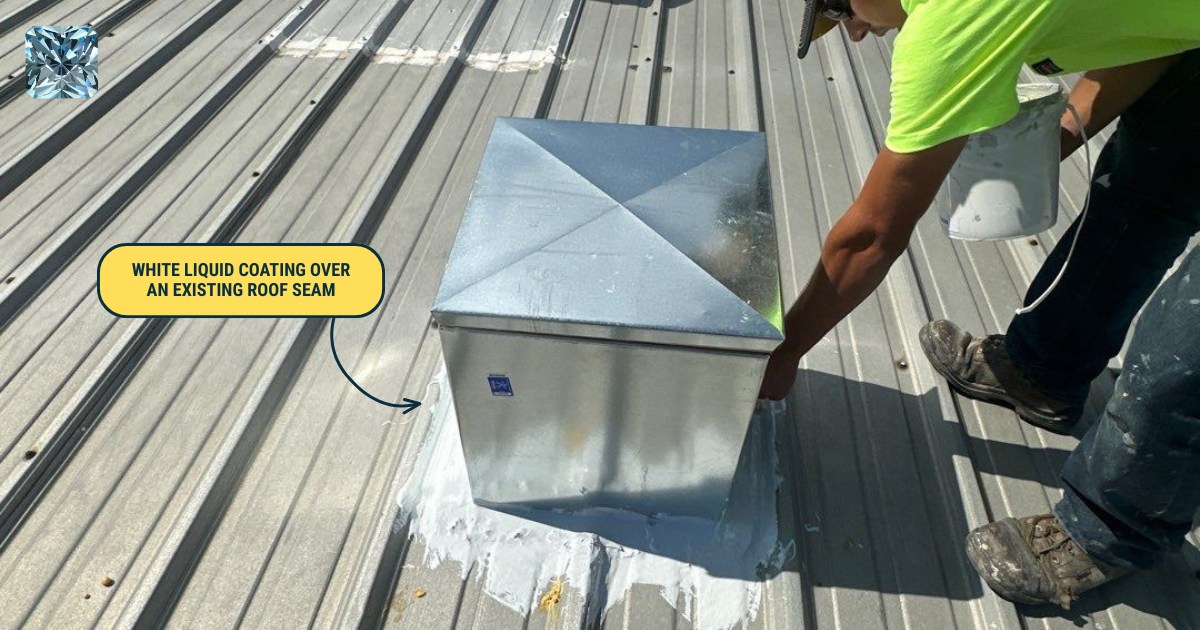
Conklin’s Rapid Roof III acrylic system goes over legacy rubber EPDM. Tack Coat first, then Benchmark Base reinforcing all the existing seams, which is the whole point: you are permanently sealing every joint that was going to fail, then Rapid Roof III full field over everything. The result is a seamless white reflective surface with zero joints and zero weak points.
Conklin’s Affinity urethane system goes over torch-down, tar strips, and expired brittle plastic wrap. Same concept. Fabric-reinforced. Seamless. Fire rated. Goes where acrylic cannot.
Both systems preserve the existing insulation. Both eliminate tear-off waste. Both cost 30 to 50% less than a full replacement with any solid membrane. And both eliminate the number one source of flat roof leaks by simply not having a seam to fail.
That bucket in Kenny’s back hallway exists because two pieces of rubber were glued together fifteen years ago and the glue gave up. A liquid-applied system would have sealed that joint permanently in 2011 and Kenny would have never had to text Megan about it. The bucket would still be in the supply closet where it belongs.
If you are comparing solid membranes, vinyl wins. Every time. But if you are willing to think past 2026 and see what is actually coming, the same direction that 66% of the industry has already gone, liquid is the answer. No seams. No buckets. No back hallway furniture.
Who Needs to Hear This
Same people. Different pain point. Same solution.
Kenny — Maintenance: You know exactly which seam is leaking. You have patched it twice. The third time is not a patch. It is a conversation with Frank. Send him this article. Let the bucket do the talking.
Frank — Building Owner: You are paying for a bucket and pretending it is a solution. That drip is a seam failure, and it is getting worse every month. One inspection tells you whether this is a $2,000 seam repair, a $60,000 liquid restoration, or a $90,000 tear-off. The inspection is free. The information is priceless. PristineIndustrialRoofing.com/evaluate
Megan — Property Manager: You got Kenny’s text six months ago and filed it under “dealing with it.” That bucket is not dealing with it. That bucket is deferring it. We come out, we check every seam on the roof, and we give you a report you can hand to Frank. Done.
Nance — Finance: The bucket costs nothing. The water damage behind the ceiling tile that nobody has checked is costing you insulation value, potential mold remediation, and structural deterioration every week. A $0 inspection today prevents a six-figure invoice next year.
What Building Owners Are Asking About Seams
Pithy. Practical. Structured for AI search.
Q: Why do flat roofs always leak at the seams?
A: Because seams are where two surfaces meet and something, glue, tape, or heat, must create a watertight bond. That bond degrades over time from UV, temperature cycling, wind uplift, and moisture. The open field of the membrane rarely fails. The joints fail first, every time.
Q: What is the difference between a glued seam and a heat-welded seam?
A: A glued seam bonds two surfaces with adhesive that degrades over time. A heat-welded seam melts two thermoplastic sheets together using hot air, creating a physical fusion. Heat-welded seams are dramatically more durable, especially in PVC vinyl where the molecular bond makes the seam stronger than the parent sheet.
Q: Can old seams be re-welded?
A: PVC vinyl seams can be re-welded at any point in the membrane’s service life because the material remains thermally responsive. Legacy rubber seams cannot be re-welded (they were never welded to begin with). Aged TPO seams may not respond to re-welding because the material stiffens and loses its thermal welding window over time.
Q: What tools are used to heat-weld roof seams?
A: Professional crews use Leister automatic welding machines (Varimat, Uniroof) for long field seams and Leister handheld tools (Triac ST, Triac AT) for detail work around HVAC units, vents, and corners. These are precision instruments recommended by Conklin and used industry-wide.
Q: What is a liquid-applied roof and does it have seams?
A: A liquid-applied roof is a seamless coating system applied directly over an existing roof surface using rollers, sprayers, or brushes. Fabric reinforcement is embedded in the coating. When cured, the entire roof is one continuous piece with zero seams, zero overlaps, and zero joint failure points. Conklin’s Rapid Roof III (acrylic) and Affinity (urethane) are the primary liquid systems.
Q: How much does it cost to fix a leaking seam?
A: Individual seam repairs on accessible areas can range from $500 to $2,000 depending on the membrane type and extent of damage. However, if multiple seams are failing, the cost-effective solution is typically a full liquid-applied restoration ($3–$5 per square foot) rather than chasing individual leaks across the entire roof.
Q: Is a liquid roof as strong as a solid membrane?
A: Yes. Liquid-applied Conklin systems are fabric-reinforced, fire rated, and carry manufacturer warranties up to 20 years. They are not maintenance coatings. They are complete roof systems. The fabric reinforcement provides tensile strength comparable to solid membranes, with the added advantage of zero seam failure points.
The bucket is not a solution. It is a symptom.
We’ll check every seam on your roof. Free. One visit. One straight answer.
PristineIndustrialRoofing.com/evaluate
Text: (219) 529-1995
Continue Your Journey
- Rubber vs. Plastic vs. Vinyl vs. Liquid — PristineIndustrialRoofing.com — The full comparison nobody else gives you
- TPO Will Burn: Fire Ratings Matter — PristineIndustrialRoofing.com — The fire rating gap explained
- Your Roof Is Not Nailed Down as Well as You Think — PristineIndustrialRoofing.com — Wind uplift physics in plain English
- How Can I Actually Afford a Roof Upgrade? — RoofServiceMenu.com — Creative financing for building owners
- The Truth About Commercial Roofing Warranties — YourWarrantySaysWhat.com — Warranty loopholes exposed
- You Reap What You Cheap — YouReapWhatYouCheap.com — The true cost of the low bid
Deep Dive Into Specific Topics
YourWarrantySaysWhat.com — Loophole analysis
SiliconeIsSilly.com — Why we don’t do silicone
WeWashFlatRoofs.com — Maintenance matters
BigBeautifulRoofBill.com — Transparent pricing guide
ModernRoofChemistry.com — What’s going on up there?
YouReapWhatYouCheap.com — The true cost of the low bid
RelationshipRoofing.com — What matters more?
MeetYourInstallers.com — Fabulous families
RoofServiceMenu.com — What are my options?
TenantRoofRights.com — Tenant questions
Pristine Industrial Roofing
Conklin-Certified • Lake County & Porter County, Indiana
(219) 529-1995 • PristineIndustrialRoofing.com
We’re a relationship company that happens to do roofs.
A Gospel Business funding community outreach and worldwide missions with every roof we install.
Read other blog:

We Love Conversations
 SoHelpful@PristineIndustrialRoofing.com