
Six Things Your Building Is Actually Costing You
A Diagnostic for Commercial Building Owners Who Think They Know What Their Roof Costs

🔲 The costs that hurt most never show up on an invoice. Insurance trajectory, energy loss, tenant risk, valuation erosion, they compound in silence until the building presents one massive bill.
🔲 Deferred maintenance isn't linear. It's exponential. A $60,000 restoration in Year 1 becomes a $220,000 tear-off in Year 5. The building doesn't warn you.
🔲 You're not avoiding a cost. You're postponing a larger one. A $180,000 roof problem on a $2 million building doesn't cost you $180,000. It costs you $250,000 in valuation discount.
🔲 Your roof is the biggest lever you control. Fix the surface and the insulation and you've addressed energy loss, insurance trajectory, tenant risk, and lender perception in one project.
You Think You Know What Your Building Costs
You know your mortgage or lease payment. You know your NIPSCO bill. You know what you paid for the last HVAC repair. You have a number in your head for what your building costs you every month, and that number feels manageable. Or at least predictable.
But there are costs your building is generating right now that never show up on a line item. They don’t arrive in an envelope. They don’t trigger a notification. They accumulate silently, and by the time they become visible, the damage is already compounding.
This isn’t an article designed to scare you into buying a roof. This is a diagnostic. Six mirrors. Hold each one up to your building and see what’s actually reflected back.
We’re not here to tell you how to feel about what you find. We’re here to make sure you’re calculating with the right numbers.
1. Insurance Premium Trajectory
What you think it costs: Your current annual premium.
What it actually costs: The rate of increase over the next 3 to 5 years.

Most building owners look at this year’s premium and decide they can live with it. What they’re not tracking is the trajectory. Commercial property insurance in the Midwest has been climbing 8 to 15% annually, and buildings with aging roof systems, especially those with prior claims, are seeing steeper increases.
Here’s the contrast that matters: a building with a documented, warrantied roof restoration can often negotiate flat or reduced premiums. A building with a 22-year-old modified bitumen membrane and two prior leak claims is on an escalator that only goes up.
The question isn’t “what am I paying now?” The question is “what will I be paying in Year 3 and Year 5 if nothing changes?” Plot that line. Then plot the alternative line. The gap between those two lines is the real cost of your current roof.
2. Energy Loss Through the Roof Membrane
What you think it costs: Your monthly NIPSCO bill.
What it actually costs: The portion of that bill your roof is responsible for.

A dark, aged roof membrane absorbs heat. A saturated insulation layer beneath it loses R-value. The result: your HVAC system works harder, runs longer, and dies sooner. But the energy loss doesn’t show up as a separate charge. It’s buried inside your utility bill, invisible unless you know to look for it.
Here’s what most building owners haven’t considered: you don’t have to yield 100% of your NIPSCO bill to NIPSCO. A high-reflectivity roof coating can redirect a meaningful portion of that energy spend back into your operating budget. That’s not a roof cost. That’s a funding reallocation. Money that was going to the utility company can go to equipment, signage, or cash reserves instead.
You can redirect some of that NIPSCO funding away from your utility bill and over into your equipment budget. That’s not a roof expense. That’s an operating strategy.
3. Tenant Retention Risk
What you think it costs: Nothing, because nobody has complained yet.
What it actually costs: The full replacement value of that tenant if they leave.
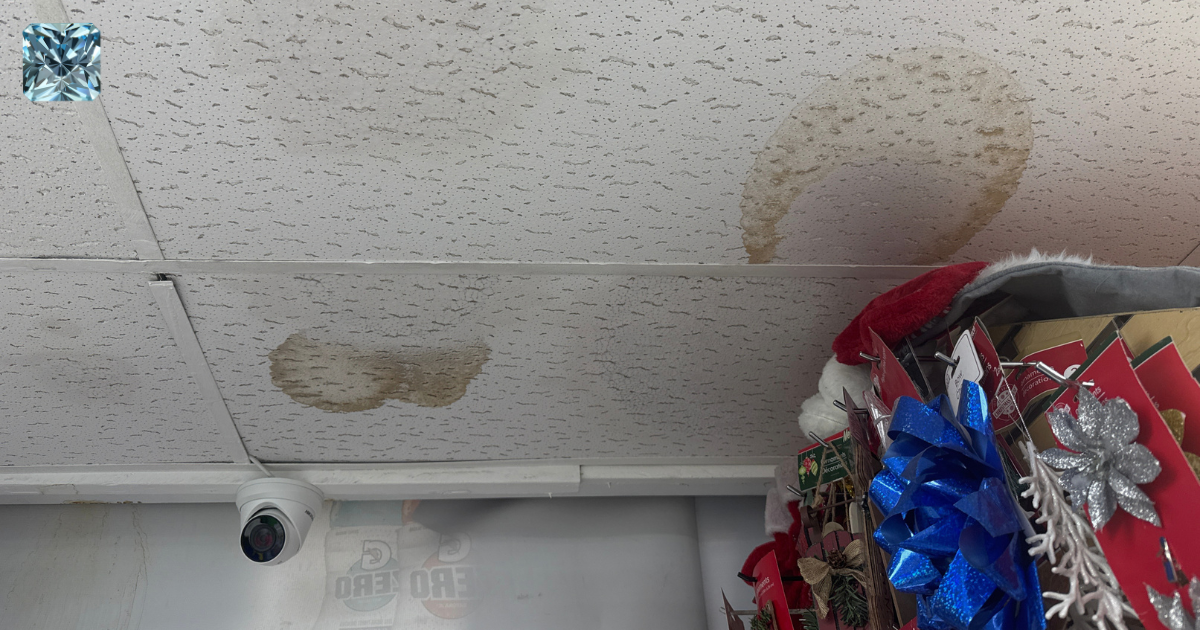
Tenants don’t file formal complaints about a roof. They just don’t renew. They find a reason, the space isn’t right, they’re consolidating, they found a better deal, and you never hear the real reason, which might be the stained ceiling tiles, the bucket in the corner of the warehouse, or the mold concern they mentioned to their facility manager but never escalated to you.
Tenant acquisition costs in commercial real estate run 6 to 12 months of vacancy plus build-out concessions. If you’re carrying a $15/SF lease on a 10,000 SF space, one lost tenant costs you $75,000 to $150,000 in vacancy and re-leasing. That’s the real price of the leak you think is manageable.
✉️ Do you know what your roof is actually costing you right now?
Subject Property Address: ___________________________
FREE evaluation. No sales pitch. No pressure. No obligation.
[ Email address ] → [ Send Me the Real Stuff ]
4. Property Valuation Erosion
What you think it costs: Nothing, because you’re not selling right now.
What it actually costs: The discount the next buyer will demand.

Commercial properties are valued on income and condition. A building with documented deferred maintenance, especially a failing roof system, gets discounted by the full estimated replacement cost plus a risk premium. Buyers don’t just subtract the repair cost. They subtract the repair cost, add a contingency, and then negotiate further because you’ve lost leverage.
A $2 million building with a $180,000 roof problem doesn’t sell for $1,820,000. It sells for $1,700,000 to $1,750,000 because the buyer prices in the hassle, the risk of hidden damage, and the opportunity to negotiate from a position of strength. You lost $250,000 to $300,000 to avoid spending $180,000.
And even if you’re not selling today, your building’s value is your equity position. It affects your borrowing capacity, your refinancing terms, and your estate value. The erosion is happening whether you plan to sell or not.
5. Deferred Maintenance Compounding
What you think it costs: The repair bill when it finally breaks.
What it actually costs: The exponential curve between Year 1 and Year 5.
Deferred maintenance isn’t linear. A small ponding issue in Year 1 saturates insulation in Year 2, which accelerates membrane degradation in Year 3, which causes structural deck concerns in Year 4, which triggers a full tear-off requirement in Year 5 that costs 3 to 4x what the original restoration would have.
The building doesn’t send you a bill each year for the compounding. It sends you one massive bill at the worst possible moment, usually when you’re already dealing with something else. The cost of waiting isn’t the same as the cost of the repair. It’s the cost of the repair times the compounding factor of everything the original problem touched.
Deferred maintenance compounds silently. A $60,000 restoration in Year 1 becomes a $220,000 tear-off in Year 5. The building doesn’t warn you. It just presents the invoice.
6. Lender Perception and Loan Conditions
What you think it costs: Nothing, because you’re not applying for a loan.
What it actually costs: The terms you’ll get when you do.
Lenders inspect roofs. Not always at origination, but often at refinancing, at renewal, and almost always when there’s been a claim. A roof in poor condition doesn’t just affect the loan-to-value calculation. It can trigger mandatory repair requirements as a condition of funding, which means you’re paying for the roof anyway, but on the bank’s timeline, not yours, and potentially at emergency pricing.
Here’s the contrast: a proactive roof restoration with a transferable manufacturer’s warranty is an asset on the balance sheet. It improves LTV, simplifies the lender’s underwriting, and gives you leverage in the negotiation. The same building, same loan amount, same borrower, but with a documented roof system versus a question mark, gets materially different terms.
And if you’re pursuing SBA financing, your property condition is part of the evaluation. The building tells a story to the lender. Make sure it’s telling the right one.
The Full Picture: What You Think vs. What’s Actually Happening
Here’s the summary. Not to persuade you. Just to make sure you’re seeing the complete calculation before you decide anything.

None of these six items show up on a single invoice. None of them trigger an alert. They compound in silence, and the building owner who doesn’t calculate them isn’t saving money. They’re just not seeing the bill yet.
What To Do With This Information
We’re not telling you to buy a roof. We’re telling you to run the real numbers. Calculate the six costs above for your specific building and see what the total actually looks like. Then compare that total to the cost of a proactive restoration. If the restoration is cheaper than the compounding costs of doing nothing, the decision makes itself.
If you want help running those numbers, we offer free building envelope inspections across Lake County and Porter County. No pressure, no pitch, just data. Because we believe business owners who see the full picture make better decisions. And better decisions are how you protect the people who depend on you.
Planning is the primary responsibility of the executive office. You’re on this throne because your decisions impact many other people.
Commercial Building Cost FAQs
Q: Why is my commercial property insurance premium going up every year?
A: Midwest commercial property insurance is climbing 8 to 15% annually. Buildings with aging roofs and prior claims see the steepest increases. A documented, warrantied restoration can flatten that trajectory.
Q: How much of my NIPSCO bill is my roof responsible for?
A: More than you think. A dark, aged membrane and saturated insulation force your HVAC to run harder, and that cost is buried in your utility bill. A Conklin high-reflectivity system can redirect 25 to 40% of that spend back into your operating budget.
Q: Can a leaking roof cause me to lose a tenant?
A: Yes, and you'll rarely hear that's the reason. Tenants don't complain. They just don't renew. On a 10,000-square-foot space at $15/SF, one lost tenant costs $75,000 to $150,000 in vacancy and re-leasing.
Q: Does a failing roof affect my property value even if I'm not selling?
A: Every day. A $2 million building with a $180,000 roof problem doesn't sell for $1,820,000, it sells for $1,700,000 to $1,750,000. The erosion hits your equity, borrowing capacity, and refinancing terms now.
Q: How fast does deferred roof maintenance compound?
A: A $60,000 restoration in Year 1 becomes a $220,000 tear-off in Year 5. Ponding leads to saturated insulation, which leads to membrane failure, which leads to deck damage. The building doesn't warn you. It just presents the invoice.
Q: Can a poor roof condition affect my loan terms?
A: Yes. Lenders inspect roofs at refinancing and after claims. A failing roof can trigger mandatory repairs on the bank's timeline, at emergency pricing. A Conklin restoration with a transferable warranty improves your LTV and simplifies underwriting.
Q: What is the difference between what I think my building costs and what it actually costs?
A: The gap is in six hidden items, insurance trajectory, energy loss, tenant risk, valuation erosion, deferred maintenance compounding, and lender terms. None show up on a single invoice. They compound in silence.
Q: How do I know if a roof restoration makes financial sense for my building?
A: Run the six numbers above and compare the total to the cost of a proactive restoration. If the restoration is cheaper than doing nothing, and it usually is, the decision makes itself. We offer free building envelope inspections across Lake and Porter Counties.
✉️ Let's Run the Real Numbers on That One Property.
You've seen the six costs. You know which building you're thinking about.
Subject Property Address: ___________________________
Drop the address. We'll evaluate the roof, calculate what the hidden costs are running, and give you the full picture, before the building presents its own invoice.
No sales pitch. No pressure. No obligation.
[ Email address ] → [ Send Me the Real Stuff ]
Pristine Industrial Roofing • Conklin Preferred Contractor • Lake & Porter County, Indiana
Free building envelope inspections. Real numbers. No pressure.
PristineRoofing.com | (219) NWI-ROOF
Read other blog:


We Love Conversations
 SoHelpful@PristineIndustrialRoofing.com