
Should I Even Bother Filing a Wind Damage Claim on My Commercial Roof?
Storm damage claims aren’t decided by the weather. They’re decided by documentation. And whoever shows up to the roof first usually wins.

- Not Every Storm Qualifies. Insurance companies require documented severe weather, not just a windy night. The March 10, 2026 storm met the threshold with 70+ mph winds and official National Weather Service warnings across Lake and Porter County.
- The Storm Doesn’t Approve the Claim, Your Roof Does. Adjusters don’t pay claims based on weather reports. They look for physical wind damage on your specific membrane, uplift at corners, seam separation, fastener movement, and perimeter damage.
- Age and Maintenance History Matter. Commercial flat roofs under 20 years old with minimal repair history typically have the strongest claim potential. Older roofs can still qualify, but they require stronger documentation and advocacy.
- Filing Without Documentation Is the Fastest Way to Lose. The difference between a paid claim and a denial often comes down to who documented the roof first and what paperwork exists before the adjuster arrives.
You've been asking yourself that question since the storm rolled through.
Maybe you walked the roof. Maybe you sent Kenny up there and he came back with a shrug and "looks okay from what I could see." Maybe you called your agent and got a friendly voice that said something like, "go ahead and file, we'll take a look."
That sounds helpful. It isn't.
Your agent works for the insurance company. Not for you. Not for your building. Not for the three weeks of disruption that follow a bad claim outcome. They are polite, they are professional, and their job is to manage exposure for the carrier, not to maximize what lands in your account.
So here is the honest answer to your question, it depends on three things. And if you get even one of them wrong, you are better off not filing at all.
Let's walk through them.
First, Did a Qualifying Storm Actually Hit Your Building?
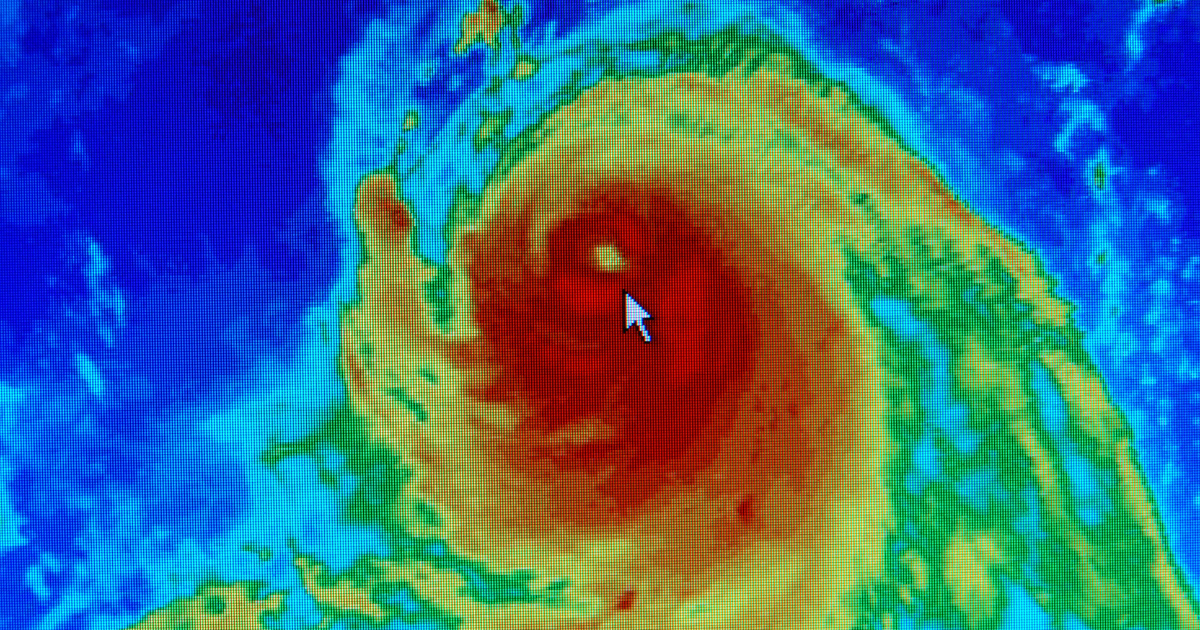
Not every storm qualifies. Insurance carriers require a documented weather event, typically damaging winds exceeding 50 to 60 mph sustained, or a formally declared Severe Thunderstorm Warning from the National Weather Service for your specific county. A bad night of rain does not move the needle. Neither does "it was really windy."
On the night of March 10, 2026, Lake County and Porter County were placed under an active Severe Thunderstorm Warning and a Tornado Warning simultaneously, with confirmed damaging winds exceeding 70 mph. The Storm Prediction Center rated this event a Level 4 Moderate Risk. That is the second-highest classification the SPC issues. Tornadoes touched down in Newton County. Power outages hit over 16,000 customers across northern Indiana and Illinois.
This was not a routine Spring storm. It was a documented, rated, multi-agency-confirmed severe weather event.
Step one, confirmed. The storm qualifies. The data exists.
The storm data is permanent. The window to act on it is not.
The storm documentation is permanent. The claim window is not. Post-storm filing windows for commercial properties in Indiana typically run 12 months from the date of the event under most standard commercial policies, but supplemental damage discovered after the initial filing has its own, shorter clock. Move now. Document now. The carrier will not be waiting around for you.
Second, Is There Actual Physical Evidence of Wind Damage on Your Specific Roof?
This is where most building owners get stuck.
They assume that because a documented storm happened, documented damage happened. That is not how adjusters think. That is not how claim decisions get made. An adjuster does not look at the SPC weather report and cut a check. They look at your specific membrane, your specific fasteners, your specific perimeter edges, and they look for a reason to tell you the damage was pre-existing.
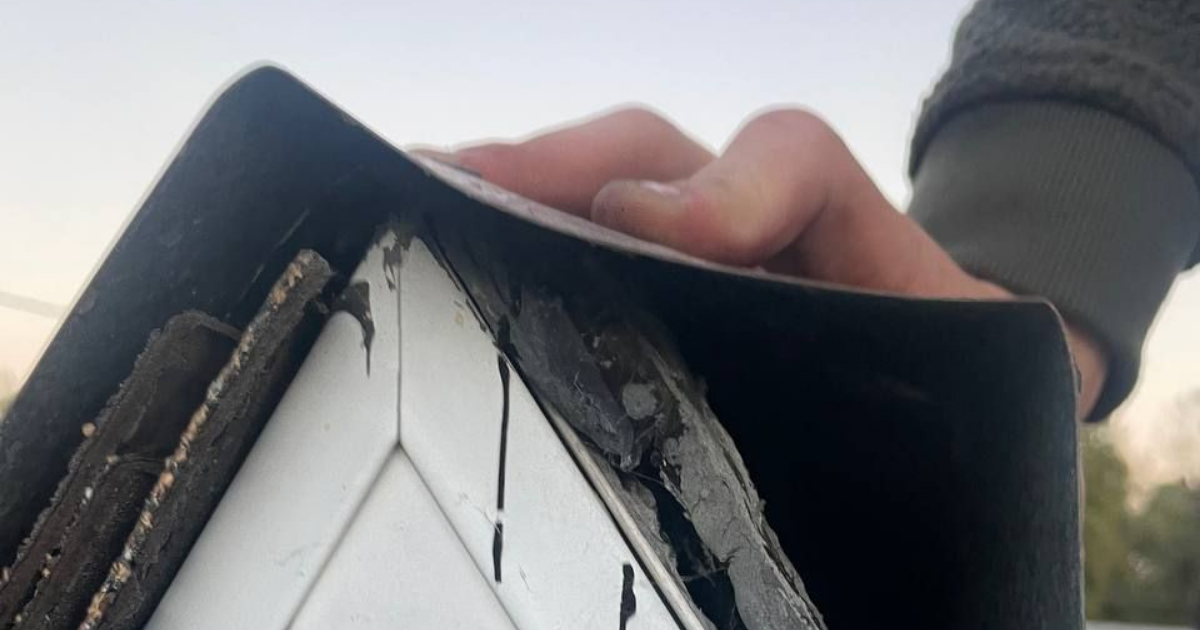
On a commercial flat roof, wind damage has a signature. It shows up at the corners first. It shows up at the perimeter. Membrane edges pulling away from the substrate. Air pockets forming between the membrane and the insulation board beneath it. Seams separating. Fasteners backing out of the deck. These are the locations where wind pressure concentrates, the aerodynamic uplift zones that building science has documented for decades. If you have never heard the phrase "corner and edge uplift," your adjuster has. Many times.
Here is the trap, if your building is running older tPo, that's our affectionate nickname for the flimsy plastic roof wrap that dominated the last era of commercial flat roofing (tPo: poor plastic, poor performance, aging fast), or aging EPDM rubber, worn adhesive and sun-degraded seams can look nearly identical to wind damage to an untrained eye. Which is exactly the argument an adjuster will make to reduce or deny your claim. This looks like deferred maintenance, not storm damage. Four words. Claim closed.
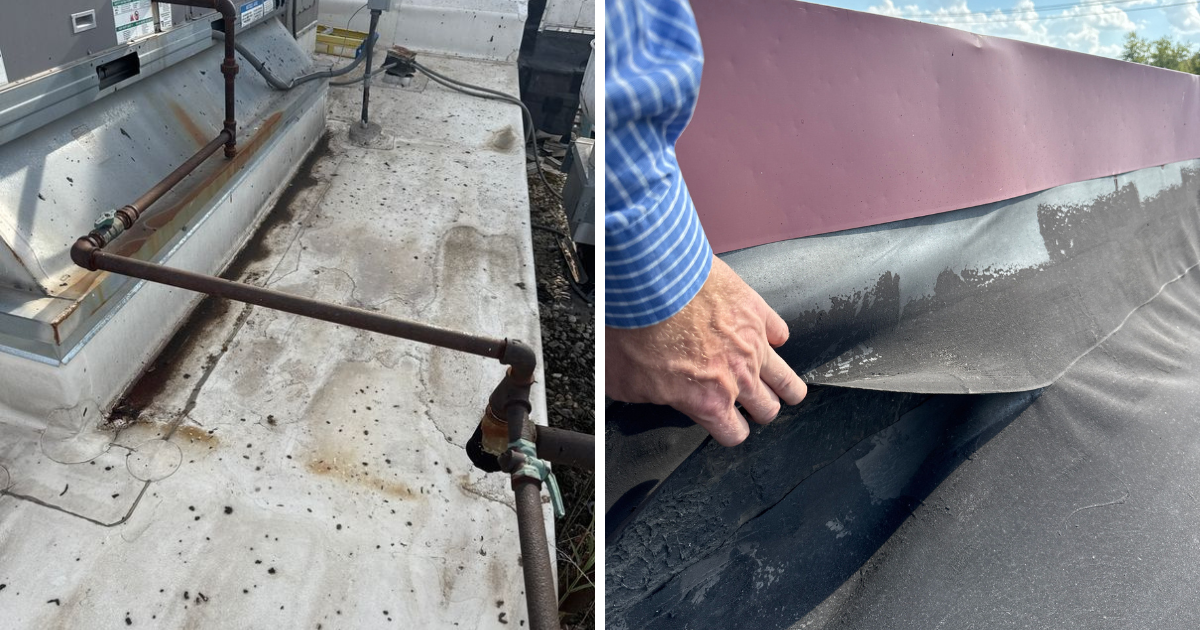
You need someone on your roof before the adjuster gets there.
Not to manufacture a story. To document the real one, with photos, with measurements, with a professional assessment that speaks the language a carrier's review desk recognizes. The difference between a claim that gets approved and a claim that gets denied is often as simple as who got there first and what paperwork they had in hand when the adjuster showed up.
Is Your Roof Even in the Right Age Window?
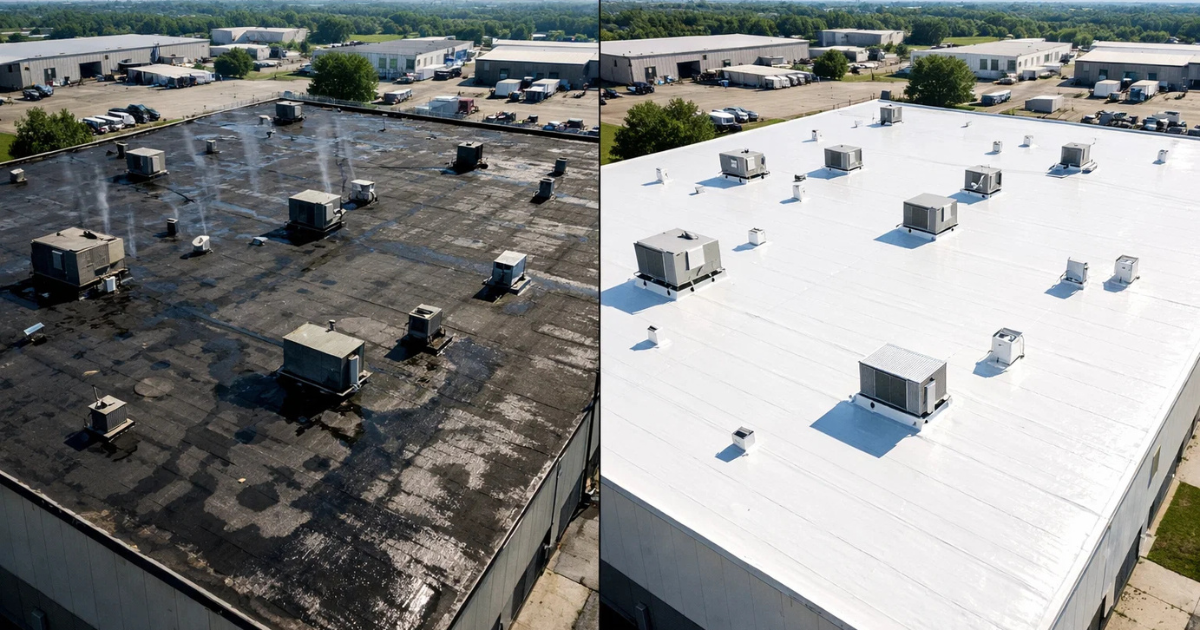
Not every roof is a candidate. This is a question worth answering before you do anything else.
A commercial flat membrane that is under 20 years old and has not had major documented repairs in the past two years is, generally speaking, a strong candidate for a qualifying claim. A membrane that is 27 years old with a repair history that reads like a maintenance log has a harder road. The carrier will argue depreciation. They will argue useful life. They will argue that the damage you are pointing to was already underway long before the storm.
This does not mean older roofs cannot recover a claim, it means you need better documentation and a more experienced advocate. It is not impossible. It is just harder. Know which situation you are in before you file.
Pristine has inspected hundreds of commercial flat roofs across Lake and Porter County. We can tell you in a single visit whether what we are looking at is wind damage, deferred maintenance, or both, and we can tell you what that distinction means for your claim potential before anyone files anything.
Still reading? Good. This next part is the one most building owners miss entirely.
✉️ You know your building has a flat roof. You know a Level 4 storm came through. Do you know what your membrane looks like right now?
Subject Property Address: ___________________________
Send us the address. We will give you an honest evaluation. FREE.
[ Email address ] → [ Send Me the Real Stuff ]
Third, Do You Have the Right Team Behind the Claim?

This is where most claims die quietly.
Filing a commercial wind damage claim without professional support is the equivalent of representing yourself in a tax dispute against the IRS. The carrier's adjuster is a professional. They have reviewed thousands of claims. They know every legitimate reason to reduce or deny a payout, and they will apply every single one if your documentation is incomplete, inconsistent, or filed in the wrong sequence.
We work with Max4Claims.
Ray founded Max4Claims after spending years as a Senior File Examiner on the inside of the insurance industry, training desk adjusters, reviewing claims from the carrier's side of the table, and watching claim after claim get reduced or closed on technicalities that the building owner never saw coming. He took that knowledge and flipped it. Now he uses it to write Xactimate estimates, manage documentation, and advocate directly on behalf of building owners from first contact through final check.
Their clients have recovered over $1.1 million in commercial supplement approvals in a single year. That is not a rounding error. That is the difference between a new roof and a partial patch job, on claims that had already been reviewed and underpaid by the carrier the first time.
Max4Claims speaks the language the carrier's review desk understands. They know what documentation wins. They know what sequence matters. They know when to push and when to let the math speak for itself.
We handle the roof. They handle the claim. You collect what you are owed.
Your agent works for the insurance company. We work for you.
What Happens If You File Without This Team?

Best case: you get a partial payment that covers maybe half of what the restoration actually costs, you accept it because you don't know what you don't know, and you spend the next three years watching the patchwork fail while your deductible is already gone.
Worst case: you file, the adjuster documents something that signals deferred maintenance, the claim gets denied, and now that denial is on record. A denial on record makes the next claim harder. The next adjuster walks in with a file that says prior denial, deferred maintenance and they are already skeptical before they touch the parapet.
There is a reason we say move quickly but move correctly. Both matter. Neither alone is enough.
The Three-Question Test, Run It Right Now

Before you call your agent, before you file anything, run your roof through this three-question check.
1. Did a qualifying weather event hit my county? If you are in Lake or Porter County and your building sat through March 10, 2026 — yes. Documented. Confirmed. Level 4 Moderate Risk. Done.
2. Is there physical evidence of wind damage on my specific membrane? You need eyes on the roof. Not a glance from the parking lot. Actual membrane inspection, corners, perimeter, seams, fasteners, drainage areas. If you have not done this, you do not have an answer yet. Get one.
3. Do I have professional support lined up, both roofing and claims advocacy? If the answer is no, fix that before anything else moves forward. The sequence matters. You want the roofing assessment and the claims advocate in position before the carrier's adjuster shows up. Not after.
All three yes? You file. You move. You move fast.
One or more unclear? You get clarity first. Filing before you have clarity is how you end up on the wrong side of a denial letter.
Commercial Wind Damage Claims, Lake & Porter County
Q: What wind speed qualifies a storm for a commercial roof insurance claim?
A: Most commercial policies require documented sustained winds of 50 to 60 mph, or a formal Severe Thunderstorm Warning issued by the National Weather Service for the affected county. The March 10, 2026 event confirmed winds exceeding 70 mph with active NWS warning coverage for Lake and Porter Counties.
Q: Can a commercial roof claim be denied even if a major storm hit my area?
A: Yes. A storm event qualifies the weather, not your specific roof. Adjusters evaluate physical evidence of damage on your membrane. If documentation is missing, inconsistent, or the damage appears pre-existing, a carrier can deny or reduce the payout regardless of storm severity.
Q: What does wind damage actually look like on a commercial flat roof?
A: Uplift at the corners and perimeter, membrane edges pulling away from the substrate, seam separation, fasteners backing out, and air pockets forming beneath the membrane. These are the highest-risk zones under wind load. Older membranes, especially tPo and aging EPDM, can present worn adhesive that mimics wind damage, which is a common basis for denial.
Q: How long do I have to file a commercial wind damage claim in Indiana?
A: Most standard commercial policies allow 12 months from the date of the event. However, supplemental damage discovered after the initial filing carries its own shorter window. Document everything now and do not wait.
Q: What is Xactimate and why does it matter for my claim?
A: Xactimate is the estimating software the insurance industry uses to price commercial roof repairs and replacements. When a claims advocate submits a professionally prepared Xactimate estimate, it speaks the carrier's language directly, reducing room for arbitrary reduction. An owner submitting their own contractor's bid against a carrier's Xactimate estimate is almost always underpaid.
Q: Should I call my insurance agent before getting a roof inspection?
A: No. Get the roofing inspection first. Understand what you have, and what you can document, before you contact the carrier. Your agent is not your advocate. They manage your policy. A roofing contractor and a claims firm like Max4Claims are your advocates.
So, Should You File?
If you are in Lake or Porter County, the storm qualifies.
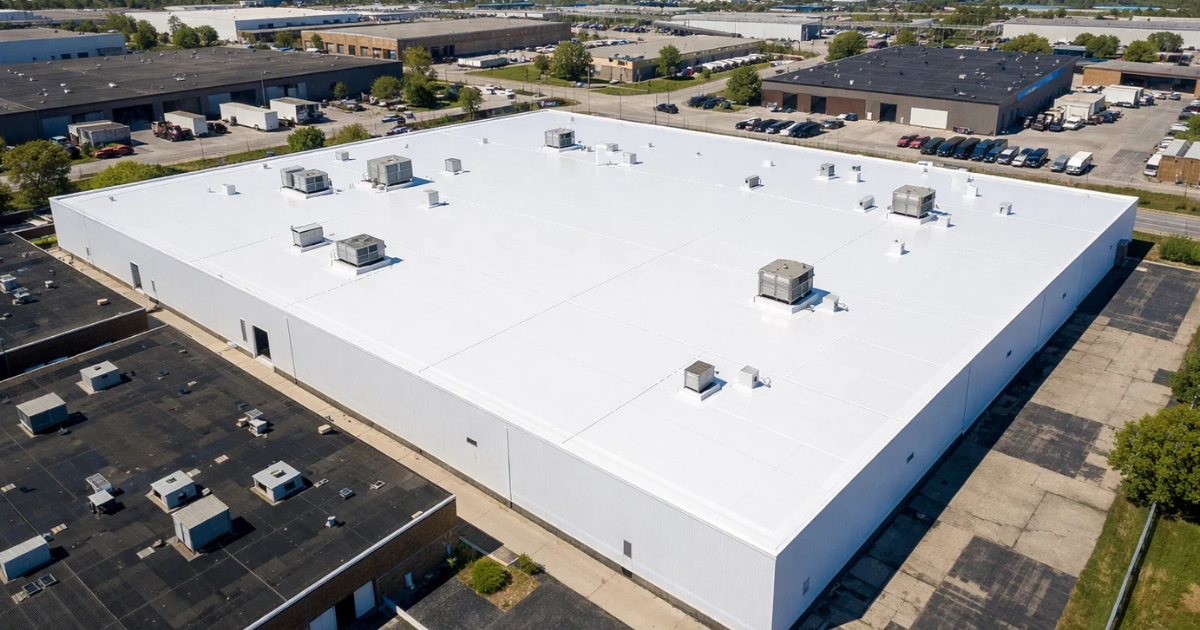
If your building is running a commercial flat membrane under 20 years old with no major documented repair history in the past two years: the roof likely qualifies.
If you are willing to move quickly, get professional eyes on the membrane before the adjuster does, and put the right claims team behind the paperwork: yes. Find out.
The investigation costs you nothing. A no is still an answer, and it is an answer you get for free. A yes, with the right team behind it, means a new Conklin-restored or FLEXION vinyl 300 roof at a fraction of the replacement cost. That is not a small thing. That is the difference between a capital expenditure that eats a year of operating budget and a claim outcome that funds the project without touching your reserves.
The window is open. It does not stay open.
✉️ Ready to find out if your roof qualifies? Start with the address.
Subject Property Address: ___________________________
We will follow up with a FREE storm damage assessment. No adjuster-speak. No runaround.
[ Email address ] → [ Send Me the Real Stuff ]
Pristine Industrial Roofing specializes in commercial flat roof systems across Lake and Porter County. We are Conklin certified contractors and we partner with Max4Claims for storm damage advocacy. We don't do residential. We don't do shingles. We do flat roofs, and we do them right.
Ready to find out if your roof qualifies? Text us first.
Text: (219) 529-1995 | go.PristineIndustrialRoofing.com/wind
Serving Lake & Porter County commercial properties.
Storm Claim Series continues: Part 2 — The Worst Thing You Can Do After a Storm Is Call Your Insurance Agent
Read other blog:



We Love Conversations
 SoHelpful@PristineIndustrialRoofing.com