
Rubber vs. Plastic vs. Vinyl: Three Flat Roof Membranes Walk Into a Building. Only One of Them Is Still Standing in 2035.
The Honest Head-to-Head Comparison Your Contractor Won’t Give You. Plus the Option Nobody Talks About That Makes All Three of Them Obsolete.
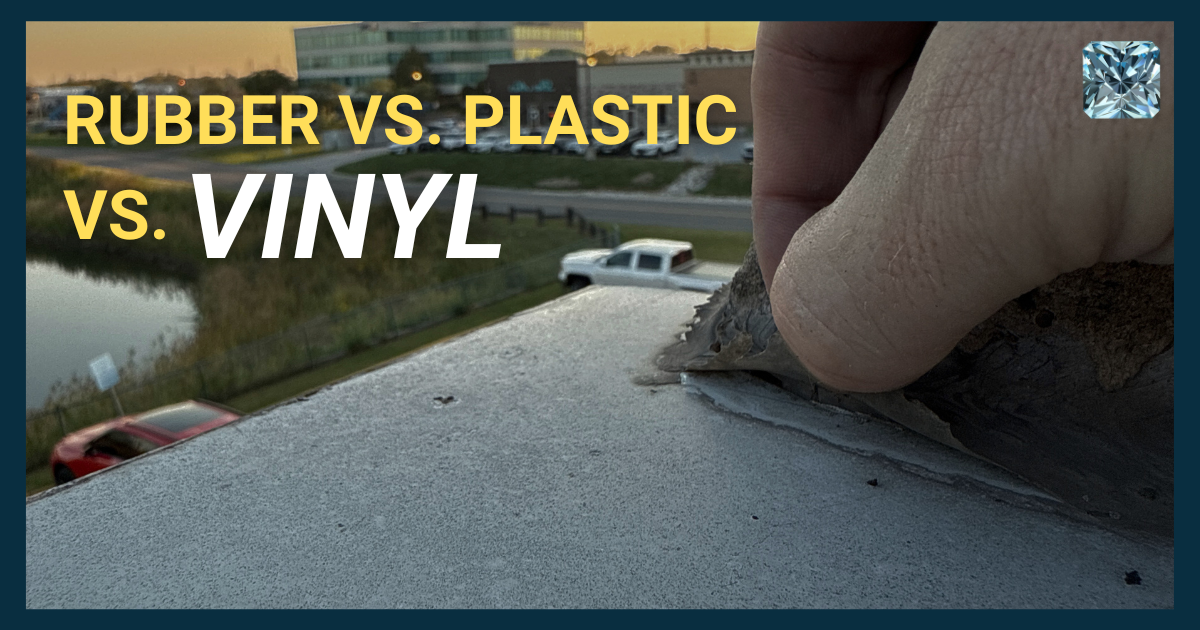
🔲 Ancient Legacy Rubber (EPDM) shrinks, leaks at glued seams, can’t handle grease or oil, and blows off in wind. It’s been around since the 1960s and it shows.
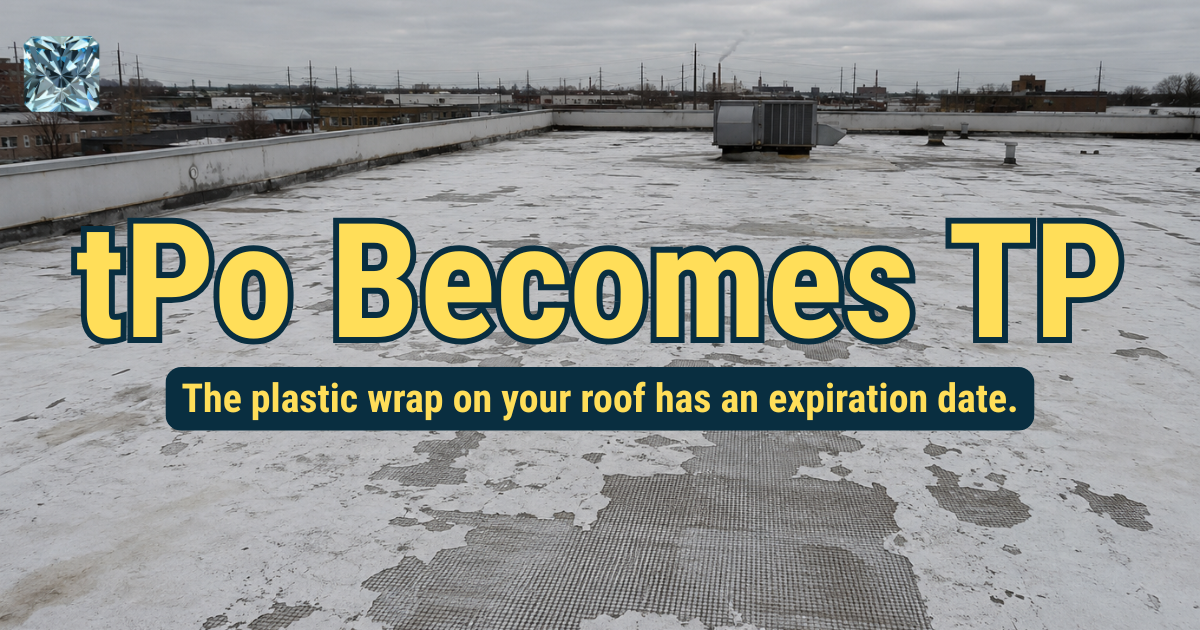
🔲 Brittle Plastic Wrap (TPO) dominates new construction at 40% market share because it’s cheap. It has no Class A fire rating, cracks under UV, and has a limited track record. You save about $400 per roll today and lose your roof in 12 years.
🔲 Pro-Grade Vinyl (PVC) is fire rated, acid and grease resistant, heat-welded, and carries a 25-year warranty. It is the best solid membrane money can buy.
🔲 But here’s the real question: Why are you still shopping for solid membranes? Liquid-applied Conklin systems, acrylic and urethane, fabric-reinforced, seamless, fire rated, represent 66% of Conklin’s volume. Liquid is the future. Solid is the past.
🔲 If you’re comparing burgers to burgers, you’re going to stay at the burger joint. Have you ever heard of steak?
Three bids landed on Frank’s desk on a Tuesday.
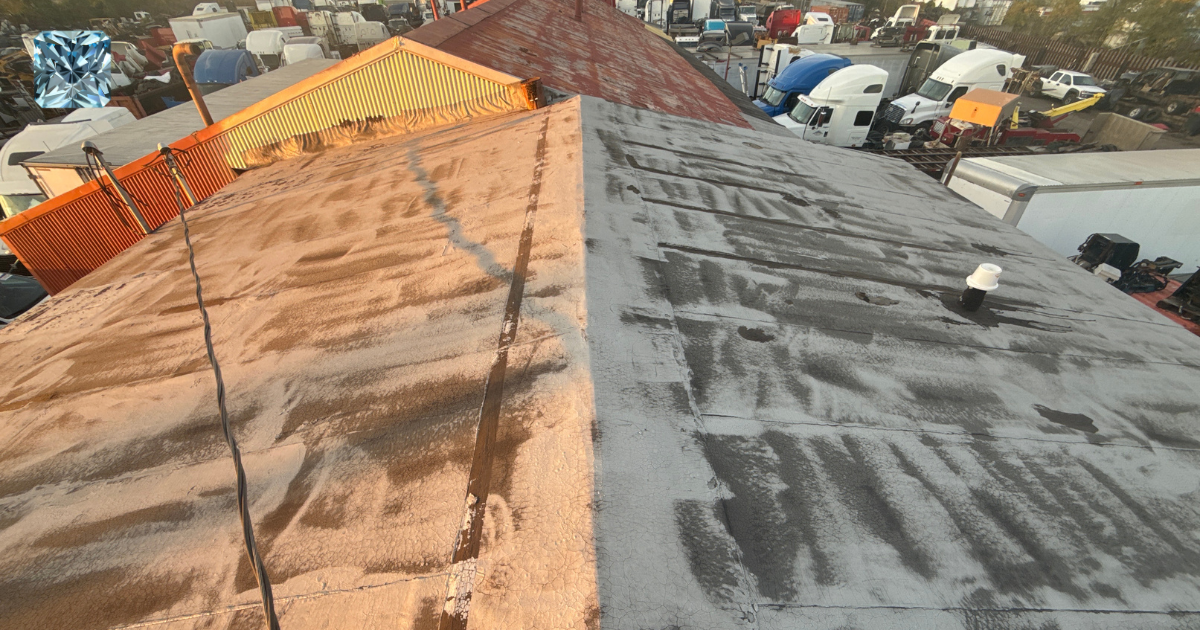
Frank owns a 22,000-square-foot strip center on Broadway in Merrillville. Auto parts store on one end, a nail salon in the middle, a taqueria on the other end. The roof has been giving him grief since 2021. Water stains on the ceiling tiles above the taqueria. A bucket in the back hallway nobody talks about. The maintenance guy, let’s call him Kenny, has been patching seams with roof cement twice a year and quietly wondering when somebody upstairs is going to stop pretending this is fine.
So Frank finally made the call. Three contractors came out. Three bids arrived.
Bid one: tear off the old rubber, install new rubber. EPDM. $87,000. Fifteen-year warranty.
Bid two: tear off the old rubber, install new plastic. TPO. $72,000. Twelve-year warranty.
Bid three: no tear-off required. Conklin liquid-applied restoration over the existing membrane. $64,000. Twenty-year warranty.
Frank looked at the three bids and did what most building owners do. He started comparing the first two. Rubber versus plastic. Which one is better? Which one lasts longer? Which one is cheaper?
He almost missed the third option entirely. Because it didn’t look like the other two. It wasn’t a membrane. It wasn’t solid. It was liquid.
And that’s the mistake almost every building owner makes. They compare Buick to Volkswagen while the Tesla is sitting right there in the parking lot.
So let’s do what Frank should have done. Let’s look at all three solid membranes honestly, head to head, with no sales pitch and no sugarcoating. And then let’s talk about why two-thirds of the commercial roofing world has already moved past all of them.
Ancient Legacy Rubber: EPDM
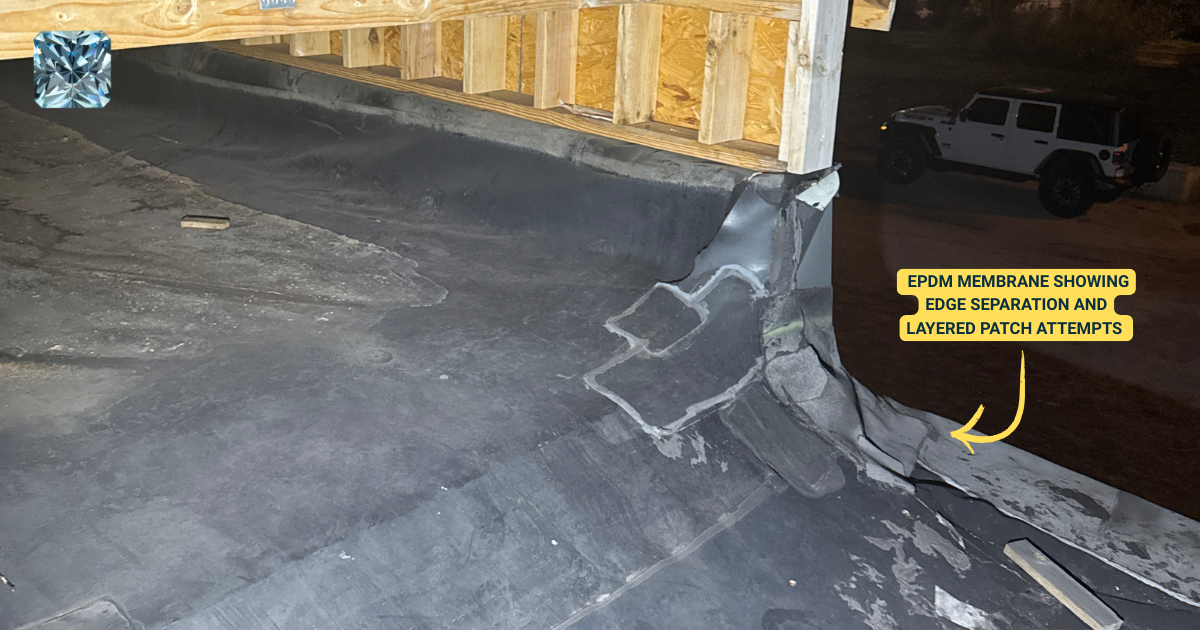
Ethylene-Propylene-Diene Monomer. The stretchy black stuff that’s been on commercial buildings since your grandfather was in high school.
EPDM is the original single-ply membrane. It has been in commercial use since the 1960s, and for decades it was the default choice for flat roofs because there was not much else available. It is a thermoset rubber, meaning once it cures, it cannot be re-melted or re-welded. The chemical curing process is irreversible.
Features: It stretches. If the membrane is non-reinforced, it has good elasticity. It handles weather reasonably well in its first decade. That is the complete list of things it does well.
Problems: The seams are glued. Not welded. Glued. And glue fails. Every single time, eventually. The membrane is sensitive to oils, grease, and solvents, which means any building with a commercial kitchen, an auto shop, or industrial operations is watching their rubber dissolve slowly from the inside out. Non-reinforced EPDM shrinks over time, pulling away from edges and parapet walls. It is susceptible to puncture from foot traffic, dropped tools, or hail. And when the wind gets under it, the whole sheet billows like a black sail off the side of your building.
The ballasted version is even more entertaining. That’s where they lay the rubber sheet loose on the roof and then dump river rock on top of it to keep it from blowing away. Rocks. On your roof. As a fastening system. Let that sink in. And when you need to find a leak, you get to move 40,000 pounds of gravel with a shovel before you can even see the membrane. Good luck.
EPDM had its era. That era ended. If someone bids you a new EPDM roof in 2026, they are selling you 1970s technology at 2026 prices. You would not buy a rotary phone for the price of a smartphone. Do not buy legacy rubber for the price of a modern roofing system.
Brittle Plastic Wrap: TPO

Thermoplastic Polyolefin. The cheap white sheet that took over new construction because contractors love the margin and building owners love the low bid.
TPO showed up in the 1990s and immediately started eating market share. It now accounts for roughly 40% of all new flat roof installations in the United States. That number sounds impressive until you realize why: it is cheap. Not inexpensive. Cheap. There is a difference.
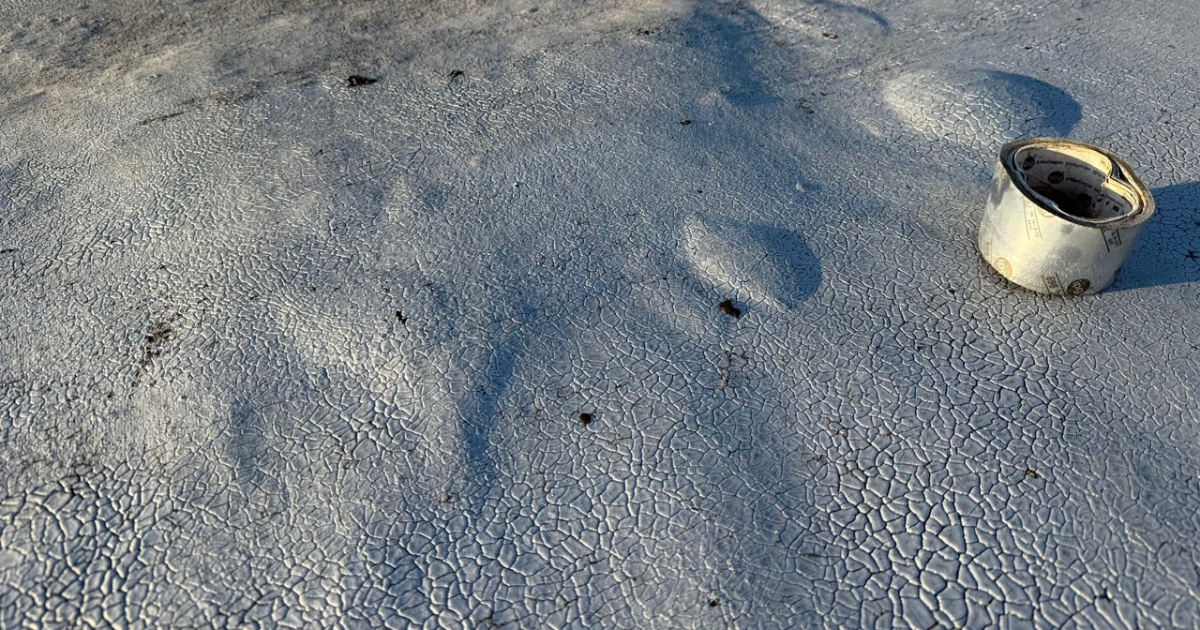
You will save approximately $400 per roll choosing commodity brittle plastic wrap over pro-grade vinyl. On a 20,000-square-foot building, that savings might total $3,000 to $5,000 in material cost. And then you will spend the next 12 years discovering what that $5,000 actually cost you.
The one feature: heat-weldable seams. That is a real advantage over glued rubber seams. Credit where it is due.
The six problems (from Conklin’s own training materials, not from us).
Limited track record. Susceptible to puncture. No Class A fire rating. UV sensitive. Stiff in cold weather. Narrow welding window where the installer has to get the temperature and speed exactly right or the seam fails. That is one feature against six manufacturer-documented cautions.
TPO will burn. That is not editorializing. That is a direct statement from Conklin’s certified installer training program. TPO membranes carry no Class A fire rating under ASTM E 108 and UL 790 testing. If your building has a commercial kitchen with grease exhaust vents pointing at the sky, or if you are anywhere near the industrial corridor where oil refineries, steel mills, and chemical operations throw particulate and heat into the air, you are putting a material on your building that the manufacturer’s own training says will burn.
Even Conklin’s own premium TPO product, the Outpost 60 mil with Kevlar-reinforced fastening edges and aramid/knit scrim, does not carry Class A. Breaking strength of 403 lbf. Puncture resistance of 275 lbs. UL Classified. FM Approved. And still no Class A fire rating. If the best TPO on the market cannot get there, what does that tell you about the commodity product that the low-bid contractor is putting on your building?
Around here in Northwest Indiana, we see it all. Steel dust. Iron particulate. Acid rain from the refineries. Fireworks debris every July. The occasional bullet hole, and that is not a joke. We operate in an industrial corridor where rooftops take punishment that suburban office parks never see. Brittle plastic wrap was not designed for this environment. It was designed for a spreadsheet.
Pro-Grade Vinyl: PVC
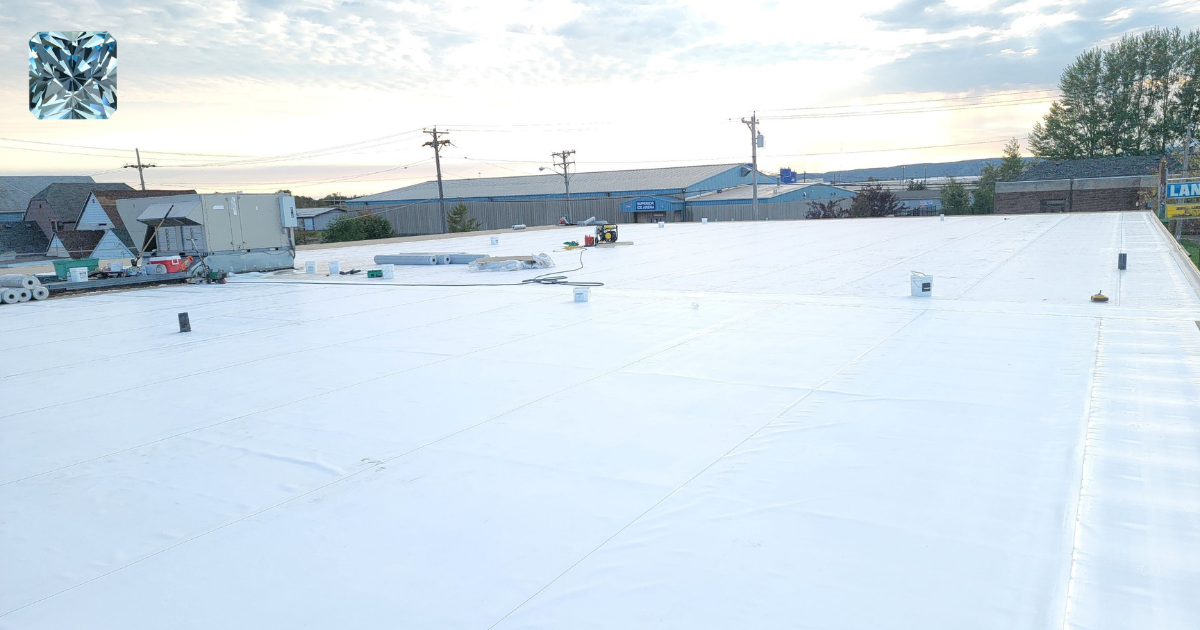
Poly Vinyl Chloride. The best solid membrane money can buy. Fire rated. Acid resistant. Heat-welded. And still not the future.
If you are going to install a solid single-ply membrane, PVC vinyl is the correct choice. Full stop. It is the best of the three and it is not particularly close.
PVC is in the amorphous branch of the thermoplastic polymer family. It is a fundamentally different chemistry than TPO. Where brittle plastic wrap melts and burns, vinyl resists flame spread and self-extinguishes. Where legacy rubber dissolves under grease and oil, vinyl shrugs it off. Where both TPO and EPDM seams eventually fail through aging, vinyl seams are heat-welded and remain re-weldable for the life of the membrane.
Conklin’s Flexion 2.0 is the current generation of their PVC vinyl system. Class A fire rated. Heat-welded seams using hot air, no adhesive, no tape, no solvent. Resistant to grease, acids, oils, and chemical exposure. Walkable. Recoatable. 25-year, 300-month non-prorated warranty. PVC vinyl has been in commercial use since the 1960s, giving it a 60-plus year performance track record compared to TPO’s roughly 30 years.
The cautions are manageable: plasticizer migration over very long service life (which Conklin’s formulation addresses), and incompatibility with EPS/XPS foam insulation and coal tar (a separator sheet is required over those materials). These are installation details, not fundamental design flaws.
If someone puts three solid membrane bids on your desk, pick the vinyl. Every time. It is not the cheapest option. It is the least expensive option over 25 years, and those are two very different numbers.
The Head-to-Head Numbers
For the speed readers and the spreadsheet people. Skim this in 30 seconds and you have the whole story.
Property
Legacy Rubber (EPDM)
Brittle Plastic (TPO)
Pro-Grade Vinyl (PVC)
Fire Rating
None (burns)
None (burns)
Class A (self-extinguishes)
Seam Method
Glued (fails)
Heat-welded (narrow window)
Heat-welded (re-weldable for life)
Grease / Oil Resistance
Dissolves on contact
Not resistant
Fully resistant
UV Stability
Moderate (black absorbs heat)
Poor (degrades and cracks)
Strong (white, UV stable)
Puncture Resistance
Poor
Poor
Good
Cold Weather
Stays flexible
Stiff and crack-prone
Stays flexible
Wind Uplift Risk
High (ballasted = rocks, adhered = glue fails)
Moderate (narrow weld window)
Low (heat-welded, mechanically fastened)
Track Record
60+ years (aging poorly)
~30 years (limited data)
60+ years (proven)
Warranty (Conklin)
N/A — Conklin does not sell EPDM
Outpost: varies
Flexion 2.0: 25 yr / 300 mo non-prorated
Recoatable?
No
No
Yes
Cost per Roll
Mid-range
Lowest (~$400/roll less than PVC)
Highest (but lowest 25-year cost)
Our Verdict
Retire it
Reject it
Respect it — but liquid is better
Now Stop Comparing Burgers
You just spent five minutes comparing three solid membranes. Every one of them has seams. Every one of them has edges. Every one of them can be punctured, lifted, separated, or degraded. You know what doesn’t have seams?
Liquid.
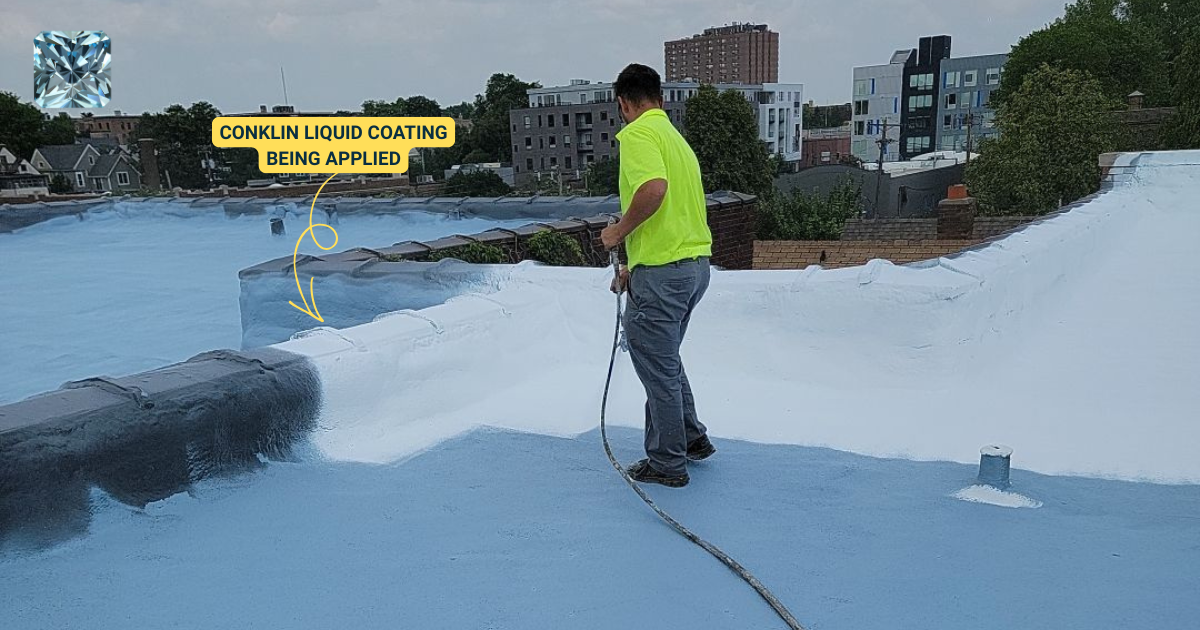
Here is the number that should reframe this entire conversation: 66% of all Conklin roofing volume, by dollar and by square footage, is liquid-applied systems. Not solid membranes. Not sheets. Not rolls. Liquid coatings, fabric-reinforced, applied seamlessly over existing roof surfaces without tear-off.
Two-thirds of the commercial roofing world has already moved past the solid membrane debate. While contractors are still arguing about whether you should buy rubber or plastic or vinyl, the professionals who actually understand where this industry is headed are spraying, rolling, and brushing seamless liquid systems onto buildings that will outlast every membrane on the market.
Conklin’s liquid-applied systems come in two primary chemistries.
Rapid Roof III (Acrylic): White acrylic coating applied over legacy rubber EPDM. Tack Coat down first, Benchmark Base on all seams, then Rapid Roof III full field. The entire roof becomes one continuous, seamless, reflective barrier. No seams to fail. No edges to lift. No glue to degrade. Fire rated. Recoatable.
Affinity (Urethane): Goes over torch-down, tar strips, expired brittle plastic wrap. The urethane chemistry bonds to surfaces that acrylic cannot. For buildings with multiple roof layers, mixed materials, or aggressive chemical exposure, urethane is the answer.
Both systems are fabric-reinforced. Both are fire rated. Both produce a seamless monolithic membrane with no joints, no laps, no weld lines, and no weak points. Both preserve the existing insulation underneath because there is no tear-off. Both carry Conklin’s warranty structure with required annual maintenance plans.
And here is the part that should make every building owner sit up: liquid-applied restoration typically costs 30–50% less than a full tear-off and re-roof with any solid membrane. Less labor. Less material hauled to the landfill. Less disruption to building operations. Less risk.
Frank’s third bid was $64,000 for a 20-year warranted liquid restoration. His rubber bid was $87,000 for 15 years. His plastic bid was $72,000 for 12 years. The liquid option cost the least, lasted the longest, and did not require tearing off the existing roof. That is not a close comparison. That is a different category.
✉️ You’re comparing options for a building you actually own. Which one is it?
Subject Property Address: ______________________________
Send it over. We’ll get on the roof, tell you what’s up there, and show you all your options, including the one most contractors never mention.
[ Your Email ] → [ Send Me the Real Stuff ]
Who Is Actually Reading This Right Now
We know who you are. Not in a creepy way. In a “we’ve had this conversation 200 times” way.
Frank — The Building Owner. You’ve got three bids on your desk and you’re trying to figure out which one is the least risky. You think in dollars and decades, not in polymers and polyolefins. You want someone to tell you plainly: what should I actually do? Here is your answer. If your current roof can be restored, go liquid. If it truly needs replacement, go vinyl. Never go rubber. Think very carefully before going plastic.
Kenny — Maintenance. You already know the roof is failing. You’ve been patching it for three years and nobody upstairs listens. You’re reading this because you want ammunition to hand to Frank that finally gets something done. Print this article. Hand it up. You’ve done your job.
Megan — The Property Manager. You’re managing twelve things and the roof is number eleven on the list until it becomes number one because water is dripping on a tenant’s merchandise. You do not want a roofing education. You want a process that does not create chaos. We make it simple. One call. One evaluation. One recommendation. You forward it to Frank and move on with your day.
Nance — Finance. You’re looking at these numbers and the liquid option is $23,000 less than the rubber option with a longer warranty and no tear-off. You do not need to understand roof chemistry to understand that math. SBA 504 and 7(a) financing is available through Centier Bank if the capital outlay needs to be spread over time. Call Bill Wintrhauler at (219) 922-2410.
Your Building Has to Outlast 2030
The world feels like it’s collapsing. Your building still needs a roof that doesn’t.
We get it. The economy is uncertain. Interest rates are shifting. Politics affects business. Cash flow fluctuates. Every building owner in Northwest Indiana is navigating the same headwinds.
But your building is not going anywhere. Your tenants need a dry ceiling. Your inventory needs protection. Your employees need a safe workspace. And the roof on top of all of it needs to last past 2030, past 2035, past the next storm and the one after that.
Solid membranes are 20th-century technology. They were the best option available when the only alternative was hot tar and gravel. But the roofing industry has moved forward. Liquid-applied systems are seamless, fabric-reinforced, fire rated, and proven across millions of square feet of commercial roofing nationwide. They preserve your existing insulation. They eliminate tear-off waste. They cost less. They last longer.
Cheap is not always cheap in the long run. We have an entire website dedicated to that concept: YouReapWhatYouCheap.com. The $400 you save per roll on brittle plastic wrap today becomes the $150,000 tear-off you pay for in 2038 when the membrane cracks, the seams split, and the insurance carrier points to the fire rating gap you never knew about.
The old-school companies are still trying to sell you the oldest material at the newest price. That is not value. That is inventory clearance disguised as a roofing bid.
What Building Owners Are Actually Asking
Structured for speed. Every question answered in two sentences or fewer.
What is the cheapest flat roof membrane?
TPO is the cheapest per roll. It is also the cheapest in performance, fire rating, and longevity. You reap what you cheap.
Which flat roof membrane lasts the longest?
Among solid membranes, PVC vinyl has the longest track record at 60-plus years in commercial use. Liquid-applied Conklin systems carry 20-year warranties and can be recoated to extend indefinitely.
Does TPO have a fire rating?
No. TPO membranes do not carry Class A fire rating under ASTM E 108 or UL 790. PVC vinyl does. Liquid-applied Conklin systems do.
Can I put a new roof over my old one without tearing it off?
In many cases, yes. Liquid-applied Conklin systems are specifically designed to restore existing membranes without tear-off. This eliminates landfill waste, preserves existing insulation, and reduces project cost by 30 to 50%.
What is the difference between TPO and PVC?
TPO is a crystalline thermoplastic polyolefin. PVC is an amorphous thermoplastic poly(vinyl) chloride. They are fundamentally different chemistries. PVC is fire rated, grease resistant, and re-weldable. TPO is not.
Why do contractors push TPO?
Margin. TPO is cheaper to buy and faster to install, which means the contractor makes more profit per square foot. The building owner absorbs the risk.
What is a liquid-applied roof system?
A seamless coating system applied directly over an existing roof surface using rollers, sprayers, or brushes. Fabric reinforcement is embedded in the coating to create a monolithic, jointless membrane with no seams, no edges, and no weak points.
Is liquid-applied roofing a coating or a roof system?
It is a complete roof system with a manufacturer warranty, not a maintenance coating. Conklin liquid-applied systems carry up to 20-year warranties and require annual maintenance plans for warranty validity.
How much does a liquid-applied roof cost compared to a full tear-off?
Typically 30–50% less than a full tear-off and re-roof with any solid membrane. Lower labor cost, no tear-off disposal, no new insulation required if existing insulation is dry and intact.
✉️ One address. That is all it takes to find out what’s on your roof and what’s possible.
Subject Property Address: ______________________________
We’ll get on the roof. We’ll tell you what’s up there. We’ll show you every option including liquid.
[ Your Email ] → [ Send Me the Real Stuff ]
Continue Your Journey
- TPO Will Burn: Why Fire Ratings Matter — PristineIndustrialRoofing.com — The fire rating gap explained
- The Truth About Commercial Roofing Warranties — YourWarrantySaysWhat.com — Warranty loopholes exposed
- Why Silicone Coatings Are Not What They Seem — SiliconeIsSilly.com — Chemistry matters
- Before You Fix the Roof, Fix the Conversation — RelationshipRoofing.com — Communication matters most
- How Can I Actually Afford a Roof Upgrade? — RoofServiceMenu.com — Creative financing for building owners
- You Reap What You Cheap — YouReapWhatYouCheap.com — The true cost of the low bid
Pristine Industrial Roofing
Conklin-Certified • Lake County & Porter County, Indiana
(219) 529-1995 • PristineIndustrialRoofing.com
We’re a relationship company that happens to do roofs. Test us. Challenge us. Have breakfast with us.
A Gospel Business funding community outreach and worldwide missions with every roof we install.
Read other blog:
We Love Conversations
 SoHelpful@PristineIndustrialRoofing.com