
Mold vs. Mildew Inside Your Commercial Roof: What’s the Difference?
One Is a Surface Problem. The Other One Eats Your Building. It’s Just “Dirt on the Roof”, Until It Starts Charging Rent Inside Your Building.
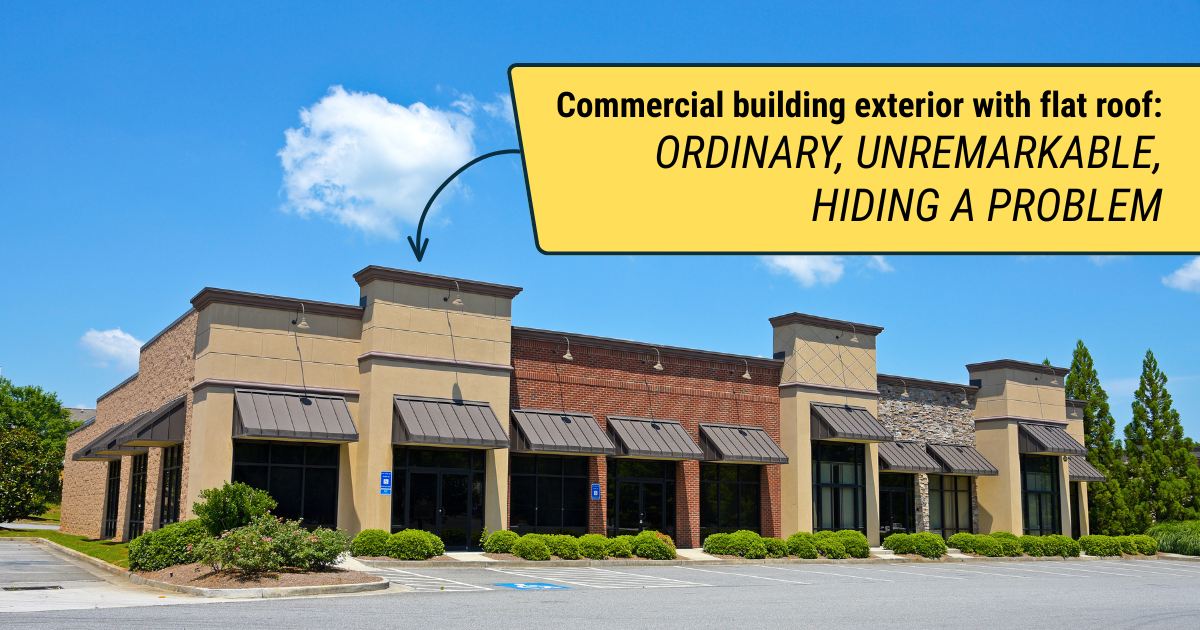
🔲 Surface vs. structural. Light or powdery = clean it. Dark, fuzzy, spreading = structural.
🔲 Both start right under the roof: Failed skin lets moisture in, inviting indoor air quality problems along too.
🔲 Northwest Indiana weather. Humidity, freeze-thaw turn small issues into big ones fast.
Both eat lungs.
🫁 Lungs are a limited resource.
People who work here matter too much.
You built something. You own it. People work in it, lease from it, depend on it. You have got a portfolio, a P&L, a property manager who sends you texts you do not always answer fast enough. You are a millionaire, or close enough that the IRS does not see a difference.
So act like one.
That dark patch on the membrane? The musty smell on the second floor that nobody can explain? The ceiling tile your maintenance guy keeps replacing? That is your building telling you something. Most building owners ignore it until it costs them $40,000. The ones who read this article do not.
If you can smell it before you see it, you are already behind.
What Mildew Actually Is, Why It Lives on Your Commercial Roof
Mildew is a surface fungus, and "surface" is the most important word in that sentence.
It grows flat. Stays flat. Does not dig. With your eyes it looks like a pale gray or white dusting on the membrane, sometimes yellow as it ages, dirty brown when it has been sitting there long enough to feel at home. Under a microscope it is a colony of powdery dots doing their best impression of your current maintenance schedule.
Mildew thrives in warm, humid conditions with poor airflow. Low-slope drainage issues, pooling water after a Spring rain, trees hanging over the edge dropping shade and moisture year-round, mildew has found exactly the address it was looking for. Northwest Indiana does not help. Lake-effect moisture, 38 inches of annual precipitation, and freeze-thaw cycles that crack surface coatings all create the kind of persistent dampness mildew needs to establish itself. It is not negligence. It is weather. What matters is what you do next.
The good news, mildew is a surface problem. A trained eye and the right preventive coating can resolve it before it becomes anything worse. The bad news: most building owners do not call until "worse" has already arrived.

What Mold Actually Is, Why It Is a Different Conversation
Mold is not a surface problem. Mold is a structural problem with a health problem riding on its back.
Where mildew sits on top of your roofing materials, mold moves through them. It penetrates porous substrates, insulation boards, wood decking, aging tPo underlayment, ceiling tiles below the roof plane, and spreads invisibly from the inside. By the time you see it on a ceiling tile in the break room, it has already been living in the building for months. Uninvited. Rent-free. Eating your equity.
Visually, mold is darker. Black, deep green, brown, or dark gray, often slimy or fuzzy rather than powdery. If the growth has depth to it, if it looks less like dust and more like something three-dimensional, that is the distinction that matters.
The health picture is not subtle. Black mold releases mycotoxins, compounds that cause respiratory distress, allergic reactions, and in prolonged exposure, neurological symptoms. Your employees are breathing that air. Your tenants are breathing that air. Lungs should not rot. That is not a scare tactic. That is biology. And from a liability standpoint, documented health complaints tied to air quality in a building with prior written notice of roof defects is a different conversation than a cleaning bill. Ask your insurance carrier about mold exposure claims.
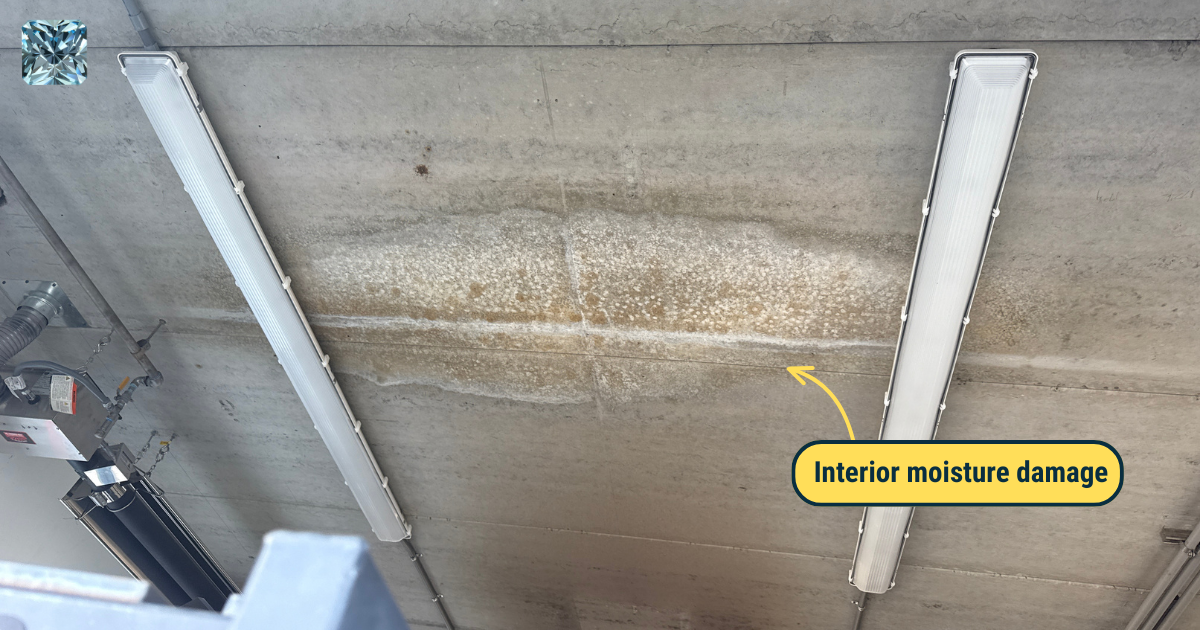
The Roof Connection, Why Both Start at the Top
Mold and mildew do not climb up from the inside. They come down from the roof.
A failing membrane, an unsealed pipe penetration, deteriorating flashing at a parapet wall, a low-slope drain that cannot keep up with a Spring downpour, each of those is a moisture entry point. Water gets in. It does not announce itself. It sits in the insulation layer, wicks through the deck, and follows gravity to the nearest ceiling tile or wall cavity.
The mildew you can see on the surface of the membrane is one signal. The mold growing in the insulation underneath it is the cost of ignoring that signal.
Commercial buildings in Northwest Indiana older tPo, the plastic wrap membrane that dominated roofing installs for two decades and is now aging out of its warranty window, are particularly exposed. Seam failures, UV surface degradation, and general tPo brittleness mean moisture intrusion is not a question of if, it is a question of when. Poor Tipo already had one job and he is not doing it well.
✉️ You know what you are looking at up there. The next question is whether that roof is actively letting water into the building.
Subject Property Address: ___________________________
Drop that address here and we will run a no-obligation evaluation.
We will tell you what system is on the building, what the moisture risk looks like, and whether you are dealing with a cleaning call or a replacement conversation. No pitch. Just the picture.
[ Email address ] → [ Send Me the Real Stuff ]
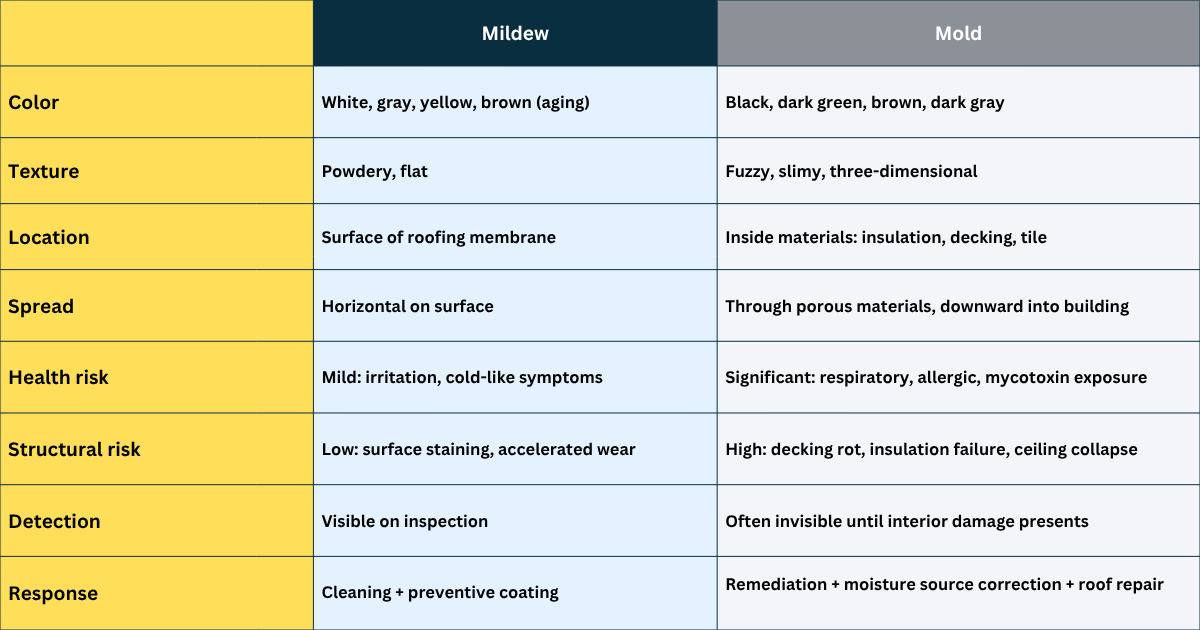
Mildew vs. Mold, The Side-by-Side You Can Actually Use
Same roof, same rain, completely different outcome, here is how to tell which one you have.
What Accelerates Both, The Moisture Conditions Specific to Northwest Indiana
This is not a generic article. This is about your building, in your climate, right now.
Lake-effect moisture. Properties in Northwest Indiana take consistent moisture loading from Lake Michigan-driven humidity patterns that settle on flat commercial roofs and stay.
Freeze-thaw cycling. Every Fall and Spring, temperatures cross the freeze threshold multiple times per week. Surface coatings crack. Membrane seams open slightly. Those micro-gaps are moisture entry points. Mildew establishes on the surface. Mold follows the water trail underneath.
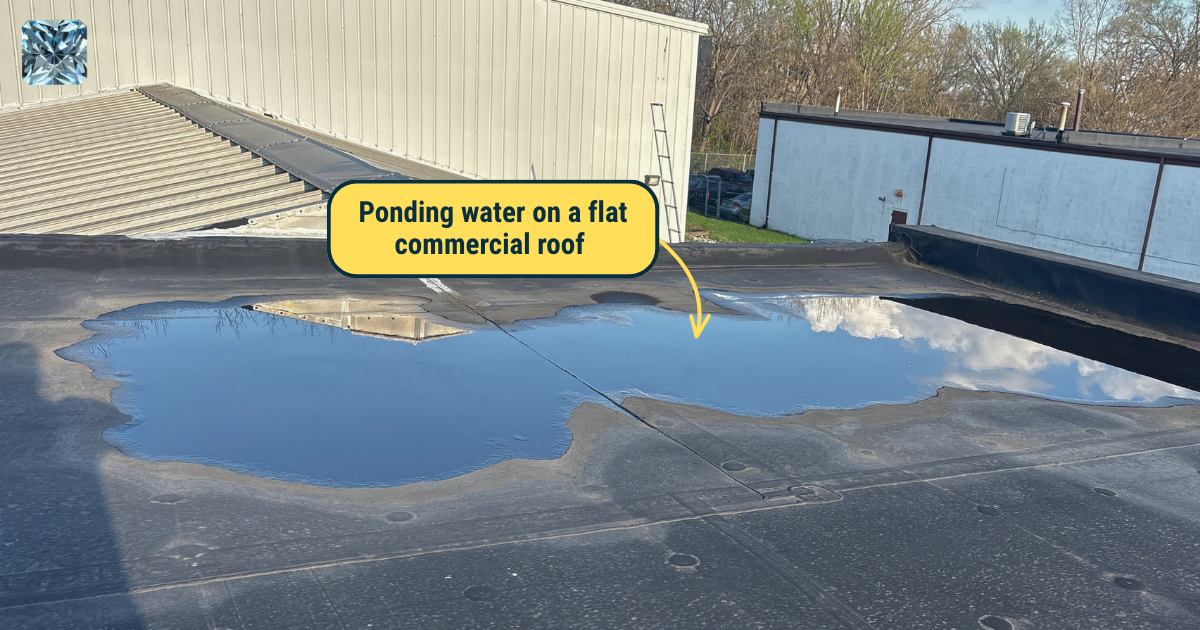
Ponding water. Flat commercial roofs with code-minimum drainage accumulate standing water after Spring and Fall precipitation events. Ponding over 48 hours accelerates mildew colonization and moisture intrusion through any gap in the system.
Deferred maintenance. Every year a roof coating degrades without being addressed, its ability to repel moisture drops. A Conklin acrylic or urethane system in good condition sheds water and resists biological growth. A failing membrane invites both.
What Conklin Systems Do About It
The answer to a moisture problem is a moisture barrier, and Conklin builds one without a seam.
Conklin liquid-applied coatings cure into a seamless, non-porous surface that denies mold and mildew the entry points they need. A Conklin acrylic or urethane system applied over a clean, dry substrate seals pipe penetrations, parapet walls, and field seams in one continuous application. No seams means no gaps. No gaps means no moisture path. No moisture path means mildew stays manageable on the surface, and mold never gets invited into the insulation layer below.
FLEXION vinyl 300 installed as a full overlay when the existing substrate needs a membrane rather than a coating, solves the same problem differently. Thick vinyl rolls, heat-welded at the seams, placed over the existing roof without tear-off in most cases. The welded seams do not fail the way lap-glued tPo seams do. That is the whole story with Tipo.
These are separate systems with separate applications and separate warranty structures. A Conklin liquid coating is not a FLEXION system. FLEXION vinyl 300 is not a coating. We install both. Which one fits your building depends on what is currently on the roof and what condition it is in. Both cut off the moisture supply chain that mold needs to move from the surface into your building.
When Cleaning Is the Answer, And When It Is Not
Knowing the difference saves you a phone call. Knowing it late costs you a lot more.
Cleaning is the right call when,
✅ The growth is white, gray, or powdery, surface mildew
✅ The membrane beneath is intact with no soft spots, bubbling, or visible seam failure
✅ No interior moisture evidence. no stained ceiling tiles, no musty odor, no tenant air quality complaints
✅ The growth is confined and has not spread into flashing or penetration zones
A roof inspection is the conversation when,
🦠 The growth is dark, fuzzy, or three-dimensional
⚠️ The membrane has soft spots, visible blistering, or seam separation
💧 There is interior moisture evidence. Stained tiles, a smell the cleaning crew cannot resolve, tenant complaints
🏢 The building is in Northwest Indiana with a flat roof that has not had a professional inspection in more than three years
A building with aging tPo and recurring mildew is not a cleaning problem. It is a roofing problem wearing a cleaning problem's coat.
Commercial Roof Mold & Mildew FAQs
What is the fastest way to tell mold from mildew on a commercial roof? Color and texture. Mildew is powdery, flat, and light-colored, white, gray, or yellow. Mold is darker (black, green, or brown), often fuzzy or slimy, and has visible dimension. If the growth has depth to it, call a professional before you touch it.
Can mildew on the roof cause indoor air quality problems? Mildew itself is a surface fungus with limited penetration. However, persistent mildew on a membrane signals moisture conditions that can accelerate mold growth underneath, and mold in the insulation layer absolutely affects interior air quality. Treat it early and you lower the risk of escalation.
How long does it take for mildew to turn into a mold problem? No fixed timeline. In high-humidity conditions with active moisture intrusion, the kind common in Lake County and Porter County, mildew on the surface and mold in the substrate can coexist within weeks of a significant leak event. The moisture source drives escalation speed.
Does a Conklin coating prevent mold growth? A properly applied Conklin acrylic or urethane system creates a seamless, non-porous surface that denies moisture the entry points mold needs to establish in the building. It is not a mold treatment, it is a moisture management system. The goal is keeping water out of the substrate entirely.
Will my insurance cover mold damage from a roof leak? Coverage varies, but documented deferred maintenance, prior written notice of roof defects that went unaddressed, is a common basis for denied or reduced claims. A commercial property with years of visible mildew and no inspection history is in a complicated position when the ceiling tile comes down.
Is FLEXION vinyl 300 different from a Conklin liquid coating? Yes, completely separate systems. FLEXION vinyl 300 is a physical vinyl membrane installed in rolls and heat-welded at seams. Conklin liquid coatings are spray- or roller-applied chemistry that cures into a seamless continuous surface. Both manage moisture. Which one fits your building depends on the condition of the existing substrate.
How often should a commercial roof in Northwest Indiana be inspected for mold and mildew? Twice a year at minimum, once in Spring after freeze-thaw season and once in Fall before winter moisture loading begins. Any significant storm event or new roof penetration warrants an additional walk. Three years without a professional inspection in this climate is three years of accumulated risk.
The Roof Is the Beginning of This Story
Mold does not start in the break room. It starts at the first gap in the membrane where water found a way in and kept it.
Building owners who call us after a mold remediation bill say the same thing every time, the roof had been "okay" for years. Not leaking. Not obviously failing. Just quietly degrading in the spots nobody walks and nobody checks, while mold built a permanent address in the insulation layer three inches below the surface.
Mildew on the membrane is the early warning signal. The ones who call while it is still a cleaning conversation save real money and spare their tenants real health exposure.
You built something worth protecting. Start here.
✉️ We will evaluate the system, identify the moisture risk, and give you a straight answer about what you are dealing with. No jargon. No pressure.
Subject Property Address: ___________________________
Drop that address. No pitch. No obligation.
[ Email address ] → [ Send Me the Real Stuff ]
Pristine Industrial Roofing
Lake & Porter Counties │ Commercial Flat Roofing │ Conklin Certified
(219) 529-1995 │ ModernRoofChemistry.com
We love you enough to tell you the truth.
Read other blog:


We Love Conversations
 SoHelpful@PristineIndustrialRoofing.com