
From Noah’s Tar to Your Roof: 4,000 Years of Waterproofing in 8 Minutes.
The Surprisingly Entertaining History of Keeping Water Out of Buildings. And Why 66% of the Industry Just Went Back to Liquid.

🔲 The first waterproof structure on record used tar over wood. Genesis 6:14. Pitch within and without. Noah ran the original liquid-applied roofing company.
🔲 Thatched roofs were the original single-ply membrane. One layer of organic material between you and the sky. It worked until it did not.
🔲 A blue tarp is single-ply roofing. Just not a very good one. After every hurricane, entire neighborhoods become an aerial photo of EPDM without the marketing budget.
🔲 The roofing industry has spent 4,000 years trying to keep water out. We started with liquid (tar). We moved to solids (membranes). And now 66% of the industry is going back to liquid. Full circle.
🔲 History does not repeat but it rhymes. The future of commercial roofing looks a lot like the beginning. Seamless. Liquid. Applied by hand. Except now it is Conklin chemistry instead of biblical pitch.
The first roofing contractor in recorded history was a 600-year-old man building a boat in his backyard while his neighbors laughed at him.
Noah did not use shingles. He did not roll out a membrane. He did not call three contractors and compare bids. He used tar. Pitch. A liquid waterproofing compound applied by hand to every surface of a wooden vessel that was about to endure the most catastrophic weather event in human history. Inside and out. Genesis 6:14. Pitch within and without.
Four thousand years later, the commercial roofing industry has come full circle. We started with liquid. We spent a few decades experimenting with solid sheets, glued seams, plastic wraps, rubber blankets, and rocks. And now two-thirds of the serious commercial roofing volume in America has gone back to liquid-applied systems. Seamless. Fabric-reinforced. Applied by human hands with rollers and brushes. Noah would recognize the process. He just would not recognize the chemistry.
This is the surprisingly entertaining history of keeping water out of buildings. And if you own a commercial property with a flat roof, it ends with a question you probably have not been asked.
Era 1: Sticks, Straw, and Hoping for the Best
The original single-ply membrane was a handful of grass on top of some sticks. It worked until it rained sideways.
For most of human history, a roof was whatever you could pile on top of your walls. Thatch. Leaves. Animal hides. Clay tiles if you were wealthy. The Conklin training binder includes a photo of workers building a thatched roof somewhere in the developing world, and honestly, the technique has not changed much in 3,000 years. You bundle organic material, you layer it at an angle, and you pray the wind does not shift.
The problem with organic roofing is organic decomposition. Thatch rots. Leaves rot. Hides crack and dry. Every organic roof has a built-in expiration date written by biology, and no amount of craftsmanship changes that timeline. The material is alive, and alive things die.
But here is the thing nobody talks about: those thatched roofs were steep. Water ran off them because gravity did the work. The moment humans decided they wanted flat roofs, for storage, for terraces, for industrial function, the entire waterproofing equation changed. You could no longer rely on angle. You needed a material that could hold water on its surface without letting it through. You needed a membrane. Or a liquid.
Era 2: Tar, Gravel, and the Birth of the Built-Up Roof
Hot tar mopped over felt layers. The original multi-ply system. Also the original back injury.
The built-up roof, or BUR, dominated commercial construction for over a century. Multiple layers of felt or fiberglass saturated with hot asphalt, mopped onto the roof deck one layer at a time, then topped with gravel or a mineral cap sheet. It was heavy. It was messy. It was brutal labor. And it worked.
BUR systems could last 20 to 30 years when properly installed and maintained. The redundancy of multiple layers meant that even if one layer failed, the layers beneath it provided backup waterproofing. The gravel surface protected the asphalt from UV degradation and provided ballast against wind.
The problems were practical. Hot asphalt kettles on the ground, pumped to the roof through heated hoses, created fire hazards, toxic fumes, and burn injuries. The material was incredibly heavy, adding significant structural load to the building. Repairs required reheating and re-mopping. Finding the source of a leak in a multi-layer system was like finding a needle in a haystack made of tar.
And the smell. If you have ever driven past a commercial building getting a hot-mopped roof, you remember the smell. Your car still remembers the smell.

Era 3: The Rise of the Single-Ply Membrane
Somebody said “what if we just rolled out one sheet instead of mopping seventeen layers of hot tar?” And an industry was born.
Single-ply membranes arrived in the 1960s and changed everything. Instead of building up multiple layers of felt and asphalt, contractors could roll out a single sheet of synthetic material, fasten it or glue it to the deck, and walk away. Lighter. Faster. Cheaper. No hot kettles. No toxic fumes. No third-degree burns.
Three chemistries emerged and have been fighting for market share ever since,
EPDM (Ethylene-Propylene-Diene Monomer) — Legacy Rubber: The first major single-ply. Black rubber sheet, highly elastic, weather resistant in its youth. Seams glued with adhesive. Dominated the market from the 1970s through the 1990s. The problem: glued seams fail, the material shrinks over time, and it dissolves under grease and oil. Also, some genius decided the best way to keep it from blowing off was to dump river rock on top of it. Ballasted EPDM. Rocks as a fastening system. We are not making this up.
TPO (Thermoplastic Polyolefin) — Brittle Plastic Wrap: Arrived in the 1990s as a cheaper alternative to PVC. White, reflective, heat-weldable seams. Took over new construction because it was inexpensive and fast to install. Currently 40% of new installations in the US. The problem: no Class A fire rating, UV sensitive, stiff in cold weather, limited track record, and a narrow welding window that turns every seam into a quality gamble. You save about $400 per roll and lose your roof in 12 years.
PVC (Poly Vinyl Chloride) — Pro-Grade Vinyl: The best solid membrane. Class A fire rated. Acid and grease resistant. Heat-welded seams that create molecular bonds and remain re-weldable for life. 60-plus year track record. Conklin’s Flexion 2.0 carries a 25-year non-prorated warranty. If you must install a solid membrane, this is the one. Every time.
But here is the plot twist that nobody saw coming.

Era 4: Back to Liquid. Full Circle.
4,000 years of innovation and we ended up back where Noah started. Except now it is Conklin chemistry instead of biblical pitch.
While the membrane wars raged, rubber versus plastic versus vinyl, glue versus heat, rocks versus screws, something quiet happened in the commercial roofing industry. Liquid-applied systems started taking over.
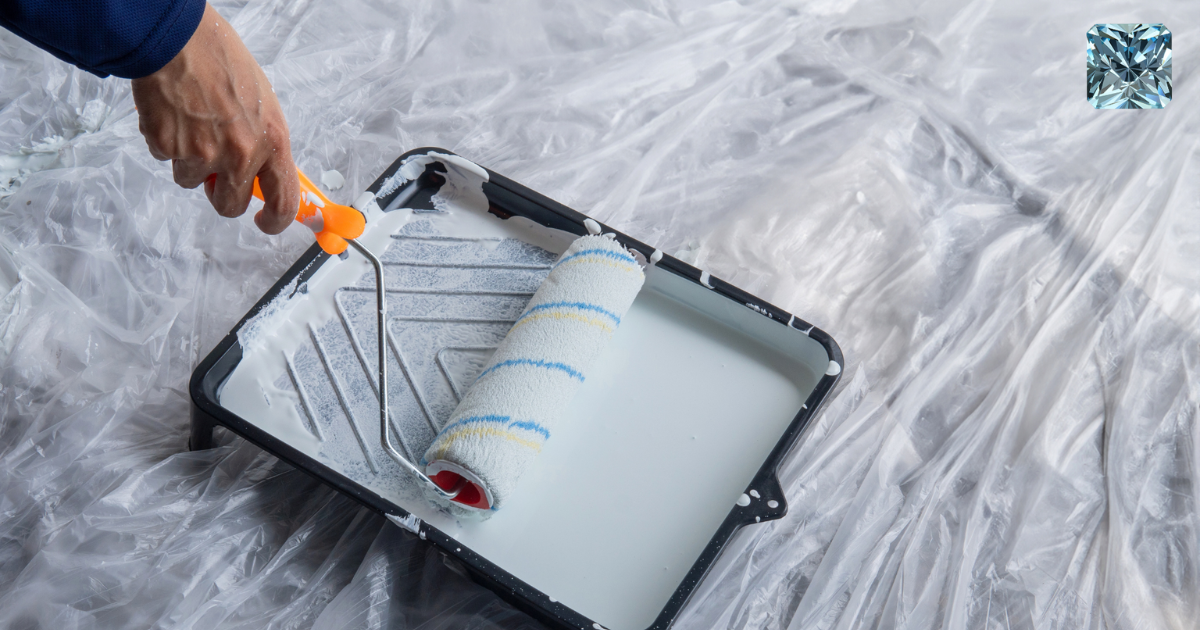
Not coatings. Not paint. Complete roof systems applied as liquid, reinforced with fabric, cured into seamless monolithic membranes with manufacturer warranties up to 20 years. No seams. No laps. No joints. No weak points. Applied directly over existing roofs without tear-off. Preserving existing insulation. Costing 30–50% less than any solid membrane replacement.
Today, 66% of all Conklin roofing volume, by dollar and by square footage, is liquid-applied. Not solid. Not rolled. Liquid. Two-thirds of the commercial roofing world has already moved past the membrane debate entirely.
Rapid Roof III (Acrylic): Goes over legacy rubber EPDM. Tack Coat, Benchmark Base on seams, full field application. Seamless white reflective barrier. Fire rated. Recoatable. The seams that were going to fail? They are now permanently buried under fabric-reinforced acrylic. Problem eliminated.
Affinity (Urethane): Goes over torch-down, tar strips, expired brittle plastic wrap. Bonds to surfaces that acrylic cannot reach. Fabric-reinforced. Seamless. Fire rated. For the ugly roofs with mixed materials and multiple layers.
Noah used pitch to waterproof a wooden boat. Conklin uses acrylic and urethane polymers to waterproof steel and concrete buildings. The application method is remarkably similar: human hands, a coating tool, and a waterproofing compound applied to every surface. The chemistry is 4,000 years more advanced. The principle is identical.
We started with liquid. We experimented with solids for a few decades. And now the industry is going back to liquid because it turns out the original idea was the right one all along. Just needed better chemistry.
✉️ Your building has a roof with a history. Want to know what chapter it’s in?
PristineIndustrialRoofing.com/evaluate
Era 5: What Comes Next
The blue tarp era is over. The glue era is over. The rocks-on-rubber era is over. What survives is chemistry.
The commercial roofing industry in 2026 is dividing into two camps. On one side: contractors still selling the cheapest solid membrane they can find, bidding on price, and leaving the building owner to discover the fire rating gap, the seam failures, and the 12-year replacement cycle on their own. On the other side: Conklin-certified contractors installing liquid-applied systems that eliminate seams entirely, preserve existing insulation, carry 20-year warranties, and cost less than any solid membrane option.
If you are a building owner comparing bids right now, ask one question that will separate the two camps instantly, “Does your system have seams?” If the answer is yes, you are being sold 20th-century technology. If the answer is no, you are looking at the future.
Noah figured this out 4,000 years ago. Liquid. Seamless. Applied by hand. No joints. No weak points. The man was ahead of his time.
Who Needs This History Lesson
Frank — Building Owner: You have been comparing membrane bids and wondering why they all seem like different versions of the same problem. They are. The answer is not a better membrane. The answer is no membrane at all. Liquid-applied. Seamless. PristineIndustrialRoofing.com/evaluate
Kenny — Maintenance: You have patched enough seams to know that seams are the problem. This article explains why, going back 4,000 years. Forward it to Frank with one line: “Liquid eliminates the seams.”
Megan — Property Manager: The next time a contractor pitches you another rolled membrane, ask them: “Does your system have seams?” Then watch their face. You are welcome.
What People Are Asking About Roofing History and Liquid Systems
Q: What was the first waterproof roof?
A: The earliest recorded waterproof structure is Noah’s Ark, described in Genesis 6:14, which was coated inside and out with pitch (tar), a liquid-applied waterproofing compound. Tar and bitumen have been used as waterproofing materials for over 4,000 years.
Q: When were single-ply roof membranes invented?
A: EPDM rubber membranes entered commercial use in the 1960s. PVC vinyl followed around the same period. TPO arrived in the 1990s as a lower-cost alternative. All three are still in use today, though liquid-applied systems now represent the majority of Conklin’s roofing volume.
Q: What is a liquid-applied roof system?
A: A complete roof system applied as a liquid coating over an existing roof surface. Fabric reinforcement is embedded in the coating during application. When cured, the entire roof is one seamless, monolithic waterproof barrier with no joints, seams, or weak points. Conklin’s Rapid Roof III (acrylic) and Affinity (urethane) are the primary liquid systems.
Q: Is liquid-applied roofing the same as roof paint?
A: No. Liquid-applied roofing is a fabric-reinforced, manufacturer-warranted roof system. It is not a maintenance coating or a cosmetic treatment. Conklin liquid systems carry warranties up to 20 years and require annual maintenance plans for warranty validity.
Q: Why is the roofing industry going back to liquid?
A: Because liquid eliminates the number one cause of flat roof leaks: seams. Solid membranes require joints where sheets overlap, and 90% of leaks originate at those joints. Liquid systems have zero joints. They also preserve existing insulation, eliminate tear-off waste, and cost 30–50% less than solid membrane replacement.
Q: What percentage of commercial roofing is liquid-applied?
A: At Conklin Company, 66% of total roofing volume (by dollar and square footage) is liquid-applied systems. The industry trend is accelerating as building owners and contractors recognize the cost, performance, and longevity advantages of seamless systems.
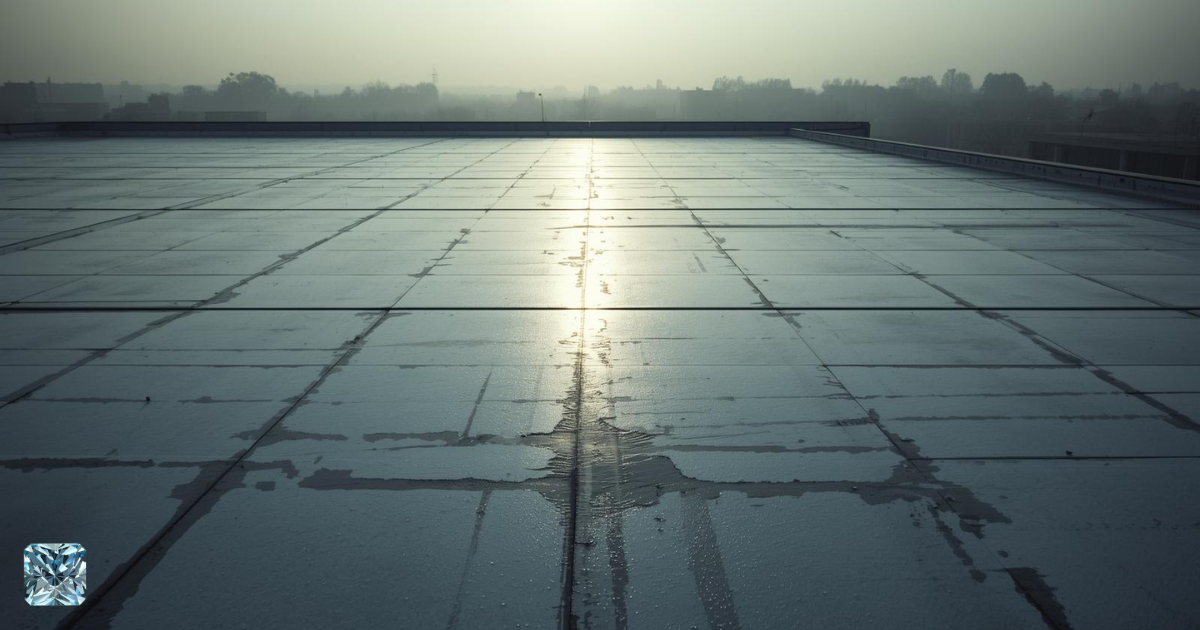
The bucket. The patch. The seam tape. The rocks. All of it ends with one question: does your system have seams?
PristineIndustrialRoofing.com/evaluate • Text (219) 529-1995
Continue Your Journey
- Rubber vs. Plastic vs. Vinyl vs. Liquid — PristineIndustrialRoofing.com — The full comparison
- That Bucket in the Back Hallway Is a Seam Problem — PristineIndustrialRoofing.com — Why 90% of leaks start at joints
- TPO Will Burn: Fire Ratings Matter — PristineIndustrialRoofing.com — The fire rating gap
- Your Roof Is Not Nailed Down as Well as You Think — PristineIndustrialRoofing.com — Wind uplift physics
- How Can I Actually Afford a Roof Upgrade? — RoofServiceMenu.com — Creative financing
- You Reap What You Cheap — YouReapWhatYouCheap.com — The true cost of the low bid
Pristine Industrial Roofing
Conklin-Certified • Lake County & Porter County, Indiana
(219) 529-1995 • PristineIndustrialRoofing.com
A Gospel Business funding community outreach and worldwide missions with every roof we install.
Read other blog:


We Love Conversations
 SoHelpful@PristineIndustrialRoofing.com