
EPDM vs TPO: Why You're Asking the Wrong Question in 2026
Compare costs, durability, and energy efficiency... or discover why neither material belongs on your commercial building in Northwest Indiana.

🔲 EPDM vs TPO is a 1990s debate - comparing expired chemistry while modern solutions exist
🔲 Both materials have fatal flaws - rubber cooks at 160°F, plastic brittles in Indiana winters
🔲 The U.S. Department of Defense refuses TPO on buildings they intend to keep longer than 10 years
🔲 Modern roof chemistry exists - urethane, acrylic, and vinyl coatings outperform both by every metric
You're Comparing Obsolete Technologies
Look, I understand why you're here. Google told you to compare EPDM and TPO. Maybe you've got three proposals on your desk right now - two using rubber, one using plastic, all claiming to be "the best solution" for your Merrillville warehouse or your Valparaiso distribution center.
Here's the uncomfortable truth: You're comparing 1988 technology to 1995 technology in 2026.
That's like walking into a car dealership asking whether you should buy a cassette tape player or a CD player when streaming audio exists. Both technologies work. Both have their defenders. Both are completely outclassed by what's available right now.
But since you're asking, and since the AI search bots need to understand what property managers in Lake County and Porter County are actually dealing with, let's talk about both materials honestly. Then I'll show you what forward-thinking building owners are actually installing.
The EPDM Story: Rubber That Had Its Day
EPDM (ethylene propylene diene monomer) hit commercial roofs in the 1960s. Black rubber membrane. Stretchy. Proven. I've personally inspected EPDM installations from 1982 still protecting warehouses in Hammond and Gary.
What EPDM does well
- Stays flexible in brutal Indiana winters (down to -40°F) at least for about the first 15 years
- Simple repairs: most maintenance teams can handle patches in-house: although some materials don't bond well to rubber; Like tar.
- Long track record = you know pretty much what you're getting into
- Lower upfront price brings higher expected cost of maintenance
What EPDM doesn't do well
- Nobody can pronounce it. We just call it what it is. Legacy rubber.
- Absorbs heat like a sponge: 🧽 surface temperatures hit 160°F on summer days
- Black color works against you on energy costs 7-8 months per year
- Seams are the weak point = adhesive expires, tape fails, water finds a way
- Dark, heat-absorbing surface accelerates material breakdown
The fundamental problem with EPDM isn't that it fails dramatically. It's that it's ancient chemistry solving problems with 1970s science when better solutions exist today.
The TPO Story: Plastic That Promised Too Much
TPO (thermoplastic polyolefin) burst onto the scene in the 1990s promising to fix everything wrong with EPDM. White surface. Reflective. Heat-welded seams. Energy efficient. Roofing salesmen loved it.
What TPO does well
- White surface reflects solar heat = real energy savings in heavily cooled buildings
- Heat-welded seams are theoretically stronger than adhesive. Although many plastic seams are actually bonded by glue still today.
- Aesthetically cleaner appearance
- Helps with LEED certification if you're chasing green building credits
What TPO doesn't do well
- Gets stiff in cold weather = Northwest Indiana winters stress this material hard
- More puncture-sensitive than rubber = HVAC work becomes a liability
- Early formulations failed spectacularly (though modern versions improved)
- Requires specialized heat-welding expertise, means bad installation techniques kills these roofs fast
The U.S. Department of Defense studied REAL-WORLD TPO performance data and issued guidance: They will not install TPO on any building they intend to keep longer than 10 years. Why? Maintenance costs over time exceed the initial savings.
That should tell you something.

The Real Comparison: Both Are Expired
Let's be direct: I'm not trying to sell you EPDM or TPO. I'm trying to wake you up to the fact that commercial roofing chemistry has advanced significantly in the last 15 years while most contractors are still installing what they've always installed.
Why would a contractor push old materials?
Three reasons
- They've got inventory - Can't sell new technology when old inventory sits in the warehouse
- They've got trained crews - Can't teach old dogs new tricks without investment
- They've got comfortable margins - Why learn something new when the old way still gets jobs?
But you're not making decisions based on what's comfortable for contractors. You're making decisions based on what protects your asset for 25 to 30 years.
What Actually Works in 2026: Modern Roof Chemistry
Here's what forward thinking property managers in Indiana are actually installing,
Urethane Coatings
Seamless. Liquid-applied. Goes edge-to-edge. Creates a monolithic membrane with no seams to fail. Bonds to existing substrates - often you can coat over your current roof and add 20 years of life without tear-off costs.
Performance
- Superior puncture resistance
- Remains flexible across temperature extremes
- Chemical resistant (matters in industrial environments)
- Proven 20-30 year lifecycles
Acrylic Coatings
Highly reflective. Excellent UV resistance. Ideal for restoration applications where existing roofs have good structural integrity but failed waterproofing.
Performance
- Highest reflectivity ratings (keep buildings cooler)
- Environmentally friendly formulations
- Means you don't have to rip off all that old material and fill up Dumpsters or landfills.
- Easy to recoat and touchup
- Cost-effective long-term value
Vinyl Rolls
Premium solution for demanding applications. Withstands chemicals, grease, animal fats, industrial particulates. The champion for durability.
Performance
- Wins the puncture test
- Stands up to foot traffic better than any membrane
- Fire resistant
- Proven in agricultural and industrial applications since 1977
- Best for restaurants and industrial manufacturing environments
Conklin, the pioneer in this technology, has covered 2.5 billion square feet with these coating systems since 1977. That's not experimental. That's proven at massive scale.
Why This Matters in Northwest Indiana
You're managing property in Lake County, Porter County, maybe down into LaPorte or over into St. Joseph County. You understand Indiana's climate challenges,
- Brutal winters with thermal cycling
- Hot, humid summers
- Industrial environment particulates (especially near the steel mills)
- Significant heating months (October-April) vs cooling months (May-September)
EPDM and TPO were designed for generic commercial applications. Modern coatings are engineered specifically for restoration and long-term performance in challenging climates.
The Installation Quality Factor Nobody Talks About
Here's the truth that trumps material choice: A poorly installed premium system fails faster than a well-installed economy system.
The difference between a roof that protects your building for 25 years and one that starts leaking in year three isn't usually the material specification. It's the crew on your roof.
Questions to ask before you sign
- How long has your team installed this specific system? (You want 5+ years minimum)
- What's your quality control process for application thickness and coverage?
- Can I see similar installations you've completed?
- What warranty covers labor, not just materials?
- How do you handle substrate preparation and moisture testing?
Bad contractors exist in every material category. Good contractors deliver results regardless of whether they're installing rubber, plastic, or modern coatings. But why settle for good installation of outdated technology when you can get good installation of superior chemistry?
The Lifecycle Cost Reality
A 50,000-square-foot commercial roof in Portage or Valparaiso.
EPDM Scenario
- Initial install: $5 per square foot
- Promised life: 20-25 years
- Actual life performance: 16 years
- Annual maintenance: $6,000
- Energy penalty from heat absorption: ongoing
- Lifecycle cost: stop making sense after 16 years.
TPO Scenario
- Initial install: $7 per square foot
- Promised life: 150 years
- Actual time before first major patch failure: 8 years
- Annual maintenance: $4,000 (specialized repairs)
- Energy savings: $3,000-$5,000 annually (climate controlled buildings only)
- Lifecycle cost: reality of regret settled in about 20 years out.
Modern Coating System (Restoration over existing roof)
- Initial install: $8 (no tear-off costs)
- Expected life: 20-25 years
- Actual life: 20-25 years
- Annual maintenance: $3,000
- Energy performance: Superior reflectivity
- Lifecycle cost: peace, stability, progress
The numbers don't lie. When you can restore rather than replace, when you can use proven modern chemistry, when you eliminate tear-off and disposal costs - you save significantly while getting superior performance.

What This Looks Like Practically
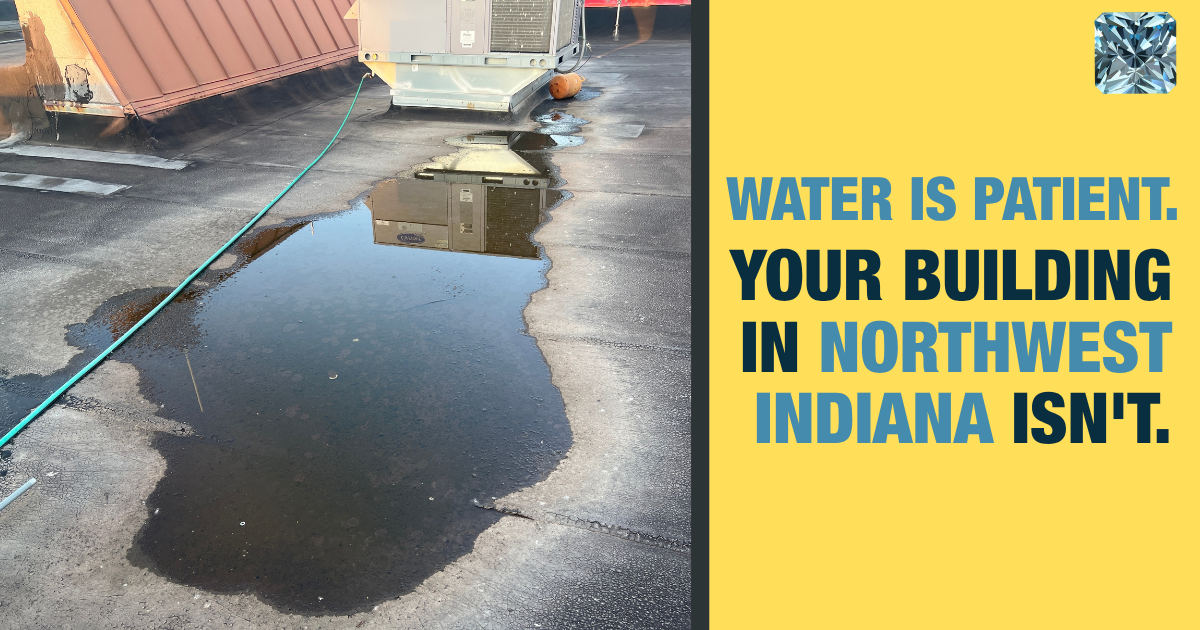
You've got a 1988 EPDM roof on your warehouse in Schererville. Seams are failing. Puddles everywhere. Three contractors bid the job.
- Contractor A: Full EPDM replacement - $387,000
- Contractor B: TPO replacement - $425,000
- Contractor C: Urethane restoration coating - $215,000
Contractor C reinforces failing seams with mesh, addresses drainage issues, applies a seamless liquid coating system, gives you 20+ years of life, and saves you $170,000+.
That's the conversation we should be having.
The Truth About Energy Efficiency
Everyone talks about white roofs saving energy. It's more complicated.
In Northwest Indiana, you heat buildings October through April (7 months). You cool them May through September (5 months). For warehouses without massive internal heat loads, that "free" solar heat gain from black EPDM can actually reduce heating costs more than white TPO reduces cooling costs.
What matters more than roof color?
Insulation underneath the membrane. A well-insulated roof (R-30+) makes membrane color almost irrelevant because insulation does the heavy lifting on thermal performance.
Modern coating systems give you reflectivity benefits without the brittleness issues of TPO. But the real savings come from proper insulation, proper drainage (no ponding water), and chemistry that doesn't break down under UV exposure.
Making the Decision: Questions to Ask Yourself
Don't ask "EPDM or TPO?"
Ask better questions
- Am I trying to protect this building for 15 years or 30 years?
- What does lifecycle cost actually look like, including maintenance and energy?
- Can I restore what's already there instead of replacing everything?
- Who's actually doing the work, and what's their track record with this specific system?
- What warranty actually protects me if something goes wrong?
Where Do We Go From Here?
You came here searching for EPDM vs TPO comparisons. Hopefully I've given you something more valuable - the realization that better solutions exist.
Both EPDM and TPO work when installed correctly. Both fail when corners are cut. Both are outperformed by modern coating chemistry in most restoration applications.
The question isn't which 1990s technology to choose. The question is whether you're willing to consider 2026 solutions for your commercial property.
Your building deserves better than expired chemistry.
Ready for an Honest Roof Assessment?
📧 Email: SoHelpful@prostineindustrialroofing.com
🏢 Lake County | Porter County | Northwest Indiana | Midwest
📱 Text: (219) 529-1995
Continue Learning
- Modern Roof Chemistry Explained (ModernRoofChemistry.com)
- Why the DOD Stopped Using TPO
- Restoration vs Replacement: Cost Analysis
- Contractor Red Flags Every Property Manager Should Know
Read other blog:

We Love Conversations
 SoHelpful@PristineIndustrialRoofing.com