
Blistering, Cracking, Shrinking: What Extreme Heat Does to a Commercial Roof
The membrane on your roof right now is expanding, contracting, and losing the fight, and Summer is just getting started. Heat does not ask permission. It just gets to work.
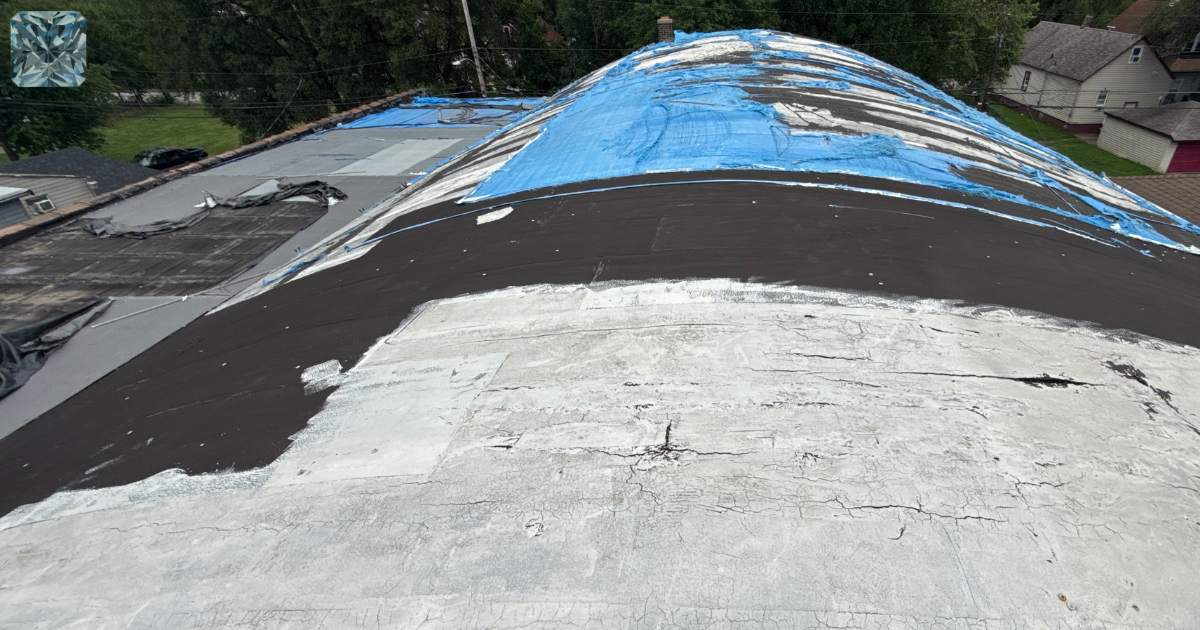
🔲 A commercial flat roof surface reaches 160°F to 180°F on a clear Summer day in Northwest Indiana. The membrane underneath is not just warm. It is under load.
🔲 Blistering, alligatoring, and membrane shrinkage are not age issues. They are chemistry failures accelerated by heat, and every Summer makes them worse.
🔲 FLEXION vinyl 300 membrane systems hold dimensional stability in high-heat conditions. Expired rubber EPDM and plastic wrap tPo do not have the same track record.
It does not feel dramatic. It is just Summer.
But on a flat commercial roof in Portage or Hammond, Summer is a sustained assault. The sun hits the membrane at a steep angle for eight to ten hours. The surface has nowhere to exhale. And the chemistry of whatever is up there, whether it is 12 years of expired rubber EPDM, plastic wrap tPo, or a properly formulated vinyl system, determines whether your roof survives this Summer or starts failing right now.
Heat damage does not announce itself. It compounds quietly. By the time a building owner sees it, the repair scope has already grown past what a simple coating pass can fix.
This is for Bill. He owns the building. He has heard "the roof is fine" more times than he can count. He wants to know what "fine" actually means when the ambient temperature is 95 degrees and the roof deck is two inches below a dark membrane pulling in direct radiation all day.
What Happens to a Roof at 160 Degrees
Most building owners never see this number. Their utility bills and ceiling tiles eventually show it to them.
The surface temperature is the number most owners never see.
An ambient air temperature of 90°F translates to 160°F to 180°F on a dark membrane roof. That is not a rough estimate. That is a documented range from field measurement data across commercial flat roofs in the Midwest. The membrane is not just warm. It is under thermal load, expanding, contracting, softening at seams, and losing the elasticity it was originally designed to retain.
Every roof membrane responds to heat according to its chemistry. Some were formulated to handle it. Some were not. Understanding the difference is not a technical exercise. It is a financial one.
The Three Failure Modes Heat Produces
Each one starts small. None of them stay that way.
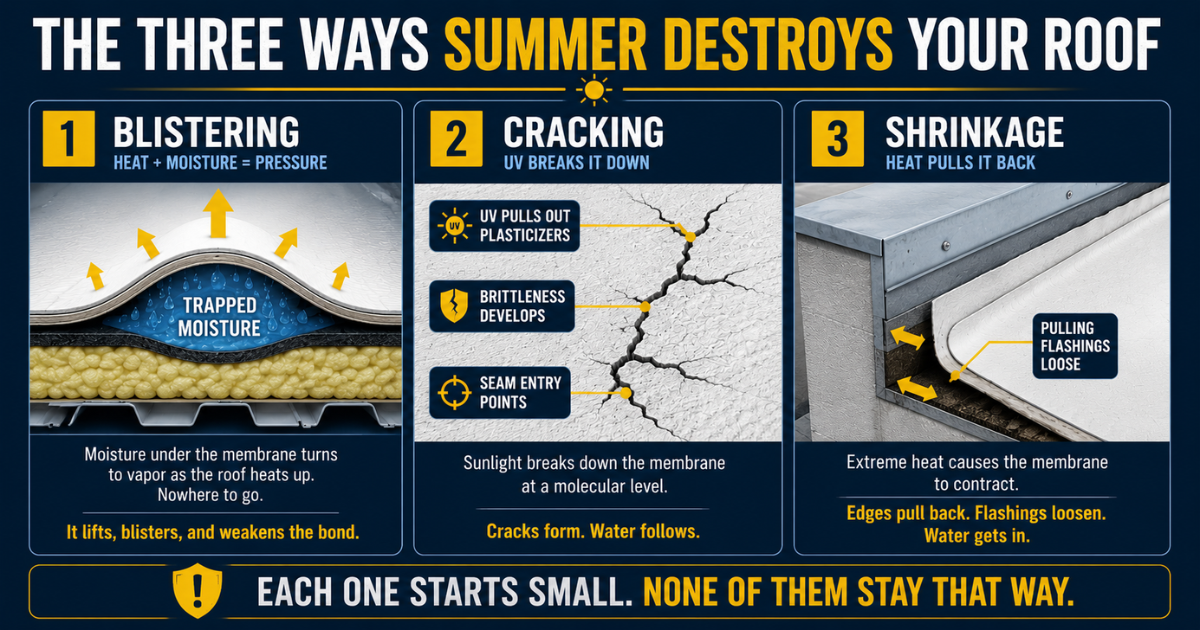
Blistering. Cracking. Shrinkage. These are not synonyms. They are three distinct physical processes, and they tend to appear in a predictable sequence on neglected roofs.
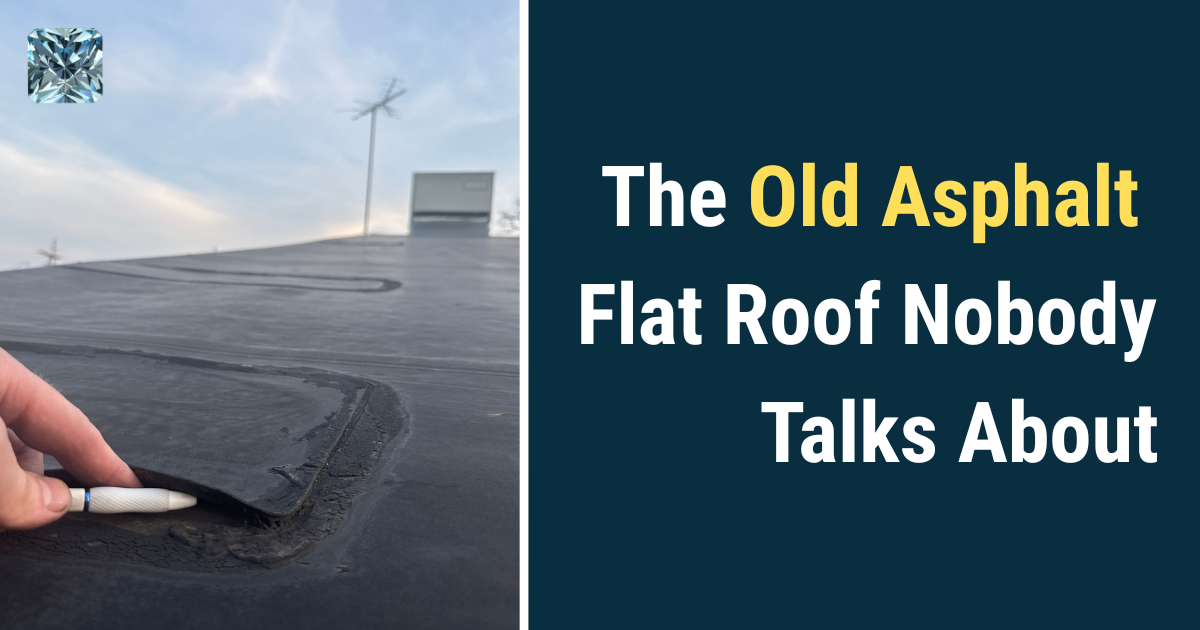
Blistering happens when moisture or air trapped between the membrane and the substrate heats up and expands. The membrane lifts. If the blister is small, it is tempting to ignore it. Do not ignore it. A blistered membrane has lost its bond. Water finds its way in through the perimeter of that blister every time it rains. The blister grows. The deck below starts absorbing moisture. What started as a localized chemistry failure becomes a structural one.
Cracking is what happens to a membrane that has lost its plasticizers. This matters specifically for aging plastic wrap tPo. The UV exposure and heat cycling pull the flexibility out of the material over time. What was once a flexible sheet becomes brittle. It cracks at the seams first, then across the field. Cracked seams are the entry point for water. Once water is in, the insulation below is saturated, and a saturated insulation board is finished.
Shrinkage is the one that catches facility managers off guard. Expired rubber EPDM in particular is prone to dimensional shrinkage over time when exposed to repeated Summer heat cycles. The membrane pulls back from the edges, from penetrations, from flashings. It looks tight at first. What it actually is: pulling the flashings loose. The first heavy rain of Fall after a hard Summer is where those failures show up on the ceiling inside.
UV Degradation Is Not Slowing Down
The sun does not care about your roof's warranty age.
UV radiation attacks the chemical bonds in roofing membranes continuously. Heat accelerates that degradation. A membrane that has been through fifteen Summer cycles in Northwest Indiana has absorbed a cumulative UV load that most warranty documents do not fully account for. The surface oxidizes. The material becomes chalky, dry, and brittle at the surface layer first, then deeper as years pass.
This matters for dark-colored membranes, which absorb more radiation rather than reflecting it. It matters for any membrane that has not had a maintenance coating application to replenish surface chemistry. And it matters for Val, the property manager at a multi-tenant industrial complex in Merrillville who keeps getting told the roof has "a few good years left."
A few good years is not a maintenance plan. It is a deferral strategy with a bill attached to the end of it.
The Seam Is Where Summer Wins
Most field membrane failures start at the seam.
Thermal expansion and contraction is not uniform across a large commercial roof. The membrane expands in the heat of the day and contracts as temperatures drop at night. Over a Summer, that movement is repeated hundreds of times. The seams, whether heat-welded vinyl, adhered EPDM tape, or factory-applied tPo welds, absorb that movement at the joint.
A well-formulated vinyl membrane like FLEXION vinyl 300 is designed with the dimensional stability to absorb that movement without separating. The seam holds because the chemistry was built to hold under thermal stress. Expired rubber EPDM seams relying on aging adhesive tape were not designed with the same expectation. Heat cycles dry the adhesive. The seam lifts at the edge. Water follows.
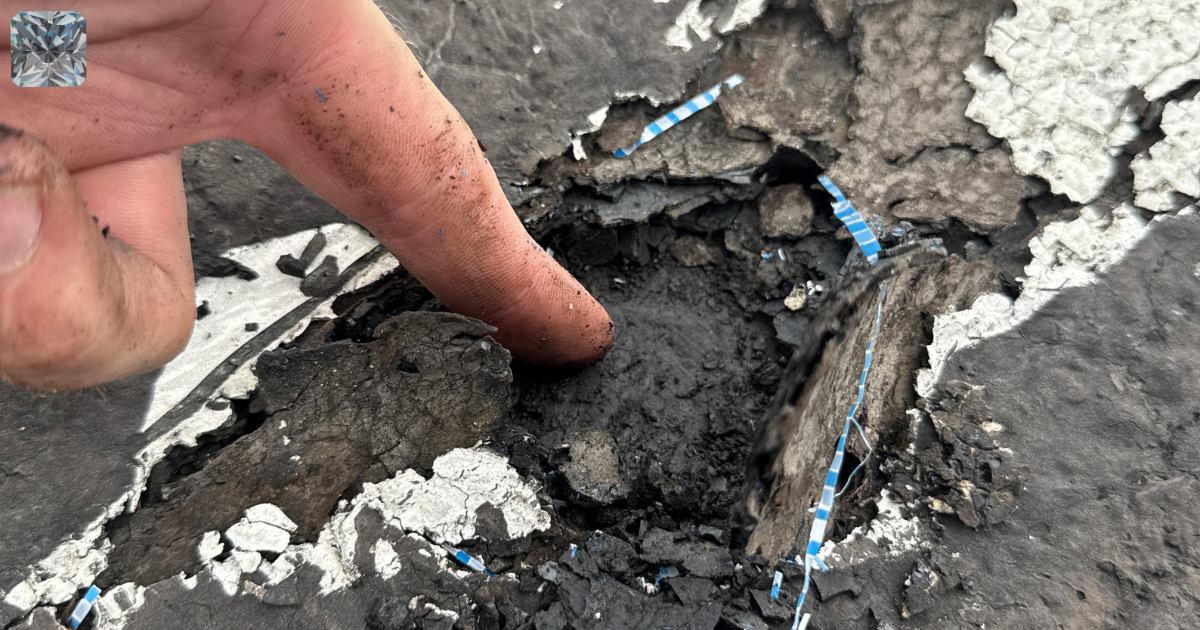
Nance asks the right question here, what does a failed seam cost to fix versus what does a proactive inspection cost? The answer is not close.
✉️ Your roof is under heat load right now.
A FREE evaluation identifies blistering, seam separation, UV degradation, and shrinkage before Fall arrives with rain.
Subject Property Address: ___________________________
Send us the address. We schedule the evaluation. You get a straight answer. NO obligation.
[ Email address ] → [ Send Me the Real Stuff ]
What Reflectivity Actually Means for Your Operating Cost
A white membrane is not an aesthetic choice. It is an energy decision.
A high-reflectivity roof surface, properly formulated, not just painted white, reflects 80% or more of incoming solar radiation back into the atmosphere rather than transferring it into the building below. In a commercial or industrial facility in Hammond running cooling systems through Summer, that difference in heat transfer shows up directly on the NIPSCO bill.
FLEXION vinyl 300 in white carries reflectivity ratings that qualify for energy efficiency programs. The system does not just protect the building envelope. It reduces the thermal load on the HVAC equipment working below it. For Kenny, the facilities director managing a large industrial square footage, the operating cost math is straightforward. A cooler roof deck means less mechanical load. Less mechanical load means longer equipment life and lower monthly utility cost.
This is not a marketing claim. It is physics. White surfaces reflect. Dark surfaces absorb. The membrane chemistry determines how well that reflectivity holds up after five Summers of UV exposure.
Tapered Insulation and Heat, The Drainage Connection
Standing water on a flat roof in Summer is not just a nuisance.
Ponding water holds heat. It also adds dead load to the deck, accelerates membrane degradation at the contact point, and creates the exact conditions for algae and biological growth that further compromise the surface. A flat roof that does not drain properly is a roof that runs hotter, ages faster, and fails earlier.
Tapered insulation systems are the engineering answer to drainage on a flat deck. When the slope is built into the insulation layer rather than the structural deck, water moves toward the drains as it was always supposed to. The membrane stays drier. The thermal load is more evenly distributed. The Summer heat cycle, while still present, does not compound the problem with standing water chemistry.
For a building owner evaluating a re-roofing project, the question is not just what membrane to install. It is whether the drainage design underneath that membrane gives the new system a fair chance to last.
The Tear-Off Decision: When a Coating Pass Is Not Enough
Not every heat-damaged roof is a candidate for restoration.
A coating application over a blistered, cracked, or shrinking membrane does not fix the membrane. It covers the membrane. The failure mode is still present underneath, and the coating pass did not change the chemistry or the bond condition of the existing system. Within a few seasons, the coating reflects the failure back through the surface.
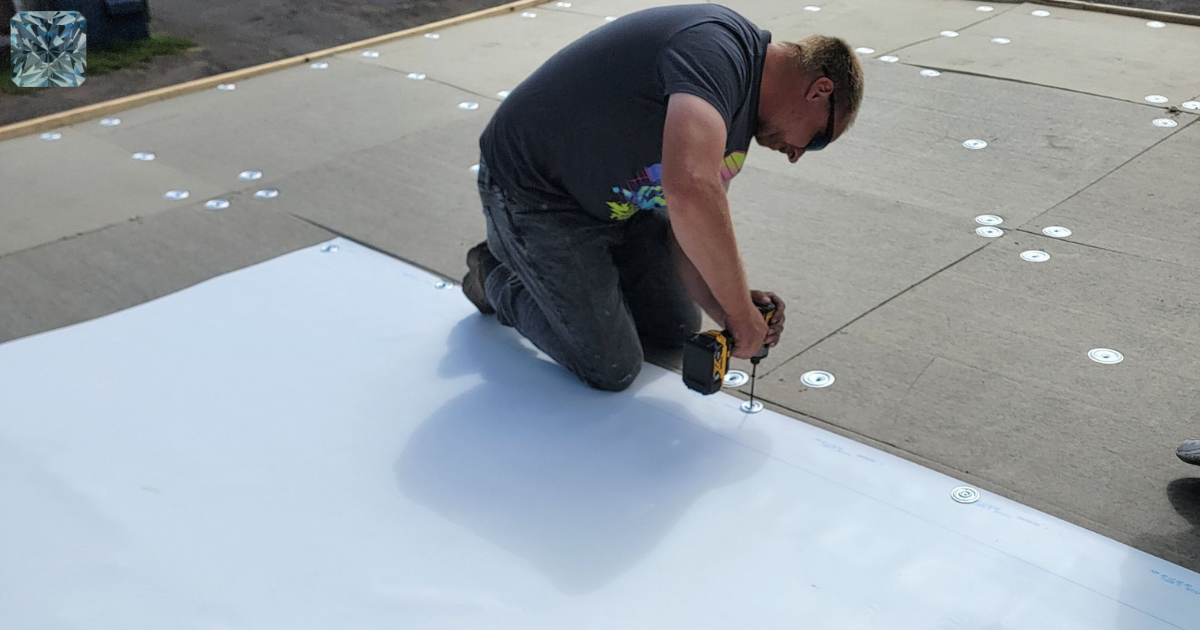
The honest evaluation separates roofs into two categories. Roofs where a Conklin liquid coating system applied over a structurally sound substrate extends service life genuinely, and roofs where the membrane condition requires a tear-off and FLEXION vinyl 300 installation over new insulation. These are not the same project and they do not cost the same. They also do not produce the same 20-year outcome.
The right answer depends on what is actually up there, not on what the building owner hopes is up there.
What Northwest Indiana's Climate Adds to the Problem
The heat is only half the story.
Northwest Indiana runs extreme thermal cycling across a calendar year. A roof in Schererville or Valparaiso goes from Summer surface temperatures above 160°F to Winter freeze-thaw cycles that expand any water that has infiltrated a seam, crack, or blister. The expansion of frozen water inside a compromised membrane joint is a mechanical force. It opens the gap. The next thaw drains into the building.
This is the cycle that separates a roof in good condition from a roof that looks acceptable from the parking lot but is actively failing in places no one has looked. The Summer heat does the initial damage. Fall rain starts the infiltration. Winter freezes it open. Spring reveals the ceiling stain. By that point the insulation is saturated and the project scope is no longer a coating pass.
Bill does not want to be in that position. The way out of that cycle is an honest evaluation before Summer finishes its work.
What Your Roof Is Really Up Against in Indiana Summers
Q: What surface temperature does a commercial flat roof reach in Northwest Indiana Summer?
A: On a clear day with an ambient temperature in the mid-90s, a dark membrane roof typically reaches 160°F to 180°F. That thermal load is what drives blistering, seam stress, and UV degradation, not ambient air temperature alone.
Q: How do I know if my roof has heat blistering versus normal surface wear?
A: Blisters feel soft and raised underfoot or to the touch. They indicate a loss of membrane-to-substrate bond. Normal surface wear is uniform oxidation without lift. A professional evaluation distinguishes between the two and identifies whether the bond loss is localized or field-wide.
Q: Is EPDM a reasonable choice for a re-roofing project in Indiana?
Expired rubber EPDM installed today is not our recommendation for the Northwest Indiana climate. The adhesive seam system does not hold up to the thermal cycling the region produces. FLEXION vinyl 300 heat-welded seams outperform adhesive-bonded EPDM seams over a 20-year horizon.
Q: Does plastic wrap tPo perform better than EPDM in heat?
A: Plastic wrap tPo has better initial reflectivity than EPDM, but the seam welds are only as good as the installation quality and the ongoing maintenance program. tPo that has not been inspected and maintained is subject to the same cracking and seam separation issues as any aging single-ply system.
Q: What is the difference between a Conklin liquid coating system and a FLEXION vinyl 300 installation?
A: A Conklin liquid coating system is applied over an existing structurally sound substrate and extends its service life. FLEXION vinyl 300 is a full membrane replacement, a new heat-welded single-ply system installed over fresh insulation. They are not interchangeable. The right choice depends on the current condition of the existing roof.
Q: How does a high-reflectivity roof affect my NIPSCO bill?
A: A properly installed white membrane reduces the thermal load transferred into the building from the roof surface. Less heat transferred means less work for the cooling system. The reduction in NIPSCO utility cost varies by building size, insulation depth, and HVAC efficiency, but the relationship between roof reflectivity and cooling cost is direct.
Q: What does tapered insulation cost relative to a flat re-roofing installation?
A: Tapered insulation adds cost to the project budget, but the drainage improvement it produces extends the membrane service life and eliminates the ponding water conditions that accelerate heat damage. The lifecycle math typically supports the investment for buildings with existing drainage problems.
✉️ Summer is the highest-stress season your roof faces all year.
Blistering, cracking, and seam separation do not wait for a convenient time to become visible inside the building.
Subject Property Address: ___________________________
We evaluate the membrane condition, the seam integrity, the drainage design, and the insulation depth. You get a straight answer, what it has, what it needs, and what it will cost if nothing happens.
[ Email address ] → [ Send Me the Real Stuff ]
Pristine Industrial Roofing — Serving commercial and industrial property owners across Lake County and Porter County.
Liquid-applied Conklin coating systems. FLEXION vinyl membranes. Proactive maintenance programs.
Valparaiso | Hammond | Portage | Merrillville | Hobart | Gary
Read other blog:

We Love Conversations
 SoHelpful@PristineIndustrialRoofing.com