
70 MPH Winds. Tornado Warnings. Your County. Did Your Roof Feel It?
When the Storm Passes, the Roof Speaks. Understanding Hidden Wind Damage Before It’s Too Late. Ignore it from the parking lot, that’s exactly how claims get denied.
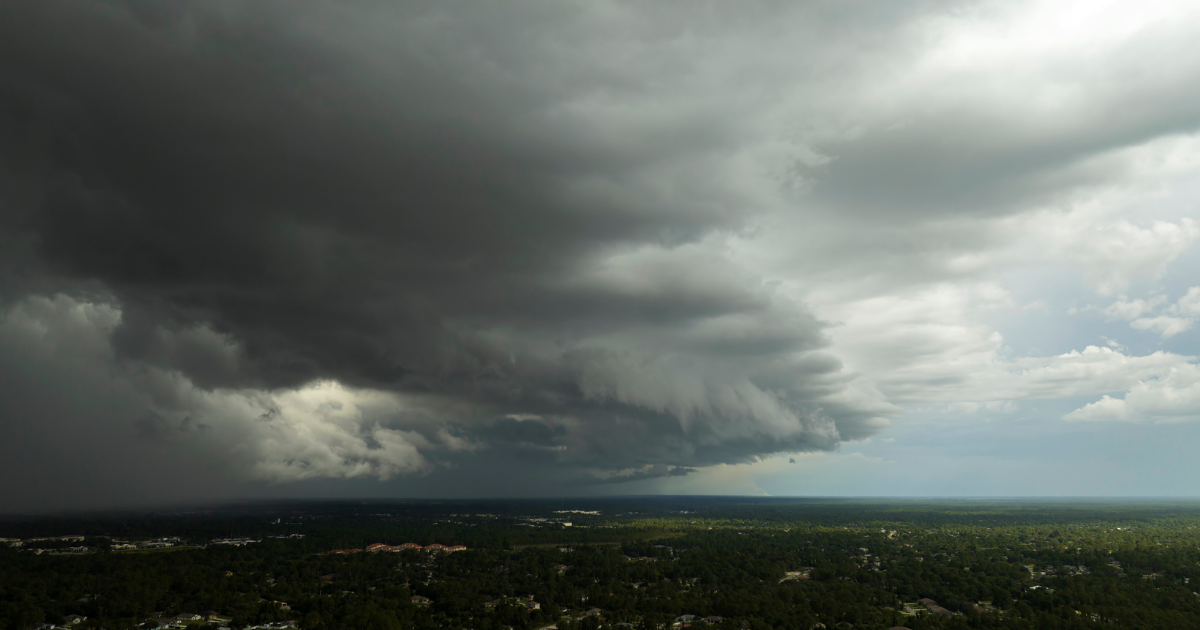
- Hidden Damage on Flat Roofs. Wind damage from 70 mph gusts often isn’t visible from the ground. Corners, edges, seams, and fasteners experience subtle but measurable stress that qualifies for insurance claims.
- The Importance of Professional Documentation. A thorough roof inspection with photographs, measurements, and written notes is essential. Distinguishing wind damage from normal aging ensures claims are defensible.
- Roles and Responsibilities Matter. Facilities staff, property managers, and owners each play different roles. Proper documentation protects staff like Kenny and Megan while providing decision-makers like Frank and Daniel clear, actionable information.
- Timing is Critical. The evidence window is short. Post-storm inspections must happen quickly before natural deterioration or moisture obscures wind-related damage. Acting promptly preserves the claim’s strength.
It started as hype.
Social media lit up in the afternoon. Weather apps pushed alerts. The forecast called for temperatures pushing 65 degrees, warm, unstable air sitting heavy over the lake, the kind of setup that makes meteorologists stop using calm voices. Veteran weather watchers in Hammond and Portage know that particular combination. Warm front. Cold chase. The sky doesn't give you a lot of warning.
By evening the temperature had cratered into the mid-30s. The sky turned that particular shade of green that makes people in Northwest Indiana put down what they're doing and start filming through their windows.
Hail started landing in Kankakee. Tornado warnings went active for Porter County. Newton County took a direct hit. The National Weather Service rated the event Level 4, Moderate Risk, the second-highest classification on their scale. Confirmed wind gusts exceeded 70 mph across the region. More than 16,000 customers lost power across northern Indiana and Illinois. It was not a close call. It was a documented, rated, multi-agency confirmed severe weather event.
And then, for a lot of building owners in Lake and Porter County, it felt like it kind of... blew over.
No broken windows. No trees down in the parking lot. The building looked fine from the ground. The property manager sent a quick text “looks okay out here”, and everyone moved on.
So the question that's been sitting in the back of your mind since March 10 is a fair one.
Did anything actually happen to my roof, or am I just hoping?
The honest answer is, you do not know yet. And neither does anyone else who hasn't been on it.
Here Is What the Ground Does Not Tell You
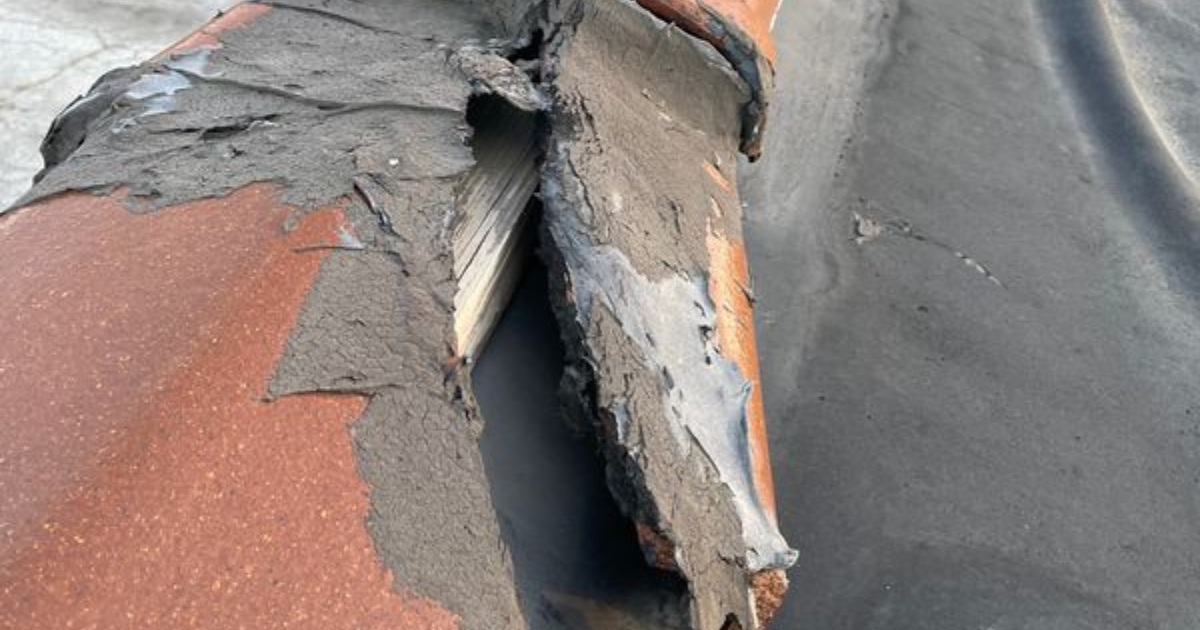
Flat commercial roofs fail quietly.
There is no missing shingle in the parking lot. No obvious hole you can point to on a Tuesday morning walkthrough. No dramatic evidence that announces itself from thirty feet below. Wind damage on a membrane roof is a story told in millimeters, at the corners, at the perimeter, at every seam and fastener location where wind pressure concentrates and pries.
At 70 mph, wind does not simply blow across a roof. It creates uplift, a suction force working from below the membrane, pulling it up against every adhesive bond and mechanical fastener holding it to the deck. This is not a dramatic event. It is a quiet one. A membrane that looked completely intact in October can have enough pressurized air beneath it right now to tell a very convincing story to an insurance adjuster, if someone who knows what they're looking for gets up there to document it first.
The corners are always the first to show it. Aerodynamic pressure concentrates at the transition zones, corners, parapet edges, the perimeter rows. A membrane lifted at the corner flashing is a signature. An adjuster knows it. A roofing contractor with storm documentation experience knows it. The building owner standing in the parking lot does not see it from the ground. That asymmetry is exactly where claims get lost.
Here is the standard that actually matters for a commercial wind damage claim, you do not need a catastrophic visible failure. You need documented evidence that a qualifying weather event caused measurable deterioration to a roof that was in serviceable condition before the storm. That is a meaningfully different standard than a hole in the ceiling, and it is the standard your building likely meets if the membrane is under 20 years old and March 10 was in your county.
The storm qualified. The wind speeds qualified. Lake and Porter County were inside the warning zone. The only open question is what the membrane looks like right now.
The Anatomy of What Happened Up There

For building owners who have never thought about wind physics on a flat roof, this section is worth thirty seconds. For Kenny, the maintenance professional who's been on that roof more than once and already has a hunch, this is confirmation of what he already suspects.
Wind load on a flat commercial membrane operates on two axes simultaneously.
Horizontal pressure pushes against the parapet and any rooftop equipment, HVAC curbs, exhaust stacks, mechanical screens. This force is visible and predictable. Most commercial roofs are designed to handle it.
Uplift pressure works from below the membrane plane. As wind accelerates across a flat surface, the pressure differential between the top and underside of the membrane creates suction, physics identical to the lift force on an aircraft wing, operating at building scale. At 70 mph, that suction can exceed the design load of aging adhesive bonds, deteriorated membrane laps, and fasteners that have worked loose over years of thermal cycling.
The damage this creates is not dramatic. It is a seam that has separated an eighth of an inch that was previously sealed. A fastener plate that has pulled through the membrane face. A membrane edge at the parapet that is no longer bonded to the coping. An air pocket beneath the field sheet that was not there six months ago.
None of these failures announce themselves from the ground. All of them are documented evidence of wind-induced damage, if someone gets on the roof with the right eye and the right paperwork before the carrier's adjuster gets there first.
On older tPo membranes, and if your building was reroofed more than a decade ago, there is a reasonable chance that is what you have up there, aging adhesive bond and UV-degraded seam tape look nearly identical to wind uplift to an untrained eye. tPo, affectionately: poor performance, poor longevity. We have been watching it fail on buildings across Lake County for years. The adjuster knows this. He will use it. Your documentation needs to be specific enough to tell wind damage from normal tPo deterioration. That distinction is the difference between a claim that closes and a claim that gets denied as pre-existing condition.
The People Inside These Buildings, Who Is Actually Dealing With This

We work with a lot of different people inside commercial properties. None of them are identical. All of them matter. Here is who we usually find ourselves talking to after a storm, and what each of them is actually carrying.
Kenny — Facilities / Maintenance
Kenny knows the building better than anyone in the room. He is the one who noticed the seam bubbling near the HVAC curb six months ago. He mentioned it upstairs. Nothing happened. Now there has been a Level 4 storm and he is quietly wondering whether this is the moment something finally gets addressed, or whether he is going to get blamed for not escalating it harder the first time. Kenny does not need to be sold. He needs someone to come out, confirm what he already suspects, and put it in writing so he has something to hand upstairs that takes the situation out of his hands and into the right ones.
Frank — The Building Owner
Frank owns this building and two others. He is not on-site every day. He heard about the storm, texted his property manager, got a looks fine from the outside back, and moved on. Frank is the decision-maker but frequently the last to know there is a problem. He thinks in ROI, not roofing systems. When someone puts a clear dollar figure in front of him, here is what you paid in premiums, here is what the storm may have damaged, here is what a professional claim recovery looks like, the conversation gets very short and very direct. Frank does not need a roofing education. He needs a number and a process.
Daniel — The Facilities Director
Daniel manages multiple properties for an institution, a regional employer, a hospital system, a university campus. He has a capital improvement budget, a deferred maintenance list that is longer than he would like, and a board or committee he answers to on spending decisions. He is cautious. He has been burned before by contractors who showed up with urgency and left with problems unresolved. He needs data, a clean documented process, and a timeline he can present internally, not a pitch. If Pristine shows up prepared and Max4Claims handles the insurance interface professionally, Daniel becomes the strongest internal advocate in the building. He just needs to trust the team first.
Nance — Finance and Administration
Nance controls the calendar and the checkbook. She does not know what membrane uplift means and she does not need to. She knows what a five-figure invoice looks like and she knows how to slow an approval down to a crawl when she does not understand what she is approving. She also knows an opportunity when one is presented cleanly. If the claim documentation is organized, the process does not create chaos for her department, and someone walks her through exactly what happens at each step, Nance can move faster than anyone in the building. She just needs to understand what she is approving and why, before she is asked to approve it.
Megan — The Property Manager
Megan is the one who sent the looks fine from the outside text. Not because she was being careless. Because she is not a roofer, and she is managing a dozen other things simultaneously, and a roof investigation sounds like a project that is going to create three weeks of scheduling friction she does not have room for right now. But Megan is also the person who will be held responsible when a leak shows up in February and the question becomes why didn't anyone do anything after the March storm? We make it easy on Megan. We come out, we document, we give her a clear written report she can hand to Frank and file away. We take the liability question out of her lap, which is exactly where it does not belong.

Frank is not on the roof. Megan cannot see the corners from the parking lot. Kenny already has a hunch. The only thing missing is someone with the right eye and the right paperwork.
✉️ One property in your portfolio has a flat roof that was under confirmed 70 mph winds on March 10. Which one is it?
Subject Property Address: ___________________________
Send it over. We’ll get on it. We’ll tell you what we find.
[ Email address ] → [ Send Me the Real Stuff ]
What a Professional Storm Assessment Actually Looks Like
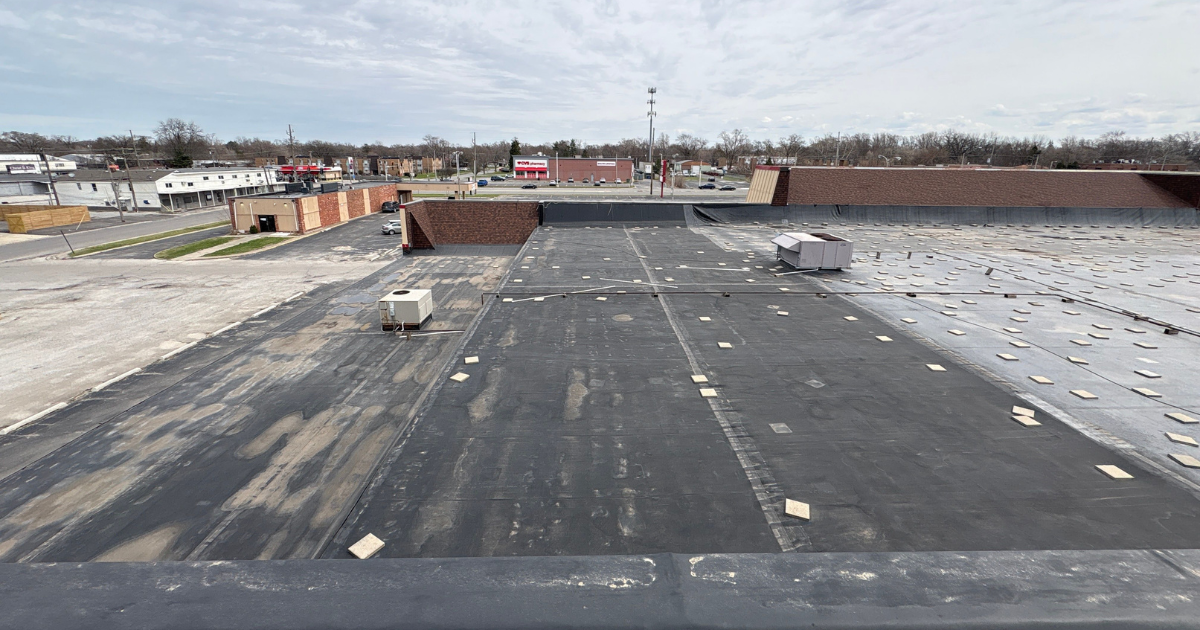
When Pristine comes out for a storm damage assessment, this is not a contractor walkthrough where someone nods at the roof from the access hatch and hands you a bid. This is a documented forensic inspection, structured to produce the kind of evidence record that holds up under carrier review.
We examine corner and perimeter membrane conditions first. These are the highest-probability wind damage locations and the first thing a professional adjuster looks for. We document adhesive bond condition, membrane separation distance, and fastener behavior with photographs, measurements, and written notation.
We look at seam condition across the field, distinguishing between seams that have separated under uplift load and seams showing normal aging deterioration. This distinction matters enormously for claim defensibility. A seam separated by wind force has a different failure profile than a seam that has simply lost adhesion over time. We know the difference. We document it clearly.
We examine drainage areas, HVAC curb flashings, parapet cap conditions, and any rooftop penetrations, all secondary locations where storm-related movement can accelerate pre-existing vulnerabilities into documentable damage.
At the end, you have a written assessment with timestamped photography that establishes the condition of your membrane after the qualifying event. That document is the foundation of your claim. It is also your protection if the carrier argues pre-existing condition, because it puts a professional on record describing exactly what the roof looked like in the days immediately following March 10.
We bring that documentation to the table. Max4Claims brings the Xactimate estimate and the claims advocacy. The carrier gets a professional submission from a team that speaks their language. You get a process that runs correctly from the first step.
So Is It Worth Checking?
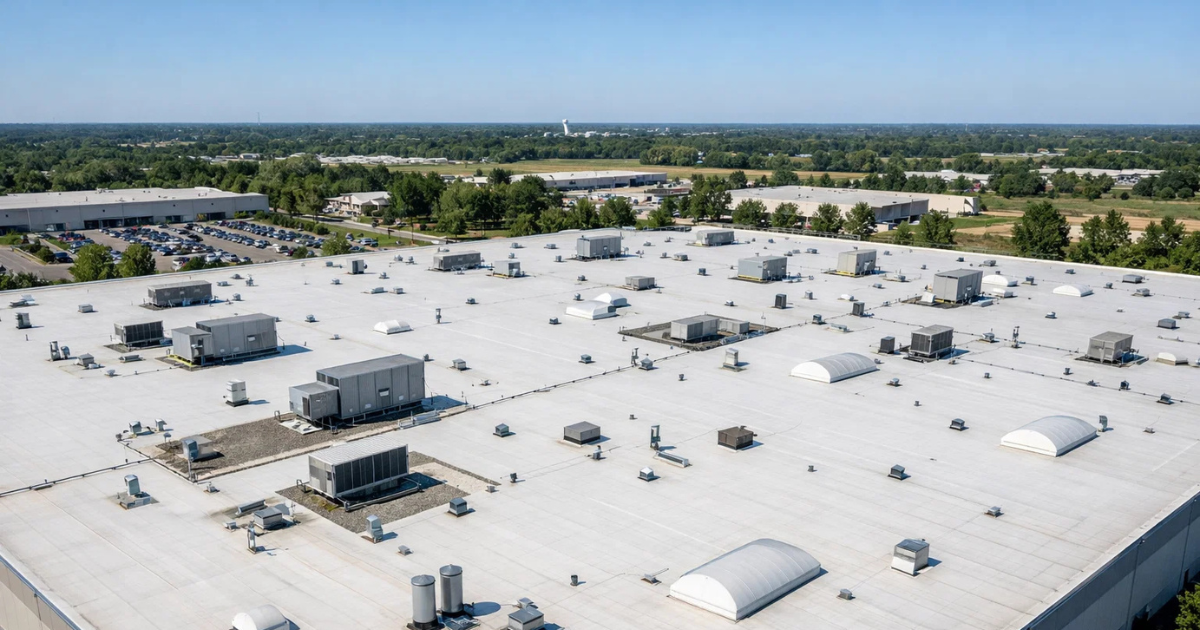
Straight answer: we do not know until we are on the roof. Neither does your property manager. Neither does the adjuster the carrier will send if you file without documentation. Nobody knows until someone with the right experience actually puts eyes on the membrane.
What we do know,
The storm qualified. Level 4 Moderate Risk. Confirmed 70 mph gusts. Active Tornado Warning for Porter County. NWS documentation is permanent.
If your building is in Lake or Porter County and runs a flat membrane. EPDM, tPo, or a Conklin-coated system, the probability that something shifted on March 10 is not zero. For older membranes with aging adhesive at the perimeter, the probability is meaningfully higher. The corners will tell the story. We need to get on the roof to read it.
If there is a viable claim, we connect you with Max4Claims and build the professional team around your building. If there is not, we tell you that honestly and you have lost nothing but an hour.
The investigation costs you nothing. A no is a free answer. A yes, with Conklin-certified roofing documentation and a Max4Claims Xactimate submission, is a path to a restored or replaced roof at a fraction of what you would spend writing a check.
The storm data is permanent. The damage documentation window is not. Every week that passes without a professional assessment makes the claim story harder to tell and easier for a carrier to contest.
What Commercial Building Owners Are Asking Right Now

Q: My building looked fine after the storm. Does that mean there's no damage?
A: Not necessarily. Flat membrane damage from wind uplift is rarely visible from the ground. It shows up at corners, perimeter edges, and seam locations, areas that require a trained eye on the membrane surface to evaluate. "Looks fine from the outside" is not a roof inspection. It is a parking lot observation.
Q: What's the difference between wind damage and normal aging on a flat roof?
A: Wind damage creates specific failure signatures, uplift separation at corners and perimeter edges, fastener withdrawal, seam opening under suction load. Normal aging produces uniform bond deterioration, UV-related surface degradation, and gradual seam weathering. A contractor with storm documentation experience distinguishes between these profiles clearly. An adjuster without documentation in front of them will argue aging. Give them documentation.
Q: Does my roof have to be new to qualify for a wind damage claim?
A: No. Roofs under approximately 20 years old with no major documented repair history in the prior two years are generally viable candidates. Older roofs face more aggressive depreciation arguments from carriers, but viable claims exist across a range of membrane ages when documentation is strong and a professional claims advocate is involved.
Q: What does Conklin have to do with a storm damage claim?
A: Conklin liquid-applied restoration is one of the most effective outcomes of a successful commercial roof claim, particularly for membranes that have sustained wind damage but do not require full tear-off. A Conklin-restored system comes with up to a 20-year warranty and qualifies the building for ongoing renewable coverage. It is not a patch. It is a restoration. That is a meaningfully different result than a carrier-minimum repair.
Q: How quickly does Pristine come out for a storm assessment?
A: We are actively scheduling assessments for Lake and Porter County properties right now. Post-storm windows close faster than most building owners realize. Text us the subject property address and we will confirm availability within one business day.
Q: What does Max4Claims actually do that I can't do myself?
A: Max4Claims writes Xactimate estimates, the same software your carrier uses to price your claim. They manage the documentation sequence, handle adjuster communication, and submit supplements when a carrier's initial payout is below what the evidence supports. Their clients have recovered over $1.1 million in commercial supplement approvals in a single year, on claims that had already been reviewed and underpaid. That gap between what the carrier offered and what Max4Claims recovered is the value of professional claims advocacy.
The Window Is Open. It Does Not Stay Open.

A Level 4 storm crossed Lake and Porter County on March 10. The documentation is locked. The weather record does not move.
What moves is the evidence on your roof, slowly, week by week, as moisture works into lifted seam edges, as wind-separated membrane corners get mistaken for pre-existing deterioration, as the story that was crystal clear in the days after the storm becomes murkier and easier for a carrier to contest.
You know your building has a flat roof. You know the storm was real. The only thing you do not know yet is what happened at the corners and the perimeter edges while you were watching the green sky from the parking lot.
That is a one-hour answer. It costs you nothing to get it.
✉️ One address. That is all it takes to find out.
Subject Property Address: ___________________________
We will schedule the assessment, document what we find and give you a straight answer.
[ Email address ] → [ Send Me the Real Stuff ]
Pristine Industrial Roofing specializes in commercial flat roof systems across Lake and Porter County. Conklin certified. Max4Claims partnered. We don't do residential. We don't do shingles. We do flat roofs, and we do them right.
Ready to find out if your roof qualifies? Text us first.
Text: (219) 529-1995 | go.PristineIndustrialRoofing.com/wind
Serving Lake & Porter County commercial properties.
Storm Claim Series continues: Part 4 — You Paid For This. Here's How to Collect, And How to Know If You Actually Can.
Read other blog:


We Love Conversations
 SoHelpful@PristineIndustrialRoofing.com