
6 Reasons You Still Need a Roofer, Even If You Don't Have a Leak Yet
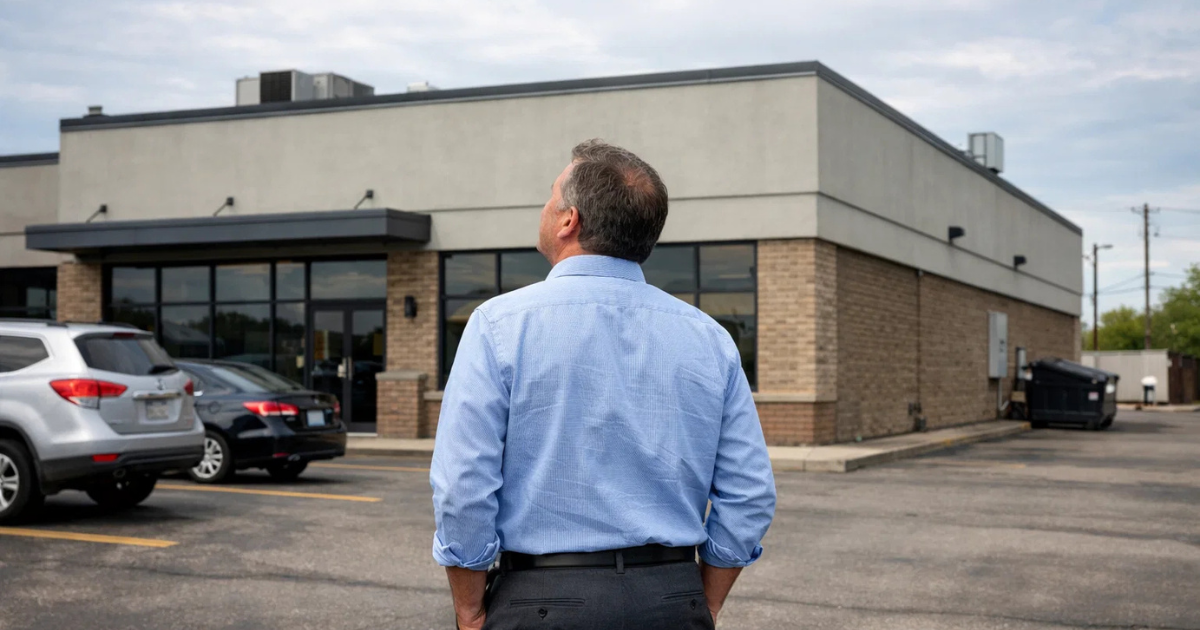
Your roof is doing a lot of work up there. Pretending it’s fine is not a maintenance strategy. If you can't see it from the parking lot, you don't know what's up there.
🔲 Most Roof Problems Start Years Before a Leak. By the time water appears inside your building, moisture has usually been working through insulation and decking for 1 to 3 years. Early assessments catch damage before it becomes structural.
🔲 Wet Insulation Quietly Drives Up Your Energy Bill. Moisture destroys insulation performance. Upgrading from R-10 to R-30 with a reflective coating can reduce energy load by 30 to 50%, lowering your NIPSCO costs significantly.
🔲 Preventive Maintenance Is Cheaper Than Replacement. Send this to the Finance Dept! :) Deferred maintenance turns manageable repairs into major projects. A $4,200 fix today can become a $68,000 replacement later if the issue goes unnoticed.
🔲 Your Roof Takes Damage From More Than Weather. HVAC techs, plumbers, and other contractors regularly walk your roof. Loose fasteners, dropped tools, and foot 🦶 traffic can puncture membranes without anyone noticing.
Let's get this out of the way, most building owners in Hammond do not call a roofer until something is actively wrong. Water on the floor. A tenant complaint. A ceiling tile that finally gave up.
That is the reactive mindset, and it is expensive.
It is a lot like ignoring the dashboard. You know those little lights? They don't just appear randomly. The car has been watching that problem for months before it decided to tell you. By the time the light is on, you are behind. The question is not whether something is happening. The question is how long it has been happening and what it is going to cost you now versus what it would have cost you six months ago.
A lot of building owners tell us, "I don't have any problems yet. I'll call you when I have problems. I'm good."
They mean it genuinely. The problem is they are making that call from the parking lot. And flat commercial roofs cannot be seen from the parking lot. You are not guessing. You are just, not looking.
Here are six things that are probably happening on your roof right now, whether you know about them or not.
1. Your Insulation Is Soggy, and Your NIPSCO Bill Proves It
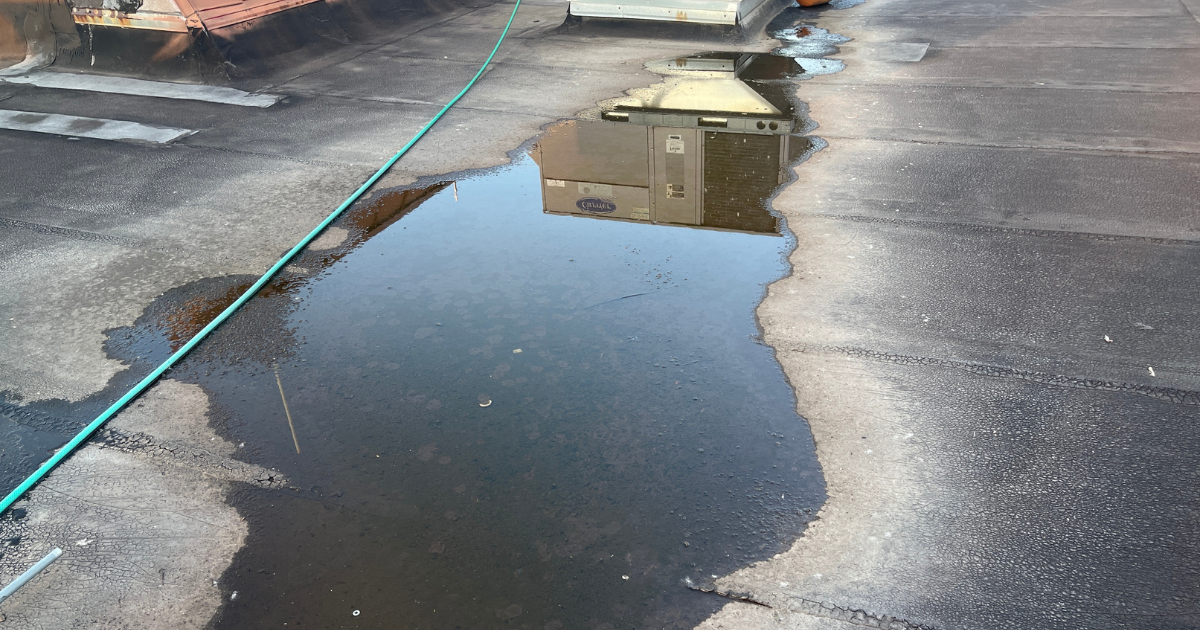
The result?
NIPSCO runs harder than it should. Your bill climbs. You assume it is just the cost of operating the building.
Commercial flat roofs use foam insulation to slow heat transfer. When that insulation absorbs moisture, from condensation, from a slow micro-breach in the membrane, from years of freeze-thaw cycling in Northwest Indiana, it stops performing. The trapped air that gives the foam its R-value gets displaced by water. Water conducts heat. Your building loses that thermal buffer entirely.
Here is what the physics actually says, most commercial roofs in this region are sitting at R-10 or below, which is essentially minimal insulation by modern standards. If you bring that above R-30 with a quality insulation upgrade and cap it with a bright white reflective coating, you are looking at a 30 to 50% reduction in energy load. Just flipping the roof from a dark surface to a brilliant reflective white is a 25% drop in NIPSCO dependency on its own. That is not a sales number. That is heat transfer physics, the sun is hitting your building with the same intensity regardless of what you do, but a reflective surface sends most of that energy back before it ever becomes your problem.
What would a 30% cut in your energy bill do for your bottom line this year? What would it do for the conversation at next quarter's budget meeting?
If the number on your NIPSCO bill has been drifting upward and you do not have a clear explanation for it, your insulation is worth a look. We will get on the roof and tell you exactly what is up there.
✉️ Every month you wait on a roof assessment is another month your insulation is underperforming, your NIPSCO bill is running high, and the damage underneath, if there is any, is compounding. The assessment is FREE. The delay is not.
Subject Property Address: ___________________________
One address. One property. One honest look. No sales pitch.
[ Email address ] → [ Send Me the Real Stuff ]
2. Your Structure Is Rotting from the Inside
Validate this claim with your validator!
Who is Val?
Every billionaire has a validation department. Why?
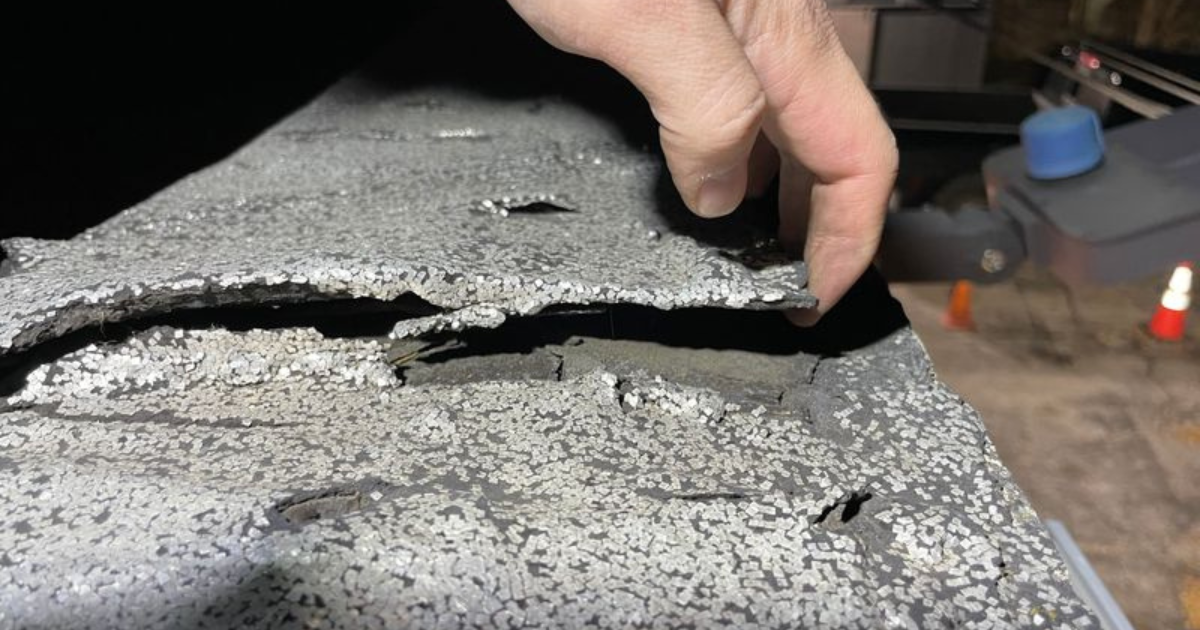
Here is what nobody tells building owners about leaks: the water you see is not where the problem started. By the time moisture finds its way through your membrane, your insulation, your deck, and your ceiling, it has already been traveling for a while.
Wet insulation presses against your decking. Wood decking saturates and softens. Metal decking begins to corrode at the fasteners. Over time, structural capacity is quietly compromised, and none of it is visible from the interior until it is significant.
Ryan owns a warehouse in the region. Found us online, called because he wanted a second opinion on a roof that he described as "probably fine." No interior leaks. No visible damage from the ground. He was not worried, he was just being thorough.
We got on the roof. The field surface looked tired but passable. Then we started walking the far northwest corner and felt it, soft. Not catastrophic, but soft enough that you knew immediately the deck underneath was holding moisture it had no business holding. Ryan had no idea. There had been no leak. There had been no sign. The damage had just been quietly compounding under a surface that looked like it was doing its job.
We caught it before it became a structural conversation. That is the only reason it stayed a manageable one.
By the time water appears on your ceiling, the damage has typically been compounding for one to three years. A $4,200 remediation becomes a $68,000 replacement not because of one catastrophic event, but because deferred inspection let a manageable problem grow into a structural one.
The repair is almost always cheaper than the replacement. The inspection is almost always cheaper than the repair. That math is consistent. We have never seen it go the other way.
3. Your Employees Are Breathing It
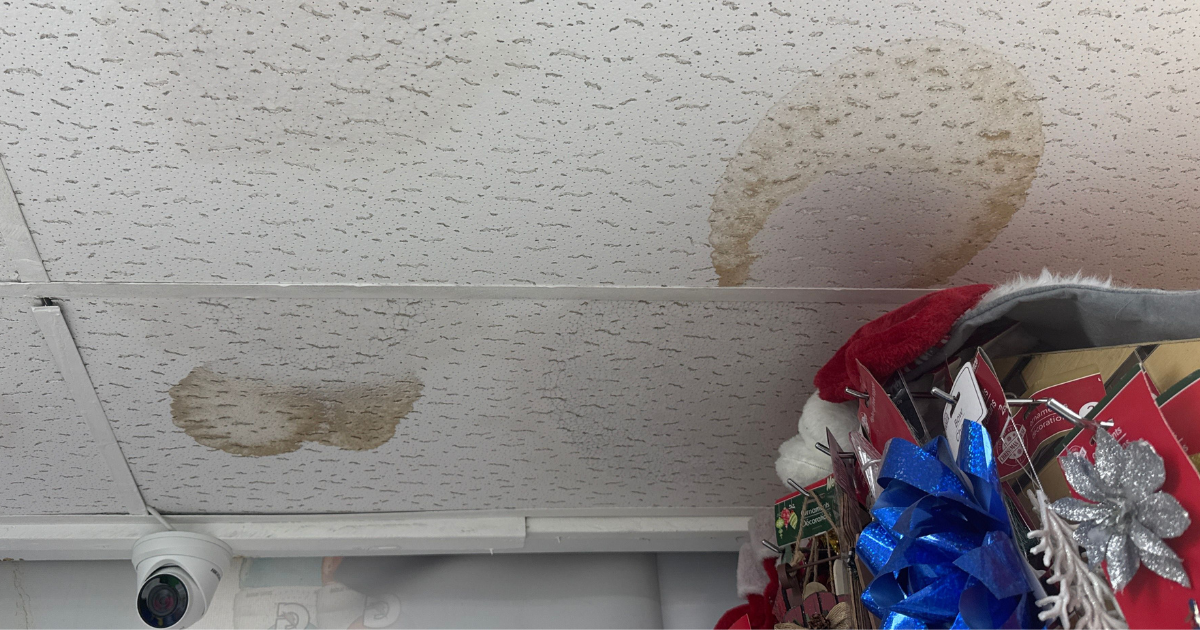
Mold slows productivity.
Moisture trapped inside a commercial roof assembly does not stay put. It migrates. It finds the interior. And when it does, it introduces mildew, mold spores, and a general degradation of indoor air quality that your employees are living with every workday.
This is not a comfort issue, it is a liability issue. OSHA has general duty provisions that make employers responsible for maintaining a workplace free from recognized hazards. Mold is a recognized hazard. If an employee connects a health complaint to the building environment and you did not have a maintenance record that showed diligent upkeep, you are in a difficult position.
Beyond the legal exposure, people work better in clean air. Productivity, sick days, turnover, all of it is influenced by the environment you put people in. The roof is not the first thing most business owners think about when they think about employee health. But it is directly connected.
A commercial roof assessment is part of due diligence for any building where people spend forty hours a week.
4. The Skin Needs More Than a Glance, It Needs Maintenance
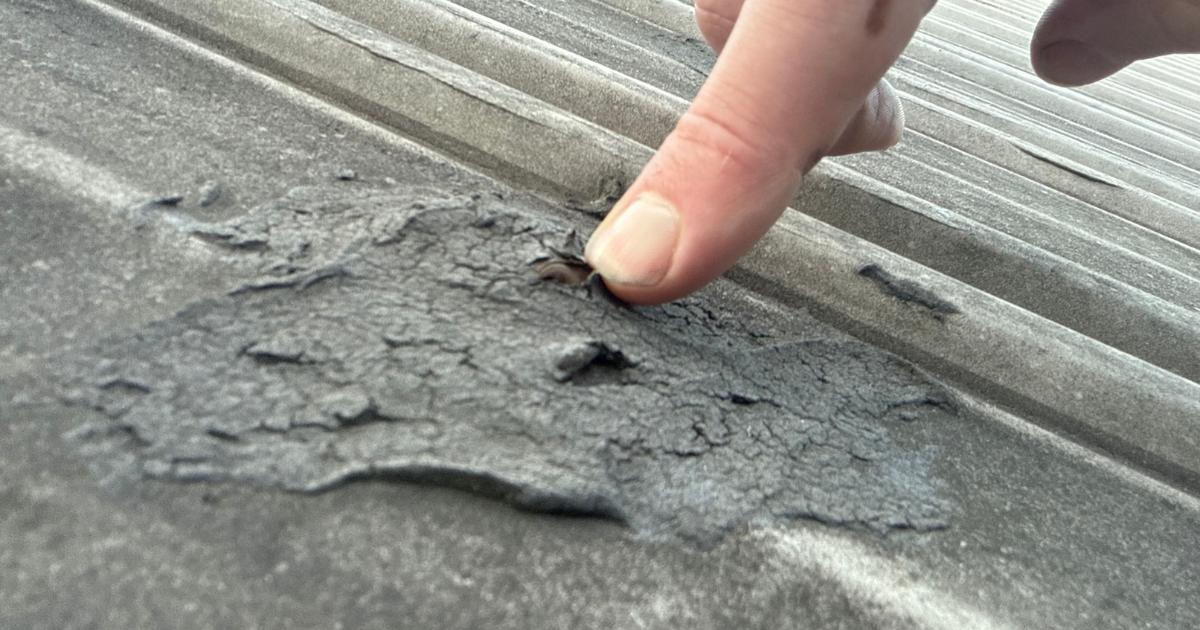
Just taking pictures is not enough.
What should a healthy inspection include?
🔲 Video?
🔲 MRI moisture scan?
🔲 Touch-ups included? …
Just looking at it? That’s lame.
😒 Think about what your roof membrane actually endures. Northwest Indiana averages 38 inches of precipitation annually. Lake-effect moisture runs through this region like a part-time job. We get freeze-thaw cycles that expand and contract every seam, every penetration around your AC units and vents, every edge detail. And then Summer hits and the sun goes to work on whatever the Winter left behind.
The membrane is the skin of your building. Like skin, it accumulates damage. UV degradation. Biological growth, algae and moss establish in the granules and accelerate breakdown. Chemical exposure from HVAC exhaust. Physical debris from wind events.
If you're only shampoo-ing, meaning you're doing a basic inspection every once in a while, you're not conditioning. You're not protecting. You're just looking at it. And honestly: what are they actually maintaining though? Just looking at it?
A proactive maintenance program includes cleaning, treatment, and application of a Conklin-based protective coating before the membrane reaches a point of failure. We do not install TPO or EPDM. We install systems that are engineered to extend roof life through chemistry rather than replacement.
There is also an insurance angle that building owners are starting to feel directly. Carriers are scrutinizing commercial property maintenance records more carefully. If your file shows a pattern of reactive-only service, no scheduled inspections, no documented maintenance visits, you are at risk of a claim denial or, in some markets, a non-renewal. Proactive maintenance is not just a roof strategy. It is an insurability strategy.
5. Other Contractors Are Damaging Your Roof
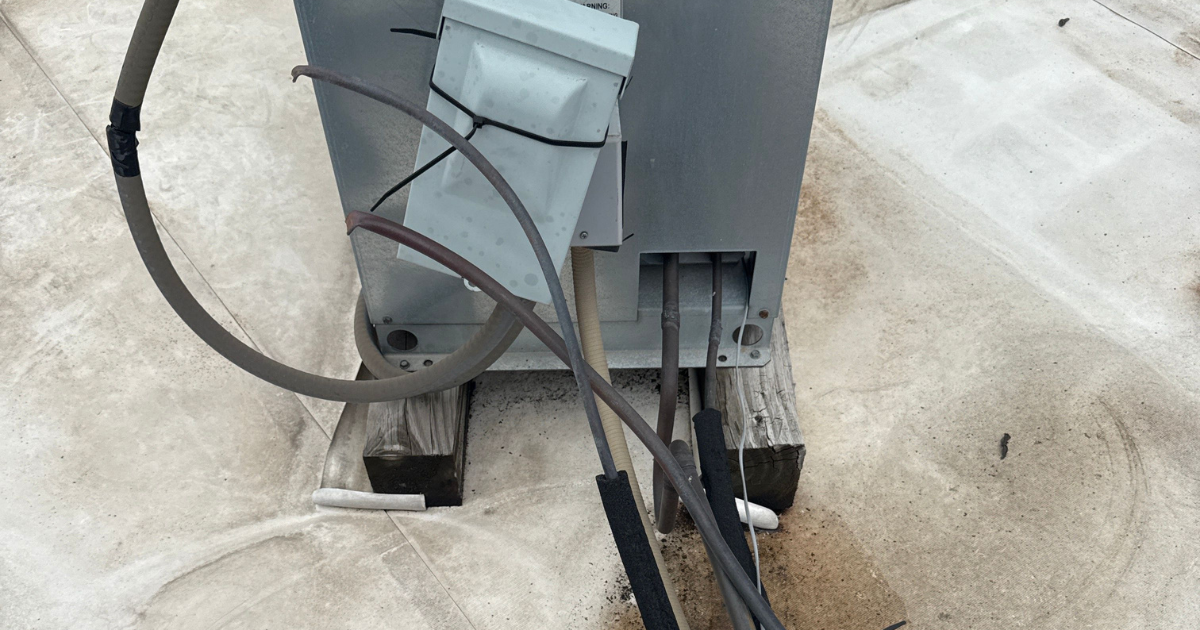
Save my time!
This one surprises people. It should not.
Every time an HVAC technician accesses your rooftop units, they walk across your membrane. They drag equipment. They kneel on the surface.
They leave behind tools, fasteners, and metal shavings. Plumbers. Electricians. Solar installers. Any trade that has rooftop access is a potential source of membrane damage, and none of them are accountable for what they leave behind because nobody is doing a post-visit inspection.
A single screw sitting point-up on a commercial membrane, driven into the surface by foot traffic over a few weeks, is a puncture waiting to become a leak waiting to become a $40,000 problem.
Ryan's warehouse is a good example of this. When we did his full assessment, the area around his rooftop HVAC units told a different story than the rest of the field. Loose fasteners, the kind that fall out of a service tech's bag and never get picked up, scattered across the membrane surface near the units. A few had already worked themselves point-up. One more season of foot traffic and at least two of them were going through the membrane. Ryan's HVAC contractor had been up there four times in the previous eighteen months. Nobody had flagged it. Nobody was looking for it. That is not the HVAC contractor's job. It is ours.
The membrane around AC units and vents, the highest-traffic areas on any commercial roof, consistently shows the most wear that is not weather-related. The evidence is clear once you are up there. But nobody goes up there.
Annual roof assessments are not just about the weather damage. They are about keeping eyes on what every other trade has been doing to your biggest maintenance asset.
6. Your Dark Roof Is a Microwave, and It's Cooking Your Budget
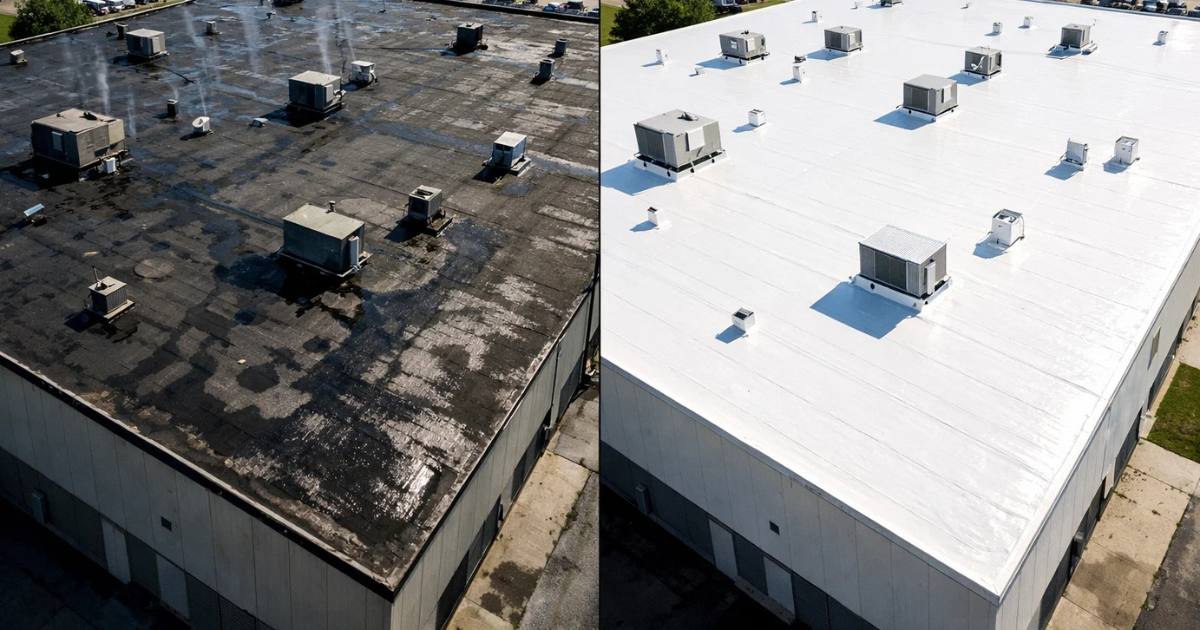
170 degrees is different than 70 degrees. Right?
Old commercial roofing was almost universally dark. Dark gray, black, dark brown. In 2026, those roofs are walking monuments to a different era of energy economics, one where nobody was particularly worried about what a roof surface temperature did to a building's cooling load.
Here is what a dark roof does in a Northwest Indiana Summer: it absorbs solar energy until the surface temperature reaches 160° to 180°F. Your HVAC system is then trying to cool a building from the inside while the roof is essentially a radiator pressing heat in from above. It is not a battle. It is a losing fight. You are paying for every BTU of that heat twice, once when the sun delivers it, and once when your system tries to remove it.
A brilliant white reflective coating, specifically a Conklin acrylic or urethane system, changes the physics immediately. The roof surface stays near ambient temperature instead of cooking. The thermal load on your HVAC drops. Your NIPSCO dependency drops 25% from color change alone. Add a quality insulation upgrade from R-10 to R-30 and you are looking at a combined 30 to 50% reduction in energy load. Add a full reflective system with a thick insulation blanket at R-30 or above and some buildings are seeing numbers that approach 50%.
What does a 30 to 50% cut in your energy bill do for your operating budget? What does it do for your peace of mind when you write the NIPSCO check in August?
The financial case is real, it is provable, and it starts with knowing what you have up there right now.
The Dashboard Is Already On

Flourish infographic here.
Three dashlights.
Warning.
You may not see the light yet. That does not mean it is not there.
The inside of your roof assembly, the insulation, the deck, the air quality flowing into your building, tells a story that you cannot read from the parking lot. The top surface has been taking damage from UV, freeze-thaw, lake-effect moisture, and foot traffic from every trade that has been up there since the last time someone paid attention.
We are not here to sell you a replacement. Most of the buildings we assess do not need one. What they need is an honest set of eyes that can tell them what they are actually dealing with, and what it will cost to address it now versus what it will cost to address it later.
The math almost always favors now.
No is on the roof personally for every assessment. Isaiah is with him. There are no surprises, no pressure, and no report designed to scare you into something you do not need. Just the truth about your building.
Commercial Roof Maintenance NWI FAQ

- How do I know if my commercial roof has moisture damage if there's no leak? You usually cannot tell from the interior until the damage is significant. An infrared scan or a hands-on assessment by a qualified commercial roofer is the only reliable way to identify moisture intrusion early. By the time you see a ceiling stain, the problem has typically been progressing for one to three years.
- What is the ROI on commercial roof maintenance? A well-documented capital maintenance program typically returns roughly $1 for every $1 invested when you account for avoided replacement costs, energy savings, extended roof life, and preserved insurability. Deferred maintenance works in the opposite direction, for every $1 avoided today, downstream damage typically costs $4 to $8 to correct.
- Can my insurance carrier drop my policy for lack of roof maintenance? Yes. Carriers can deny claims or non-renew policies when inspection records show prior written notice of defects that were not addressed. Documented, proactive maintenance is part of maintaining your coverage eligibility, not just your roof.
- How much can a reflective roof coating reduce my energy bill? In Northwest Indiana's climate, switching from a dark roof to a bright white reflective Conklin coating produces roughly a 25% reduction in NIPSCO energy load from the color change alone. Combined with an insulation upgrade from R-10 to R-30 or above, total reductions of 30 to 50% are achievable.
- What does a free roof assessment from Pristine Industrial Roofing actually include? We get on the roof. We walk the field, the perimeter, and around every rooftop unit, vent, and pipe. We document what we see and give you a straight read on condition, risk, and options. No report designed to sell you something. Just an honest look at your building.
✉️ Schedule your free commercial roof assessment.
The building you're thinking of right now, the one you've been meaning to get looked at. That's the one.
Subject Property Address: ___________________________
We’ll reach out to schedule. No sales pitch. Just an honest look at what’s up there.
[ Email address ] → [ Send Me the Real Stuff ]
Pristine Industrial Roofing — Serving commercial and industrial property owners across Lake County and Porter County.
Liquid-applied Conklin coating systems. FLEXION vinyl membranes. Proactive maintenance programs.
Valparaiso | Hammond | Portage | Merrillville | Hobart | Gary
Read other blog:



We Love Conversations
 SoHelpful@PristineIndustrialRoofing.com